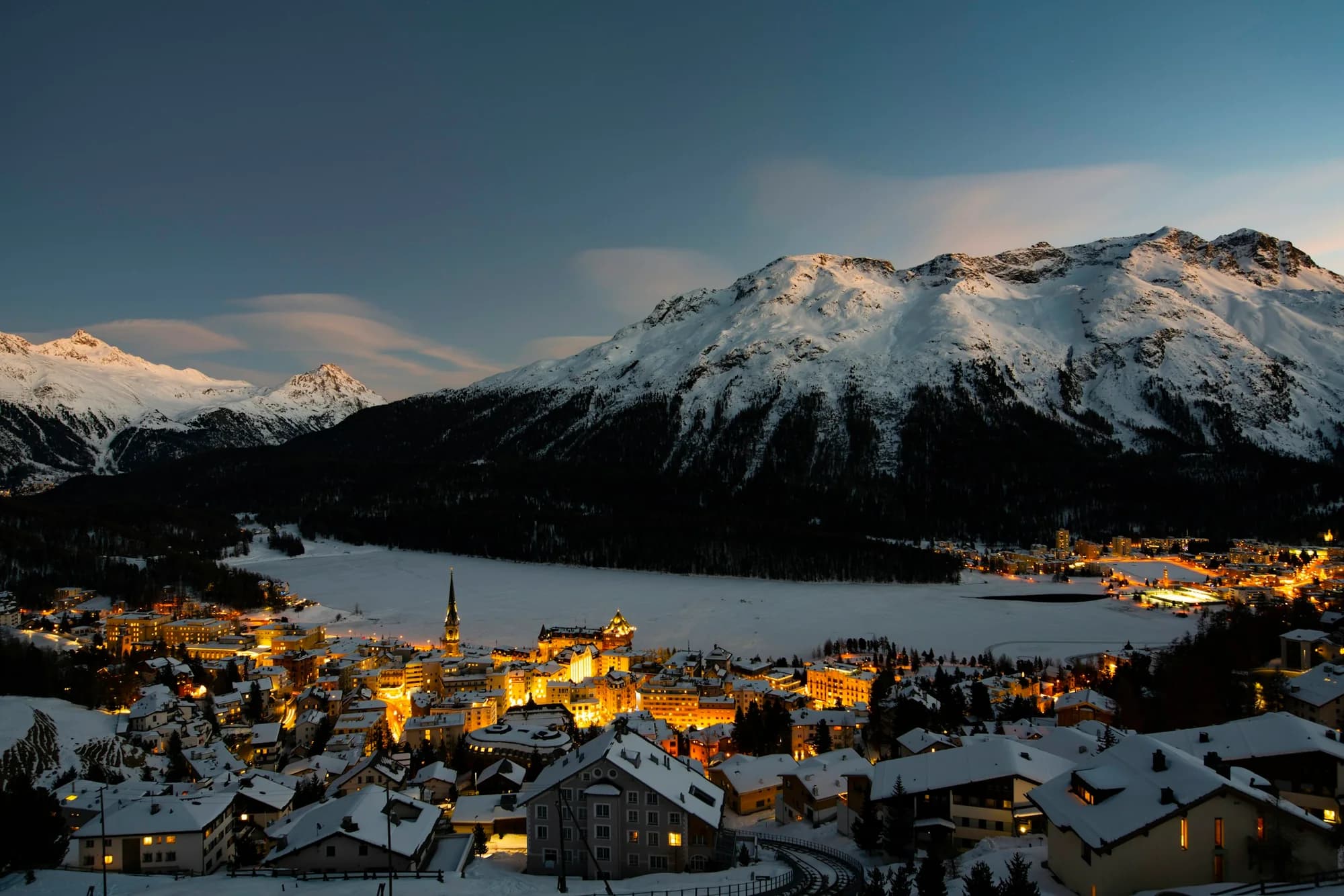
By the second winter, the packing list is shorter. You know which gloves you will wear, which train you want and whether anyone will actually need the evening shoes. There is less to work out. More of the week belongs to you.
St. Moritz is exceptionally good at making the first visit look appealing. Snow, grand hotel windows, knitwear that has apparently never met a chair back. At Omnia, we are interested in what happens after that first impression: the moment a destination becomes somewhere you expect to return. The history of the Engadin offers a few clues. One involves a wager. Another has to be rebuilt every winter.
An invitation to stay for winter.
In the Kulm’s telling of its history, Johannes Badrutt made an offer to four English summer guests in 1864: come back in December, and he would reimburse them if winter disappointed. They stayed until Easter. As hotel origin stories go, it has a pleasingly decisive ending.
Badrutt’s proposition was disarmingly simple. Try the place in another season. The mountains were already there; what changed was the possibility of a different life among them. Summer scenery could become the setting for winter friendships, long evenings and plans that acquired a habit of extending themselves.
It is an invitation worth borrowing. Before a favourite week becomes a second home, let the place surprise you twice. Return when the terraces are quieter or the weather sends you indoors. Bring the person who dislikes your favourite sport. A home has to accommodate the whole party, including its less enthusiastic skiers.
Tradition has to be made again.
There is a wonderfully physical illustration at the Cresta. The St. Moritz Tobogganing Club describes a natural ice run made afresh each year from snow and ice, following a tradition begun in the winter of 1884–85. Its club history dates the first completed run to January 1885 and records the people whose work has kept it rideable.
There is something rather wonderful about an institution whose defining feature melts. Its continuity depends on people turning up to make it again. A course has to be built, tended and watched; a season has to be organised. The inheritance is a working practice, carried forward one winter at a time.
That connection between a pursuit and a place runs through Omnia & Sport. A sport gives the calendar an appointment you want to keep. There is a skill to return to, someone to meet and a reason to leave the city even when work would happily consume another weekend. A home within reach of that life begins with a very personal attraction: you can see yourself using it.
A place becomes part of your life when returning to it gives the year a shape.
The journey belongs to the address.
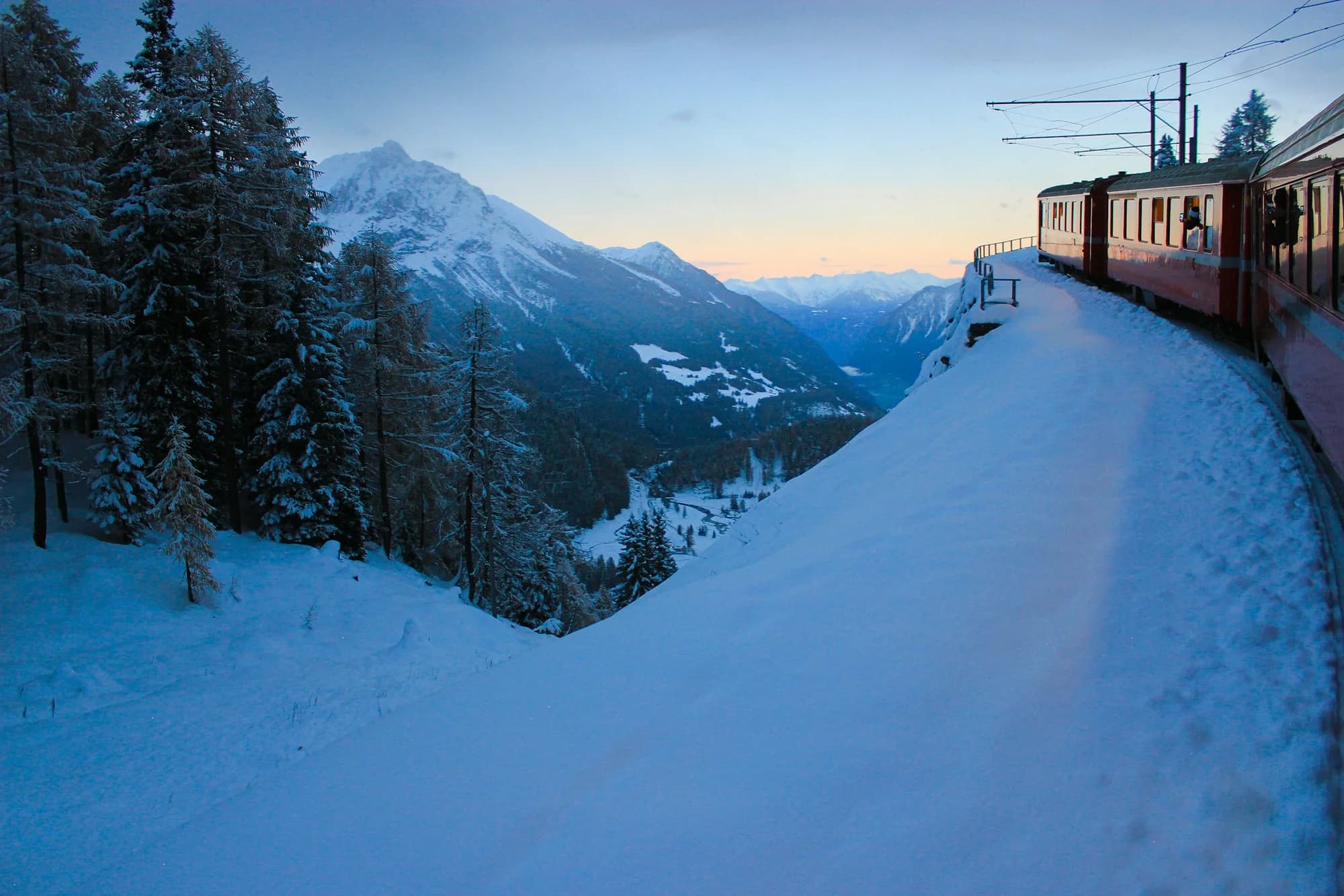
The railway belongs in this story as much as the hotel. UNESCO’s inscription for the Rhaetian Railway in the Albula and Bernina landscapes recognises the historic routes as an achievement of engineering in an Alpine setting. It also identifies their contribution to overcoming the isolation of mountain settlements. The landscape and the means of reaching it developed a relationship.
A rail journey can offer something increasingly rare: time between one life and the next. The laptop closes; the landscape takes over. For someone else, every additional connection uses up an evening they hoped to spend by the fire. Both instincts deserve a place in the brief.
When we think about second homes and retreats, the journey is part of the address. Imagine it on an ordinary Friday, with the luggage and people you usually bring. The home that fits your life is one you can reach often enough to build a relationship with it. Sometimes the detail that makes the difference happens long before the front door.
المجلة · مجانية، شهرية
أعجبك العدد؟ دع العدد القادم يصلك.
رسالة واحدة مدروسة في الشهر. إلغاء الاشتراك بنقرة واحدة.
There should be something beyond the snow.
St. Moritz also has a cultural life that asks for a different kind of attention. The Segantini Museum records its opening in 1908 and identifies Nicolaus Hartmann as the architect. A dedicated building for the painter offers another way to engage with the mountain landscape: through the work of someone who looked at it closely.
This matters most to the person who would happily let everyone else ski. Give them a painter, a long lunch and an afternoon without a timetable, and the mountain week becomes theirs too. A destination grows more interesting when the main attraction can take a day off.
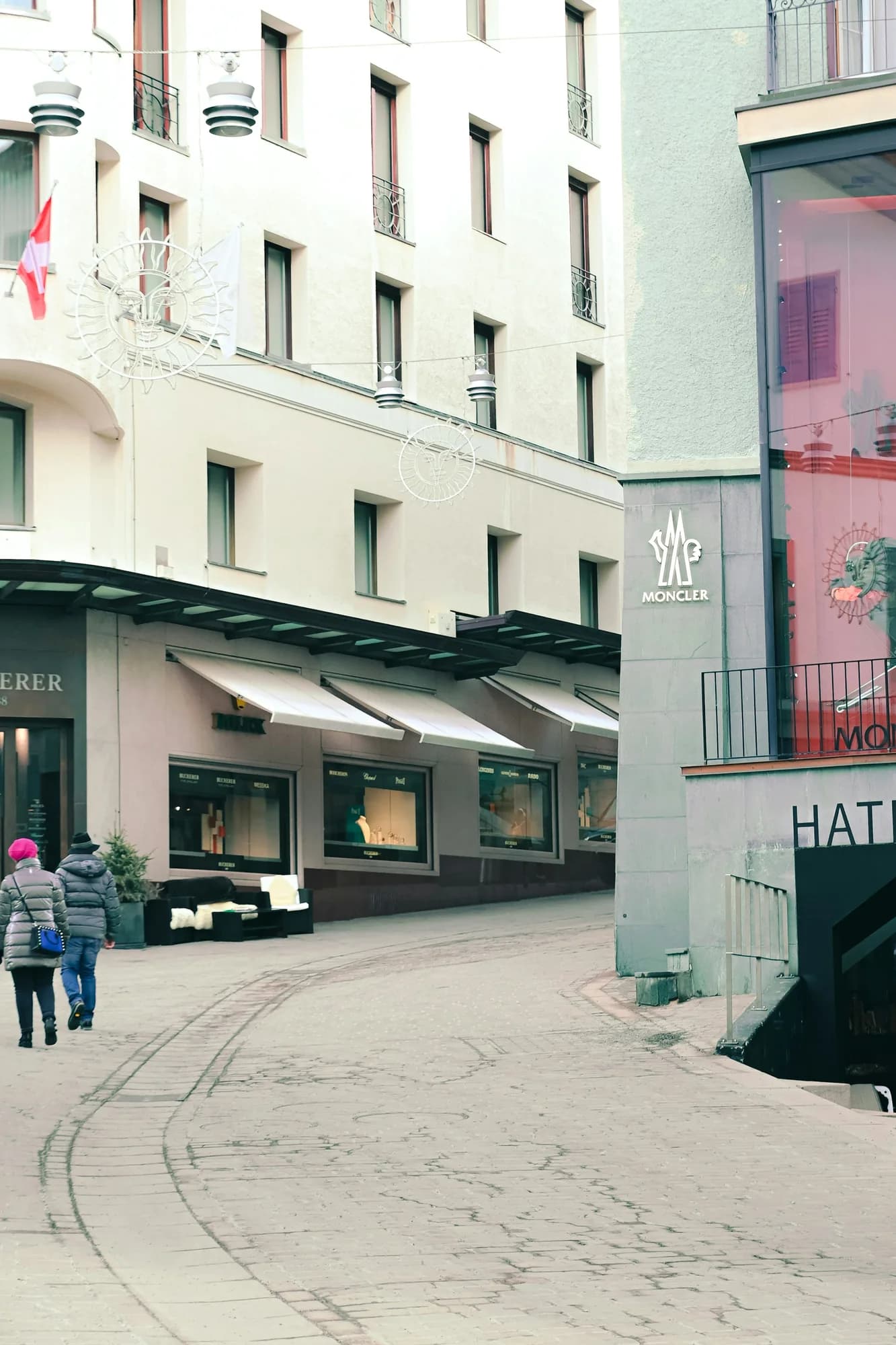
Our interest in a place always extends beyond its headline. We want to understand what fills the hours around it: the walk that needs no car, the room where everyone gathers, the cultural life that gives a rainy afternoon somewhere to go. Those details help a shared home make room for several different ideas of a good day.
What familiarity is worth.
The most useful thing to borrow from St. Moritz is the thought of a winter with a place in it. Its particular history belongs to the Engadin. Your own tradition may begin elsewhere, with a different landscape and a much shorter list of things you feel obliged to do.
For readers whose curiosity turns towards Montenegro, our Kolašin guide opens a different mountain conversation. Let the place establish its own appeal. Then consider whether its seasons, journeys and everyday life match the time you actually want to spend there.
That is how Omnia approaches the next address: through the life it could make possible. The telling detail may be that you want the children to know one mountain well, or that a week away never quite feels long enough. Tell us that part. It gives us somewhere meaningful to begin.
Before a place becomes a tradition.
A considered visitTry a second season.
Return at another time of year and see which parts of the place still draw you outside.
Follow an ordinary day.
Include breakfast, errands, a walk and an evening at home. Let the daily rhythm inform the decision.
Make the full journey.
Assess the route from your own home, including transfers and the time left to enjoy a short stay.
Find your own reason to return.
A genuine pursuit, relationship or curiosity is a stronger foundation than an image borrowed from someone else’s holiday.