Every life is a story, shaped by places that leave their mark. Tivat, a coastal jewel in Montenegro’s Bay of Kotor, is where the Adriatic meets a rugged Balkan spirit. Once a humble naval outpost, now a vibrant harbour that blends history with modern allure, Tivat does not chase grandeur. It creates it. From its ancient roots as a sailors’ haven to its bold reinvention as a marina town, Tivat’s story of resilience and reinvention inspired our Global Citizens Collection. This is a town where tradition and ambition sail side by side, inviting global citizens to find a home in its sunlit embrace.
A seaside haven forged by history.
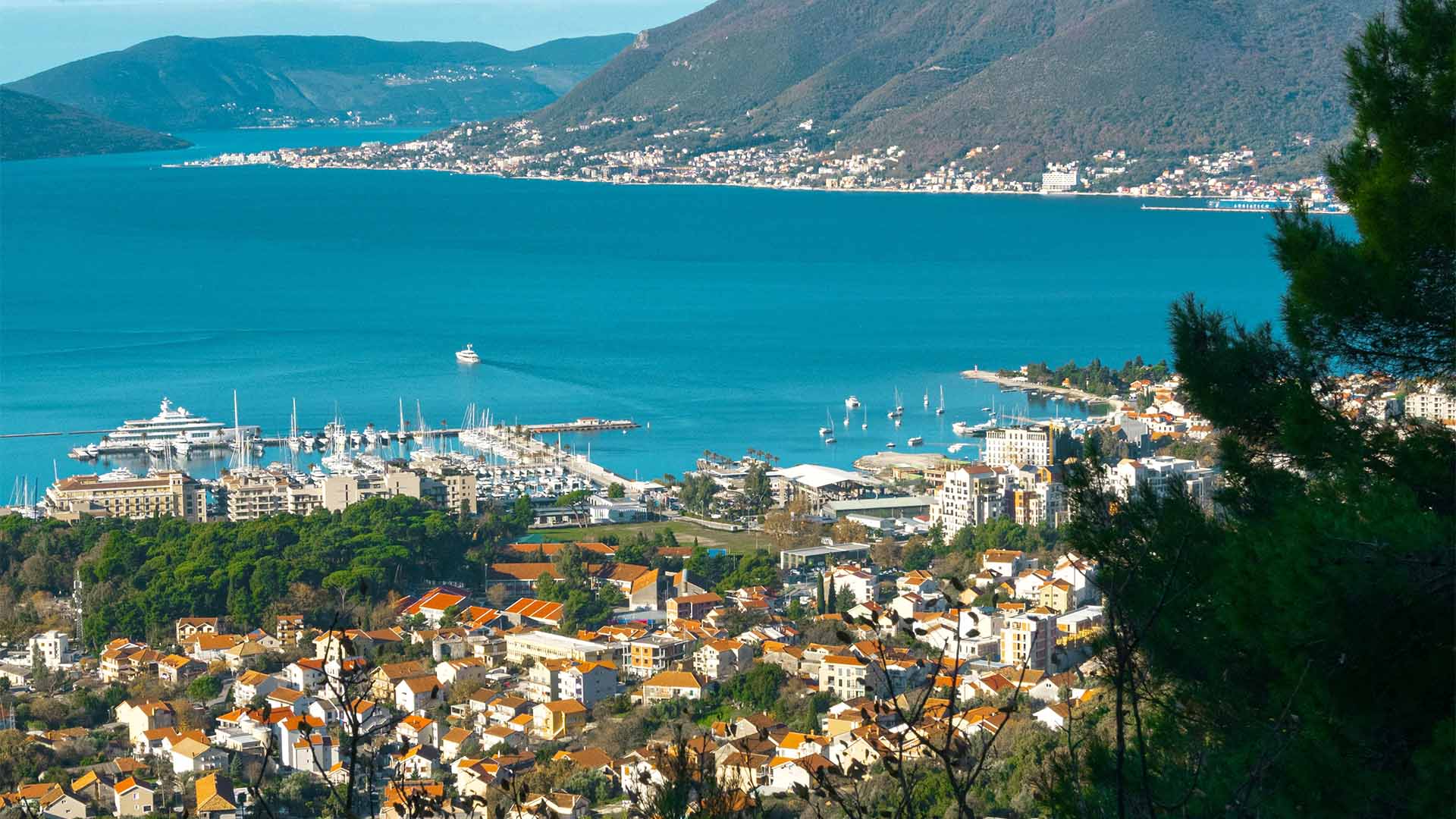
Tivat’s story begins where the sea meets the shore. Nestled in the Bay of Kotor, beneath the shadow of Mount Vrmac, it was known as Teodo in the 14th century, a name some link to the Illyrian queen Teuta, who ruled these shores in the 3rd century BC. By the Middle Ages it was a retreat for Kotor’s nobles, their summer estates dotting the coast. Venetian rule from 1420 to 1797 brought stone villas and a maritime pulse, with ships trading across the Adriatic.
From 1889, the Austro-Hungarian Empire turned Tivat into a naval arsenal, building the Arsenal shipyard, where craftsmen honed the skills that shaped the town’s gritty, seafaring soul. This was not a flashy port. It was a working harbour, where sailors and builders forged bonds over rakija and shared dreams, a place that welcomed without losing its Balkan heart. That legacy of resilience and openness is what drew us to Tivat for our collection.
A modern renaissance.
Tivat’s transformation is no imitation. It is a reinvention rooted in its own history. After the Second World War, as part of Yugoslavia, Tivat’s naval base thrived, servicing ships from the Yugoslav People’s Army and its allies. When Montenegro gained independence in 2006, the town turned to tourism. In 2007 the Canadian businessman Peter Munk and a group of investors saw potential in the disused Arsenal shipyard, buying the site and transforming it into Porto Montenegro, one of the Adriatic’s leading superyacht marinas, now home to large vessels, fine restaurants and a year-round cultural calendar.
This was never about copying Monaco. It was about Tivat claiming its place as a Mediterranean star, blending Balkan grit with a cosmopolitan edge. The marina has since changed hands, passing to the Investment Corporation of Dubai in 2016, but the ambition Munk set loose has only deepened.
By 2026, Tivat’s evolution shines brighter still. The marina’s success has sparked growth, with Lustica Bay, an Orascom and government joint venture on the nearby peninsula, rising as a resort town of hotels, beaches and a golf course still taking shape. Tivat Airport, just outside the centre, now handles well past a million passengers a year, a record 1.12 million in 2024 and climbing through 2025, connecting the town to Europe and beyond. Yet Tivat stays true to its roots. The Renaissance summer house Buca, a 500-year-old noble estate turned museum, stands alongside modern promenades, and the Naval Heritage Collection, with its preserved submarine, keeps the town’s maritime story alive. Some 280 sunny days a year, clear waters, and nearby islands such as Sveti Marko and the Island of Flowers do the rest.
On a town that lives its duality
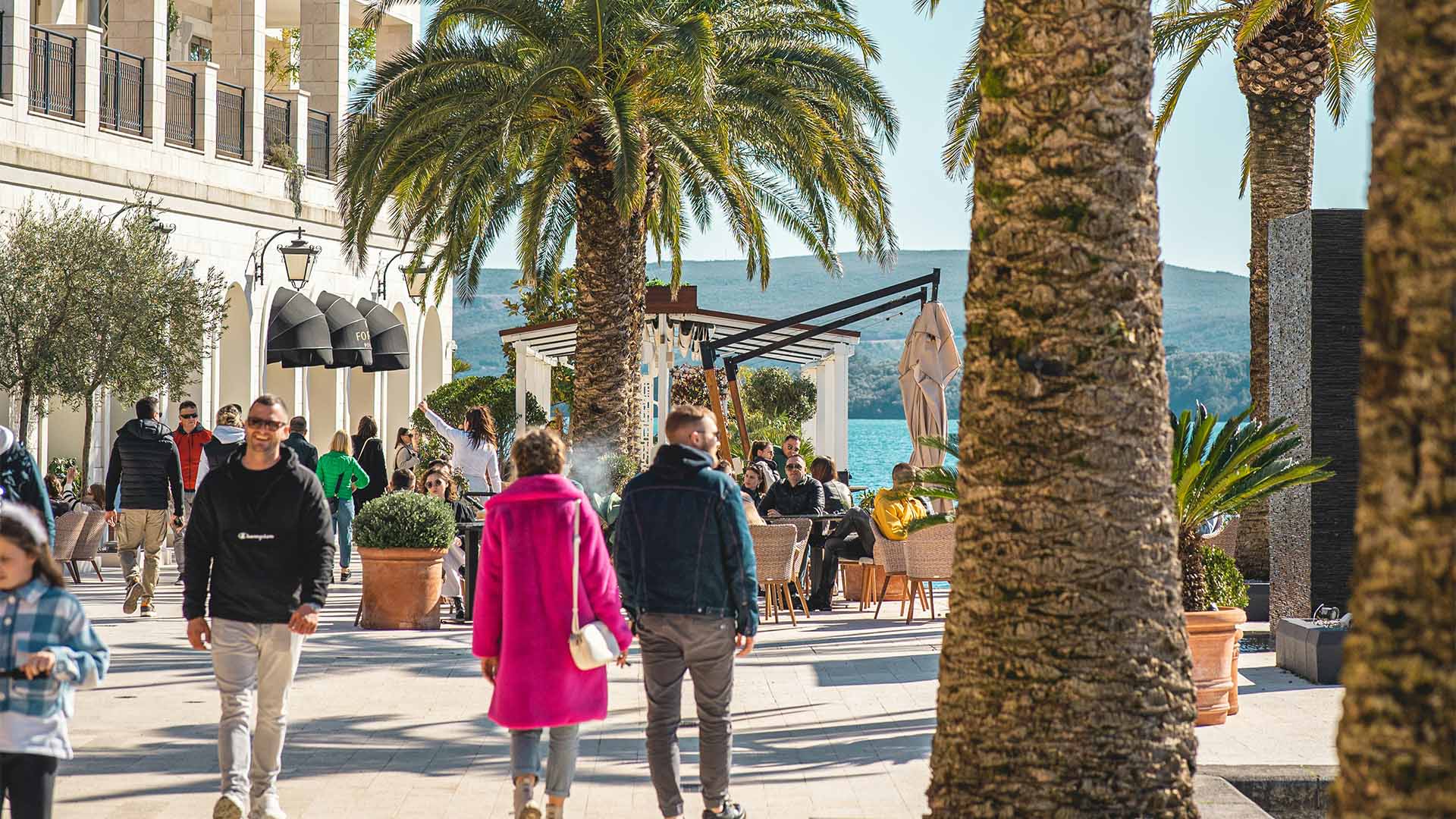
Walk the Pine Embankment, and you will see superyachts docked beside fishing boats, a nod to Tivat’s past and present at once.
المجلة · مجانية، شهرية
أعجبك العدد؟ دع العدد القادم يصلك.
رسالة واحدة مدروسة في الشهر. إلغاء الاشتراك بنقرة واحدة.
A town that lives its duality.
Tivat’s magic lies in its contrasts. The Buca-Lukovic Museum and Gallery preserves the town’s noble heritage, while Porto Montenegro’s waterfront buzzes with cafes and boutiques. Gornja Lastva, a stone village in the hills above, offers views of the bay and a glimpse of Montenegro’s rural soul. Plavi Horizonti beach, with its clear shallows, draws families and adventurers, while the Blue Cave, reachable only by boat, lures snorkellers to its glowing depths.
Tivat is not a loud party town like Budva or a fortress like Kotor. It is a place where you can sip Montenegrin Vranac wine at a seafront bar, taste Njeguski prsut in a local konoba, or hike Vrmac’s trails for panoramic views, all while feeling the pulse of a town that is both ancient and alive.
Reading Tivat.
Field notesA working harbour, reinvented.
The Arsenal shipyard, built out from 1889, was the town’s identity for more than a century. Porto Montenegro did not erase that history; it grew out of it, which is why Tivat reads as authentic rather than invented.
Heritage stands beside the new.
The 500-year-old Buca summer house and the Naval Heritage Collection sit a short walk from the marina promenades. The old and the new are neighbours here, not rivals.
Connected, yet unhurried.
Tivat Airport handles well past a million passengers a year, a record 1.12 million in 2024, so Europe is close. The pace, though, stays its own.
A forward-looking frontier.
Montenegro has been an EU candidate since 2010 and is drafting its accession treaty in 2026 with a 2028 membership target. That is a forward driver, not a settled fact, but a credible one.
Why Tivat sparked our vision.
Tivat inspired our Global Citizens Collection because it tells a story of transformation without losing its soul. It is a town where the Adriatic’s turquoise water meets Montenegro’s rugged heart, where Venetian villas and naval relics stand beside modern marinas, where hospitality is as natural as the sea breeze.
Tivat does not mimic other destinations. Its quiet confidence, blending Balkan tradition with a cosmopolitan edge, shows that global citizenship is not about erasing roots but embracing them while welcoming the world. To follow that thread further, explore the Global Citizens Collection, the wider Montenegro market, and the country’s coastal developments. For a sense of where the serious money sits on this coastline, our companion piece on Montenegro’s high-end addresses reads the prices behind the postcards. This is Tivat’s story, a place where history and ambition converge, where global citizens find a home that is as authentic as it is inspiring.