Life as an expat in Saudi Arabia has just become a very different proposition. The Non-Saudi Real Estate Ownership law took effect on 22 January 2026, and the Cabinet approved the geographical zones and implementing regulations on 23 June 2026, letting foreigners own within the mapped areas published through Saudi Properties, per White & Case. At the same time a royal order of 25 September 2025 froze residential and commercial rents in Riyadh for five years, through 2030, per Arab News. Add tax-free pay and a front-row seat to a nation reinventing itself, and the Kingdom is one of the more interesting moves you can make right now. Here is the full picture: the draw, the cost of living, where to live, work, and what life actually looks like across Riyadh and Jeddah.
Why move to Saudi Arabia.
Start with the money. Salaries are strong and there is no income tax, which often lands you well ahead of home pay once housing or car allowances are folded in, though the packages are leaner than the 1990s oil-boom days. A mid-level engineer in Riyadh earns roughly SAR 14,000 to 25,000 a month, about SAR 168,000 to 300,000 a year, depending on field and seniority, per Saudi Life Guide, and you keep all of it. Around 13 million expats live alongside some 24 million Saudi citizens, in a population of about 37.6 million, per Worldometer, drawn to the largest economy in the Middle East: nominal GDP reached about $1.275 trillion in 2025, with the IMF projecting roughly $1.39 trillion for 2026, per House of Saud. Riyadh is a finance and tech powerhouse, Jeddah has its Red Sea swagger, and Dammam still runs on oil.
It is not only the cash. Vision 2030 is a remarkable thing to live alongside, pumping about $110 billion into hospitality and delivering some 362,000 new hotel rooms by 2030, per Hospitality Net. NEOM’s Sindalah island, handed to Red Sea Global, held a ceremonial opening in 2024 and is due to open to the public in late 2026, per The Middle East Insider. You are not just clocking in here; you are part of something being built. It is a hustle, but the payoff is real.
Adventures and things to do.
There is plenty to do for anyone with a sense of adventure. Dive the Red Sea off Jeddah, where SAR 300 (£61) buys you coral reefs to rival anywhere. Camp the Empty Quarter for around SAR 500 (£102) for a weekend under a star-soaked sky. Visit AlUla’s Winter at Tantora, where rock tombs meet live music, an anchor of the region’s wider visitor ambitions, per Experience AlUla. Riyadh Season brings concerts and Formula 1: the crowds are not here for the sand alone.
Golfers will find their game across the megaprojects, and compounds like Saudi Aramco’s Dhahran camp pack their own courses, home to thousands of residents. Food is a joy at every price: a SAR 5 (£1) shawarma is a steal, or spend SAR 150 (£31) on a Diriyah heritage feast.
Must-see places in the Kingdom.
Saudi Arabia is a kind of time machine. Al Rajajil’s standing stones in Al Jawf, a Stonehenge of the desert, are genuinely eerie. Diriyah’s mud-brick UNESCO district mixes the old with new villas. Jeddah’s Al-Balad is a coral-stone maze where you haggle for gold and dodge donkey carts. Riyadh’s Kingdom Centre Tower charges SAR 69 (£14) for the Sky Bridge and a view of a city clawing skyward. NEOM’s beaches and ambition, per its site, point straight at the future. You are not sightseeing so much as time-travelling.
The experiences that stay with you.
Saudi Arabia has soul. Sip cardamom coffee, free if a local offers it, and say yes. Join a desert majlis for around SAR 100 (£20) for tea and tales on cushions. Pick up rose perfume in Taif for SAR 50 (£10), or watch falcons cut the sky for SAR 200 (£41). Sail the Red Sea at dusk for pure gold light. Ramadan is its own kind of magic, with communal iftar feasts, and compounds add their own twist with expat barbecues. It is not touristy; it is human, if you dive in.
On the pace of change
You are not just taking a posting in Saudi Arabia. You are landing in the middle of a country rewriting itself in real time.
Working in Saudi Arabia.
Work here can be a windfall for those willing to put in the effort. Oil, healthcare and tourism are the big employers, and the pay is tax-free, with a mid-level engineer on roughly SAR 14,000 to 25,000 a month. The Red Sea Destination’s first phase alone is building about 3,000 rooms across 16 hotels, with much more to come by 2030, per its project record, and it needs people now. Expect 48-hour weeks, with overtime on the megaprojects; the five daily prayer breaks pace out the day. Crucially, the old Kafala sponsorship system has been dismantled: reforms completed by June 2025 mean you can change employers and apply for exit, re-entry and final-exit visas through Absher and Qiwa without a sponsor’s sign-off in qualifying cases, per Multiplier. English goes a long way, and Arabic wins hearts.
The cost of living in Saudi Arabia.
Here is the maths, and Saudi Arabia is kind to anyone who is clever with it. A family of four runs around SAR 12,100 to 12,200 (about £2,470) a month before rent, per Numbeo. The breakdown:
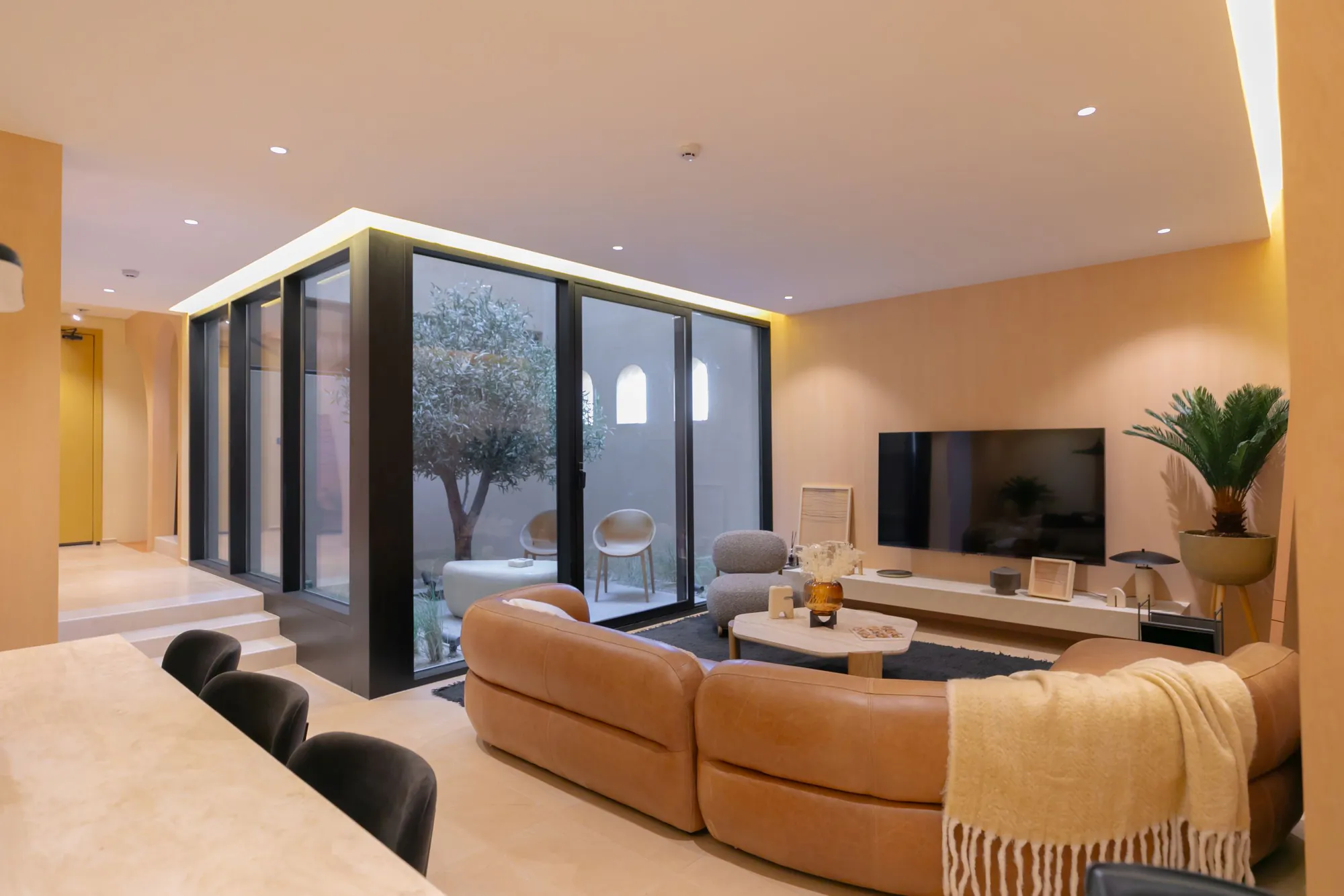
Housing. Compounds are the obvious choice, at roughly SAR 120,000 (£24,500) a year for a Riyadh villa with bills included. A solo flat outside a compound is around SAR 40,000 (£8,160): grittier, but doable. And the picture is steadier than it was: the September 2025 royal order froze Riyadh rents to 2030 with automatic lease renewal, so a new arrival in the capital is no longer exposed to a sharp annual hike, per Arab News. If you want to buy rather than rent, note the catch for city-dwellers: under the new M/14 law, foreigners in Riyadh and Jeddah may own only within government-designated zones, though a resident expat may also own one home for personal use outside them. Makkah and Madinah follow their own rule: ownership there is restricted to Saudi companies and Muslim individuals, who are not confined to designated zones, and non-Muslims cannot own there at all. Budget about 10% in transaction costs (a roughly 5% foreign-ownership fee on top of the 5% Real Estate Transaction Tax), per White & Case.
Food. A supermarket like Danube covers a family of four for about SAR 600 (£122) a month. Street eats are a SAR 5 (£1) shawarma; a smart dinner runs SAR 200 (£41).
Transport. Petrol is cheap and held flat through 2026: Gasoline 95 is SAR 2.33 (£0.48) a litre and Gasoline 91 is SAR 2.18, per GlobalPetrolPrices, so a SAR 50,000 (£10,200) car is the smart play. Careem is around SAR 20 (£4) a ride, and the new Riyadh Metro, with all six lines now open, finally gives the capital real mass transit.
Healthcare. Private care is excellent and Western-grade, and insurance runs roughly SAR 5,000 (£1,020) a year.
Schooling. The British International School Riyadh charges roughly SAR 60,000 to 90,000 (£12,200 to £18,400) a year at primary, rising to about SAR 100,000 to 135,000 (£20,400 to £27,500) at sixth form, averaging around SAR 71,000, per the International Schools Database. Pricey, but first-rate.
Utilities. Summer air conditioning is roughly SAR 500 (£102) a month, because the heat is no joke.
The bottom line. Coffee is about SAR 15 (£3), and with no pubs to drain the wallet you save fast: SAR 5,000 (£1,020) a month stacks up quickly. There is no income tax, either.
المجلة · مجانية، شهرية
أعجبك العدد؟ دع العدد القادم يصلك.
رسالة واحدة مدروسة في الشهر. إلغاء الاشتراك بنقرة واحدة.
Day-to-day life in Riyadh and Jeddah.
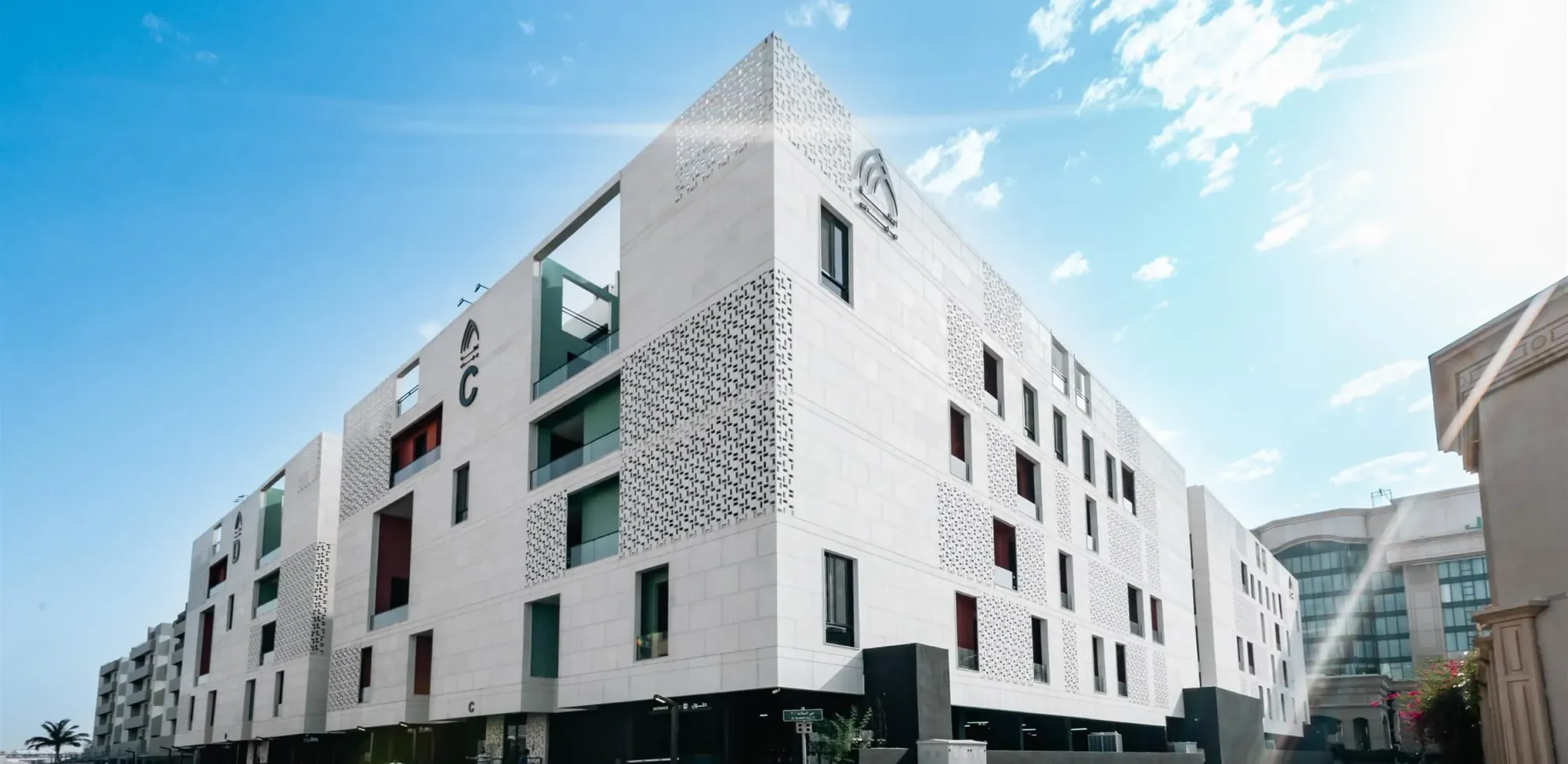
Expat life in Riyadh and Jeddah leans heavily on the compound: pools, gyms and a ready-made community. Dhahran’s Aramco camp is practically a city in its own right. Beyond the gates it is real life: traffic snarls, 45°C summers, and souqs that buzz. Cars still rule, so a SAR 50,000 (£10,200) car buys freedom, though the Riyadh Metro now covers a good slice of the capital. Socially it is expat-powered, with a sizeable British community grilling and socialising, and locals are warm if you make the effort. A simple "sala" (hi) breaks the ice. It is not dull; it is yours to crack.
Why expats stay.
Safety is a real draw, with crime barely a whisper. Children thrive in the compounds, and the schools shine. Savings soar on no income tax and cheap food. The wider mood is shifting: women have driven since June 2018, and cinemas have hummed since the ban lifted that same year, while a fuller calendar means there is always something on. The scale of the boom is now hard to overstate: Saudi Arabia welcomed 116 million visitors in 2024 (29.7 million of them international) and about 122 million in 2025, per Arab News. You are inside a genuine transformation, and it is happening at the speed of headlines.
What has changed, and what has not.
A 2026 reality check, because some of the old warnings no longer hold. The heat is still intense, with summers that can top 50°C and keep you indoors. Pork remains off the menu, and alcohol is still effectively unavailable to ordinary expats and tourists: the single licensed store in Riyadh’s diplomatic quarter serves non-Muslim diplomats and premium-residency holders only, and while a wider licensing reform for hotels and tourist zones is widely discussed, it is not yet general retail reality, per The Drinks Business. Ramadan still slows everything down, with shops dozing until dusk, so eat and drink discreetly during daylight. What has changed is the big one for newcomers: the sponsor-controlled exit system is gone, so you are no longer at an employer’s mercy to leave or move jobs. None of the rest is a deal-breaker, but it is worth knowing going in.
Riding the property wave.
For the first time, the property story is one you can actually own a piece of. The M/14 law, effective January 2026, opens ownership to non-Saudis, with all transactions running through the official Saudi Properties portal, per White & Case. That arrives on top of a visitor surge worth about SAR 284 billion ($75.6 billion) in tourism spending in 2024, rising to roughly SAR 300 billion ($81 billion) in 2025, per Arab News, which keeps rental demand firm and the pipeline of new homes growing. Just remember the city carve-out: in Riyadh and Jeddah, foreign buying is limited to designated zones, so take advice before you commit. When the time is right, it is worth a look at where to put down roots in Saudi Arabia.
Expat hacks for settling in.
Field notesDress modestly.
Keep knees covered and skip anything flashy. It is the easiest way to move through the day without friction.
Pick the right compound.
Riyadh’s Al Rajhi zone or the Jeddah coast are the expat anchors. The compound you choose shapes your whole social life.
Learn a little Arabic.
A simple "shukran" (thank you) goes a long way; locals notice the effort.
Drive, do not just ride.
Running a car at around SAR 1,000 (£204) a month buys freedom, but the new Riyadh Metro now covers much of the capital, so keep both options open.
Find your people online.
Join the "Expats in KSA" Facebook group early. Riyadh Air launched in June 2026 with Riyadh to London Heathrow as its first route, a roughly seven-hour hop, so home stays close.
Save with intent.
Stash around SAR 5,000 (£1,020) a month. Tax-free pay plus cheap living is the whole point: future you will thank present you.
Insider tips from the ground.
A few things the guidebooks miss:
- Haggle at the souqs. Half off is a fair opening position; the dance is expected.
- Try camel milk. At SAR 10 (£2) it is cheap and, strangely, rather good.
- Camp with the Bedouin. A desert night for around SAR 300 (£61) is unforgettable.
- Avoid peak heat. May to September is a furnace, so plan the big trips around it.
- Prepare for Ramadan. Stock snacks, because iftar runs late and the daytime rhythm changes.
The heat bites and some rules pinch, but the rush of living somewhere this ambitious is hard to find anywhere else.