باختصار
- Oman’s OMR 12 million (USD 31.2 million) Film City in Khazaen, Barka, announced in 2024, is a modest cultural and tourism strand of Vision 2040, with no reported construction progress as of early 2026. It is not a property demand catalyst, and no source links it to prices.
- Property strength in 2026 rests on real drivers. The NCSI national residential price index rose 18.7% year-on-year in Q3 2025, and Savills reports transaction values up 18.4% to OMR 678 million by Q1 2026, on constrained supply and tighter Central Bank credit rules.
- The Royal Oman Police provides a two-year residence-visa service for owners of residential units in Integrated Tourism Complexes. Separately, the Ministry of Commerce, Industry and Investment Promotion describes a renewable ten-year Golden Residency programme with a minimum investment of OMR 200,000; its property route covers ready-made units in ITCs. Confirm the applicable route, the specific home and the application requirements before relying on residency as part of a purchase.
- On subsidy, Oman cannot and does not compete. Saudi Arabia raised its film rebate to 60% in 2026 and its USD 150 million Desert Warrior still flopped, grossing under USD 1 million worldwide. Oman sells location, not incentives, and property should be judged on its own fundamentals.
المحتويات
- 01Oman Film City and the case for economic diversification.
- 02Oman property in 2026: what is actually moving the market.
- 03The Golden Residency and how foreigners buy in Oman.
- 04Tourism, the creative economy and the honest film link.
- 05The regional screen-economy bet, and why Oman is right to stay small.
- 06How diversification, not film, supports Oman property.
- 07The challenges Oman still has to address.
- 08Oman property and the screen economy: the 2026 outlook.
Oman announced an OMR 12 million (USD 31.2 million) Film City project in Khazaen, Barka, in 2024, a deliberate move to seed a domestic film industry and draw international productions to its deserts, mountains and coast. The plan, from the Ministry of Culture, Sports and Youth, sits inside Oman Vision 2040, the national strategy to diversify away from oil. As of early 2026 it remains an announced commitment with no reported construction progress, and it is modest beside what regional neighbours have spent.
The legacy version of this report argued that the film push was lifting Oman’s property market. The evidence does not support that, and we have cut the claim. No source links the Film City to property demand or prices. This rebuilt report keeps the screen-economy story where it belongs, as a small cultural and tourism strand, and then sets out what is genuinely moving Oman property in 2026: constrained supply, tighter credit and a new residency regime. The figures here are sourced and current; the causation the old draft asserted is not.
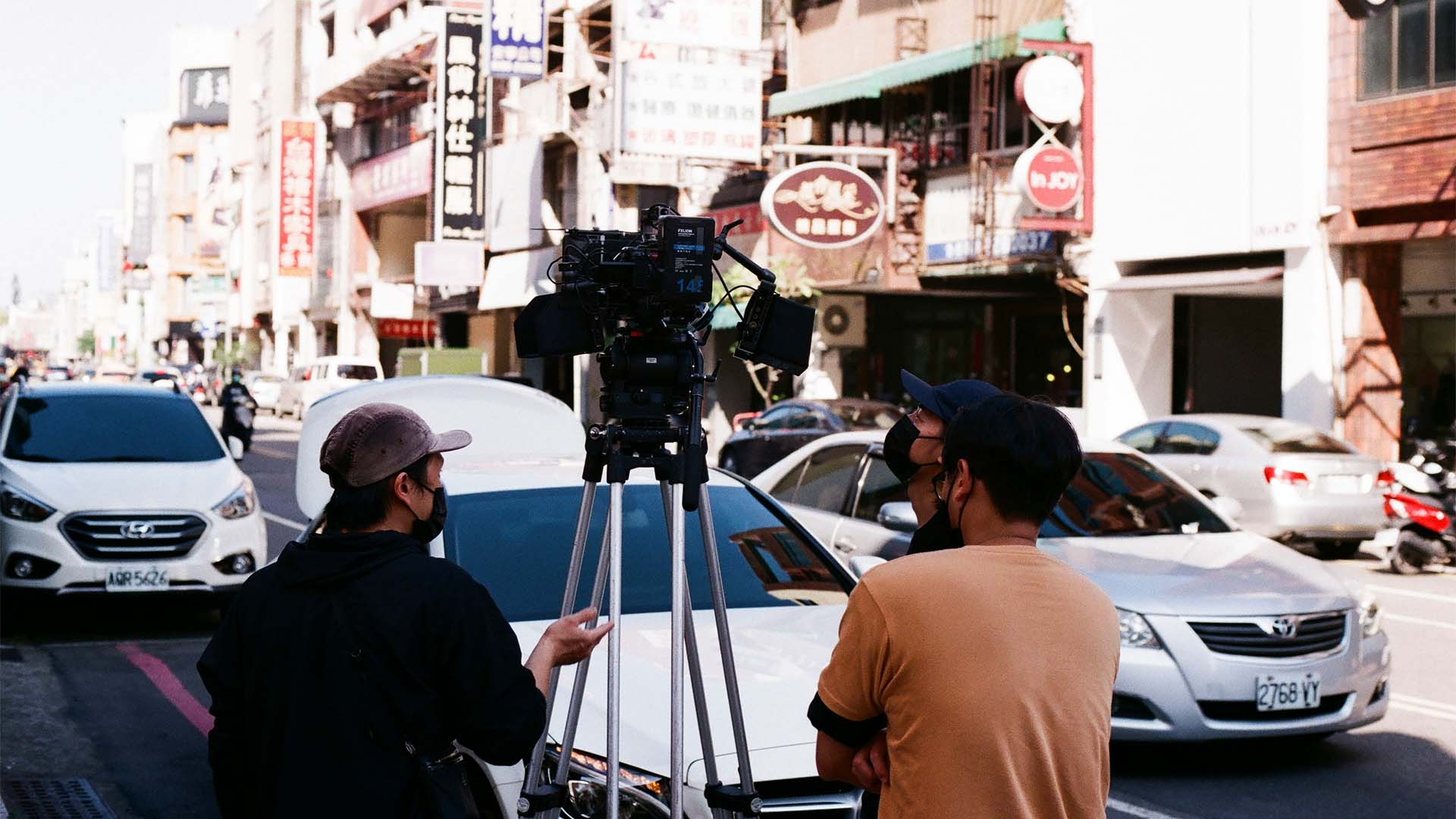
Oman Film City and the case for economic diversification.
Oman’s film history is slight. It amounts to a few local works and minor international shoots. Al Boom (2006), directed by Khalid Al Zedjali, is recognised as the first Omani feature film and premiered at the Muscat festival. The Omani Film Society held its first festival in 2000, and the Muscat International Film Festival reached its 11th edition in 2024 with 56 films from 11 countries. The announced Film City, backed by the Ministry of Culture, Sports and Youth, aims to add end-to-end production services from pre-production to post, and is projected to create over 100 jobs for Omanis in its first year. On the record it is framed as a cultural-ecosystem play, not a property scheme.
The ambition aligns with Vision 2040’s goal of reducing oil dependence. Diversification is real and measurable: non-oil sectors reached 73.3% of GDP at constant prices by the third quarter of 2025, up from 72.5% in 2024, against a long-term target of 93% by 2040. But the Film City is small money in macro terms. The OMR 12 million it represents is best read as a signal of intent within that broader programme, sitting alongside far larger plays in tourism, logistics, manufacturing and mining. It belongs in the diversification story as a footnote, not a headline.
Oman property in 2026: what is actually moving the market.
Oman’s property market is genuinely strong heading into 2026, and the drivers are macroeconomic, not cinematic. On capital values, the National Centre for Statistics and Information recorded the national real-estate price index up 17.3% year-on-year in the third quarter of 2025, with residential prices up 18.7%, residential land up 19.6%, apartments up 22.4% and villas up 16.5%. On activity, Savills reports that transaction values rose 18.4% year-on-year to OMR 678 million by Q1 2026, with mortgage activity up 23.6%. None of this is linked to the Film City; Savills attributes the resilience to sustained demand for well-located, high-quality assets and to Oman’s limited exposure to regional disruption.
The strength is concentrated. Prime Muscat communities such as Al Mouj and Muscat Hills carry the resilient figures. In Savills’ Q1 2026 rental data, a two-bedroom apartment at Al Mouj averaged OMR 710 a month and a four-bedroom villa OMR 1,770, with Muscat Hills four-bed villa rents rising 25% in the quarter as tenants competed for limited prime stock. Qurum held steady at OMR 350 for a two-bed. These are rents, not capital appreciation; the prior draft of this report wrongly merged the 25% rental jump with the 18.4% transaction figure into a single "appreciation" band, which we have removed. Prime Muscat communities offer indicative gross rental yields in the region of 6-8% for apartments and around 5-6% for villas on market estimates. Treat those as indicative ranges, not a guaranteed return.
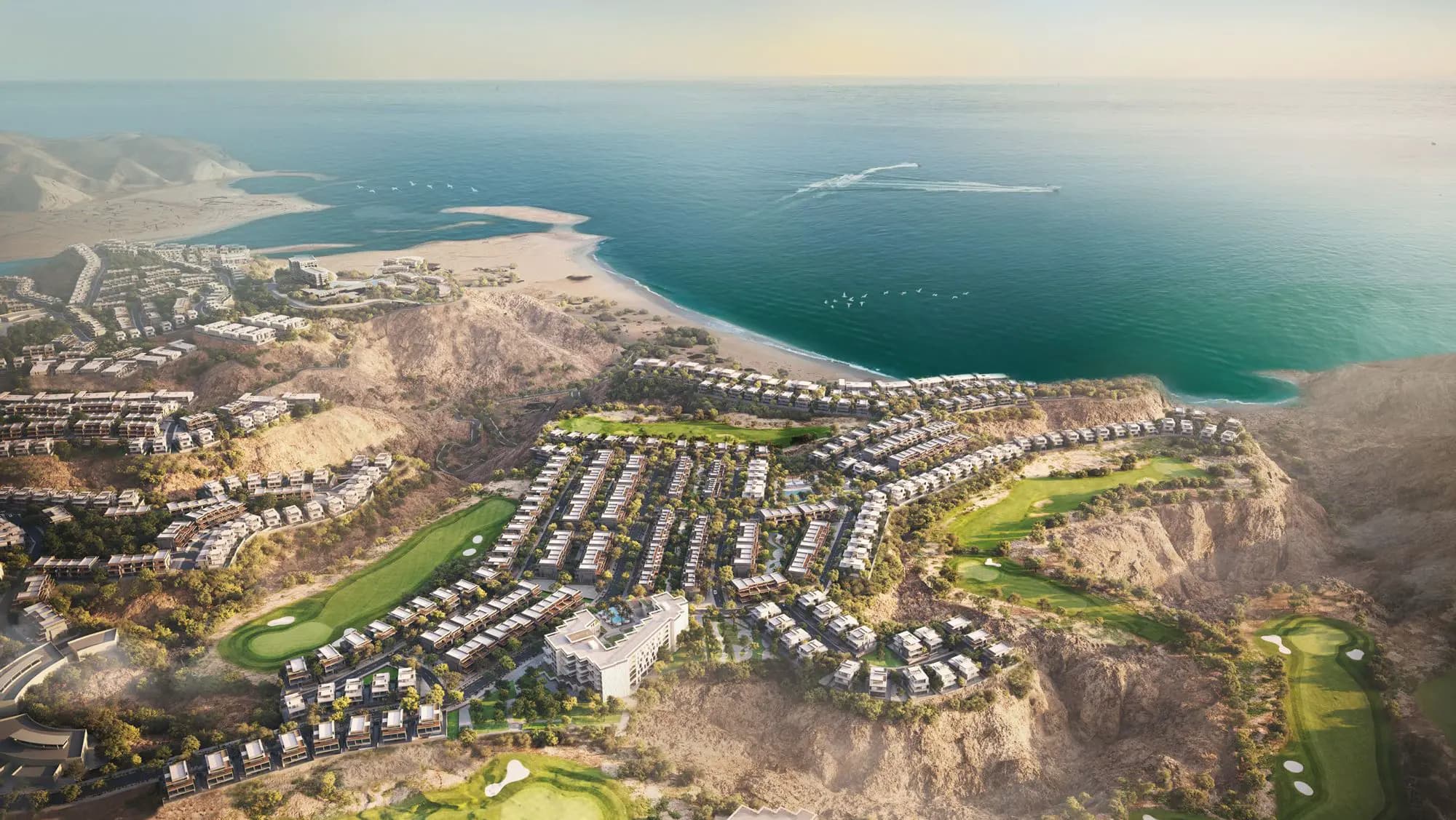
Demand at the top of the market is supported by branded inventory rather than screen activity. The USD 500 million Trump International Oman project at AIDA, delivered by Dar Global with the Trump Organization and Omran and opening in December 2028, brings an 18-hole golf course, villas and branded residences aimed at international buyers. That is the kind of catalyst the prime segment actually responds to.
Source: NCSI real-estate price index, Q3 2025; Savills Oman, Q1 2026. Indicative; not investment advice.
The Golden Residency and how foreigners buy in Oman.
The ownership and residency framework is the material 2026 change, and it is what a serious foreign buyer should study before any market headline. Foreign freehold remains concentrated in Integrated Tourism Complexes and other government-approved zones, which is why Al Mouj, Muscat Hills and AIDA recur in this report. The old low residency threshold has been superseded by a formal Golden Residency programme, relaunched on 31 August 2025 and administered through Invest Oman.
- 10-year residency. MoCIIP describes a renewable ten-year programme with a minimum investment of OMR 200,000; its property route covers ready-made units in ITCs. The home and application must satisfy the programme requirements.
- Owner visa. ROP publishes a two-year residence-visa service for owners of residential units in ITCs. Confirm the ownership documents, the applicable service and the application requirements.
- Eligible stock. Confirm the applicable residency route, the specific home and the application requirements before relying on residency as part of a purchase.
That is a far more substantial commitment than the legacy framing implied, and it reshapes who buys and why. The residency thresholds, not the Film City, are the policy lever that actually changes foreign demand. Combined with the absence of personal income and annual property taxes, the programme is the clearest reason an international buyer would choose Oman over a higher-priced Gulf neighbour.
Tourism, the creative economy and the honest film link.
Tourism is a real plank of Vision 2040, and here the film story has a legitimate, if minor, role. The strategy targets 11.7 million annual visitors by 2040, backed by a planned USD 31 billion of investment and 360 tourism projects launched in 2024 alone. Oman welcomed around 3.9 million international visitors in 2024; arrivals softened to 2.83 million by the third quarter of 2025, down 2.4% year-on-year, while domestic tourism grew 5.1% to 13.6 million trips. Tourism output reached RO 2.28 billion (USD 5.93 billion) in 2025, up 7.8%.
This is where the screen economy earns its place. Films and series that showcase Oman’s landscapes lift global visibility, which supports the short-stay rental market and destination brand. That is the honest scope of the link: a marketing and tourism effect, measured in awareness and visitor nights, not a measurable lift in home prices. A production hub also creates creative-sector jobs and keeps cultural talent in the country, which matters for diversification on its own terms. None of that requires, or supports, the claim that film moves property values.
Infrastructure and capital flows do the heavy lifting on the property side. Mordor Intelligence sizes the residential market at about USD 5.29 billion in 2026, reaching roughly USD 7.34 billion by 2031 at a 6.74% CAGR, with Muscat holding the largest revenue share at 47.35% and villas about two-thirds of the market; Dhofar, around Salalah, is forecast to grow fastest at 7.82%. Expatriate demand, concentrated in Muscat, accounts for much of that growth. For the demand side in full, see our report on Oman’s tourism surge and the structural reasons behind rising Oman property prices.
The regional screen-economy bet, and why Oman is right to stay small.
Oman’s pitch to producers is location rather than subsidy: distinctive deserts, mountains and coast, and the absence of personal income or property taxes. It has no headline cash-rebate scheme to match its neighbours, and the realistic target is mid-budget, location-specific shoots, not blockbusters. Set against the regional arms race in incentives, that restraint looks sensible rather than timid.
The competitive backdrop has only hardened. Saudi Arabia raised its film and television production rebate to 60% in 2026, with NEOM offering a separate 40% scheme; Abu Dhabi runs a rebate of up to 35-50%; and California expanded its annual film and television tax credit cap to USD 750 million. No small market can win a subsidy war against numbers like these.
| Market | Headline incentive |
|---|---|
| Saudi Arabianational rebate, raised 2026 | Up to 60% |
| Abu Dhabi, UAE | Up to 35-50% |
| NEOM, Saudi Arabiaregional scheme | 40% |
| California, USAannual programme cap | USD 750m |
| Omanno headline cash rebate | Location, not subsidy |
Source: Variety, Hollywood Reporter, Bird & Bird, Governor of California, 2025-2026. Headline rates; terms and caps vary.
Subsidy also guarantees nothing. The region’s flagship screen bet has aged badly. Saudi Arabia’s Desert Warrior, at USD 150 million the costliest film produced in the kingdom, opened in April 2026 to roughly USD 472,000 and has grossed under USD 1 million worldwide, one of the worst returns on a budget of its size in modern box-office history. That is a cautionary tale about treating big-budget film as an economic engine, not evidence the strategy pays off, and it is exactly why a property thesis should never lean on a screen-economy narrative.
Oman is not trying to out-spend its neighbours on film, and it is wise not to. At OMR 12 million the Film City is a small cultural bet. The property market stands on its own fundamentals: supply, credit and residency.
How diversification, not film, supports Oman property.
Strip out the unsupported causal claim and a clearer four-part case remains for Oman as an investment market in 2026.
- Property fundamentals. Constrained supply and tighter credit, not film, underpin price strength, with the NCSI national residential index up 18.7% and Savills transaction values up 18.4% by early 2026.
- Economic diversification. Under Vision 2040, non-oil sectors already make up 73.3% of GDP and are targeted at 93% by 2040, broadening the demand base across the property market.
- A growing residential market. Mordor Intelligence sizes the residential market at about USD 5.29 billion in 2026, reaching roughly USD 7.34 billion by 2031 at a 6.74% CAGR, with Muscat holding the largest revenue share.
- A clearer residency route. MoCIIP describes a renewable ten-year programme with a minimum investment of OMR 200,000; its property route covers ready-made units in ITCs. The home and application must satisfy the programme requirements.
The challenges Oman still has to address.
Several caveats temper the case.
- A modest film bet. At OMR 12 million the Film City is small, still only announced, and unlikely to move the wider economy. It should not be priced into a property decision.
- Subsidy competition. Saudi Arabia’s 60% rebate and the box-office failure of its USD 150 million Desert Warrior both show how hard, and how unreliable, it is to build a screen economy from incentives.
- Concentration and oversupply. Demand is heavily weighted to Muscat and to prime ITC communities. Outside them, parts of Muscat’s residential stock sit unoccupied, so the resilient headline figures do not describe the whole market.
- Softer tourist arrivals. International arrivals dipped 2.4% in the year to Q3 2025 even as domestic trips grew, a reminder that the destination story is a work in progress rather than a finished one.
Oman property and the screen economy: the 2026 outlook.
The honest read for 2026 is this: Oman’s screen-economy ambition is a small, sincere cultural and tourism strand of Vision 2040, not a property driver. What carries Muscat’s prime addresses is constrained supply, tighter credit and a formal Golden Residency programme, with national residential prices up 18.7% and transactions up 18.4% on those fundamentals. Judge the market on them, treat the indicative yields and forecasts as illustrative, and keep the Film City in its proper place as context rather than catalyst.
For a buyer, that means doing the unglamorous work: confirm the development sits in an approved freehold zone, size the purchase against the OMR 200,000 Golden Residency threshold, and underwrite the rent on the prime communities where demand is real, not on a film narrative. To see what is available now, browse the current developments in Oman, or read more on the Oman market and where demand is heading.
استشارة
تحدّث إلينا على انفراد.
مستشار من أومنيا حول التوافر والهيكلة والتوقيت في هذه الأسواق.
 متاحيتي، مسقطعايدة، عُمانتبدأ من200,000 £النوعمساكناستكشف الإقامة