باختصار
- Oman’s official real estate price index rose 17.3% year on year in Q3 2025, with residential up 18.7%: apartments up 22.4%, residential land up 19.6% and villas up 16.5%, per NCSI.
- Activity confirms the momentum: total transaction value reached OMR 678m in Q1 2026, up 18.4% year on year, with mortgage activity up 23.6%, per Savills.
- The picture is bifurcated, not uniform: prime stock and the index are rising while Muscat carries roughly 87,000 vacant homes, and lower and mid-grade prices have fallen 10-25%, per local research.
- The move is structural: diversification, the unified Real Estate Regulation Law of 2026, the relaunched Golden Residency, tourism and a population heading from 5.4m toward 7.7m by 2040.
المحتويات
- 01Why property prices in Oman are rising: the ten reasons.
- 02Economic diversification is boosting demand.
- 03Ownership reform has gone materially further.
- 04Fewer, higher-earning expatriates are reshaping demand.
- 05A tourism build-out is creating new demand.
- 06A stable environment keeps risk contained.
- 07Population growth is the steadiest demand pillar.
- 08Rising demand for residential land is leading the move.
- 09Accessible financing and a shift toward ownership.
- 10A resilient prime tier in the integrated complexes.
- 11A relative-value entry point against the Gulf.
- 12The other side: Muscat’s vacancy overhang.
- 13A note on tax, corrected for 2026.
- 14What rising Oman property prices mean for you.
In the third quarter of 2025, Oman’s official real estate price index, the spine for any read on property prices in Oman, rose 17.3 percent year on year, per the National Centre for Statistics and Information. Residential prices led at 18.7 percent, with apartments up 22.4 percent, residential land up 19.6 percent and villas up 16.5 percent. Activity has followed: Savills reports total transaction value of OMR 678 million in the first quarter of 2026, up 18.4 percent on the year, with mortgage activity up 23.6 percent.
That is a market with genuine momentum, and the reasons behind it are structural rather than speculative. But the headline hides a split. The official index and the prime tier are rising, while Muscat carries a documented overhang of vacant homes and the generic mid-market has actually softened. What follows sets out the ten reasons Oman property prices are rising in 2026, then the one chapter that matters most for reading them honestly: where they are not.
Why property prices in Oman are rising: the ten reasons.
The increase is not down to a single catalyst. Ten structural reasons are working together, each reinforcing the next. In brief, they are:
- Economic diversification into tourism, technology and free zones, creating jobs and housing need.
- Foreign-ownership reform, with a unified 2026 law and new property-linked residency requirements.
- Fewer but higher-earning expatriates reshaping demand under Omanisation.
- A tourism build-out drawing investment into coastal and resort property.
- Political stability and steady governance that keeps Oman among the region’s lower-risk markets.
- Population growth, heading from 5.4 million toward 7.7 million by 2040.
- Rising demand for residential land as buyers seek plots to build.
- Accessible financing, with mortgage activity rising and a shift toward ownership.
- A resilient prime tier in the integrated tourism complexes, where rents and values hold.
- A relative-value entry point while mass-market pricing stays below neighbouring Gulf capitals.
Each of these drivers is set out below, followed by the counterweight that keeps the read honest.
Economic diversification is boosting demand.
Oman is diversifying away from oil with measurable effect, and Vision 2040 targets non-oil sectors at 90 percent of the economy. The non-oil economy is already large, at roughly RO 28.7 billion, and the special economic zones are pulling in capital: the Duqm zone alone signed about RO 1.05 billion of new investment contracts in the first half of 2025.
The property link is direct. New industry, logistics and tourism activity create jobs, jobs draw residents, and residents need homes. Companies setting up in the free zones bring employees from abroad who seek modern apartments and villas. Diversification also reduces the risk tied to oil prices and builds a steadier base for growth, which is the kind of foundation that supports compounding values over time rather than a single price spike.
Ownership reform has gone materially further.
This is the single most material new development since the legacy reading, and it has strengthened the investment case rather than merely maintained it. Foreigners can own freehold, or hold a 99-year usufruct, within the integrated tourism complexes under Law 29 of 2018. From 2026, a unified Real Estate Regulation Law, Royal Decree 79 of 2025, consolidates previously scattered rules under the housing ministry with escrow, guarantee and intermediary controls, which raises the standard of buyer protection across the market.
The Royal Oman Police provides a two-year residence-visa service for owners of residential units in Integrated Tourism Complexes. Separately, the Ministry of Commerce, Industry and Investment Promotion describes a renewable ten-year Golden Residency programme with a minimum investment of OMR 200,000; its property route covers ready-made units in ITCs. Confirm the applicable route, the specific home and the application requirements before relying on residency as part of a purchase.
Fewer, higher-earning expatriates are reshaping demand.
The honest read here corrects a common misconception. Oman’s expatriate workforce did not surge in this window: it fell about 1.2 percent in 2024, to roughly 1.81 million, with Muscat’s expatriate count down about 3.2 percent, as Omanisation reshaped the labour market, per police figures. A raw influx is not what is driving prices.
What is happening is a shift in the mix. The wider resident population kept growing even as the expatriate workforce contracted, and the higher-earning cohort grew with it. The result is fewer but wealthier expatriates, which concentrates demand at the prime end of the market, supports rents in the integrated complexes and leaves the generic mid-market with a thinner pool of tenants and buyers. That bifurcation matters for where the rising index actually shows up, and it is the thread that runs through the counterweight chapter below.
A tourism build-out is creating new demand.
Tourism is a genuine engine, though the headline numbers need updating. Foreign arrivals grew about 41 percent from 2022 to 2023, and momentum has continued: 2024 saw roughly 3.9 million international arrivals, up about 5 percent, and 13.6 million total visitors including domestic travel. Coastal and resort property benefits directly, as integrated developments mix homes with hotels and amenities, and visitors often become buyers of a holiday home.
Vision 2040 sets the ambition at 11.7 million tourists by 2040, supported by a stated tourism investment target of about USD 31 billion. That figure is the official one, and it replaces a garbled USD 51 billion number that circulated in earlier readings, an artefact of converting Omani rial targets. The investment is flowing into named developments rather than a single round figure, with the integrated complexes along the coast carrying much of it. We track this engine in detail in our report on how Oman’s tourism is surging as global interest rises.
Source: National Centre for Statistics and Information (NCSI), real estate price index, Q3 2025, year on year. Official index data; for illustration, not investment advice.
A stable environment keeps risk contained.
Oman is widely regarded as politically stable, and it is assessed as among the Gulf economies least exposed to regional spillover. That steadiness lowers the risk premium investors attach to the market and draws families and businesses looking for a dependable base rather than a quick trade.
The point should be made with measure, not boosterism. Oman is rated as low-exposure to regional disruption rather than immune to it, and growth is steady rather than rapid. The investment read is that stability supports steady, compounding growth in property values over time, but it does not insulate the market from the wider region, which is why selectivity matters more than blanket optimism.
Population growth is the steadiest demand pillar.
Of the softer drivers, population growth is the strongest, and it is quantifiable. Oman’s population reached 5.4 million in 2025, rising by about 106,566 in the year to September, split roughly 3.02 million Omanis and 2.31 million residents of other nationalities, and it is projected to reach 7.7 million by 2040. More people, concentrated on Muscat and the main cities, means a structurally larger housing need.
The scale of activity matches it. Full-year trading value was OMR 3.38 billion in 2024 and OMR 3.37 billion in 2025, broadly flat at the headline, though sales contracts within that total rose about 16 percent to OMR 1.27 billion. Cavendish Maxwell flags a potential long-run undersupply of homes against population growth even though tens of thousands of units are due by 2030, which sets up the central tension in this market: a growing population on one side, a near-term Muscat overhang on the other.
Rising demand for residential land is leading the move.
Land values are leading the broader index. Residential land prices rose 19.6 percent year on year in the third quarter of 2025, which forms the base under built prices across the rest of the market. The governorate detail is striking: Muscat recorded the single largest move, with residential land up 48.3 percent, and Musandam up 29.7 percent. Buyers want plots to build custom homes, developers buy land for their pipelines, and limited well-located supply pushes those values up.
The built segments follow the land. Apartments rose 22.4 percent and villas 16.5 percent over the same window, the steepest gains landing in the apartment market where younger buyers and renters concentrate. Strong land demand reflects confidence in the future, and that cycle keeps the official index moving upward, even as the next chapter shows it does not lift every part of the market evenly.
| Segment | Price growth | Read |
|---|---|---|
| Apartments | +22.4% | Steepest gain; young-buyer demand |
| Residential land | +19.6% | The base under built prices |
| Residential, overall | +18.7% | The headline residential move |
| Villas | +16.5% | Family and lifestyle demand |
Source: National Centre for Statistics and Information (NCSI), real estate price index, Q3 2025, year on year. Official index data; indicative, not investment advice.
Accessible financing and a shift toward ownership.
The financing backdrop is supporting buyers, and the evidence is in the activity rather than a quoted rate. Savills reports mortgage activity up 23.6 percent year on year in the first quarter of 2026, a clear sign that financing is accessible and that purchasers are using it. Alongside that, buyer behaviour is shifting from renting toward ownership, and homeownership demand is growing accordingly.
Accessible options are pulling in first-time buyers in particular. The combination lifts demand at the more affordable price points and adds liquidity to the market. For an investor, the read is that demand is being supported by structure, more financing turning into more purchases, rather than by sentiment alone.
A resilient prime tier in the integrated complexes.
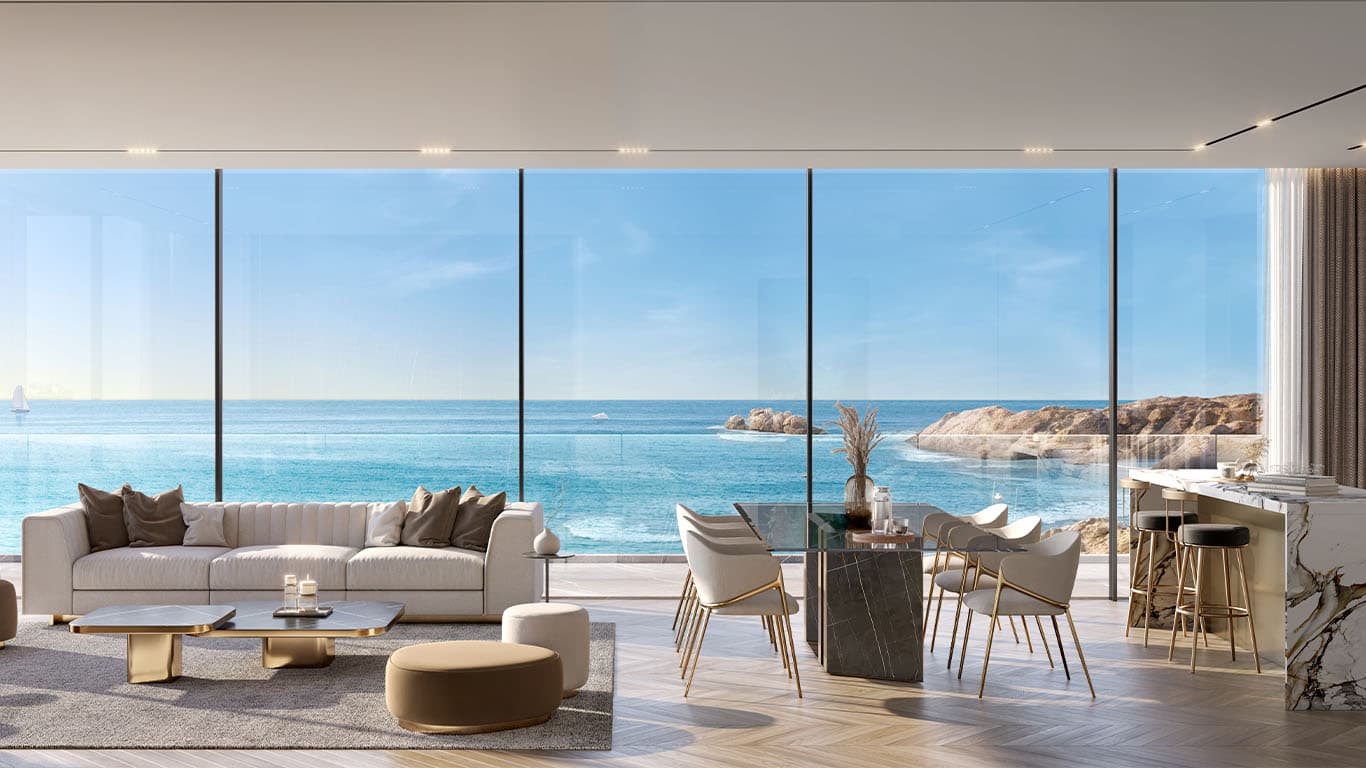
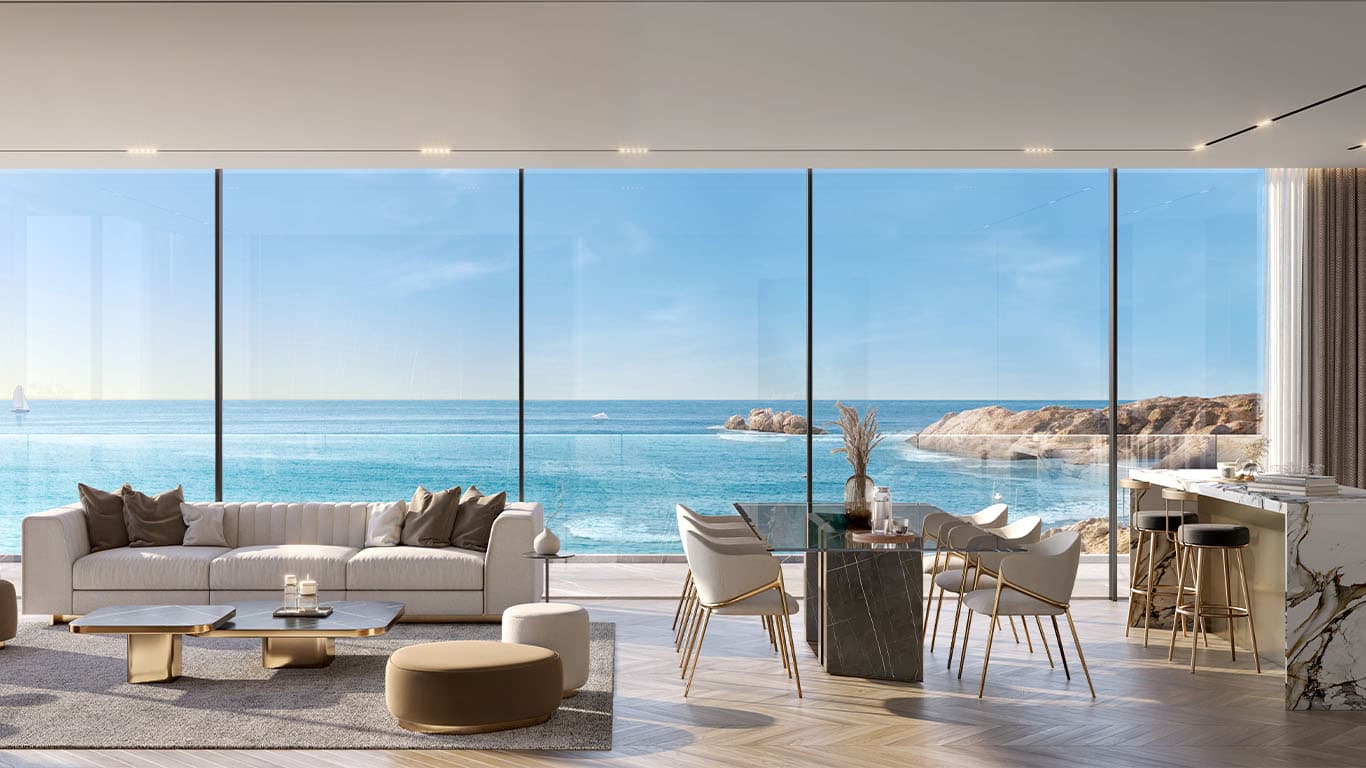
The clearest pocket of strength sits in the integrated tourism complexes, the freehold addresses open to foreign buyers along the coast. Here, values appreciate and rents hold firm. Realistic gross rental yields run roughly 6 to 9 percent on prime integrated stock, with the best of it at the top of that range. That is the honest band to plan around, and it replaces the legacy headline of up to 13 percent, which conflated short-let gross returns with capital appreciation and is not a sustainable annual yield.
The forecast detail reinforces the case for selectivity. Savills’ local agents expect capital value growth of only about 1.3 percent across the wider market in 2026, with rents marginally ahead, and that modest headline sits above a wide spread: the resilience is concentrated in the prime integrated stock rather than spread evenly across the market. You can see the live pipeline across our developments in Oman.
The official index is rising, but it does not lift every door equally. The case in Oman is for the prime, masterplan-backed addresses where rents and values hold, not for the generic stock that sits empty in Muscat.
A relative-value entry point against the Gulf.
Pricing still sits below comparable Gulf capitals at the mass-market level, and that gap is part of the entry case. Indicative 2026 ranges in Muscat run from roughly OMR 600 to 1,050 per square metre in affordable outer areas, around OMR 900 to 1,250 per square metre for mid-market apartments, and OMR 2,200 to 3,600 per square metre in the top-prime coastal stretches such as Al Mouj and Shatti Al Qurum. The median Muscat home is around OMR 240,000. These are third-party brokerage estimates, indicative rather than official, and the spread is the point: the market is wide, and value depends entirely on segment and location.
For an investor, the relative-value argument holds for the prime integrated end, where the official index, the residency reforms and the demand base all point the same way. It holds far less for generic mid-grade stock, where the wide affordable band reflects an oversupply rather than a bargain. That distinction is the bridge to the chapter that follows.
The other side: Muscat’s vacancy overhang.
A rising official index and rising transaction values coexist with a real oversupply, and any honest read has to hold both. Roughly 87,000 residential units sit vacant in Muscat, about 20 percent of supply, up from around 80,000 at the 2020 census. In the affected lower and mid-grade segments, that overhang has pushed prices down, not up: apartments by roughly 10 to 15 percent and villas by roughly 15 to 25 percent in the worst-hit pockets.
What this means in practice:
- The index and the ground truth diverge. The NCSI index captures the whole market and is lifted by land and prime stock, while generic apartments and villas in oversupplied areas have softened. A single average masks two opposite movements.
- Modest near-term capital growth. Savills’ local agents forecast only about 1.3 percent capital value growth across the wider market in 2026, with rents marginally ahead. This is not a market rising uniformly at double digits.
- Selection beats exposure. The risk is in buying generic stock for near-term appreciation. The mitigation is to concentrate in prime, masterplan-backed and integrated-complex addresses, where occupancy and rents hold and the demand base is real.
None of this undoes the structural case. It sharpens it. Diversification, ownership reform, tourism and population growth are genuine pillars, but they reward the buyer who reads the split rather than the headline.
A note on tax, corrected for 2026.
Oman has historically levied no personal income tax, which has long been part of the investment case, and that picture is changing in a way investors should understand precisely. Under Royal Decree 56 of 2025, a 5 percent personal income tax applies to annual income above OMR 42,000 from 1 January 2028.
The detail that the legacy report got wrong. It is not correct that rental income and capital gains stay tax-free. The personal income tax law lists leasing income and proceeds from the disposal of real-estate assets among taxable gross-income sources, with deductions allowed. The sale of a primary residence is exempt, but rental income and gains on a secondary property are within scope of the 5 percent charge once total income clears the OMR 42,000 threshold. This is a factual correction and a point with financial-disclaimer weight, so treat it as a flag to verify against current guidance, not as advice. We set out the full position in our report on Oman’s personal income tax and what it means for property investors.
What rising Oman property prices mean for you.
Read against the sources rather than the marketing, Oman in 2026 is a market with real foundations that is repricing selectively. The official index rose 17.3 percent in the third quarter of 2025, transactions were up 18.4 percent in early 2026, and the structural drivers, from diversification to ownership reform to a population heading toward 7.7 million by 2040, reinforce one another. That is the signature of a durable trend, not a spike.
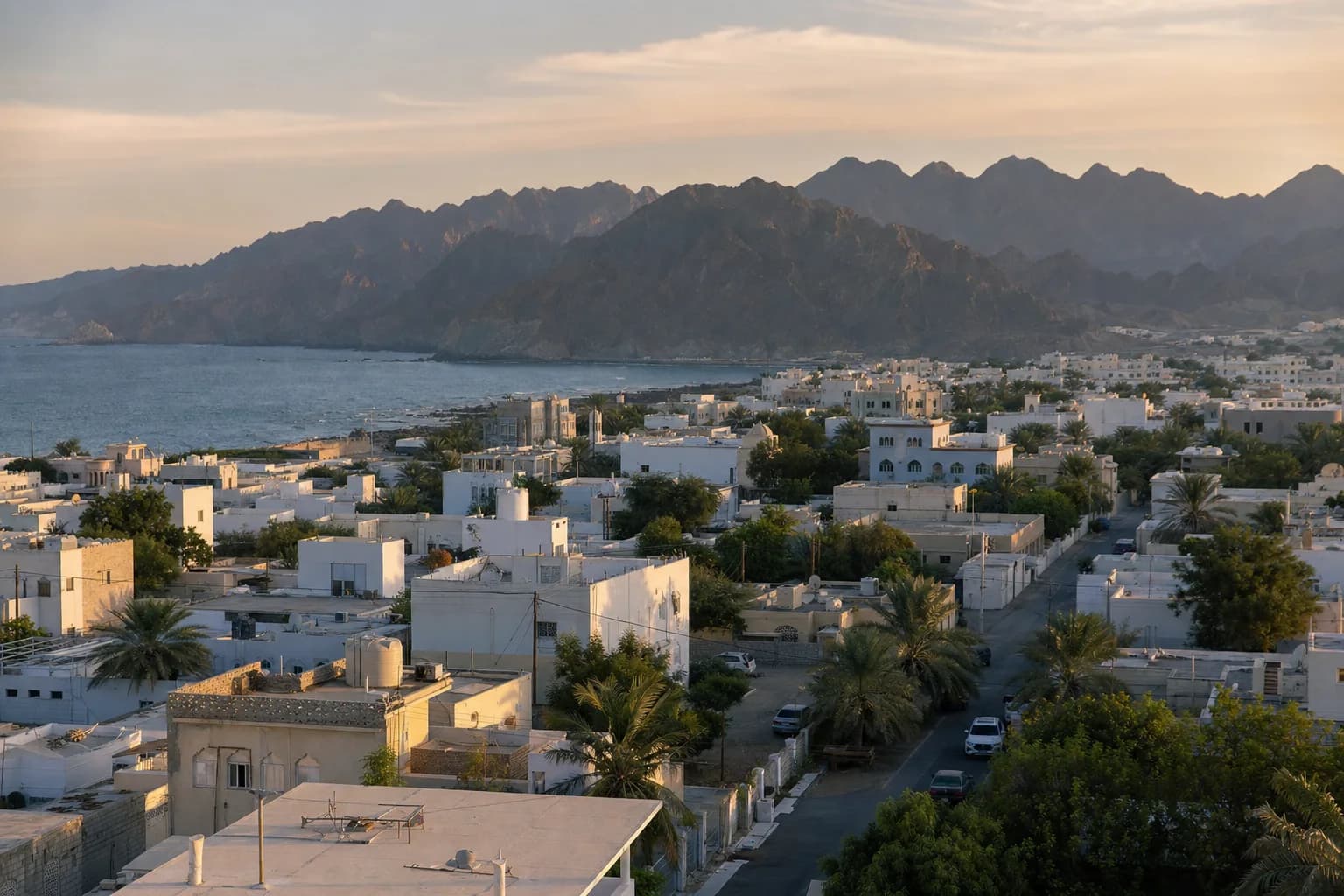
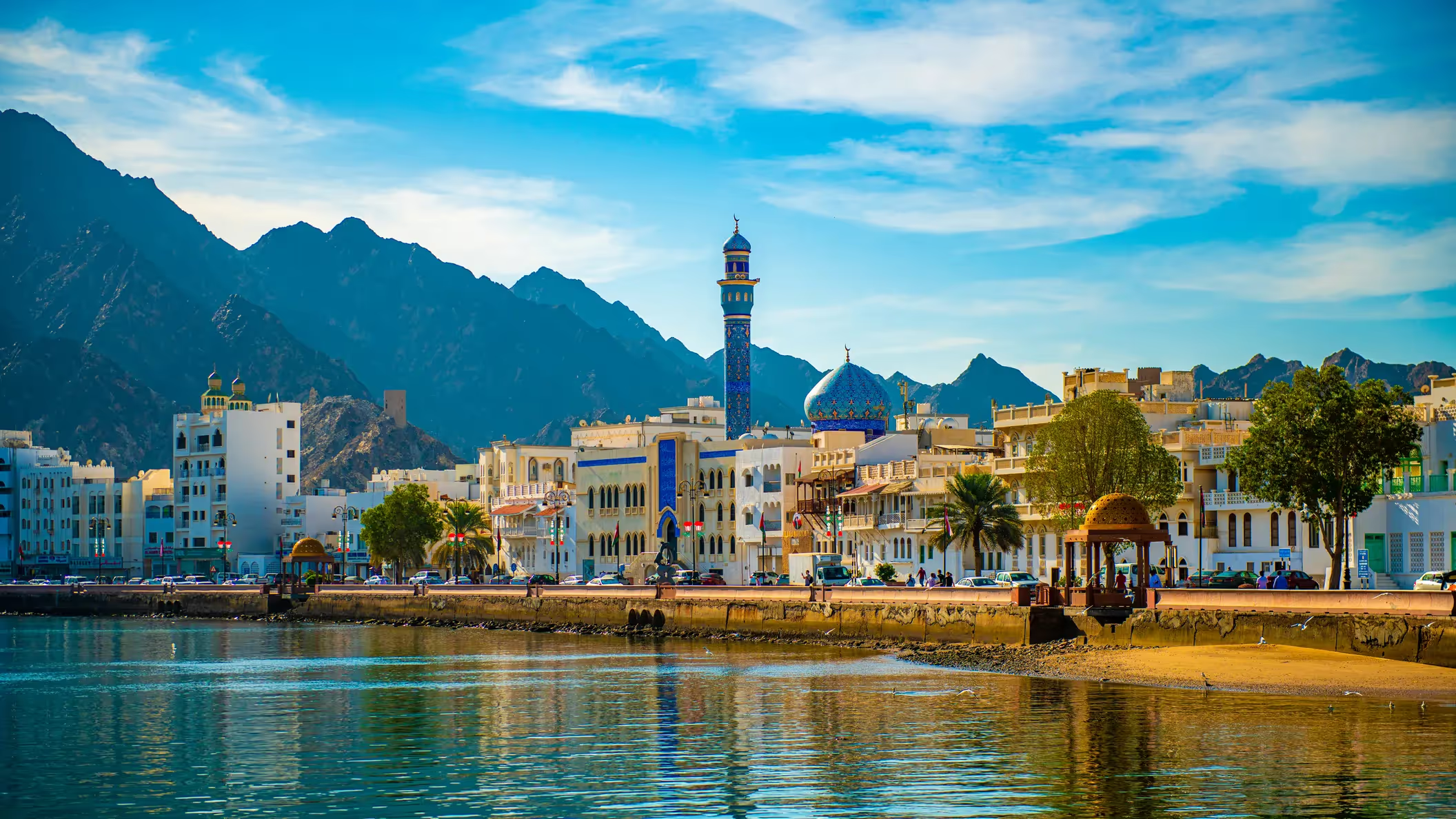
The discipline is to act on the split. The strongest case sits in and around Muscat, in the prime integrated complexes along the coast, with Salalah and the resort corridors close behind, where rents and values hold. Be cautious on generic mid-grade stock, where Muscat’s vacancy overhang has pushed prices down. Favour masterplanned communities with a credible amenity base, weigh the income case over near-term appreciation, and understand the 2028 personal income tax, including that it brings rental income and secondary-property gains into scope.
Oman’s property story rewards investors who move early, read the market with clear eyes and choose carefully. The reasons behind the rise are unlikely to fade soon, but the rise itself is uneven, and that is exactly why selection is the whole of the work. Every figure here is indicative and not investment advice.
استشارة
تحدّث إلينا على انفراد.
مستشار من أومنيا حول التوافر والهيكلة والتوقيت في هذه الأسواق.
 متاحيتي، مسقطفندق ترامب إنترناشونال، عُمانتبدأ من265,700 £النوعمساكناستكشف الإقامة