Orientation
Most clients begin with the area, not the apartment. In the Diplomatic Quarter, that means understanding an enclave the state built, and still runs.
The Diplomatic Quarter, Hayy As Safarat, is a master-planned enclave of about 800 hectares in northwest Riyadh, bordered to the west by the Wadi Hanifa green corridor. Roughly a third of its land is given to parks, gardens and plazas, a ratio almost unheard of elsewhere in the city (Royal Commission for Riyadh City). It was built to house embassies, ambassadors’ residences and international organisations, and the plan accommodates more than 120 diplomatic missions. Most of the capital’s embassies cluster here.
It is genuinely walkable in a way little of Riyadh is: palm-lined streets, running trails through Al Khuzama and Yamamah parks, and cafes you can reach on foot. Residents describe an atmosphere closer to a university campus than a Gulf capital (Monocle). The community is a mix of diplomatic staff, senior government figures and long-term international professionals, which makes it among the most international addresses in the city. It is also, by design, transient: as one ambassador told Monocle, it feels "like a village" yet "no one truly puts down roots."
The honest frame is that this is a carefully managed exception rather than ordinary Riyadh. Historically you could only lease here, not buy, and even modifications to a home need permission and can be reversed. Saudi Arabia’s foreign-ownership law took effect on 22 January 2026, and the Cabinet approved the designated geographic zones in June 2026. DQ is not among the named zones, and its government-controlled, embassy-anchored status makes it a special case. We walk you through exactly where that line sits before you form a view.
- District type
- Embassy-anchored residential enclave
- Stock
- Villas, low-rise apartments, serviced units
- Tenure
- Historically leasehold
- Green space
- About a third of the land
- Security
- Checkpoint-controlled access
- Airport
- 30 to 35 minutes
Life here
A quarter you can walk, in a city built for cars.
The rarest thing here is not the address. It is the pavement.
The day has an unusually settled rhythm for Riyadh. Mornings are for the parks and the school run, the heat owns the early afternoon, and the plazas fill again once the sun drops. The three notes below are what residents tend to mention first.
The plaza
Al-Kindi Plaza, opened in 1986, is the social heart: a Najdi-modernist square of arcades, fountains and cafes. The weekly DQ Souq runs on Saturdays, and the newer Oud Square adds contemporary dining a short walk away.
The green
Al Khuzama and Yamamah parks are joined by walking and running trails, and the Wadi Hanifa corridor runs the western edge. This is the part of Riyadh where you leave the car and cover the day on foot.
The threshold
Every entry is a checkpoint. Credentials are verified at the barrier, which delivers exceptional day-to-day safety and, honestly, a real sense of separation from the wider city. Residents feel both at once.
Developments here
A short, honest shelf.
We do not list new-build stock in the Diplomatic Quarter, and that is deliberate rather than an omission. This is an overwhelmingly leasehold, compound and villa market with no off-plan pipeline to sell. What matters here is access to what actually comes up, which is a desk conversation, not a portal.
Nothing listed here right now. The desk covers this area daily, including stock that never reaches a portal.
Off the listings
Almost nothing in the Diplomatic Quarter reaches a public listing.
Compounds fill by introduction and leases turn quietly. Tell us what you are after and we will tell you what is genuinely available, including the stock that never reaches a portal.
Ask what’s availableNearby
Also in Riyadh.
Neighbouring addresses worth seeing before you decide.
Saudi Arabia · Riyadh · Wadi Safar
Altara at Rayana, Wadi Safar
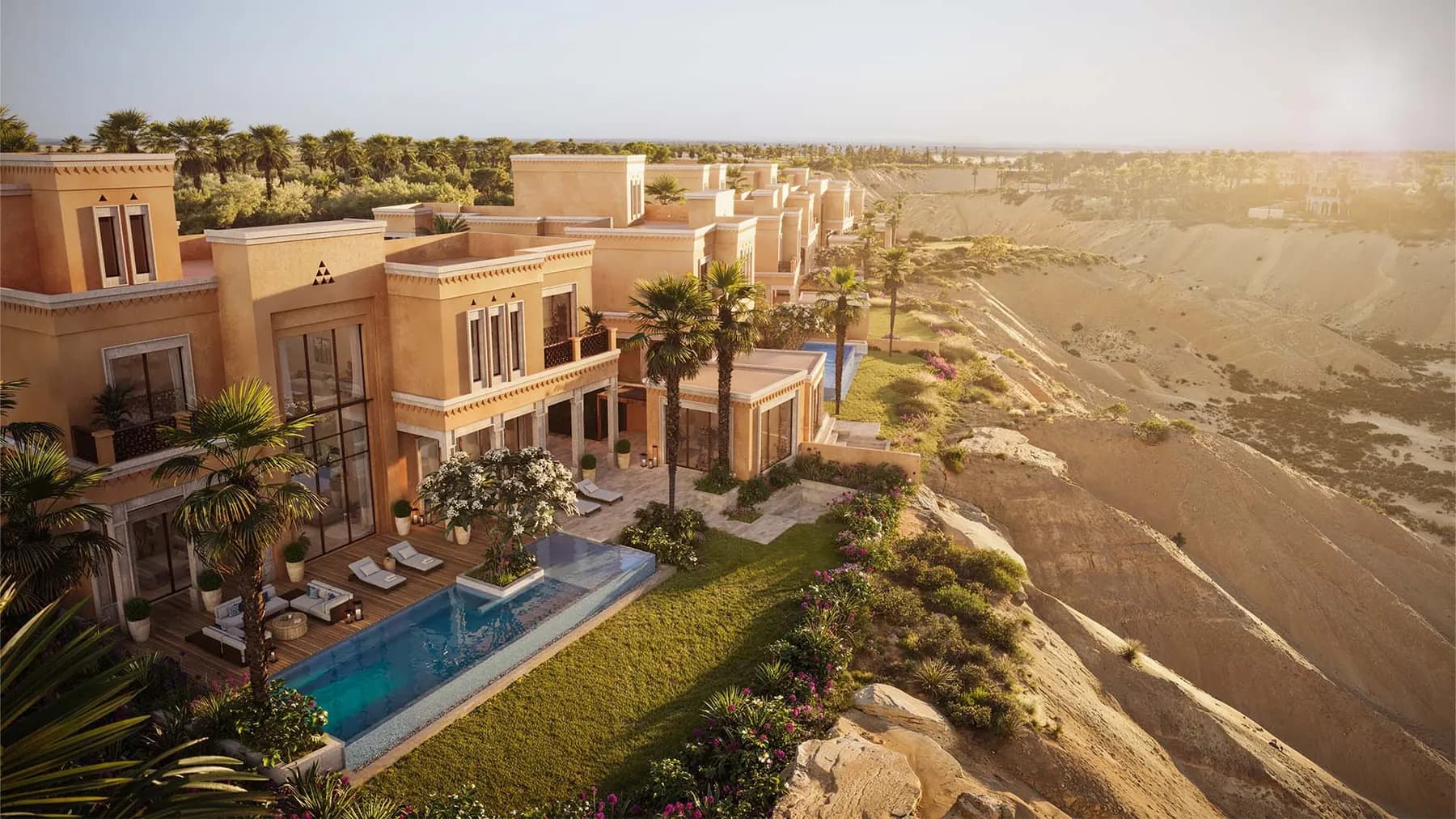
Some homes are chosen. An Altara mansion is authored from nothing fixed: a ground-up custom mansion at Rayana, Wadi Safar, where you direct the facade and interior and Dar Global builds it turnkey. Freehold, from £5,250,000.
From£5,250,000Residences6–8 BedsStatusNow sellingSaudi Arabia · Riyadh · Sedra
Kaheel
Studios, apartments and townhouses in Sedra, Riyadh, with 1,492 homes and more than 30,000 m² of green space. Compare layouts and request current availability.
Residences0–3 BedsStatusNow sellingSaudi Arabia · Riyadh · Al Fursan
Eyal Al Fursan
742 family villas in NHC’s Al Fursan destination, northeast Riyadh. Explore three models, project images and the questions to resolve before choosing a plot.
Residences4 BedsStatusNow selling
Schools & everyday life
What a household actually pays here.
The Diplomatic Quarter works as a primary home because of what sits inside it and a short drive from it: an international school on campus, and living costs worth sanity-checking before you commit to a lease or a compound.
Schools within reach
- British International School Riyadh (BISR), Diplomatic QuarterBritish curriculum, plus IGCSE and the IB Diploma, ages 3 to 18 · Al Safarat, inside the quarterDQ campus opened 2020
- King Faisal SchoolLong-established, bilingual and international in style · Inside the Diplomatic QuarterOne of the founding-era schools
- Multinational Schools Riyadh (MSR)American and IB curricula · Northwest Riyadh, a short drive from DQFor families drawing on adjacent districts
A working list, not a ranking. Given DQ’s capped footprint, families also draw on international schools in adjacent northwest Riyadh. Curricula, fees and waiting lists move. We confirm current details and make the introduction before you commit.
What it costs to live, not just to buy
- Rent for a DQ apartment or compound villa, roughly SAR 144,000 to 300,000 a year
- SAR 12,000 to 25,000 a month
- Groceries, family of four
- SAR 2,000 to 3,000 a month
- Utilities, government-subsidised, higher in summer with heavy air-conditioning
- SAR 300 to 700 a month
- Tax context: no personal income tax, VAT on most goods and services
- 0% income tax, 15% VAT
Put together, a family of four in DQ typically budgets SAR 20,000 to 40,000 a month all-in, where housing and schooling are not covered by an employer.
Indicative 2025 to 2026 estimates (area guides on DQ leasing plus JLL). Your advisor confirms current numbers in your currency.
A closer reading
How to read the Diplomatic Quarter.
A working brief on the enclave: how it came to be, what you actually hold here, and what the 2026 ownership shift does and does not change. About 8 minutes.
Reviewed by The Omnia Riyadh desk · July 2026
he Diplomatic Quarter is not a neighbourhood that grew. It was decided. In 1975 a Council of Ministers resolution moved the diplomatic corps from Jeddah to Riyadh, and the state set out to build the capital a first model district worthy of its embassies. To understand DQ is to understand that it remains, half a century on, a place the government made and still governs, which is exactly why buying into it is a different question from buying anywhere else in Riyadh.
The enclave the state built
Championed by the then governor of Riyadh, Prince Salman bin Abdulaziz, the quarter was built between 1978 and 1982 by the Arriyadh Development Authority, now the Royal Commission for Riyadh City. It was conceived as the capital’s first model neighbourhood: a deliberate showcase of urban design, landscaping and Najdi-modernist architecture on the edge of Wadi Hanifa. Its most celebrated building, Frei Otto’s Tuwaiq Palace of 1985, with its 800-metre curving Living Wall and tensile tent structures, won the 1998 Aga Khan Award for Architecture.
The scale was capped from the start. DQ was designed to house around 22,000 people across five residential complexes, each holding roughly 3,000 to 6,000 residents, in about 3,359 housing units (Royal Commission for Riyadh City). It was never meant to be a growth district. That deliberate low density is why the quarter still feels like a village inside a city of millions, and why supply here has never expanded the way the rest of Riyadh has.
A place the state made and still governs. You lease your way in, and read the ownership rules before you assume you can own.
What you actually hold
What you have historically bought in the Diplomatic Quarter is a lease, not a freehold. Residents, Saudi and expat alike, rent on one or five year terms, and even long-settled ambassadors describe a place where no one truly puts down roots (Monocle). There is no established resale market of individually owned DQ homes. The product itself is villas and low-rise apartments inside gated complexes and named compounds, plus serviced options such as Marriott Executive Apartments and Vivienda, alongside a great deal of institutional land use: embassies, ambassadorial residences and public services.
Because ownership was closed and supply is capped, DQ has never behaved like a normal investment market. The pricing signals come from rents and from prime-Riyadh benchmarks, not from arms-length home sales inside the quarter. Prime districts including Al Olaya and the Diplomatic Quarter command roughly SAR 6,600 to 15,000 per square metre against about SAR 5,000 for general apartment stock (Sands of Wealth citing JLL, September 2025). Read those as area-level context, not as evidence that a specific DQ home changed hands at that number.
What 2026 does, and does not, change
The governance has been consolidating: the Diplomatic Quarter General Authority, created in 2018, was dissolved in 2021, and the quarter folded back under the Royal Commission for Riyadh City, which now runs an active Diplomatic Quarter Development Program aligned to Vision 2030. The pivotal shift is the Kingdom’s Law of Real Estate Ownership by Non-Saudis, in force from 22 January 2026, built on a designated-zone model with REGA as the competent authority. The Cabinet approved the designated geographic zones on 23 June 2026, and they are now published on the REGA Saudi Properties platform. Foreign purchases carry a transaction fee of up to 5% on top of the standard 5% real estate transaction tax.
Whether DQ’s own residential plots ever open to foreign freehold is the open question. It was not among the zones approved in June 2026, whereas several adjacent prime Riyadh areas were, including Diriyah Gate, KAFD, King Salman Park and Sedra. Its embassy-anchored, government-controlled, leasehold character makes it a special case, so the clearer near-term investment case is more likely to sit in those prime districts adjacent to DQ than inside the perimeter itself. That is not a hedge, it is the honest read: any purchase framing here has to be verified against the live REGA zone record rather than assumed. Which is precisely the conversation to have with the desk before you commit to anything.
Who it's for
Start with why the quarter fits your life.
Tell us which sounds like you, and an advisor tailors the guide, the compounds and the numbers to your situation.
The family
A walkable, green address that works year round.
Parks, an international school on campus and checkpoint-level security make DQ one of Riyadh’s most liveable addresses. We map the schooling, the compounds and the commute before the home.
- Schools
- Walkable
- Secure
The professional
A base in Riyadh’s most international enclave.
Diplomatic and senior professional neighbours, cafes on foot, and KAFD and Olaya inside twenty minutes. We find the right lease in a market that stays tight.
- International
- Central
- Serviced options
The investor
An honest read on a special-case market.
DQ itself is leasehold and capped, with no resale record to price against. We show you where the clearer near-term case sits in the prime districts around it.
- Zone check
- Adjacent prime
- Honest data
Two minutes
Get a shortlist matched to your brief.
A handful of options, with pricing and an honest read on tenure. A person replies, not an autoresponder.
What to know
The practical part, before you look.
The Diplomatic Quarter is not a normal ownership market, so the numbers below are area-level and city-wide proxies, not DQ transaction evidence. Here is the honest version: what prime Riyadh trades at, where the city rents are heading, and why the ownership question is checked against the live zone map before you commit.
Ownership & rules
- Who can own
- Saudi and GCC nationals can already own. For other foreign buyers the framework took effect on 22 January 2026, and the Cabinet approved the designated geographic zones in June 2026, administered by REGA. The zones are drawn on maps, not district names, so we confirm a specific building against the REGA record rather than relying on the neighbourhood.
- What you hold
- Freehold title where a building sits inside a designated zone. Established stock is already titled, so ownership tends to be cleaner to verify than on unbuilt land.
- Residency
- The Premium Residency real estate route starts at SAR 4m of appraised, unmortgaged residential property and holds for as long as eligibility, including the ownership, is maintained. Cash routes exist alongside it for those who prefer not to anchor residency to one home.
- Taxes
- A one-off 5% real estate transaction tax on purchase, and that is broadly the headline cost. There is no recurring tax on a completed home and no individual capital gains tax when you sell one.
- Letting
- Long lets register through the Ejar platform. Short-let host permits are currently restricted to Saudi nationals, though a licensed operator route exists. We map which applies before you bank on rental income.
What it costs to buy
- Prime Riyadh (Al Olaya and DQ), per m², area-level indicativeDQ is a thin, mostly-leased market. Sands of Wealth citing JLL, September 2025
- SAR 6,600 to 15,000
- Riyadh apartment price, per m², up 10.3% year on year (city-level proxy)JLL KSA Living, Q3 2025
- SAR 6,501
- Riyadh average villa rent, up 17.2% year on yearApartment rent averaged SAR 30,832, up 19.6%. JLL KSA Living, 2025
- SAR 88,715 a year
Rules and figures reflect the framework as last verified and can change. Your advisor confirms the current position, and eligibility for a specific building, before you commit.
Where it sits
In northwest Riyadh, on the edge of Wadi Hanifa.
- Wadi Hanifa and Wadi Namar recreation
- About 10 minutes, on the western edge
- King Fahd Road into downtown Riyadh
- 10 to 15 minutes
- King Abdullah Financial District (KAFD)
- 15 to 20 minutes
- Olaya and the central business district
- 15 to 20 minutes
- Diriyah and the At-Turaif UNESCO site
- About 15 minutes
- King Khalid International Airport (RUH)
- 30 to 35 minutes, about 35 km
Inside the quarter
- Tuwaiq Palace, Frei Otto, 1985
- Al-Kindi Plaza, the central square, 1986
- Al Khuzama Park and Yamamah Park
- Hayy Assafarat Grand Mosque
- Wadi Hanifa green corridor
- Oud Square and Al Fazari Plaza dining
The wider picture
The city
Riyadh
Saudi Arabia’s capital and the engine of Vision 2030, remaking itself on a scale few cities attempt. The Diplomatic Quarter is where its international life has been concentrated for four decades.
Read the city guide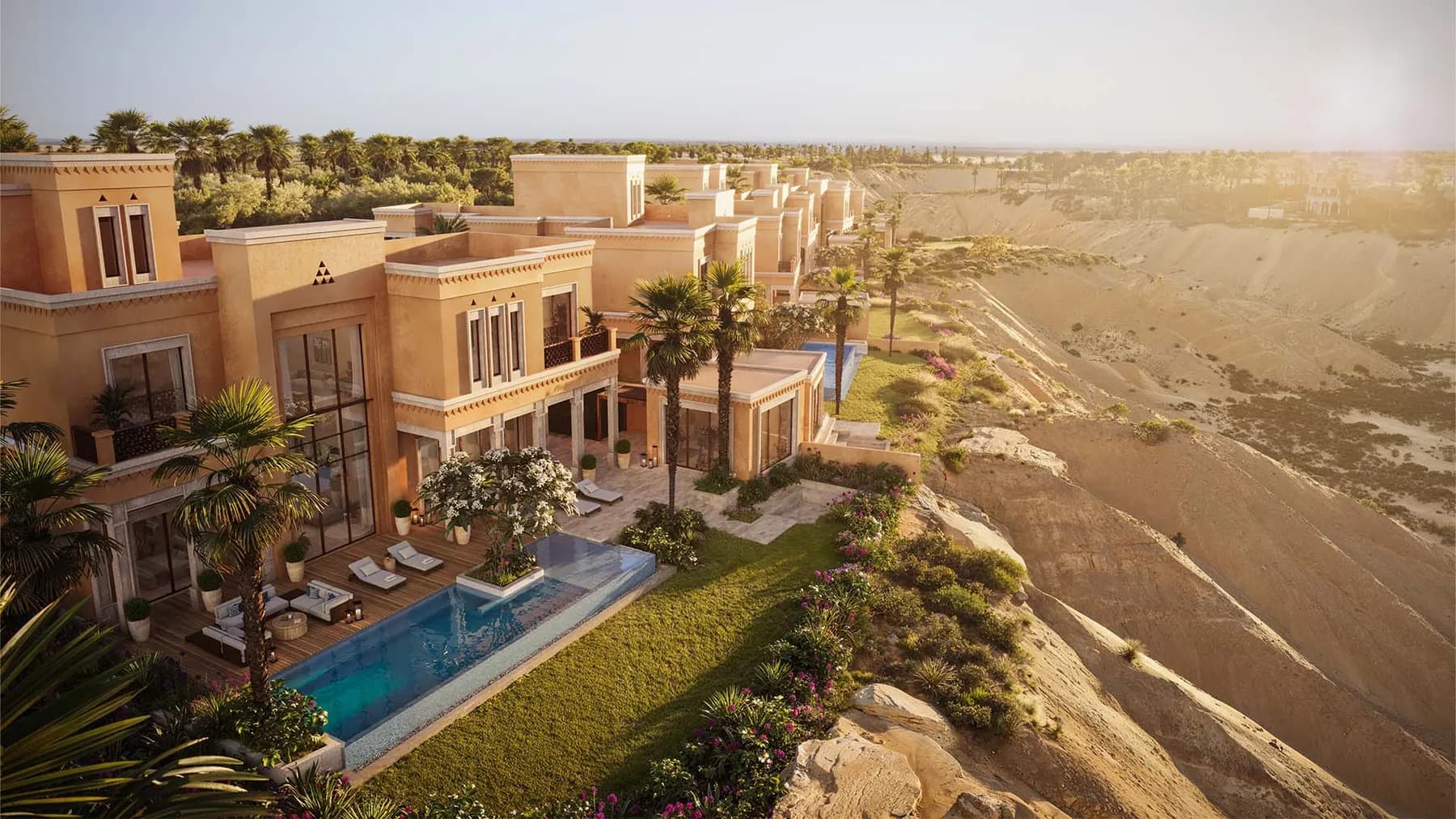
The country
Saudi Arabia
The foreign-ownership law took effect on 22 January 2026; the designated geographic zones were approved in June 2026. For property in the Kingdom, we map the rules, the residency routes and the tenure before anything else.
Read the market guideFrom the desks
Read around Riyadh.
Investor guides
Plot, built-up and internal area: reading a Saudi home plan.
Compare plot, gross floor, built-up and internal area using ROSHN Group and Mohammed Al Habib examples, including a worked price-per-metre calculation.
Process · Saudi ArabiaRead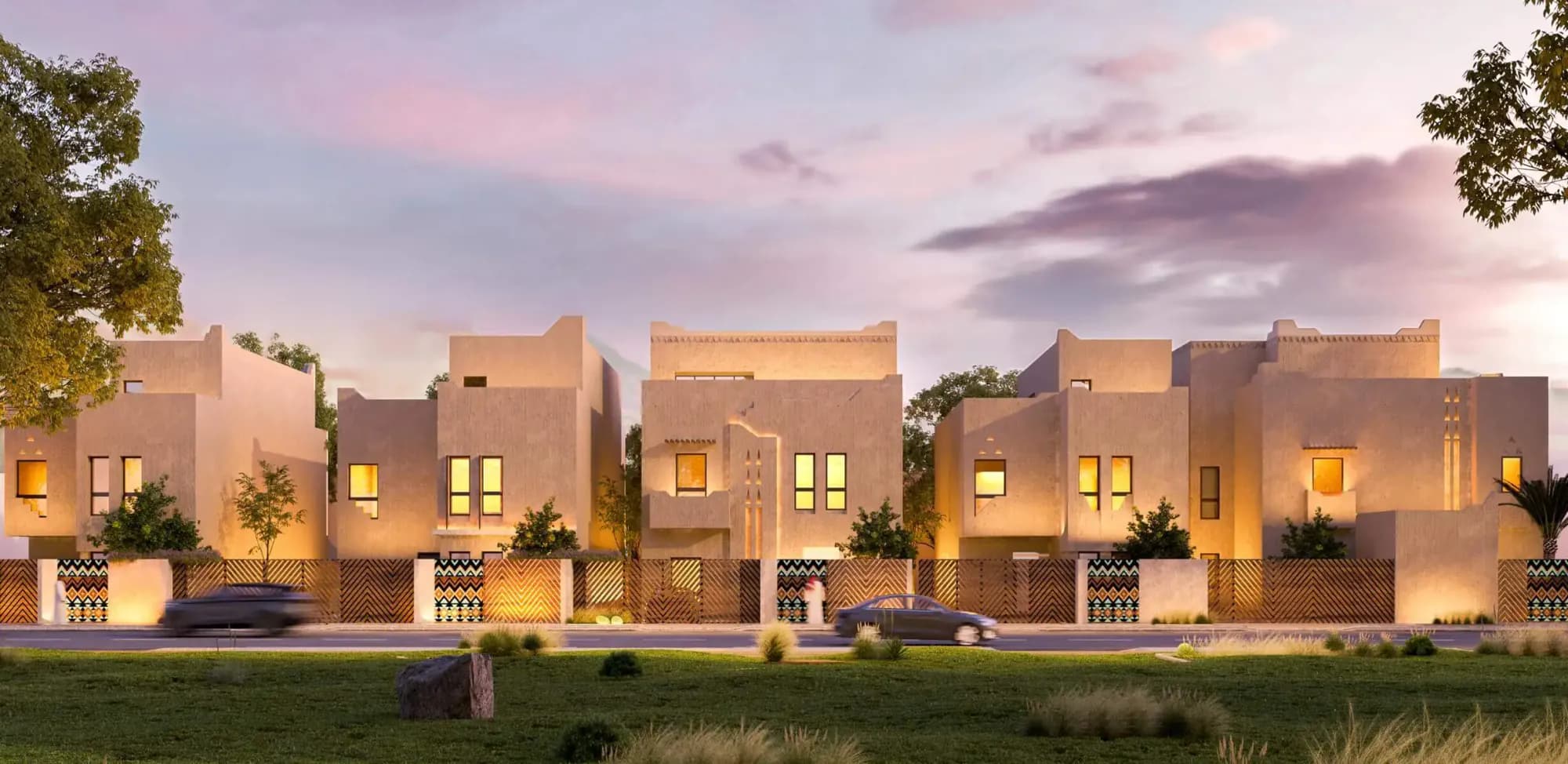
Investor guides
Eyal Khuzam 1 vs 2: how to choose your villa.
Compare Eyal Khuzam 1 and 2 using published project totals, villa models, plot areas and the questions that matter for a current unit offer.
Process · Saudi ArabiaRead
Investor guides
What it costs to buy property in Saudi Arabia
RETT, registration, agency and running costs: the true all-in figure on a residence.
Costs · Saudi ArabiaRead
Investor guides
How to buy property in Saudi Arabia
Reservation to registered title at the Real Estate Registry: the stages, timelines and who you need.
Process · Saudi ArabiaRead
Investor guides
Can foreigners buy property in Saudi Arabia?
Foreign individuals can own freehold in designated areas, with 2026 rules widening access in Riyadh and Jeddah.
Ownership · Saudi ArabiaReadInvestor guides
Buying off-plan property in Jeddah and Riyadh
Escrow protection, payment plans and what a Four Seasons or operator flag is worth at handover.
Off-plan · Saudi ArabiaRead
Frequently asked
Before you enquire.
Can you buy property in the Diplomatic Quarter?
Historically, no. DQ has operated as a leasehold enclave where residents, Saudi and expat alike, rent on one or five year terms rather than owning. Saudi Arabia’s foreign-ownership law took effect on 22 January 2026, and the Cabinet approved the designated geographic zones in June 2026. DQ was not among the named zones, and its government-controlled, embassy-anchored status makes it a special case. Confirm current status against the live REGA record with the desk before assuming you can purchase inside the perimeter.
What does it cost to rent in the Diplomatic Quarter?
Typical rents run about SAR 12,000 to 25,000 a month, roughly SAR 144,000 to 300,000 a year, for an apartment or a villa in a DQ compound, reflecting the security, greenery and international character. Riyadh rents overall rose sharply in 2025, with JLL putting villa rent growth near 17% and apartment rent growth near 20% year on year, so budget for a tight, competitive leasing market.
What are the compounds like in the Diplomatic Quarter?
DQ is built around five residential complexes and named compounds offering gated security, pools, sports facilities and 24/7 guarding, in villa and low-rise apartment formats, plus serviced options such as Marriott Executive Apartments and Vivienda. Because the footprint is capped, many families also look at well-known compounds just outside the perimeter in northwest Riyadh.
Is the Diplomatic Quarter safe?
It is the highest-security district in Riyadh. Every entry is controlled by checkpoints where credentials are verified, backed by continuous patrols. That delivers exceptional day-to-day safety, at the cost of some friction and a sense of separation from the rest of the city.
Who lives in the Diplomatic Quarter?
A concentrated international community: embassy and ministry staff, ambassadors, senior executives and long-term expat professionals. It is among the most international addresses in Riyadh, but by design it is transient, most residents are on fixed postings rather than putting down permanent roots.
What schools serve the Diplomatic Quarter?
The British International School Riyadh (BISR) opened a campus inside DQ in 2020, teaching the British curriculum plus IGCSE and the IB Diploma for ages 3 to 18. King Faisal School also sits within the quarter, and families draw on additional international schools, American and IB, in adjacent northwest Riyadh.
How far is the Diplomatic Quarter from the airport and the business districts?
King Khalid International Airport is about 30 to 35 minutes away, roughly 35 km. KAFD, Olaya and central Riyadh are each about 15 to 20 minutes by car, and Wadi Hanifa and the Diriyah UNESCO site are on the doorstep. Its walkability makes short internal trips car-free, which is rare for Riyadh.
Is the Diplomatic Quarter a good investment?
As a place to live for internationally mobile families, it is one of Riyadh’s most desirable addresses. As a pure buy-to-own investment it is unproven: the market has been leasehold with a capped, government-controlled supply and no established resale channel. The clearer near-term investment case sits in prime districts adjacent to DQ, which is exactly the conversation to have with the desk.
Private client advisory, GCC
The Omnia Riyadh desk
We start with the enclave and the rules, not a unit. In the Diplomatic Quarter, understanding the tenure is the whole first move.
Start with the area
Let's start with Diplomatic Quarter, not the apartment.
Tell us how you would use it. We will send the Diplomatic Quarter guide, the buildings worth seeing, and an honest read on where ownership stands.