باختصار
- Wellness or fitness appears in 37 of 40 developments. Pools and explicit fitness or gym provision each appear in 34. These are now baseline luxury language, not differentiators on their own.
- Golf appears across 19 marketed offers, compared with padel in four. Fourteen golf offers sit within AIDA or Wadi Safar, so this is offer frequency rather than 19 separate courses.
- Concierge appears in 15 developments, valet in four and housekeeping in two. Hotel-style facilities are much more widely advertised than explicit residential service.
- Smart-home systems appear in seven records, work, office or coworking in three, EV charging in two and pet facilities in none. The quiet omissions reveal the next buyer questions.
المحتويات
- 01What the census measures.
- 02Wellness is now the entry ticket.
- 03The pool has become a language, not a differentiator.
- 04Golf still dominates. Padel carries more identity.
- 05Facilities are not service.
- 06Luxury is moving beyond the front door.
- 07Four markets, four amenity grammars.
- 08The quiet omissions may matter more.
- 09How to read an amenity list like an owner.
- 10Methodology and source ledger.
Luxury property in the Middle East is no longer sold as a home with a pool. It is sold as an operating environment: somewhere to train, recover, work, entertain, raise children, arrive privately and leave without worrying about what happens in between. The vocabulary has expanded so quickly that the word amenity now covers everything from a rooftop padel court to a staffed residence club.
The New Luxury in the Middle East tests that vocabulary against the developments themselves. Omnia coded 817 advertised amenity, service and specification claims across 40 current development records in the United Arab Emirates, Saudi Arabia, Oman and Qatar. The result is a census of the offers in Omnia’s researched inventory, not a ranking of every scheme in the region. It shows what has become standard, what remains genuinely scarce, and where the promise of five-star living is still much stronger than the published service detail.
What the census measures.
The sample contains every published Middle East development record in Omnia’s inventory at the 27 July 2026 cut-off. The UAE sample covers Dubai and Ras Al Khaimah. Saudi Arabia covers Riyadh and Jeddah. Oman covers Muscat, principally Yiti and Sultan Haitham City. Qatar covers two Qetaifan Island launches. Montenegro is outside this edition.
Each explicit claim was coded into an amenity family. A development receives one presence count for a family whether it advertises one pool or five. Frequency therefore describes how often an amenity appears across marketed offers. It does not measure its size, quality, capacity or delivery status.
- Facilities. Physical spaces and equipment such as pools, gyms, spas, courts, lounges, parks and children’s areas.
- Services. Operational promises such as concierge, housekeeping, valet, hotel management and resident booking.
- Private specifications. Features inside or attached to the home, including private pools, lifts, roof terraces, smart-home systems and EV charging.
- Shared setting. Masterplan amenities advertised as accessible to the buyer, including beaches, golf, trails, retail, dining, schools and community facilities.
| Market | Developments | Coded claims | Average per record |
|---|---|---|---|
| United Arab EmiratesDubai and Ras Al Khaimah | 16 | 320 | 20.0 |
| Saudi ArabiaRiyadh and Jeddah | 12 | 277 | 23.1 |
| OmanMuscat | 10 | 183 | 18.3 |
| QatarQetaifan Island | 2 | 37 | 18.5 |
| Total | 40 | 817 | 20.4 |
Omnia Reports & Intel census of all published Middle East development records in the Omnia inventory at 27 July 2026. Claims are explicit labels inside 166 amenity and specification groups. Qatar is reported but is too small for market ranking.
Wellness is now the entry ticket.
Wellness or fitness language appears in 37 of the 40 developments. A dedicated fitness or gym claim appears in 34, as does a pool. Parks, gardens, trails or another movement-oriented landscape claim appear in 33. At those frequencies, none is a luxury differentiator on its own. They are now the price of entry into the category.
The shift is wider than this sample. The Global Wellness Institute’s 2025–2026 research describes wellness real estate as moving from niche to mainstream, while warning that wellness is often mistaken for a collection of fashionable facilities. Knight Frank’s 2025 branded-residence survey makes the same distinction: the next stage is health embedded into daily living, not merely another gym beside another spa.
The Middle East sample shows why the distinction matters. Eighteen developments explicitly name a spa, while seven specify a sauna, hammam or steam room. The broader word wellness travels much further than the operational detail. A serious buyer should ask what exists, who operates it, what is residents-only, and what remains a future masterplan promise.
Omnia Middle East Property Amenity Census 2026. Presence is counted once per development family, regardless of how many individual facilities are advertised.
The pool has become a language, not a differentiator.
A pool appears in 85% of the sample. The more revealing number is the language around it. Twenty developments, half the sample, specifically advertise an infinity or infinity-edge pool. Only six explicitly advertise a private pool attached to an individual home. The first has become a visual convention; the second remains scarce.
The same pattern repeats elsewhere. Roof terraces, rooftop facilities or roof gardens appear in 13 developments. Beach access appears in 13. A sauna, hammam or steam room appears in seven. A cinema appears in one. What reads as exceptional in a brochure can therefore be tested against the sample: infinity-edge water is common, private water is not; a roof is useful, but resident capacity and access rules decide whether it changes daily life.
| Amenity or service | Developments | Share of sample | Census reading |
|---|---|---|---|
| Pool | 34 / 40 | 85% | Baseline |
| Infinity pool | 20 / 40 | 50% | Familiar luxury language |
| Named spa | 18 / 40 | 45% | Common, but not universal |
| Beach access | 13 / 40 | 33% | Location-led |
| Sauna, hammam or steam room | 7 / 40 | 18% | Specific wellness provision |
| Private pool | 6 / 40 | 15% | Still scarce |
| Cinema | 1 / 40 | 3% | Rare in this sample |
Omnia Middle East Property Amenity Census 2026. A phrase must be explicit in the development record to count. Absence means not advertised in the record, not necessarily unavailable.
The amenity that photographs best is not always the amenity that changes how a home lives.
Golf still dominates. Padel carries more identity.
Golf appears across 19 of the 40 marketed offers, compared with padel in four. That gap is partly geographic and partly structural. Fourteen of the 19 golf offers are launches within just two masterplans: AIDA in Oman and Wadi Safar in Riyadh. The result is not 19 separate courses. It is evidence that access to golf still anchors far more luxury residential propositions.
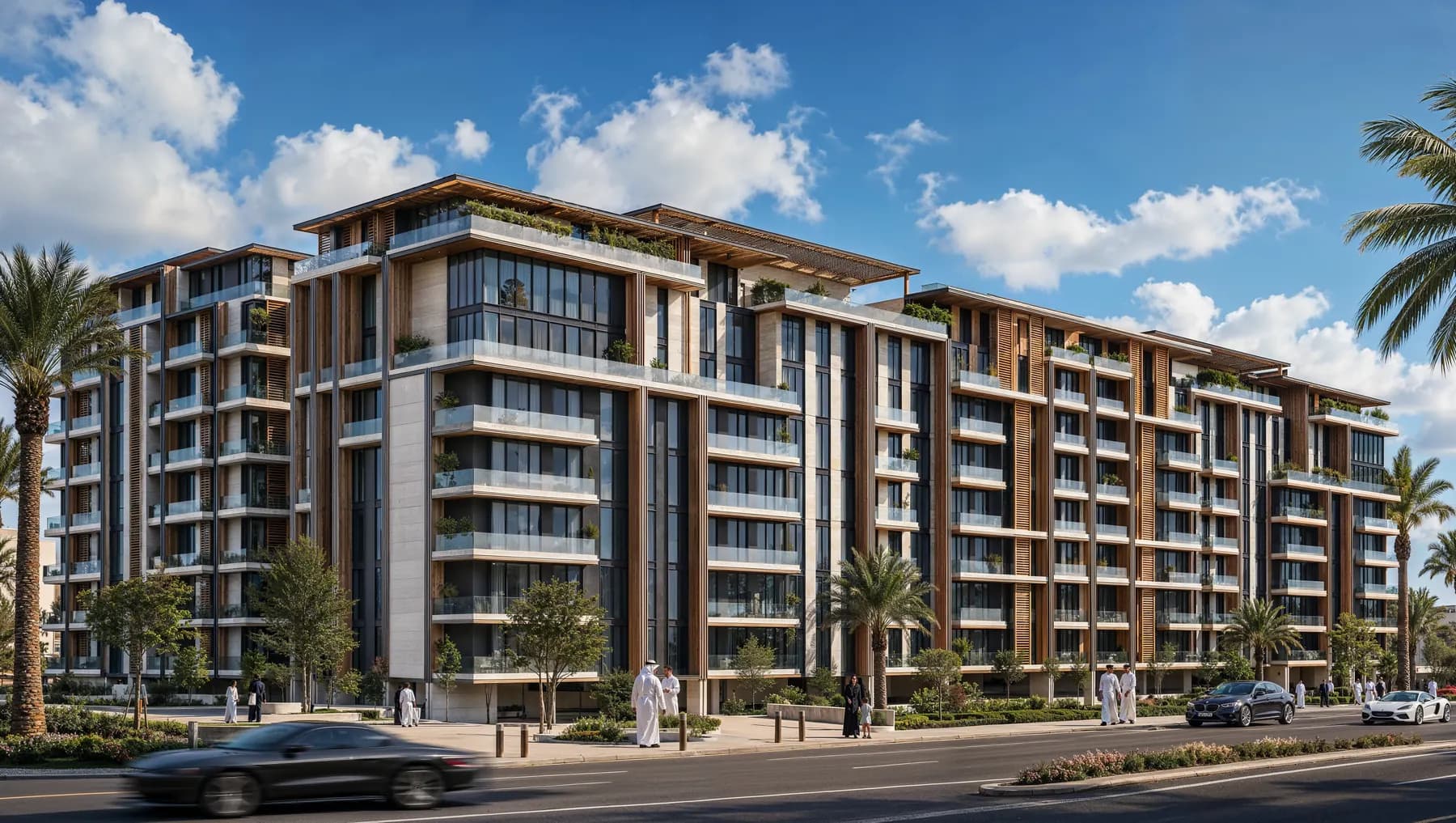
Padel has a different role. Its smaller footprint allows it to sit on a roof or inside a dense urban development, and its doubles format makes it social as well as athletic. The four occurrences in the sample include Padel Living Residences in Jeddah, where resident-only courts, controlled access and app booking form the project’s central identity rather than another line in a long facility list.
The wider participation data shows the sport’s present scale in Saudi Arabia. The International Padel Federation counted 1,097 courts and estimated roughly 400,000 amateur players in Saudi Arabia in 2024, the largest court base in Asia at the time. Those figures do not prove a property trend, but they help explain why padel can be a credible project identity. It is not replacing golf across luxury property; it offers a more compact and socially legible way for one development to distinguish itself.
Omnia Middle East Property Amenity Census 2026. Shared masterplan access counts where it is explicitly offered to residents. Frequencies are marketed development offers, not unique courses or courts.
Facilities are not service.
The sharpest finding in the census is the gap between hotel language and published operational service. A concierge appears in 15 developments. Valet appears in four. Housekeeping appears in two. Only three explicitly describe hotel management, hotel service or housekeeping as part of the residential offer.
That does not mean the other developments cannot arrange service. It means the buyer-facing record does not make it a clear, countable promise. The distinction matters because a facility is a capital item, while a service is a recurring operating commitment. It needs staffing, standards, access rules, funding and a responsible operator after handover.
Knight Frank identifies concierge, valet, housekeeping and in-room dining as central to the appeal of hotel-grade branded living. The Middle East sample suggests those services should never be inferred from a brand name, a lobby image or the presence of a spa. They should be verified individually.
Omnia Middle East Property Amenity Census 2026. Only explicit residential service language counts. A service may be separately chargeable or available on request; the census does not assume inclusion.
Luxury is moving beyond the front door.
Of the 817 coded claims, 324 describe the home itself and 493 describe a shared facility, service, setting or piece of surrounding infrastructure. In other words, 60% of the published proposition sits beyond the private front door.
That wider promise is substantial. Parks, gardens, trails or movement-oriented landscape appear in 33 developments. Children or family facilities appear in 28. Shared dining appears in 25. Retail provision appears in 21. The new luxury offer is increasingly a managed piece of neighbourhood rather than an isolated residence.
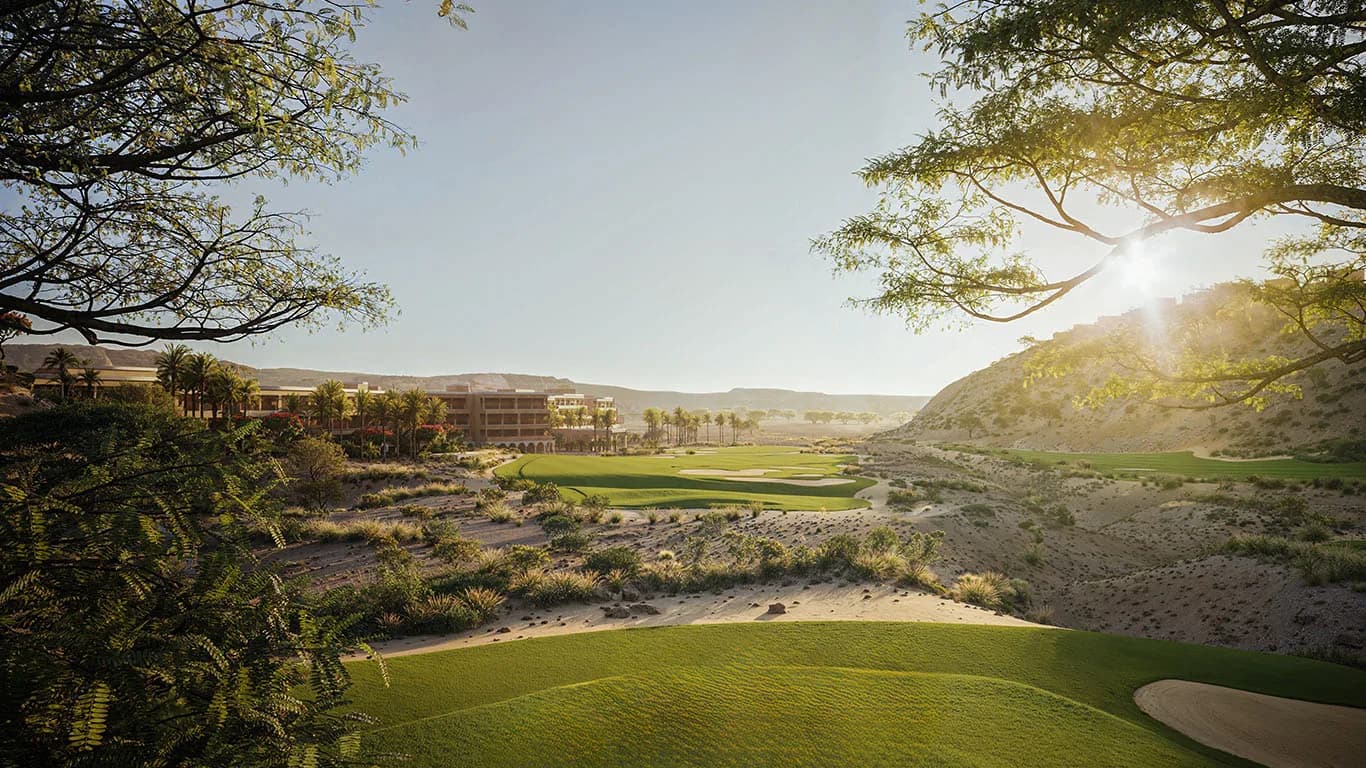
This is particularly visible in the large Saudi and Omani masterplans. Wadi Safar combines homes with golf, hotel operators, equestrian uses, trails and controlled arrival. AIDA combines multiple residential products with beach access, golf, hospitality and outdoor routes. Sultan Haitham City positions daily services and public realm as part of the residential proposition. The strongest amenity is sometimes not inside the building at all. It is the masterplan’s ability to make daily life coherent.
| Shared-life family | Developments | Share | What it usually includes |
|---|---|---|---|
| Green and outdoor movement | 33 / 40 | 83% | Parks, gardens, trails, promenades or cycling |
| Children and family | 28 / 40 | 70% | Play, childcare, schools or family grounds |
| Shared dining | 25 / 40 | 63% | Restaurants, cafes, pool bars or dining venues |
| Retail provision | 21 / 40 | 53% | Retail, groceries, shopping or specialist shops |
Omnia Middle East Property Amenity Census 2026. Shared masterplan facilities count when buyer-facing copy explicitly states resident access.
Four markets, four amenity grammars.
The sample is not balanced enough to rank countries, and Qatar’s two records are much too small for a market conclusion. It is still possible to see how the published propositions differ.
The UAE sample is vertical and facility-dense: all 16 developments advertise a pool and some form of wellness or fitness, 15 name fitness or a gym, and 10 advertise concierge. Saudi Arabia’s offer is more social and masterplan-led: 11 mention dining, 11 family uses and 10 sport or active recreation, while nine use wellness or fitness language. Oman combines landscape with movement: all 10 mention wellness or fitness, green space or movement, and sport or active recreation; nine advertise golf and six a waterfront or beach signal. Both Qatar records are waterfront and serviced, but two developments are evidence of those projects only.
| Market sample | Most repeated signals | Distinctive reading |
|---|---|---|
| UAE · 16Dubai and Ras Al Khaimah | Pool 16; wellness/fitness 16; fitness/gym 15; concierge 10 | Vertical, facility-dense and service-forward |
| Saudi Arabia · 12Riyadh and Jeddah | Dining 11; family 11; sport/active 10; wellness/fitness 9 | Social, sporting and masterplan-led |
| Oman · 10Muscat | Wellness/fitness 10; green/movement 10; sport/active 10; golf 9 | Landscape, trails, golf and private outdoors |
| Qatar · 2Qetaifan Island | Pool 2; fitness 2; waterfront 2; service 2 | Project evidence only; sample too small |
Omnia Middle East Property Amenity Census 2026. Category rules are identical across markets. Uneven market coverage prevents a league table or comparative quality score.
The quiet omissions may matter more.
The least frequent claims expose a different definition of luxury. Smart-home systems appear in seven developments. Work, office or coworking language appears in three. EV charging appears in two. Housekeeping appears in two. None of the 40 records explicitly advertises pet facilities or a pet-friendly policy.
Absence from the record is not proof that a feature is unavailable, and the census does not treat it that way. It is proof that the feature is not part of the published proposition. That makes the omissions valuable: they show which practical questions a buyer may need to raise because the brochure is spending its attention elsewhere.
The next amenity cycle is likely to be less photogenic. Reliable home technology, charging, acoustics, storage, flexible work, parcel handling, pet policy and clearly governed service may matter more to an owner over ten years than a second lounge. The projects that document those details will be easier to underwrite because they replace atmosphere with an operating promise.
| Practical provision | Developments | Share | What absence means |
|---|---|---|---|
| Smart-home system | 7 / 40 | 18% | Not explicitly marketed in 33 records |
| Work or coworking | 3 / 40 | 8% | Rare as a dedicated residential proposition |
| EV charging | 2 / 40 | 5% | Usually left to later technical detail |
| Housekeeping | 2 / 40 | 5% | Hotel language should not imply inclusion |
| Pet facilities or policy | 0 / 40 | 0% | A question for the buyer, not a presumed prohibition |
Omnia Middle East Property Amenity Census 2026. Only explicit positive claims count. The census does not infer a prohibition or absence from silence.
How to read an amenity list like an owner.
An amenity list becomes useful only when it is translated into access, capacity, operation and cost. The same word can describe very different ownership experiences. A residents-only rooftop pool is not the same product as access to a hotel pool. A concierge desk is not housekeeping. A golf view is not a club membership.
- Confirm the access right. Ask whether the facility is owned by the residents, shared with hotel guests, licensed from a third party or located elsewhere in the masterplan.
- Test the capacity. Put the number and size of facilities against the number of homes and any hotel keys that share them.
- Separate included service from on-request service. Concierge, valet, cleaning, dining and rental management can each sit under a different contract and fee.
- Identify the operator and the term. A brand, operator, hotel and facilities manager may be four different parties. Ask who is contractually responsible after handover.
- Read delivery status literally. A completed facility, a construction commitment and a future masterplan ambition should never be treated as equivalent.
- Model the carry. Every staffed or highly specified amenity has an operating cost. Verify the service-charge budget and reserve assumptions for the specific residence.
The live development collection holds the current project-level detail. The Middle East branded-residence evidence index owns market stock and pipeline, while the branded-residence value report examines premium and suitability. This census owns a different question: what is actually being offered as part of luxury residential life?
Methodology and source ledger.
Universe and cut-off. The sample contains all 40 published English-language Middle East development records in Omnia’s researched inventory at 27 July 2026: 16 in the UAE, 12 in Saudi Arabia, 10 in Oman and two in Qatar. Montenegro and unpublished draft records are excluded. The records contain 166 amenity or specification groups and 817 individual labels.
Coding. Each label and its group heading were tested for explicit positive mention of a controlled amenity family. Matching uses case-insensitive whole words or defined phrases, followed by a review in group context. A breakfast bar does not count as shared dining, and the word space does not count as spa. A category is present or absent at development-record level, so repetition inside one record does not increase its presence count. Closely related terms are grouped, such as sauna, hammam and steam room. No quality weight is assigned.
Quality control. The source-controlled audit freezes the 40 included slugs, verifies the 166-group and 817-claim arithmetic, applies one coding dictionary across all four markets and can print every matched development and source line for review. The published tables use that corrected snapshot.
Private versus shared. Group headings identify 324 claims inside or directly attached to the home and 493 claims about shared facilities, services, setting or infrastructure. The 60% shared figure is a description of the coded record structure, not a measurement of construction expenditure.
Shared masterplans. Multiple residential offers can share AIDA, Wadi Safar, Amaya or another masterplan. A shared amenity is counted for each offer only where its buyer-facing record explicitly presents resident access. This intentionally measures the frequency with which a buyer encounters that proposition. It does not count unique golf courses, parks or clubs.
Source hierarchy. Development records are compiled from official developer and operator pages, owner-supplied brochures and current project material, with the individual source history maintained in Omnia’s content record. The market context in this report uses the Global Wellness Institute, Knight Frank and the International Padel Federation through the linked primary publications above.
Limitations. The inventory is curated rather than statistically representative of all Middle East development. It is weighted toward international, off-plan and luxury residential offers in Omnia’s active markets. Qatar’s sample is too small for a market conclusion. Marketing language does not prove delivery, quality, capacity, ownership or future operating standard.
Interpretation. This census is research, not an appraisal or investment recommendation. Amenity presence does not establish value, return or suitability. Buyers should verify the title, development agreement, service contract, access rights, delivery status, operating budget and current project specification before acting.
استشارة
تحدّث إلينا على انفراد.
مستشار من أومنيا حول التوافر والهيكلة والتوقيت في هذه الأسواق.
 متاحالنهضةبادل ليفينج ريزيدنسزتبدأ من790,000 ر.س.النوعمساكناستكشف الإقامة