In brief
- Sale contracts were worth OMR 952.1 million in January to August 2026, up 14.5%, while their number rose only 1.5%.
- The residential price index rose 24.6% year on year in Q2 2026, but land carries about four-fifths of its weight; apartments rose 17.2% and villas 10.8%.
- Muscat residential land is 40.6% higher than a year ago and slipped 2.0% in the latest quarter, the first sign of a pause.
- Foreign ownership remains limited to designated areas, as the Ministry of Housing restated on 28 June 2026; judge freehold homes on rent and community, not the national index.
Contents
- 01The headline, brought up to date.
- 02Value is rising faster than volume.
- 03Prices: land leads, homes follow.
- 04Muscat is where the pressure is.
- 05More households are borrowing, for smaller sums.
- 06What the national data cannot tell a freehold buyer.
- 07The rulebook changed this year.
- 08The regional backdrop, honestly read.
- 09The Omnia view: where we would look, and where we would wait.
- 10What to watch next.
- 11Methodology, review date and next step.
Oman’s property market is rising in price, not in activity. In the first eight months of 2026 the value of property sale contracts reached OMR 952.1 million, 14.5% more than a year earlier, while the number of contracts rose just 1.5%. The official residential price index stood 24.6% higher in the second quarter than a year before. More money is changing hands for roughly the same number of deals.
That is a different story from the headline that started it. On 29 July the Oman Observer carried an Oman News Agency report that property deals rose to RO 1.43 billion in the first half, up 5.4%. Two releases later, the same total reads OMR 1.989 billion to the end of August, down 6.4%. Neither number is wrong. About half of each is mortgage registrations, which arrive in lumps. This report reads the lines that matter to someone buying a home in Oman, says what they show and what they cannot, and closes with where we would look and where we would wait.
The headline, brought up to date.
| Indicator | To Jun | To Jul | To Aug | Total to Aug |
|---|---|---|---|---|
| Total traded value | +5.4% | +7.7% | -6.4% | OMR 1,989m |
| Sales, value | +12.2% | +15.7% | +14.5% | OMR 952.1m |
| Sales, number | +6.9% | +3.9% | +1.5% | 44,609 |
| Mortgages, value | -0.3% | +0.7% | -20.0% | OMR 1,028m |
| Mortgages, number | +25.7% | +22.3% | +21.8% | 17,559 |
| Title deeds | -8.0% | -10.7% | -14.2% | 131,944 |
| Deeds, GCC citizens | -22.4% | -11.2% | -11.0% | 723 |
Ministry of Housing and Urban Planning data published by NCSI. Jan to Jun: Oman News Agency via Oman Observer, 29 July 2026. Jan to Jul: NCSI Monthly Statistical Bulletin, August 2026, table 29. Jan to Aug: Oman Daily, 2 October 2026, reporting the NCSI bulletin.
To the end of July, the NCSI’s August bulletin recorded OMR 1,715.7 million of property traded, up 7.7%, with July the strongest month of the year so far at OMR 281.7 million. August then reversed the total. The end-August figures show mortgage contracts worth OMR 1,028 million against OMR 1,285 million a year earlier. By our arithmetic, around OMR 427 million of mortgages were registered in August 2025 alone, against OMR 163.4 million in August 2026. One heavy month a year ago is enough to turn the year negative.
Our reading: treat the total traded value as noise. It adds sales to mortgages, and a mortgage registration can be a household loan, a developer facility or a refinancing. The sale-contract line is the closest the registry comes to measuring what buyers pay, and it has been ahead of 2025 in every release this year.
Value is rising faster than volume.
NCSI Monthly Statistical Bulletins, March, May and August 2026 (Ministry of Housing and Urban Planning data); August from Oman Daily, 2 October 2026. January is derived from the published January to April total.
Month to month the line is uneven. March fell largely within Ramadan and Eid, and August is the heart of the summer. The trend is clearer in the averages. Over the first eight months the average sale contract was worth about OMR 21,300, against about OMR 18,900 a year earlier, a rise of 12.9%. That is a figure Omnia derives from the published totals.
An average contract of about OMR 21,300 is far below the price of a finished home in Muscat, which tells you what most of this market is. The national registry counts every sale in the Sultanate, including residential plots and smaller properties, and its buyers are overwhelmingly Omani. A rising average can mean higher prices or a shift towards larger plots and more homes. The price index separates the two, and it says prices rose.
Prices: land leads, homes follow.
NCSI Real Estate Price Index (Ministry of Housing and Urban Planning), bulletins of November 2025, March, May and August 2026. Each point is the latest published value for that quarter; recent quarters are provisional and NCSI revises earlier ones.
In the second quarter of 2026 the residential index rose 24.6% on a year earlier and 10.2% on the first quarter. Residential land rose 28.0%, apartments 17.2% and villas 10.8%. The whole real estate index, commercial included, rose 22.7%.
Read those numbers with the weights beside them. Residential land carries 52.9 of the residential index’s 67.9 points of weight, so roughly four-fifths of the headline is land. Apartments carry 5.8 and villas 7.0. The 24.6% is a land story first. For a buyer of a finished home, the apartment and villa lines are the relevant ones, and they have risen by less.
They are also volatile. The apartment index fell 10.5% in the fourth quarter of 2025 and rose 11.7% in the next. A single quarter on a small sample can move by double digits either way, so we read these lines over a year, not a quarter. Over a year, both are clearly higher. Land tends to lead built prices because it is the input every new home has to absorb, which is the more durable implication for anyone buying new stock over the next two years.
Muscat is where the pressure is.
NCSI Real Estate Price Index, Q2 2026 (provisional), Ministry of Housing and Urban Planning. Residential land component by governorate; 2018 = 100.
Residential land in Muscat stood 40.6% higher than a year earlier, at an index of 170.2, seventy per cent above its 2018 level. That is the steepest annual rise and the highest level of any governorate. It is also the first line to pause. Muscat land slipped 2.0% between the first and second quarters, and the first-quarter figure itself was revised from 156.5 to 173.6 between releases. These are provisional numbers on a moving base.
The quarter’s sharpest move came elsewhere. Residential land in Al Batinah North, home to Sohar and the road to the UAE border, rose 24.8% in a single quarter. That is consistent with a Ministry of Housing statement reported by AGBI in April: buyers from the UAE made up about a third of March transactions, against a 2025 average of 12%, and Sohar was their second target after Muscat. Consistent is not proof, and the index does not say who bought.
More households are borrowing, for smaller sums.
The number of mortgage contracts rose 21.8% in the first eight months while sales rose 1.5%. To the end of July, before the August base effect, mortgage value was flat while the count rose 22.3%. The average mortgage fell from about OMR 68,000 to about OMR 56,000, by our arithmetic, a drop of 17.7%.
More loans of smaller size suggests financing is spreading across ordinary households rather than concentrating in a few large facilities. It is the healthier kind of credit growth for a housing market. The cost of it has just moved, though. The Central Bank of Oman raised its repo rate to 4.50% from 4.25% on 17 September 2026, following the US Federal Reserve. With the rial pegged to the dollar, the central bank tends to move with US policy rates, whatever the local housing market is doing.
What the national data cannot tell a freehold buyer.
An international buyer can generally own only in designated areas. On 28 June 2026 the Ministry of Housing and Urban Planning restated the list: Integrated Tourism Complexes, Sultan Haitham City, Al Thuraya City, Al Jabal Al Aali and Surouh, plus areas approved for GCC citizens under separate agreements. That is a sliver of the national registry, and the registry does not report it separately. There is no official series for foreign or ITC sales.
The one nationality line the registry does publish points the other way from the safe-haven story. Title deeds issued to GCC citizens fell 11.0% to 723 in the first eight months. Both can be true at once: most of the UAE’s population is expatriate, and a UAE resident who is not a GCC citizen would not appear in a count of GCC citizens. Our report on who buys in Oman sets out what is and is not known about foreign demand.
For ITC homes the better evidence is rent, because rent is what an owner can actually earn and what a tenant will actually pay. The consultancies broadly agree on the shape of Muscat’s freehold rental market and disagree on some of the detail.
| Area and home | Savills, Q1 2026 | Hamptons, H1 2026 | Read |
|---|---|---|---|
| Al Mouj, 2-bed apartment | 710 | About 650 | Still the rental benchmark |
| Muscat Hills, 2-bed apartment | 491 | About 450 | Steady |
| Qurum, 2-bed apartment | 350 | About 450 | Sources differ; Savills Q2 reports +16% |
| Al Khuwair, 2-bed apartment | 385 | About 250 | Older stock under pressure |
| Al Mouj, 4-bed villa | 1,770 | Not reported | Savills Q2 average: 1,700 |
| Muscat Hills, 4-bed villa | 1,200 | Not reported | Fastest villa rent growth in Savills’ Q1 data |
Savills Oman Property Market Report Q1 2026; Savills Q2 2026 as reported by Muscat Daily, 29 July 2026; Hamptons International H1 2026 as reported by Oman Observer, 13 September 2026. Al Mouj and Muscat Hills are Integrated Tourism Complexes; Qurum and Al Khuwair are not, and are shown for comparison. Changes are year on year as published.
Two things stand out. First, established ITC apartment rents moved by low single digits while the national land index moved by more than a quarter. A freehold apartment is not a residential plot, and its value should be tested against what it can be let for. Second, the spread between Al Mouj and older central stock is wide and, in Savills’ first-quarter data, widening. Hamptons International’s first-half figures put the gap wider still. Tenants are paying for a working community and for newer buildings. For the area detail, read our guides to Muscat Hills and Yiti, or start with the Muscat hub.
The rulebook changed this year.
- A new title register. Royal Decree 56/2026, in force since 18 May 2026, replaced the 1998 law. Per Trowers & Hamlins, it creates a preliminary register for off-plan units with the same legal standing as the main register, gives electronic title deeds full legal force, and expressly allows registration by non-Omani individuals and companies, subject to the laws on non-Omani ownership. For an off-plan buyer, that is real protection.
- New residence rules, not wider ownership. Amendments to the Foreigners’ Residence Law in June 2026 changed residence rights. The ministry was explicit that they did not expand where foreigners may own. Treat any listing that implies otherwise with care. Our ITC residency guide covers the owner route.
- A tax that starts in 2028. The Oman Tax Authority states that Royal Decree 56/2025 takes effect from 1 January 2028, at 5% of taxable income for a natural person whose total annual income exceeds OMR 42,000, covering specified income types under the law’s conditions. Our tax report sets out what that means for rent and disposals.
- Lower fees for Omani buyers. Since January 2025 Omani individuals and companies have paid a 1% registration fee on sale contracts, halved from 2%, Muscat Daily reported. Foreign buyers in the freehold areas pay more; the current schedule is in our guide to costs and fees.
The regional backdrop, honestly read.
Oman was not a bystander to this year’s regional war. Drones struck fuel storage at Duqm port in early March and at Salalah port on 11 March, suspending terminal operations there. Tourism has felt it. Guests at three- to five-star hotels fell 11.9% in the first seven months, GCC guests by 19.1%, and occupancy dropped to 45.8% from 52.9%, according to the NCSI.
The wider economy has held up better than its neighbours’. The IMF’s June staff visit put 2026 growth at around 3.7% on higher oil output, with non-oil growth easing to 2.5% because of the conflict’s effect on tourism and construction, and a fiscal surplus of 4.5% of GDP. The World Bank is more cautious at 2.4%, but against a GCC average of 1.3% and contractions in Qatar and Kuwait. Both credit the same advantage: Oman’s main ports sit outside the Strait of Hormuz. Savills describes the property market as continuing to demonstrate resilience.
Our view is that the conflict has helped Oman’s property market at the margin and hurt its tourism economy directly. Buyers who want Gulf exposure with less concentration risk have found Oman. Hotel-led resort schemes, whose returns depend on visitors, have the harder year.
The Omnia view: where we would look, and where we would wait.
The 2026 data describes a market being repriced from a low base, led by Muscat land, financed by more households in smaller amounts and watched closely by buyers elsewhere in the Gulf. It does not describe a speculative boom: deal numbers are barely moving and title deeds are down. What that means depends on who you are.
- If you are an Omani buyer. Land has done most of the moving, and Muscat land has started to pause after a 40% year. We would be patient on plots priced off the last quarter’s momentum and more interested in finished homes, where the price index has risen by less. Sultan Haitham City is the clearest example of a market priced in two tiers: the Housing Minister said in February that investors pay about OMR 900 per square metre against about OMR 400 for subsidised Omani families. Borrowing has become more common; it has also just become dearer.
- If you live in the Gulf and are looking at Oman. The case is diversification and use, not a trade. A home in Muscat or near Sohar, within reach of the UAE, makes sense if you will use it or let it on known terms. Confirm the designated area first, then judge the asset on rent and community, not on the national index.
- If you are buying from further afield. Established freehold communities offer the most evidence: Al Mouj’s rents are the benchmark, and Muscat Hills villas showed the strongest villa rent growth in Savills’ first-quarter data.Off-plan stock now sits on a stronger register, which helps, but the delivery record, service charges and the depth of resale still decide the outcome. Our ITC ownership guide and the Oman and Dubai comparison are the places to start.
Where we would wait: on anything sold on the strength of the national price index alone, on resort stock whose numbers assume tourism has already recovered, and on any claim that Oman has opened ownership to foreigners nationwide. It has not.
Every client’s best outcome is different. If you are weighing Oman, we would like to hear what you want the home to do for you first: be lived in, let, held for family, or anchor residence. The data above narrows the field; that conversation decides it.
What to watch next.
- The third-quarter price index. Whether Muscat land’s 2.0% dip in the second quarter becomes a trend, and whether apartment and villa prices keep pace with land.
- Sale contracts against mortgages. The September to December releases will show whether sale values keep rising faster than deal numbers once the August base effect has passed.
- Rates. Further moves by the Central Bank of Oman, which tracks the US Federal Reserve, will test the household borrowing that has carried this year’s mortgage growth.
- Executive regulations. The detailed rules for the June residence amendments and for the 2028 income tax, both of which affect how a home in Oman is held.
Methodology, review date and next step.
This report uses sources available on 6 October 2026. Transaction and price data are the Ministry of Housing and Urban Planning’s, published by the National Centre for Statistics and Information in its monthly bulletins of March, May and August 2026, with end-August totals as reported by Oman Daily from the bulletin. Where two outlets report different figures, we use the one that reconciles with the published monthly and year-on-year numbers. Price index chart points are the latest published value for each quarter. Recent quarters are provisional, and NCSI revises them.
Average contract and mortgage sizes, the August 2025 mortgage figure and the land share of the index are Omnia’s arithmetic from the published totals and weights, and are labelled as such. Rents are the consultancies’ published figures, shown side by side where they differ. No yield is quoted, because no published series measures one on a like-for-like basis.
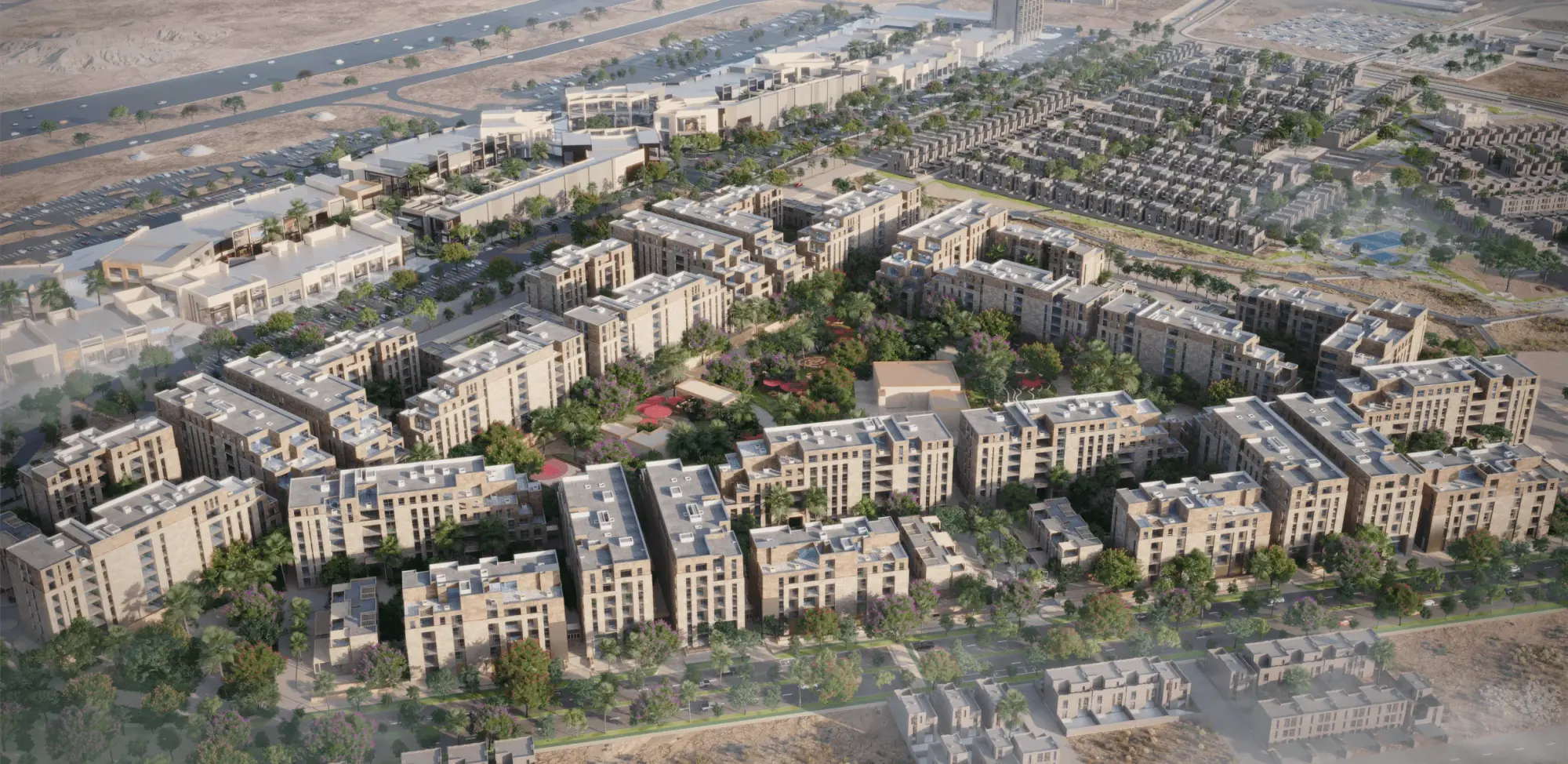
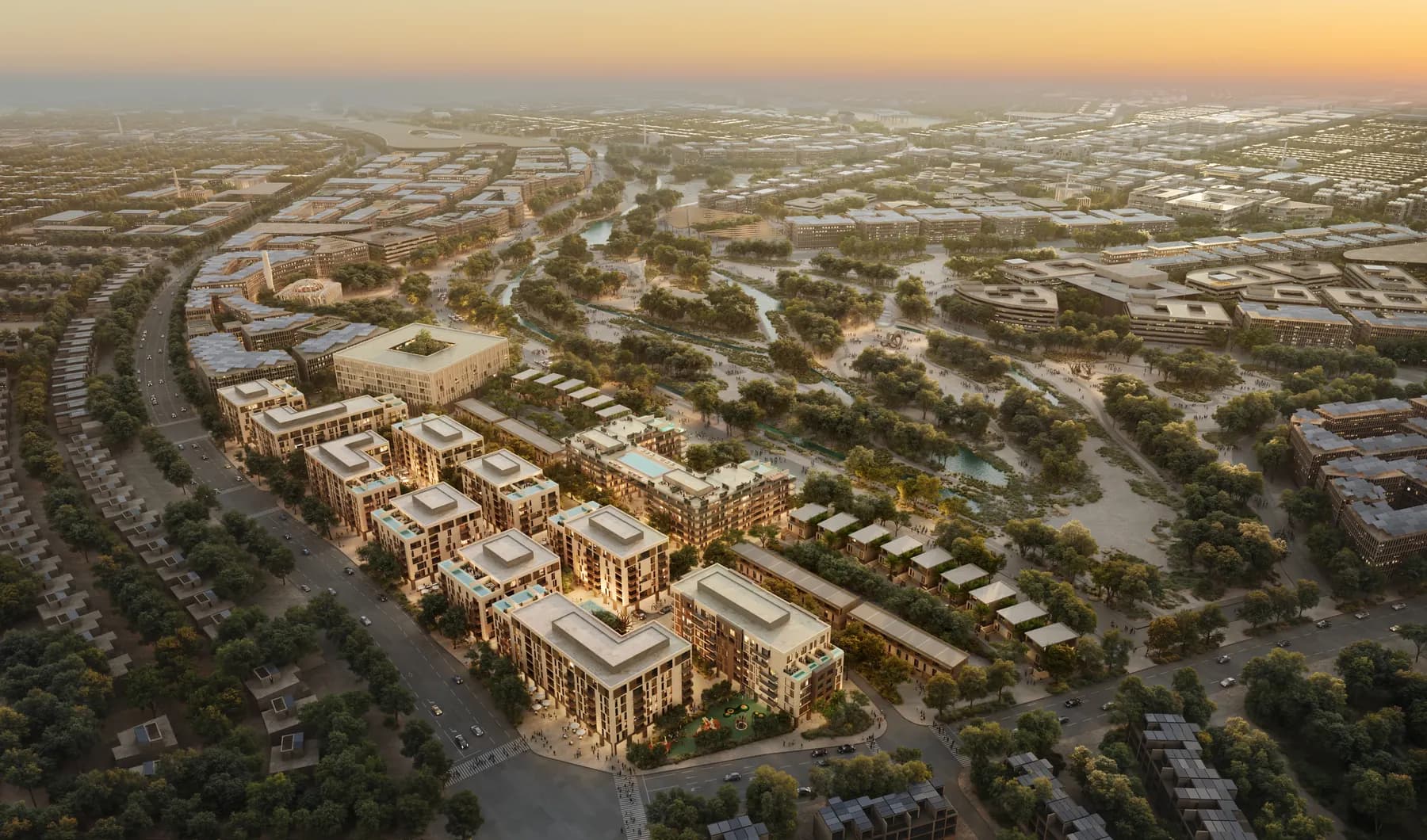
The Omnia Desk will update this report when the third-quarter price index is published, and no later than 15 December 2026. For the market thesis, see the Oman property investment hub and our read on why Oman property prices are rising. To see what is available now, browse developments in Oman, including Wadi Zaha in Sultan Haitham City.
Advisory
Talk it through, privately.
An Omnia advisor on availability, structuring and timing across these markets.

 Your Omnia desk
 AvailableSultan Haitham CityWadi ZahaStarting fromOMR 43,050TypeResidencesExplore residence