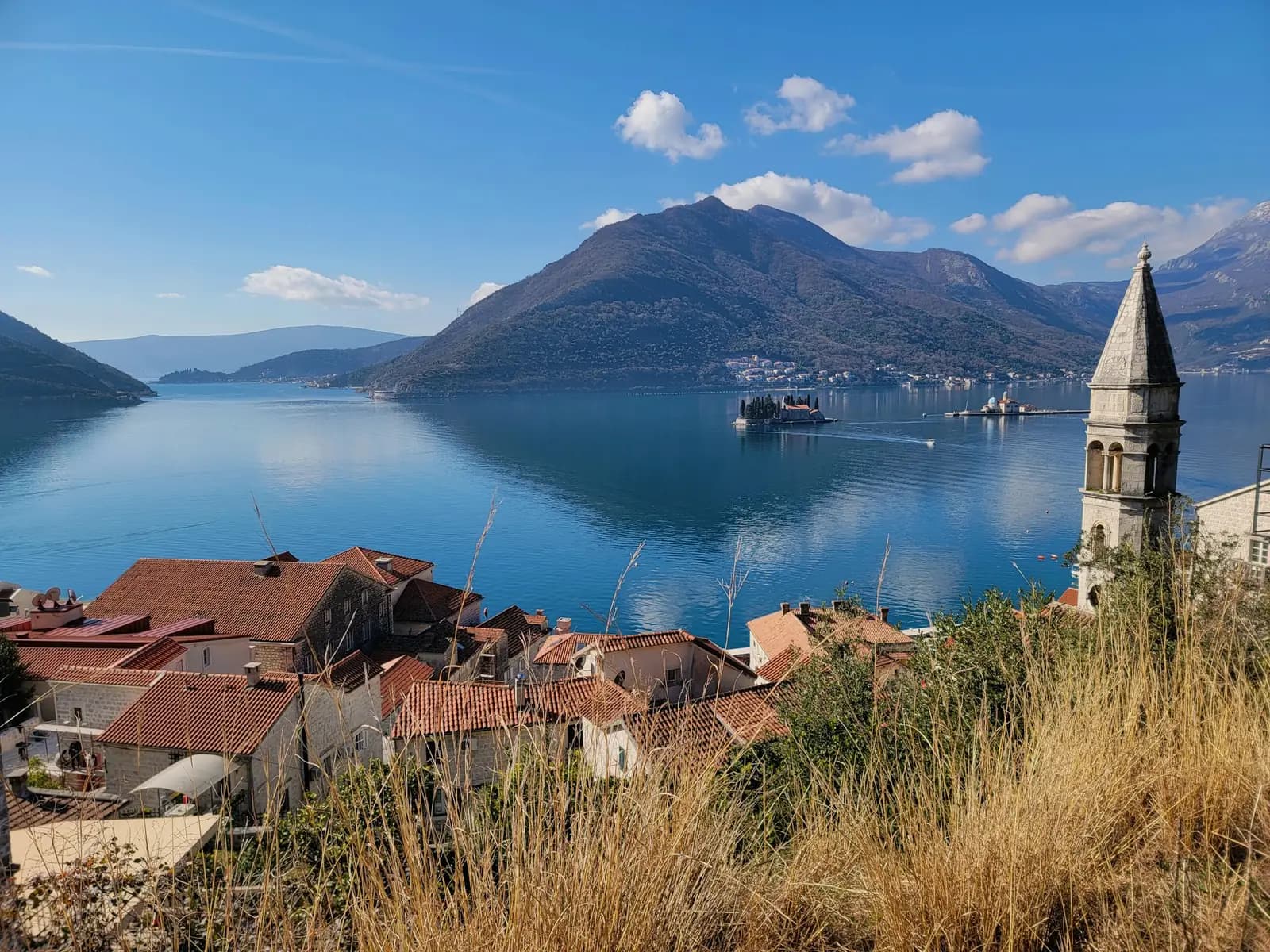
Montenegro might be small, but it packs some serious property prices into its dramatic coastline. This Adriatic gem has quietly become one of Europe’s fastest-moving markets, where medieval towns meet superyacht marinas and figures that would make Monaco residents nod in recognition. National prices surged by roughly 20% in 2024 and rose another 10 to 14% in the twelve months to mid-2026, and nowhere has that pull been sharper than on the coast. From a fortified island where film stars once vacationed to brand-new marina communities with golf on the way, Montenegro’s most expensive areas tell stories of transformation and value. Here is where the serious money sits in 2026, and why the most expensive places to live in Montenegro hold their worth.
This is where superyachts dock next to medieval fortresses. The country’s priciest coastal havens are where authentic heritage meets new development, and each one offers a distinct case for buyers weighing where to live in Montenegro. We have ranked them by price per square metre, from the highest peaks of the market down to the dependable workhorses, with every band drawn from current market trackers rather than house assertion.
How Montenegro became this expensive.
A decade ago, the idea that a slice of the Adriatic between Croatia and Albania would command Monaco-adjacent prices would have sounded optimistic. Montenegro changed that story quietly, one development at a time, and then loudly: the national index jumped about 20.8% in 2024, far above the European average, and coastal towns ran hotter still. The coastline is short and the buildable land scarce, which means that as international demand arrived, prices in the best-located pockets had nowhere to go but up. The most expensive places to live in Montenegro are not expensive by accident; they are the handful of addresses where heritage, marine access and resort-grade amenity overlap.
Two forces did most of the work. The first is the marina-and-resort model that Porto Montenegro pioneered and Lustica Bay, Portonovi and others have since scaled: take a stretch of waterfront, add deep-water berths, hotels, retail and year-round services, and a seasonal vacation strip turns into a place people can live. The second is heritage scarcity, the medieval walls of Kotor and the fortified island of Sveti Stefan, where the supply of authentic stone architecture is fixed and protected. One model manufactures value through investment; the other protects value through constraint. The priciest corners of the country tend to do one or the other extremely well.
Layered on top is a buyer base that does not depend on any single economy. Historically Russian, Serbian and British purchasers each arrived for different reasons, and that mix kept the high end steadier than a market reliant on local wages ever could. Since 2022, sanctions have dampened Russian inflows and the base has diversified further, drawing more Western European, Gulf and Turkish buyers. Add a credible EU candidacy, improving roads and airports, and tourism numbers that keep climbing, and the result is a market that prices like a small, maturing European destination rather than a frontier. The figures below rank that market from its highest peaks to its dependable foundations.
The most expensive places in Montenegro.
At a glancePorto Montenegro, Tivat.
Roughly €6,000 to €15,000 per m², with prime waterfront above €15,000. The most developed marina community: around 450 berths, superyachts up to about 250 metres, and roughly 150% appreciation over fifteen years.
Lustica Bay.
Around €3,500 to €6,500 per m². A ~€1.5-1.6bn Orascom-government development whose Gary Player golf course is still under construction, with the first holes opening from 2026.
Portonovi, Herceg Novi.
Indicatively around €12,000 per m² at the top. Home to Europe’s first One&Only resort, which opened in May 2021, backed by Azerbaijani developer Azmont Investments.
Sveti Stefan Island.
€3,000 to €6,000 per m². A 15th-century fortified island, properties from €105,000 to €8,800,000, where the Aman resort reopens in summer 2026 after a five-year closure.
Kotor Old Town.
Around €3,500 to €6,000 per m². UNESCO World Heritage walls, gross rental yields near 4.4 to 4.8%, and Tivat airport minutes away.
Budva.
Around €2,700 to €4,000 per m². The coast’s tourism volume leader, with gross yields of roughly 5.4 to 6.8%, the strongest on the coast for rental cash flow.
Porto Montenegro and Tivat: the marina at the top.
Price per square metre: roughly €6,000 to €15,000, prime waterfront above €15,000. What started at €4,000 per square metre in 2010 now reaches €15,000 and beyond for the best berths and penthouses. Market trackers put the broad marina band at around €5,000 to €8,000 per square metre, with prime waterfront villas and penthouses climbing past €15,000. Porto Montenegro did not just grow, it transformed from an ambitious idea into Montenegro’s most developed marina community, and it makes Tivat the most expensive address on the coast.
This is not your typical waterfront development. With around 450 berths, rising toward 850 on full completion, and the capacity to accommodate vessels up to about 250 metres, Porto Montenegro attracts the kind of international residents who think nothing of sailing from Monaco to Montenegro for dinner. It is recognised as the world’s first Platinum-rated marina, and that infrastructure is what makes the lifestyle possible.
Here is what makes it interesting from an investment perspective: Porto Montenegro has become a year-round destination. The SIRO Boka Place hotel opened on 15 May 2025 with around 240 rooms, the wellness brand’s second hotel after One Za’abeel in Dubai, and it joins a shopping centre, cinema and entertainment facilities that answer the traditional problem of seasonal coastal property. When you can live comfortably in winter, values shift from vacation homes toward primary residences.
There is a school here too, and it matters for families. Knightsbridge Schools International (KSI) Montenegro sits inside Porto Montenegro at Tivat: an IB World School for ages three to eighteen, day and boarding, and the only one of its kind in the country. For an international family weighing permanent residency over a summer let, that single fact changes the calculation.
Clients who invested early have watched their properties appreciate by roughly 150% over fifteen years, around 5 to 10% a year over the past decade, with stronger gains on prime marina-view units. That is not speculation, it is the result of thoughtful development meeting genuine international demand. The €4,000 starting point in 2010 measured raw waterfront; the figure today measures a finished, year-round community, and the difference between those two numbers is the development itself. It is why the cost of Porto Montenegro property sits at the very top of the table.
Lustica Bay: the golf course on the way.
Price per square metre: around €3,500 to €6,500. Imagine a multi-billion-euro development reshaping an entire peninsula, anchored one day by Montenegro’s first 18-hole golf course. That is Lustica Bay, a joint venture between Egyptian developer Orascom and the Montenegrin government, a project of roughly €1.5 to €1.6 billion. Current listings put pricing at about €3,500 to €6,500 per square metre: golf-view villas and townhomes run €4,500 to €6,500, with other stock from €3,500 to €5,000.
The scale is considerable: the masterplan now runs to more than 300 villas, over 3,000 apartments, seven hotels and a community planned for around 6,000 residents, alongside marinas, a school and medical facilities. The Mediterranean architecture uses local stone and wood, creating authentic appeal while meeting international standards.
The golf is the headline, and the honest version is that it is still being built. The Gary Player championship course is under construction: roughly nine holes are expected to open between autumn 2026 and May 2027, with the full eighteen following between autumn 2028 and May 2029. It is set to be one of the rare courses worldwide with sea views from every hole, which is precisely why developers expect golf-facing residences to carry a premium. For now, though, that premium is a forecast rather than a track record, and buyers should price it as such.
What also sets Lustica Bay apart is payment flexibility. The developer markets staged payment plans that can ease entry compared with the full upfront payment long common on the coast; treat the specific terms as developer-stated and confirm them directly rather than as a fixed market rule. The logic of the price band is the phasing: a town being assembled over many years lets you choose where on the build curve to step in. Early, off-plan and inland costs less and carries development risk; finished and golf-facing will cost more once the course is complete.
On what the prices mean
Montenegro’s expensive areas are more than premium pricing. They show how geographic beauty, strategic development and international connectivity create lasting property value.
Portonovi: resort living near Herceg Novi.
Price per square metre: indicatively around €12,000 at the top. Portonovi opened in May 2021 with serious backing from Azerbaijani developer Azmont Investments and a clear vision: bring the first One&Only resort in Europe to Montenegro. Set at the entrance to the Bay of Kotor near Herceg Novi, it was a genuine first for the brand on the continent, and it gave the western bay a five-star anchor to sit alongside Tivat’s.
The positioning is family-minded as well as marine: deep-water berths for larger vessels, full resort amenities and a setting built for year-round living rather than a summer fortnight. Combined, they target international families seeking a permanent Mediterranean base.
On price, the top of Portonovi’s branded residences is reported around €12,000 per square metre. Treat that as indicative: it sits within the upper bay band but is thinly covered by the independent trackers that map Tivat, Kotor and Budva more closely. What is not in doubt is the positioning, the integrated approach of resort, marina and residential community that supports prices at this end of the market.
Sveti Stefan Island: heritage, and a 2026 comeback.
Price per square metre: €3,000 to €6,000. Picture this: a tiny fortified island connected to the mainland by a narrow strip of sand, where Elizabeth Taylor and Sophia Loren once strolled the cobblestone streets in its mid-century heyday. Today, Sveti Stefan commands some of Montenegro’s highest property prices, and for good reason.
This is not just expensive real estate, it is living history. The 15th-century stone cottages that once housed fishermen now serve as some of Europe’s most coveted residences. Properties here range from €105,000 for smaller apartments to a striking €8,800,000 for substantial villas.
The single most important 2026 update belongs here. The Aman resort that the island is known for was closed from 2021 to 2026 amid a long beach-access dispute, and it returns this summer: the mainland Villa Milocer reopened on 22 May 2026 and the island itself follows on 1 July 2026, with Montenegro receiving a 10% share of resort profits under the settlement. So the right way to read Sveti Stefan now is as a comeback, not a continuity. Five years dark, and a 2026 reopening that puts the address back in the international conversation.
What makes this area particularly valuable is its protected status: you cannot just build more Sveti Stefans. It is a protected cultural site rather than, strictly, a UNESCO World Heritage listing (that distinction belongs to nearby Kotor), but the effect on supply is the same. The spread between €105,000 and €8,800,000 tells you something important: this is not a single product but a tiny, finite collection of them. Because the island cannot grow, that range will not be diluted by fresh supply, and a buyer at any point on the scale is purchasing scarcity as much as square metres. That is the quiet logic behind Montenegro’s most expensive heritage real estate, and the Aman’s return only sharpens it.
Kotor Old Town: the cost of UNESCO walls.
Price per square metre: around €3,500 to €6,000. Kotor’s old town and neighbouring Dobrota now trade at roughly €3,500 to €6,000 per square metre, so the entry point inside the walls is the floor rather than the norm. A compact apartment within the fortifications is the classic Kotor purchase, and it shows how UNESCO World Heritage status translates into value: the scarcity inside the walls is fixed, so the price you pay buys protected supply as much as floor area.
These are not just numbers, they represent a proven strategy. Gross rental yields of 4.4 to 4.8% are recorded across the Kotor and Tivat bay, a dependable return that holds up against far larger Mediterranean cities once expenses are netted off. The UNESCO protection provides legal safeguards against inappropriate development while creating the scarcity that supports long-term value.
On access, one correction worth making: the airport that serves Kotor is Tivat airport, about eight kilometres and fifteen minutes away, not an airport in Kotor itself. That proximity is what keeps these properties within easy reach of European buyers. The combination of heritage protection, dependable yields and a short hop to the runway creates compelling mathematics.
It is worth holding the Kotor logic in mind, because it is the clearest case in the whole market. Buy inside the walls and the gross yield sits in the 4.4 to 4.8% band recorded across the bay. The reason it holds is the UNESCO protection: it caps the supply of competing apartments while the tourism demand it helps create keeps the beds full, with the high season now stretching from April to October. Heritage status here is not a museum constraint, it is the engine of the yield.
المجلة · مجانية، شهرية
أعجبك العدد؟ دع العدد القادم يصلك.
رسالة واحدة مدروسة في الشهر. إلغاء الاشتراك بنقرة واحدة.
Budva: tourism volume that pays.
Price per square metre: around €2,700 to €4,000. Budva might not have the polish of Kotor Bay or the marina appeal of Porto Montenegro, but it has something equally valuable: massive tourism volume. Budva centre now runs at roughly €2,700 to €4,000 per square metre, with Bečići and the old town higher, and the city is the coast’s leader for summer arrivals and overnight stays. That demand creates the rental market that supports property investments across cycles.
The Budva Riviera includes Bečići and Petrovac, where property prices can mirror the pricier parts of Kotor Bay. But Budva offers something different: proven tourism infrastructure and the beach-and-nightlife appeal that generates consistent rental income, with gross yields of roughly 5.4 to 6.8%, among the strongest on the coast.
Tourism is not immune to wobbles, and arrivals can soften in any given off-season. Even so, Budva’s underlying volume keeps cash flow reliable across global conditions. Properties here serve a practical purpose: steady yields from established visitor patterns.
What is driving these high prices.
International buyers shape the market. Russian, Serbian and British buyers have long dominated Montenegro’s high-end market, each with different motivations. Since 2022, sanctions have dampened Russian inflows, and the base has diversified toward Western European, Gulf and Turkish purchasers. That breadth is part of why the high end has stayed resilient: when buyers come from different countries with different reasons, the market is less exposed to any single regional downturn.
Infrastructure investment creates value. The country’s national surge has lifted coastal values broadly, and Bar is a clear case in point: it rode roughly a 20% rise as the wider market climbed, with the €1 billion Bar-Boljare highway, connecting the port of Bar toward the Serbian border, the headline driver near the town. New connectivity reliably translates into measurable property value across Montenegro’s coast.
Montenegro’s EU candidacy adds a layer of long-term potential. The country is the accession frontrunner and is targeting EU membership around 2028; that remains a forward driver rather than a present-day fact, but it is a credible one that could draw further foreign investment and demand.
The 2026 market outlook.
Price growth expectations. After the 2024 surge of about 20.8% and a further 10 to 14% rise in the twelve months to mid-2026, the full-year 2026 forecast lands at roughly 8 to 11%, within a realistic range of about 5 to 14%. The national median sits near €2,300 to €2,450 per square metre in early-2026 figures. The older 3 to 7% number now describes the longer-run moderation expectation rather than the present pace; growth this strong reflects genuine demand, more international buyers, better infrastructure and rising tourism, rather than speculative froth.
New trends shaping value. Smart home technology and energy efficiency are becoming standard expectations. Properties with outdoor spaces command a premium as buyers prioritise balconies, terraces and gardens. Eco-friendly buildings align with Montenegro’s sustainability commitments while attracting environmentally conscious buyers.
Living costs put the prices in perspective.
Monthly living expenses for a single person run about €700 to €900, while a family of four needs roughly €2,000 to €2,500 a month excluding rent. These figures, well below Western European equivalents, support the lifestyle appeal driving international demand. One caveat worth holding: coastal towns tend to run 20 to 40% above the capital, Podgorica, so a Tivat or Budva budget sits at the upper end of these ranges.
When a comfortable life costs around €1,000 a month and provides a Mediterranean climate, dramatic mountain and sea views, and improving infrastructure, the property prices start making sense. You are not just buying real estate, you are accessing a complete lifestyle at an accessible cost.
Where to live in Montenegro: matching area to strategy.
Montenegro’s most expensive areas offer different value propositions:
- Sveti Stefan provides protected heritage appeal with supply constraints, and an Aman resort back open in 2026.
- Porto Montenegro delivers marina lifestyle at Tivat with year-round amenities and the country’s only IB school.
- Lustica Bay offers new development with golf on the way from 2026.
- Portonovi combines One&Only resort living with a family-minded base near Herceg Novi.
- Kotor provides UNESCO heritage protection with proven tourism demand and dependable yields.
Each area attracts different buyer profiles and strategies. The key is matching your priorities, whether heritage charm, marina access, golf lifestyle or rental yield, with the area that best delivers those specific benefits.
The investment reality.
Montenegro’s expensive areas represent more than premium pricing. They demonstrate how geographic beauty, strategic development and international connectivity create lasting property value. From Sveti Stefan’s protected heritage to Lustica Bay’s coming golf course, each location offers distinct advantages, and each carries its own timeline and risk.
Understanding these markets means reading both current pricing and the forces driving long-term value, and treating forecasts as forecasts. For international buyers seeking properties that combine lifestyle appeal with appreciation potential, Montenegro’s coastal developments offer compelling opportunities backed by continued infrastructure investment and a market that has been among Europe’s strongest movers.
Reading the most expensive areas in Montenegro.
Field notesBuy the constraint, not the view.
Sveti Stefan and Kotor hold value because their supply cannot expand. Protected status and limited stone architecture do the heavy lifting that a marketing brochure cannot.
Year-round changes the maths.
Seasonal coastal homes price as vacation property; a winter-viable address (Porto Montenegro’s SIRO hotel and KSI school, Portonovi’s resort) prices as a primary residence. The amenity stack is the difference.
Price the golf as a forecast.
Lustica Bay’s Gary Player course is still under construction, with first holes from 2026 and the full eighteen by about 2028-29. The premium developers expect is a projection, not yet a track record.
Yield lives in Kotor and Budva.
A flat inside Kotor’s walls earns gross yields of 4.4 to 4.8%, in line with the wider bay. Budva’s tourism volume backs even stronger yields of roughly 5.4 to 6.8%.