The United Arab Emirates offers expatriates two contrasting worlds an hour apart. Dubai, a metropolis of nearly 3.9 million, pulses with skyscrapers, malls and ceaseless energy. Ras Al Khaimah, the most northerly emirate, now home to roughly 400,000 residents, rests against the Hajar Mountains, its beaches and mangroves keeping a calmer rhythm. In the InterNations Expat City Ranking 2024, RAK placed sixth of 53 cities and Dubai tenth, and RAK came first in the world for expat essentials and second for working abroad, on the strength of affordability and how easily newcomers settle in. This editorial compares expatriate life in RAK and Dubai in 2026, across cost of living, housing, community, careers, recreation, education, healthcare and the future, to guide anyone choosing between these two emirates.
Cost of living: Ras Al Khaimah vs Dubai.
Expatriates face distinct financial landscapes in RAK and Dubai. Both emirates offer tax-free salaries, with no personal income or capital gains tax, but everyday expenses diverge.
RAK’s affordable comfort. RAK’s overall cost of living runs about 28% lower than Dubai’s, per Numbeo: a family of four spends in the region of AED 12,900 a month before rent on groceries, utilities and dining, against around AED 14,700 in Dubai. Day-to-day costs, from a coffee to a meal out, sit noticeably lower than in Dubai. School fees at RAK Academy run from roughly AED 17,000–42,000 a year, rising with the senior and IB Diploma years. The savings are real, but petrol is not one of them: UAE fuel prices are deregulated and uniform nationwide, so RAK pays the same as Dubai.
Dubai’s high-end hustle. Dubai’s costs match its global stature. A family of four spends around AED 14,700 a month before rent, per Numbeo, and everyday items from coffee to dining out sit above RAK’s. International schools such as GEMS Dubai American Academy charge about AED 66,000–93,000 a year for 2026-27, per the school. Taxi fares, Downtown parking and a premium dining and events scene add up. Dubai rewards aspiration, and charges for it.
Housing: room to breathe vs urban status.
Housing defines expatriate life, with RAK offering spacious value and Dubai prioritising proximity and status. The arrival of Wynn Al Marjan Island has begun to move RAK numbers sharply, so quote ranges, not single points.
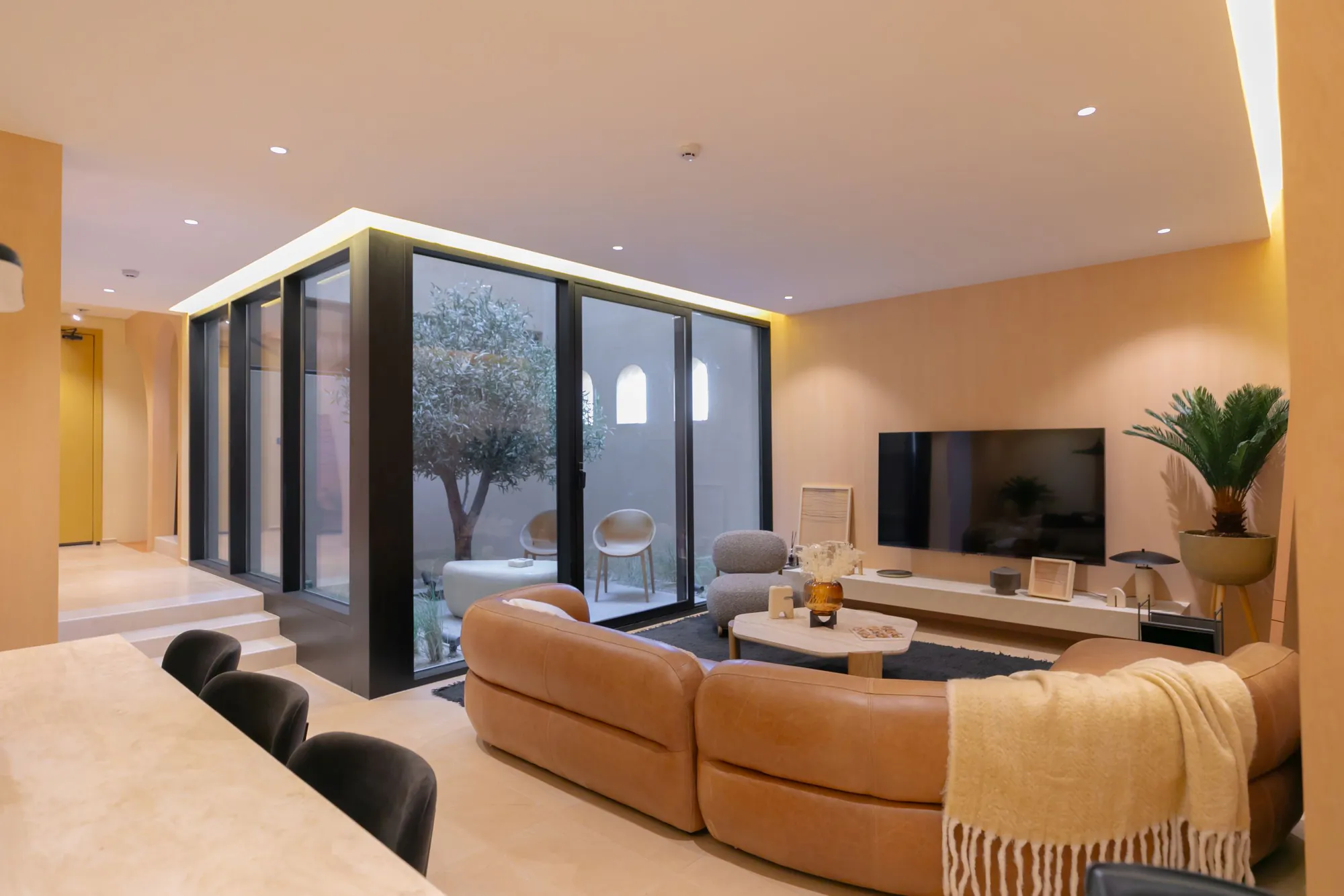
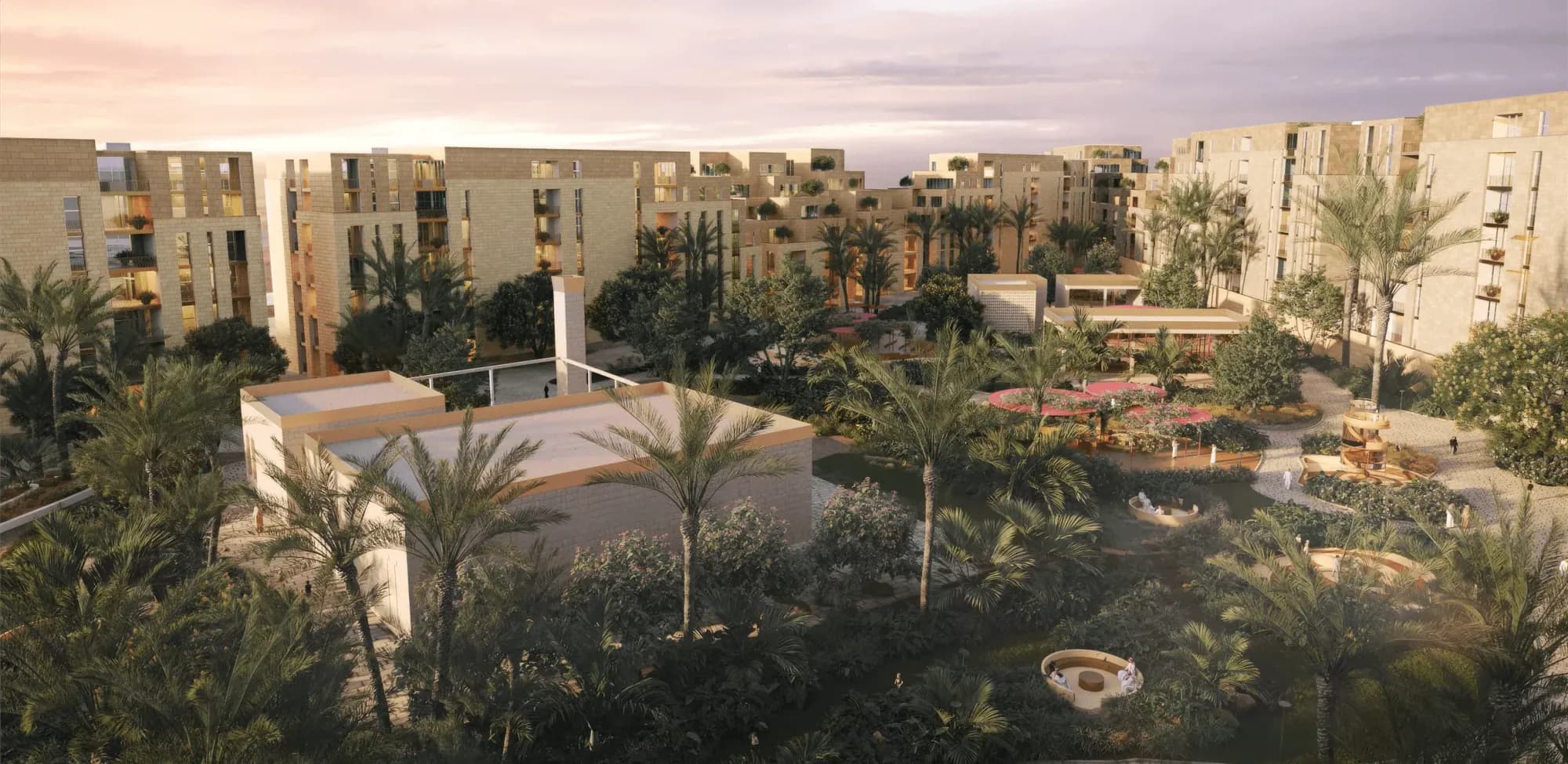
RAK’s generous spaces. RAK suits families and anyone seeking room, with apartments at the budget end well below their Dubai equivalents. Villas and townhouses in Mina Al Arab, including Flamingo Villas, advertise across a wide band, rising with the community and the sea views, per Bayut. On the sale side, Wynn-led demand has reset prices: Al Hamra Village townhouses now start around AED 1.4–1.6m, well above the old budget benchmarks, per Property Finder. Annual rent payments are common, often offset by employer allowances.
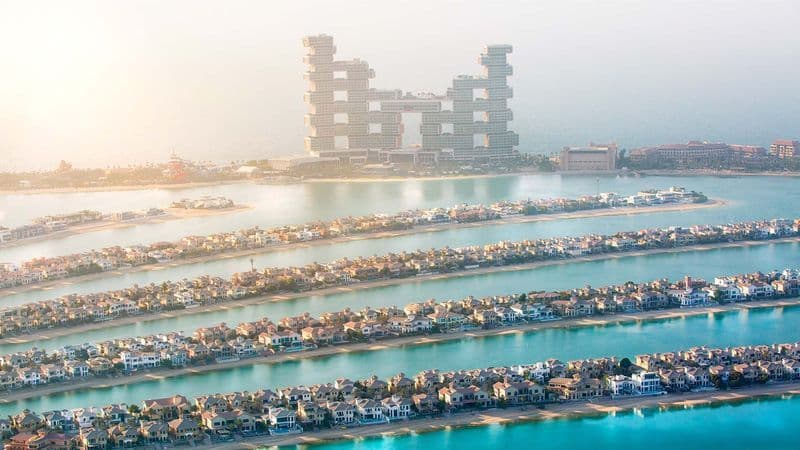
Dubai’s sleek high-rises. Dubai’s housing reflects its urban flair. A one-bedroom apartment in a sought-after tower community like Dubai Marina commands a clear premium over its RAK equivalent, rising with the view and the floor, and villas in family communities like Arabian Ranches sit higher again. Monthly or quarterly rent suits shorter postings, and furnished units stay in demand. Dubai’s towers offer proximity to everything, with less space per dirham than RAK.
On the choice itself
One emirate offers room to breathe; the other offers the centre of everything. Ras Al Khaimah or Dubai is rarely a question of money alone.
Community: living in Ras Al Khaimah vs Dubai.
Community shapes expatriate experiences, with RAK fostering intimate bonds and Dubai offering a global but more transient network.
RAK’s warm connections. RAK’s roughly 400,000 residents, a mostly expatriate community alongside a higher Emirati share than Dubai, make for a close-knit vibe. Areas like Al Hamra Village host beach barbecues and yoga, per Mina Al Arab. Newcomers are welcomed at events like the Ras Al Khaimah Art Festival or pearl-diving tours, per Visit Ras Al Khaimah. Learning a little Arabic is appreciated, and InterNations ranks RAK first in the world for expat essentials, with friendships forming quickly.
Dubai’s diverse whirl. Dubai’s expatriates, around 90% of its population, span 200-plus nationalities and form a cosmopolitan hub. Social life in Dubai Marina runs to brunches and expat clubs. Emirati traditions can be overshadowed by global events like Dubai Shopping Festival, per Visit Dubai. The city’s transient nature can make deep connections harder, though the networking is relentless.
Career opportunities: niche vs global.
Work drives relocation, with RAK offering stable niches, sharpened by the Wynn build, and Dubai a competitive global stage.
RAK’s steady, and rising, prospects. RAK’s diversified economy spans tourism, manufacturing and logistics, with roles in education, hospitality and trade. The Ras Al Khaimah Economic Zone (RAKEZ) welcomed 13,141 new companies in 2024, a 66% rise that took it to around 30,000 companies, and added more than 3,490 in the third quarter of 2025 alone, with India its top source market, per Economy Middle East. Wynn Al Marjan Island is expected to add a wave of hospitality and gaming roles as it opens, a sector new to the emirate. RAK ranks second in the world for working abroad in the InterNations 2024 study, a strong fit for those seeking stability with momentum.
Dubai’s high-stakes arena. Dubai’s finance, tech and trade hub offers roles in free zones like Dubai Internet City. The market is competitive, rewarding ambition but demanding long hours, and rush-hour congestion on Sheikh Zayed Road can be heavy. Dubai’s scale suits career-driven expatriates chasing rapid growth.
Recreation and lifestyle: nature vs glamour.
Leisure shapes expatriate satisfaction, with RAK offering natural escapes and Dubai urban thrills.
RAK’s outdoor haven. RAK’s 64 kilometres of coastline and the Hajar Mountains make room for kayaking in Mina Al Arab’s mangroves and the world’s longest zipline, the 2.83-kilometre Jais Flight at Jebel Jais, per Visit Ras Al Khaimah. Al Hamra Golf Club’s 18-hole course draws enthusiasts, per Al Hamra Golf Club. Resort dining in Mina Al Arab is relaxed and family-friendly, and the nightlife is low-key by Gulf standards, per Mina Al Arab.
Dubai’s urban spectacle. Dubai’s recreation spans Burj Khalifa visits and desert safaris to Dubai Mall’s aquarium and skating rink, per Visit Dubai. Beach clubs and venues in JBR thrive, and Downtown dining sits at a premium. The city’s high-energy pace appeals to thrill-seekers, and can overwhelm anyone seeking calm.
المجلة · مجانية، شهرية
أعجبك العدد؟ دع العدد القادم يصلك.
رسالة واحدة مدروسة في الشهر. إلغاء الاشتراك بنقرة واحدة.
Education: nurturing young minds.
Education is critical for expatriate families, with RAK offering affordable quality and Dubai a deeper bench of options.
RAK’s community schools. RAK’s schools, including RAK Academy, offer British and IB curricula from roughly AED 17,000–42,000 a year, with secondary and IB Diploma years running higher, per Which School Advisor. Smaller cohorts in Al Hamra Village allow more personalised learning, and community activities like eco-tours enrich children’s lives, per Mina Al Arab.
Dubai’s deep school bench. Dubai’s 200-plus international schools, such as GEMS Dubai American Academy, charge about AED 66,000–93,000 a year for 2026-27. Top Jumeirah schools have long waitlists, and commutes can stretch. Activities like Ski Dubai keep children busy, though the pace can limit family time.
Healthcare: accessible vs advanced.
Healthcare access influences expatriate decisions, with both emirates requiring private insurance under UAE rules.
RAK’s reliable care. RAK’s hospitals, like RAK Hospital, offer quality care with short waits. The emirate’s mandatory Essential cover starts at around AED 499 a year, and broader expat plans commonly run from roughly USD 800 to 1,900, per Pacific Prime. Care is easy to reach in areas like RAK Downtown.
Dubai’s cutting-edge facilities. Dubai’s hospitals, such as Mediclinic City, provide advanced care with abundant specialists, though premium clinics can carry longer waits. Plans sit toward the upper end of that UAE expat range, reflecting the city’s deep medical infrastructure.
Cultural integration and social life: building roots.
Expatriates seek cultural engagement and social networks, with RAK offering warmth and Dubai global diversity.
RAK’s cultural openness. RAK’s smaller community encourages integration. Expatriates join the RAK Half Marathon or visit the Suwaidi Pearl Farm, per Visit Ras Al Khaimah. Local cafes in RAK Downtown foster friendships, and community events in Al Hamra Village build bonds, per Al Hamra. The welcoming vibe helps newcomers feel at home quickly.
Dubai’s global network. Dubai’s 200-plus nationalities create a diverse scene. Expat clubs in Business Bay and events at Dubai Opera offer connection, per Visit Dubai. Emirati culture can feel distant amid the global focus, and a transient population challenges lasting ties. Social life is lively, if often surface-level.
Future prospects: RAK’s ascent vs Dubai’s reign.
RAK and Dubai offer distinct futures, shaped by economic and lifestyle trends.
RAK’s quiet rise, now loud. The defining RAK story is Wynn Al Marjan Island, the first integrated casino resort in the MENA region: a roughly USD 5.1bn project on a 70-storey tower with about 1,530 rooms, targeted to open in 2027 and reshaping the emirate’s tourism, jobs and property in the run-up. Underpinning it, S&P forecasts RAK GDP growth of about 3.3% across 2025–26, rising toward 4.3% in 2027–28, and rates the emirate A/A-1 stable. Affordable living and a community focus make RAK a sustainable long-term choice.
Dubai’s global dominance. Dubai’s economy is forecast to grow at roughly 4.5% for 2026 by the Department of Economy and Tourism and Emirates NBD, per Christie’s Real Estate Dubai. Hubs like Dubai Internet City keep its career leadership, and its connectivity keeps it a magnet, though high costs test longevity. Dubai remains the choice for global ambition.
Ras Al Khaimah or Dubai: which suits you.
Field notesChoose RAK for the budget.
The cost of living runs about 28% lower than Dubai. A family of four spends roughly AED 12,900 a month before rent, against around AED 14,700 in Dubai. Petrol is the same in both, so it is not a RAK saving.
Choose RAK for space and family life.
RAK rewards room to breathe: apartments at the budget end well below their Dubai equivalents, villas and townhouses in Mina Al Arab across a wide band, and a close-knit community that InterNations ranks first in the world for expat essentials and second for working abroad (2024).
Buy into RAK before Wynn opens.
Wynn Al Marjan Island, the MENA region’s first integrated resort, is a roughly USD 5.1bn project opening in 2027. Demand has already reset prices: Al Hamra Village townhouses now start around AED 1.4–1.6m.
Choose Dubai for the career stage.
Finance, tech and trade free zones like Dubai Internet City reward ambition, with a global network of 200-plus nationalities, though long hours and Sheikh Zayed Road congestion come with it.
Choose Dubai for glamour and connectivity.
Burj Khalifa, Dubai Mall, 200-plus international schools and hospitals like Mediclinic City make Dubai the high-octane choice, at a premium that can challenge longevity.
The verdict: calm ascent or relentless drive.
Ras Al Khaimah offers expatriates affordability, nature and community, a calm counterpoint to Dubai’s high-octane glamour and opportunity, with the Wynn-led boom adding momentum it has never had before. RAK’s lower costs, spacious homes and cultural warmth suit families and those seeking balance, while Dubai’s global stage, deep amenities and career prospects draw ambitious urbanites. Both emirates, tax-free and dynamic, cater to expatriates, but the choice hinges on priorities: RAK’s calm ascent or Dubai’s relentless drive. Wherever you settle, the UAE’s promise of growth and momentum delivers.