In brief
- Saudi Arabia’s Red Sea attention is wide, but transactable residential investment concentrates in Jeddah, the Kingdom’s primary Red Sea gateway, where units can be reserved today, title can be registered, and real rental and resale markets already function.
- Foreigners can now buy in Jeddah under the M/14 law, in force since 22 January 2026, but only inside REGA designated zones. Check the green or grey status of any plot on the Saudi Properties portal, and budget a cost stack of roughly 10% on a non-Saudi purchase.
- Three live developments illustrate the tiers: Four Seasons Private Residences on the Corniche (76 branded residences, handover read toward mid-2027), Dar Global’s ~1,000,000 sqm Amaya masterplan on King Abdulaziz Road, and Trump Plaza Jeddah, the over USD 1bn district anchoring Amaya.
- The fundamentals support the case: Jeddah gross residential yields run near 7-8%, the city saw about 30,500 transactions in 2025, and waterfront megaprojects such as the 5.7m sqm Jeddah Central scheme, with its 9.5km waterfront and marina, are reshaping the coast through 2027.
Contents
- 01The reality of Red Sea coastal investment.
- 02Jeddah waterfront property and the coastal growth strategy.
- 03Four Seasons Private Residences Jeddah, on the Corniche.
- 04Amaya, Jeddah: a masterplan on King Abdulaziz Road.
- 05Trump Plaza Jeddah, the district anchoring Amaya.
- 06What investors actually evaluate in Red Sea property.
- 07Buying property in Jeddah for foreigners in 2026.
- 08Jeddah waterfront property: which tier suits which buyer.
- 09Final thought: where ownership is practical today.
Saudi Arabia’s Red Sea coastline has become one of the most searched property destinations in the Middle East. International buyers looking for Red Sea investments are increasingly exploring both large-scale tourism developments and established coastal cities such as Jeddah, where branded residences and new master-planned communities are already coming to market. This guide is about where that broad search becomes a real purchase, and for most buyers the answer is Jeddah.
The reason is simple. Tourism-led megaprojects generate global attention, but residential investment access for international buyers is concentrated where transactions, title registration and urban demand already exist. Jeddah satisfies all three. What follows sets out the foreign-ownership rules now in force, the structural fundamentals investors actually evaluate, and three live developments that map the tiers of the market, from branded waterfront residences to a city-scale masterplan.
The reality of Red Sea coastal investment.
Saudi Arabia’s western shoreline is being developed through three distinct routes:
- Long-term tourism destinations. Resort-and-hospitality megaprojects focused on visitors rather than resident owners.
- Existing urban coastal markets. Cities such as Jeddah, where residential ownership already functions today.
- City-scale redevelopment. New waterfront districts expanding the shoreline of established cities.
Tourism-led developments generate the headlines, but residential investment access for international buyers is typically concentrated in established cities where property transactions, title registration and urban demand already exist. This is why investors researching Red Sea property frequently shift toward Jeddah once they evaluate the availability of units to purchase, the ability to complete transactions now rather than years ahead, the presence of real rental and resale markets, and functioning city infrastructure supporting long-term demand.
Jeddah waterfront property and the coastal growth strategy.
Jeddah is not just a coastal city. It is the Kingdom’s primary Red Sea gateway, sitting at the intersection of the religious tourism routes to Makkah and Madinah, commercial trade through the Red Sea shipping corridor, aviation links connecting Europe, Africa and Asia, and the national urban redevelopment programs now expanding the waterfront. That combination of existing population, infrastructure and redevelopment is what typically creates the real estate liquidity investors ultimately require for resale or rental performance.
The waterfront regeneration. Government-backed initiatives continue to reshape the coastline, adding new public waterfront districts, entertainment and tourism zones, infrastructure upgrades and mixed-use masterplans. The flagship is Jeddah Central, a Public Investment Fund company developing a 5.7 million square metre scheme with a 9.5 kilometre waterfront, a yacht marina and a 2.1 kilometre beach, set to deliver about 17,000 homes and 2,700 hotel rooms inside a roughly USD 20 billion vision. Its first phase, accounting for about 45% of the project and including the beach, marina, an opera house, a stadium and an oceanarium, is targeted for completion by the end of 2027. Alongside it, the South Corniche project and a wider program to revitalise more than 50 kilometres of coastline are extending the public waterfront, adding the amenity that underpins resident and visitor demand.
The market read. The fundamentals are supportive. Jeddah gross residential yields run near 7-8%, with Global Property Guide putting the city average around 7.89%, among the stronger figures in the Gulf and helped by tourism-driven short-let demand. The city recorded roughly 30,500 residential transactions in 2025, with apartment prices ending the year near SAR 4,385 per square metre, up about 1.2% year on year, and villas near SAR 5,185 per square metre, up about 3.2%, per Global Property Guide and Cavendish Maxwell. On the rental side, the average apartment let near SAR 25,013 a year, up about 2.6%, while villa rents softened slightly. Against a total residential stock of roughly 1.23 million units, supply is building, with about 4,320 homes completed in a single quarter of 2025, roughly 18,000 units due across 2026 and a further 22,000 in 2027, easing some pressure while the city keeps growing and developers tilt toward the mid-market in the northern districts.
Source: Cavendish Maxwell, Saudi Arabia residential market performance (2025) and pipeline estimates. Indicative; confirm per project; not investment advice.
Four Seasons Private Residences Jeddah, on the Corniche.
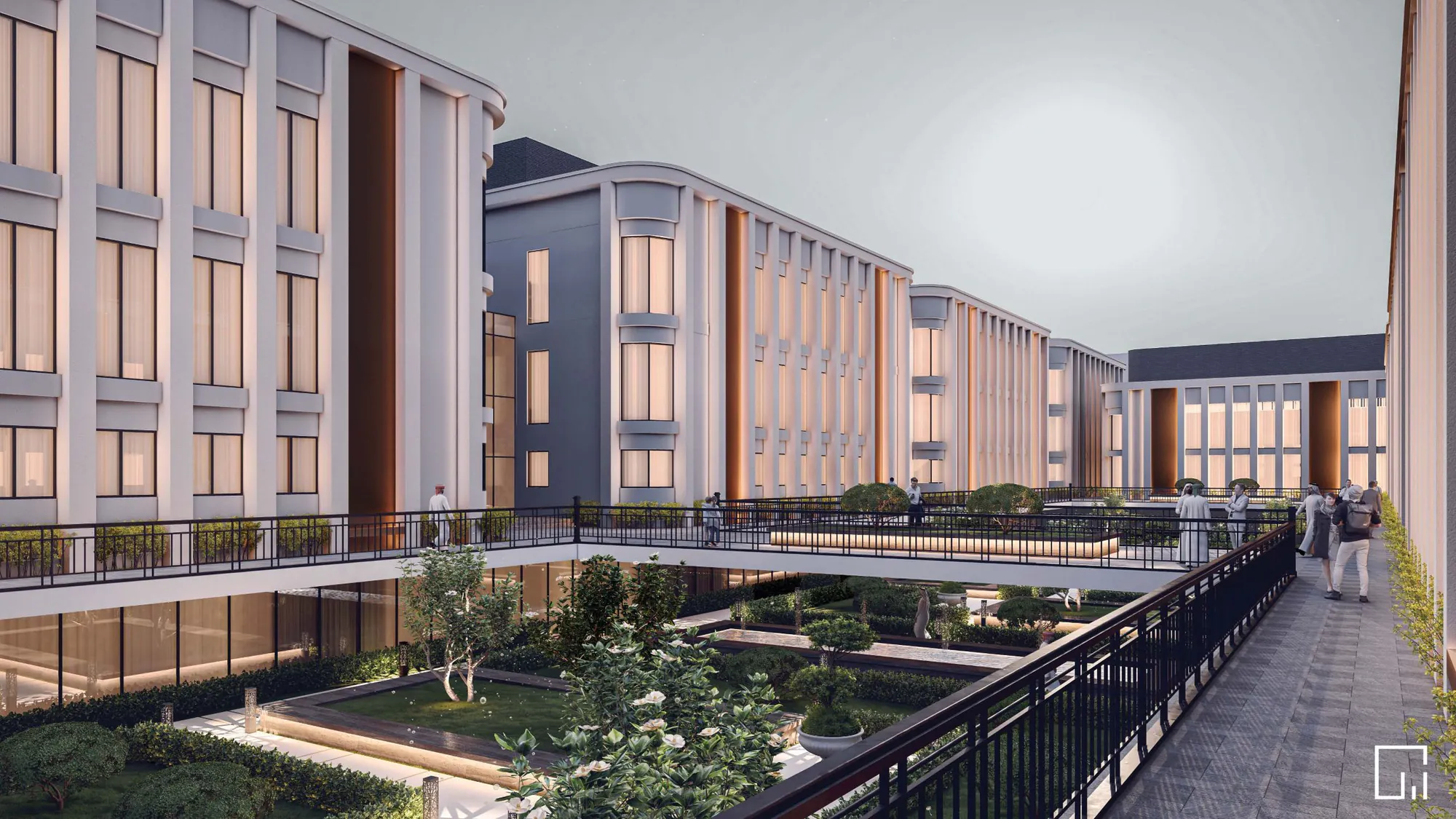
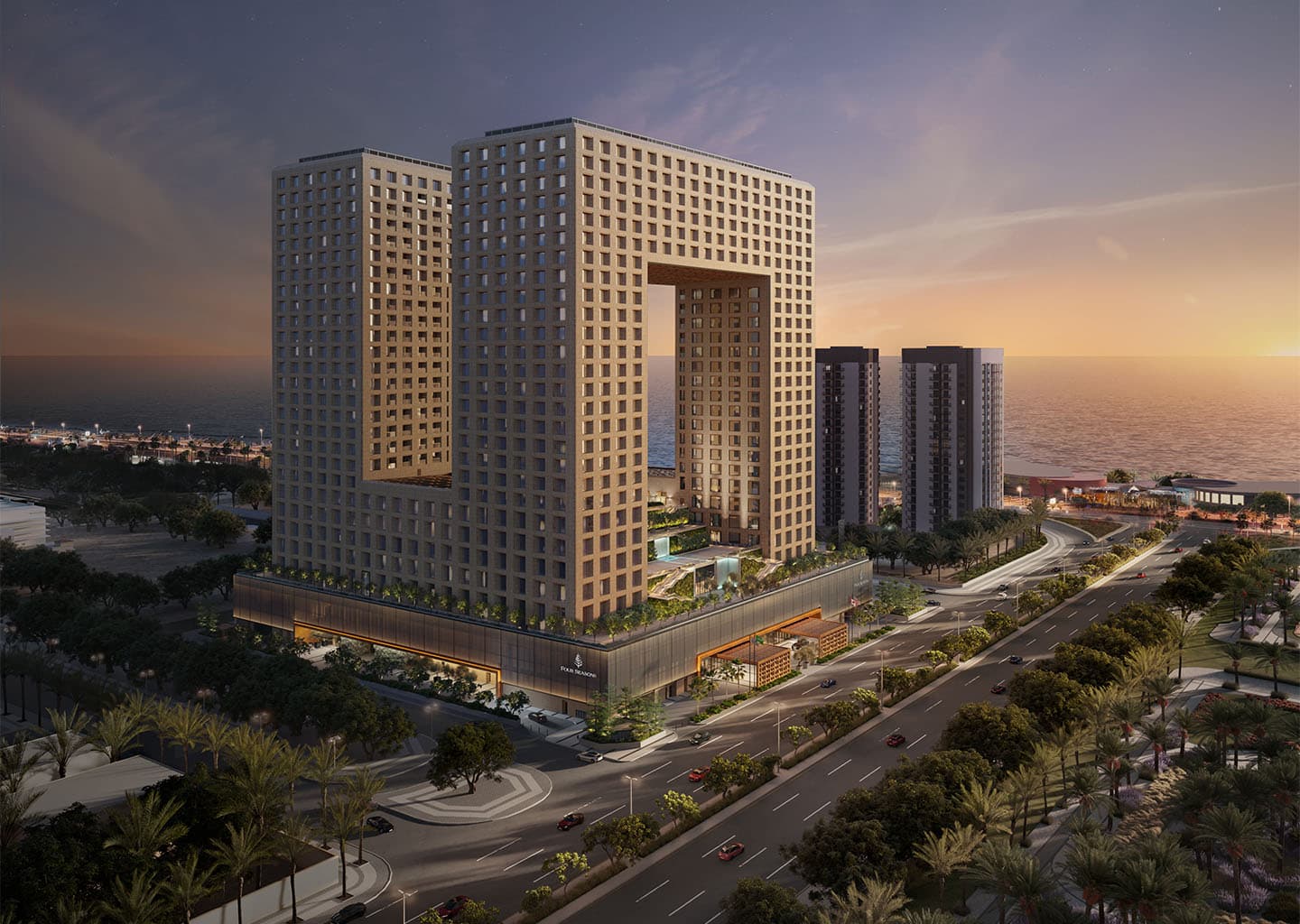
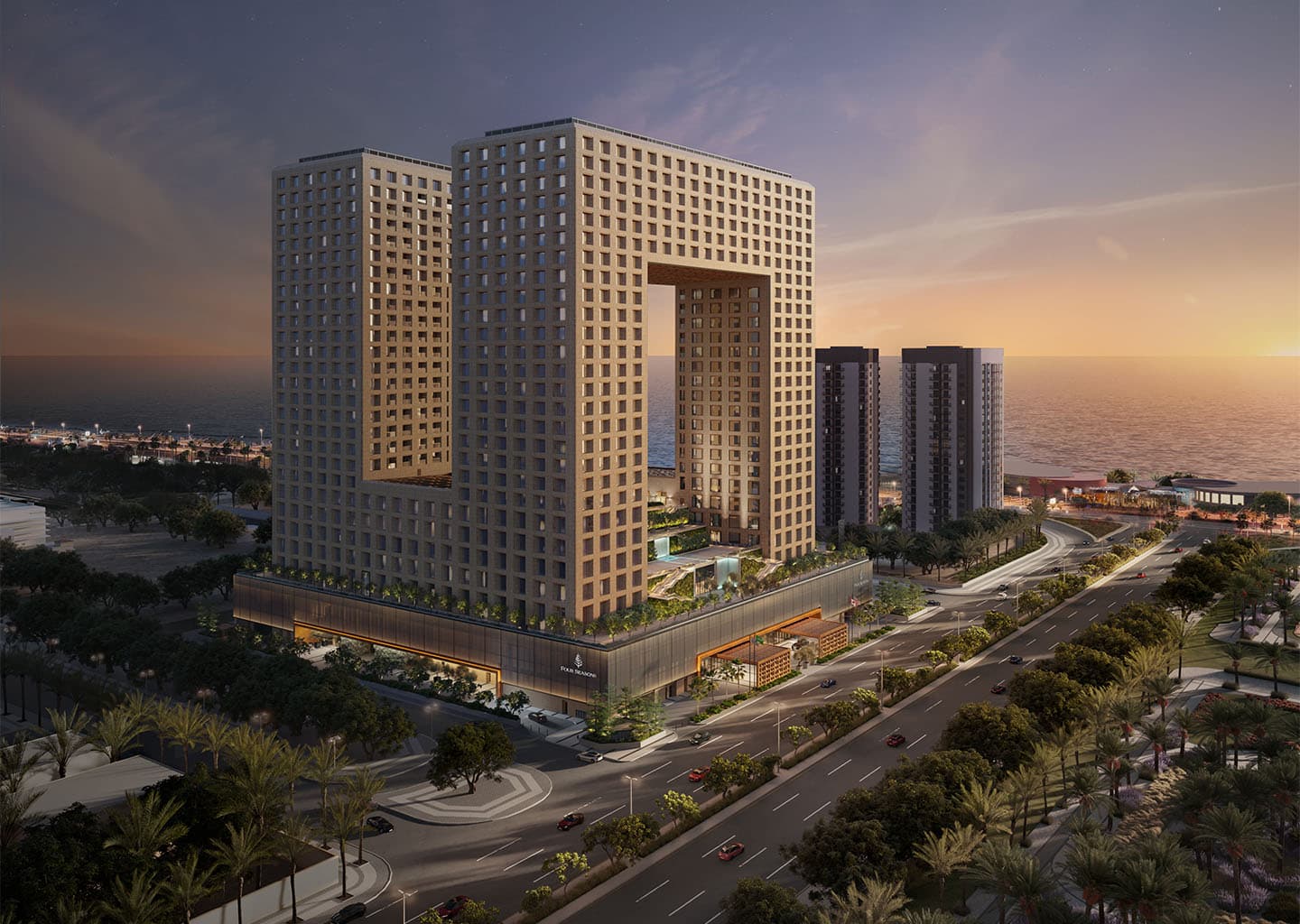
The Four Seasons Private Residences sit along the Jeddah Corniche and represent one of the city’s flagship branded coastal residential offerings. Delivered by Midad Real Estate in partnership with Four Seasons, the project comprises four towers rising to 27 floors, designed by Skidmore, Owings & Merrill, with the residences set above a hotel of about 249 keys and 21 serviced apartments. The towers are linked by what the developer says are the Middle East’s largest suspended bridges, completed in November 2024, with the scheme set to enter the Guinness World Records on completion. Handover reads toward the middle of 2027.
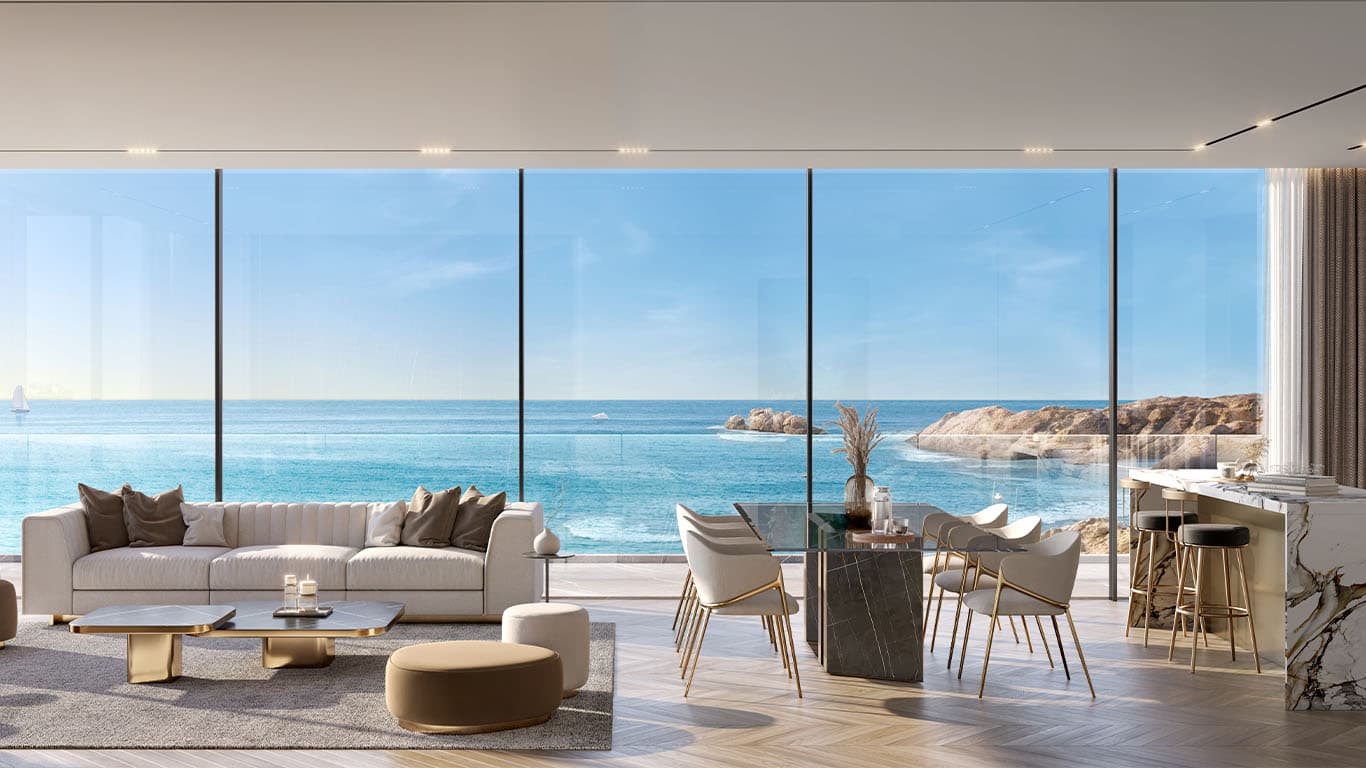
Why it matters for investors. There are only 76 private residences, including penthouses, ranging across one to five bedrooms, a deliberately low-density count for a four-tower waterfront scheme. That scarcity is the point: limited supply, direct positioning on the Red Sea waterfront, and integration with an international hospitality operator are what give branded residences their long-run demand, combining location scarcity with globally recognised management standards and a serviced lifestyle that supports both owner-occupation and short-let yield. The hotel-and-residences format also means amenity and management are funded by the operator rather than a service charge alone. For investors entering Saudi Arabia’s coastal property sector, projects like this often function as trophy assets tied to location rather than speculative future districts, appealing to both local and international purchasers. They mark the city’s branded-residence tier, which is broadening: the same Midad partnership is bringing Kerzner’s One&Only and Atlantis residences to the Jeddah waterfront, so the Four Seasons is the established reference point rather than a one-off.
Amaya, Jeddah: a masterplan on King Abdulaziz Road.
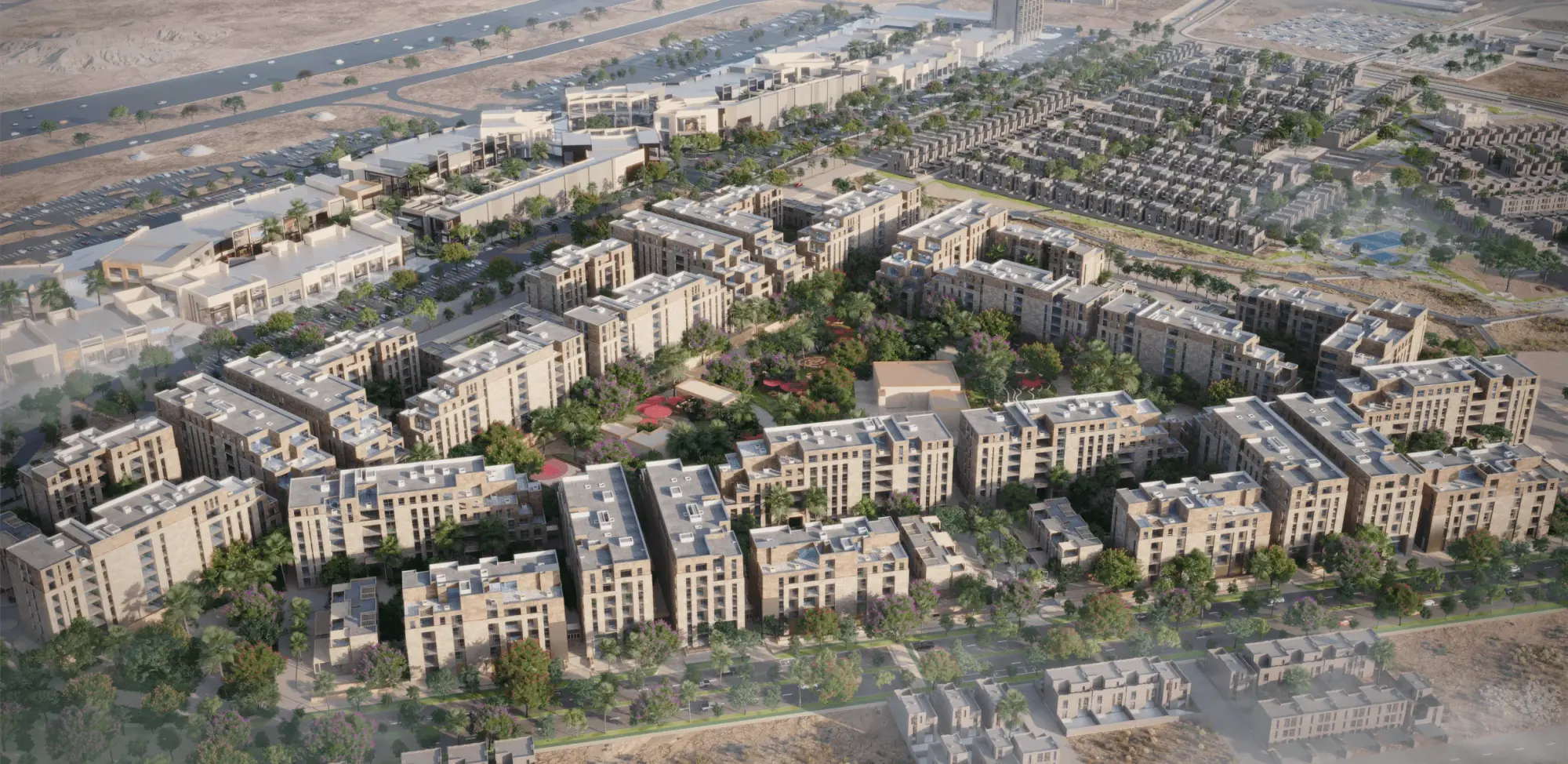
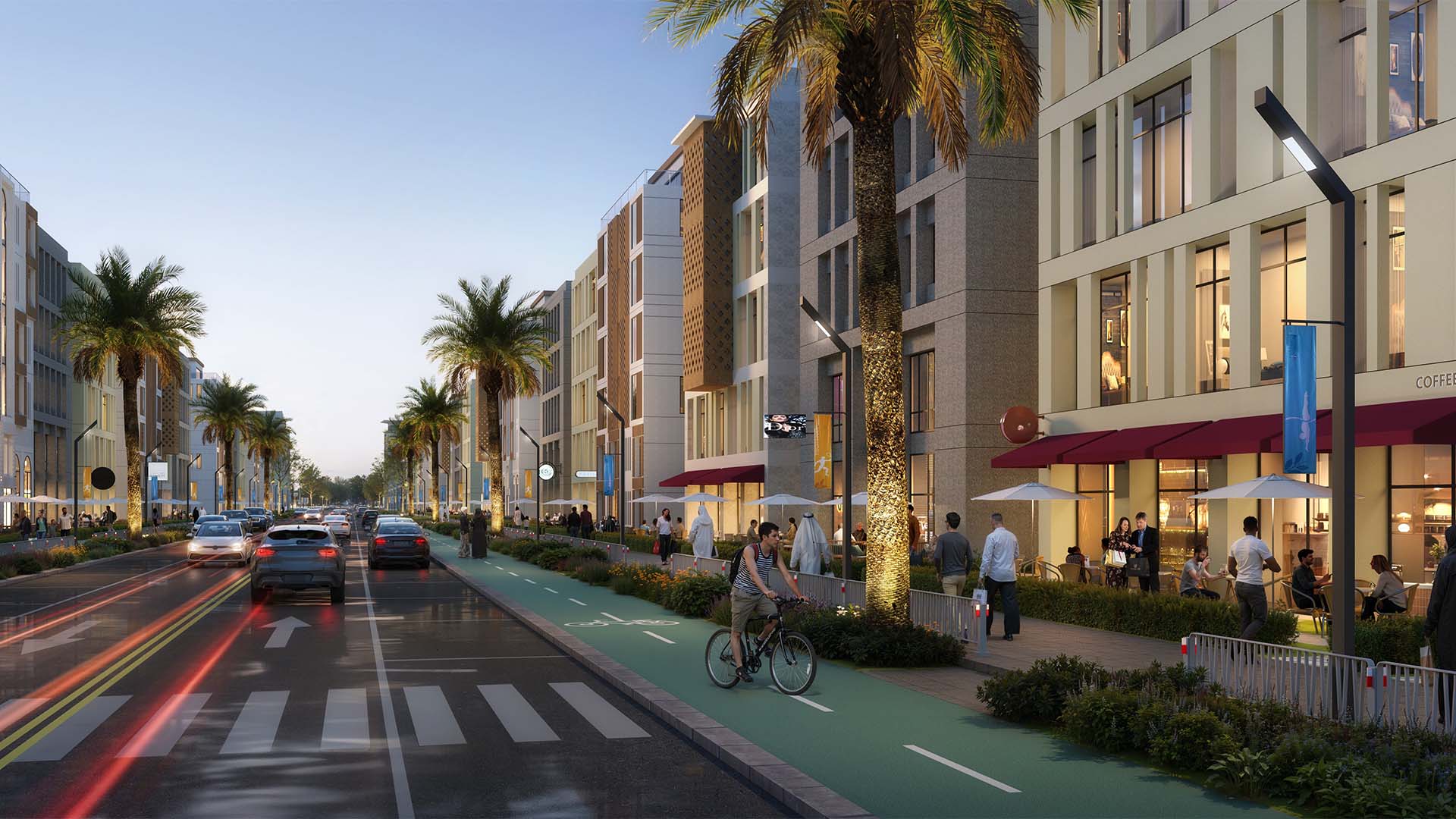
Amaya, developed by Dar Global in Jeddah, is a master-planned district of roughly 1,000,000 square metres on King Abdulaziz Road, one of the city’s last major central landholdings, with the plot acquired in September 2025. It combines residential and commercial plots, apartments, furnished apartment living, villas and public amenities, and is positioned as one of Jeddah’s greenest communities. Plots and homes carry full foreign ownership under the new framework, marketed alongside incentives that include a zero percent capital gains tax, and development is structured on a milestone-based payment schedule with a planned handover that 2026 sales materials read toward December 2030.
The masterplan logic. Saudi Arabia’s urban expansion increasingly revolves around integrated districts rather than standalone towers: mixed residential, office and retail environments with planned infrastructure and public space. For investors, large masterplans signal long-term district transformation, phased construction that supports sustained price movement, and demand drivers beyond any single building. Value tends to come from district growth as the surrounding offices, retail and lifestyle components come online, rather than from one unit’s features alone. Amaya represents the functional middle ground between branded waterfront residences and the long-horizon tourism megaprojects.
Trump Plaza Jeddah, the district anchoring Amaya.
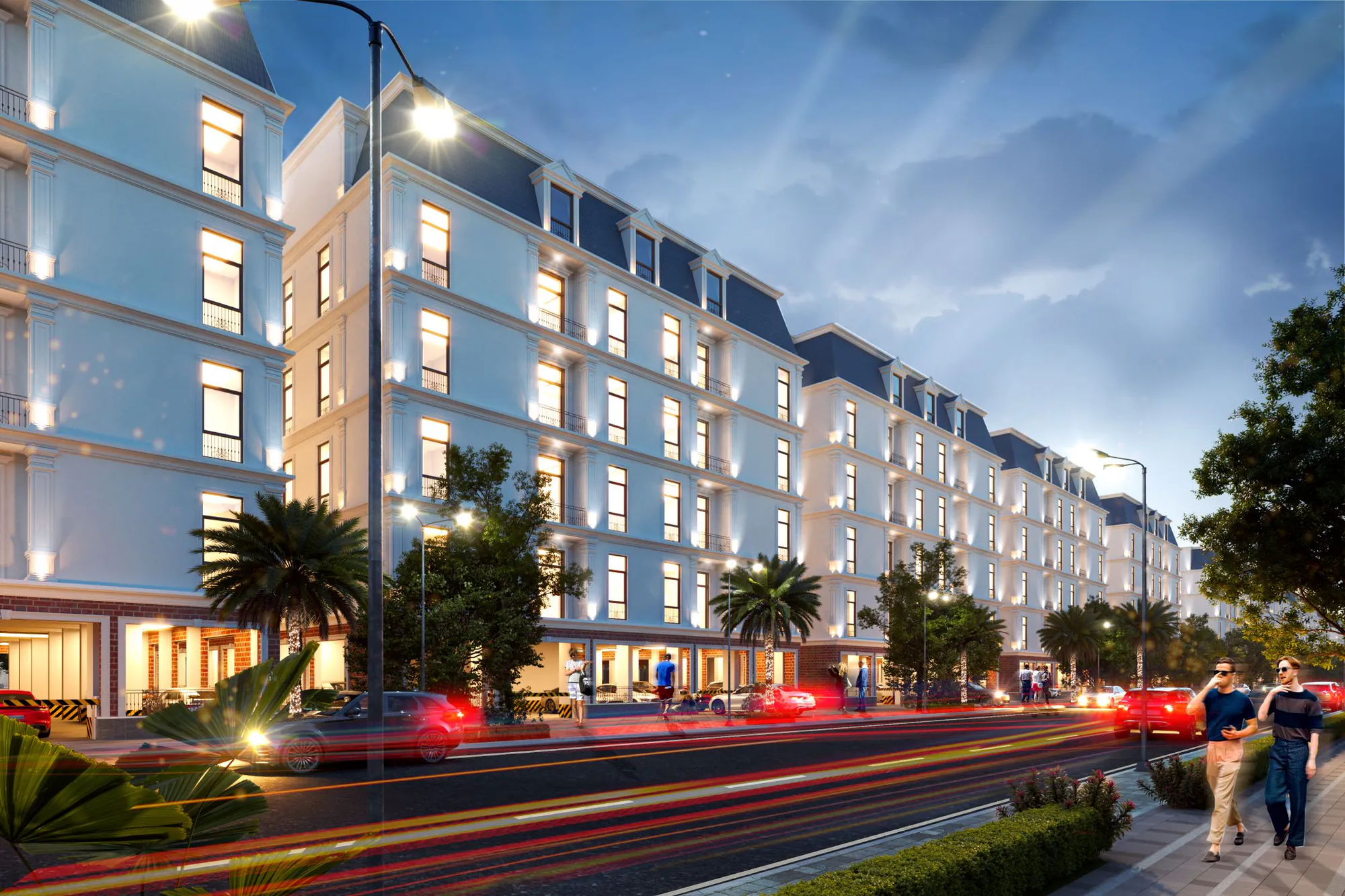
Trump Plaza Jeddah, launched on 12 January 2026, is the over USD 1 billion district that anchors the Amaya masterplan on King Abdulaziz Road. It is the third collaboration between Dar Global and the Trump Organization in Saudi Arabia, following Trump Tower Jeddah, a 47-floor, roughly SAR 2 billion residential tower on the Corniche launched in December 2024, and the Trump golf resort and mansions venture at Wadi Safar near Riyadh. Trump Plaza is designed as a fully integrated urban destination combining residential, commercial and lifestyle components, with Grade-A office space, premium retail, dining and a roughly 4,000 square metre members lifestyle and wellness club. The residential mix spans furnished Trump Executive Residences in one, two and three bedrooms, larger Trump Park Residences from two to four bedrooms, and four-bedroom Trump Townhouses, alongside home offices, retail and dining.
How to read it. Because Trump Plaza sits inside Amaya rather than standing alone, it benefits from the masterplan’s infrastructure and public realm while carrying a branded identity of its own. Properties within new central districts tend to appreciate when the surrounding offices, retail and lifestyle elements come online, creating value tied to district growth. For the wider Dar Global and Trump story across the Kingdom, see our coverage of what Trump Plaza Jeddah is, and of the Trump golf resort and mansions in Wadi Safar near Riyadh.
| Development | Type | What it offers |
|---|---|---|
| Four Seasons Private Residences | Branded waterfront, Corniche | 76 residences over a hotel; handover read toward mid-2027 |
| Amaya (Dar Global) | Masterplan, King Abdulaziz Road | ~1,000,000 sqm mixed-use; full foreign ownership; handover toward 2030 |
| Trump Plaza Jeddah | Branded district within Amaya | Over USD 1bn; residences, offices, retail; the Amaya anchor |
Source: developer announcements (Midad, Dar Global, Four Seasons), 2024 to 2026. Specs are as announced; confirm each project with the developer. Not investment advice.
What investors actually evaluate in Red Sea property.
Experienced international buyers rarely focus only on marketing headlines. Instead they typically assess three structural fundamentals before they commit.
- Is there a real city behind the property? Cities with permanent population demand, functioning transport networks, employment centres, and schools, hospitals and retail create continuous housing demand independent of tourism cycles. Jeddah already satisfies these conditions.
- Can ownership be executed today? Many investors prioritise properties with a clear purchase process, units that can be reserved and transacted now, and predictable registration. Markets where ownership pathways are already operational, as Jeddah’s designated zones now are, attract earlier international capital than zones where access structures are still evolving.
- What drives resale liquidity later? Liquidity comes from population growth, infrastructure expansion, district regeneration and the scarcity of well-located coastal sites. Jeddah combines all four, and the transaction record shows the market clearing: roughly 30,500 residential deals in 2025, sale-to-asking ratios around 97% to 99%, and double-digit transaction growth for well-priced stock. That depth of activity is why the city frequently becomes the practical focus for buyers who begin with a broad Red Sea property search.
For property investors the key question is not where development is planned. It is where ownership is possible and practical today. For many buyers researching the Red Sea, that answer begins with Jeddah.
Buying property in Jeddah for foreigners in 2026.
The practical mechanics changed when the Law of Real Estate Ownership by Non-Saudis (M/14) entered into force on 22 January 2026, about 180 days after the royal decree was published in mid-2025. Foreigners can now own residential property in Jeddah, but only inside the designated zones approved by the Real Estate General Authority (REGA), not across the whole city. The early designated areas centre on Riyadh, Jeddah and NEOM, with separate rules for the holy cities, where Muslim non-Saudis can hold title in Makkah and Madinah under tighter conditions. Each plot can be checked on the Saudi Properties portal at aqar.rega.gov.sa: a green status means it is open to foreign freehold ownership, a grey status means it is restricted to Saudi nationals.
The cost stack. A non-Saudi purchase carries roughly 10% in combined transaction costs: the standard 5% real estate transaction tax plus a non-Saudi disposal fee of up to 5%, alongside registration fees. Ownership is only legally effective once it is recorded in the national registry, so registration is the point at which a purchase becomes real, not paperwork to leave for later. For a fuller picture of who can own and where, and of the path that opened this market, see our companion analysis on how Saudi Arabia opened its property market to foreign buyers, and on how Premium Residency has reshaped demand.
Jeddah waterfront property: which tier suits which buyer.
The live Jeddah market sorts into three broad tiers, each with a different profile.
- Branded waterfront residences. Scarce, operator-managed and tied to a prime Corniche location, like the Four Seasons Private Residences. These are trophy assets bought for location scarcity and resilience rather than yield.
- Masterplan districts. Mixed-use schemes such as Amaya and its Trump Plaza anchor, where value is tied to district transformation over a multi-year horizon and entry can be staged ahead of completion.
- The wider city, for yield. Beyond the headline projects, the broader Jeddah residential market carries gross yields near 7-8%, the income engine for buyers prioritising rental return over a single trophy address.
For a different lens on the same coastline, our essay on Jeddah’s waterfront penthouses as a status symbol reads the top of the market, and our piece on the Midad and Kerzner One&Only and Atlantis residences covers the next wave of branded waterfront supply.
Final thought: where ownership is practical today.
Saudi Arabia’s Red Sea coastline is attracting global attention, but for property investors the key question is not where development is planned. It is where ownership is possible and practical today. For many buyers who begin with a broad Red Sea property search, that answer keeps resolving to Jeddah: a real city with a functioning market, a foreign-ownership framework now live in its designated zones, and waterfront regeneration adding amenity along more than 50 kilometres of coast.
To see the live inventory now coming to market under this framework, browse developments across Jeddah, and the wider picture across Saudi Arabia. Verify each plot on the REGA zone map, budget the roughly 10% cost stack, and confirm every project spec with the developer before you commit. Every figure here is indicative and not investment advice.
Advisory
Talk it through, privately.
An Omnia advisor on availability, structuring and timing across these markets.
 AvailableAl Shati, JeddahFour Seasons Private Residences, JeddahStarting fromSAR 6,716,214TypeResidencesExplore residence