In brief
- Riyadh led the Kingdom on price growth: average apartment values rose about 10.6% year on year in Q2 2025 to SAR 6,175 per square metre, and villas about 8.2% to SAR 5,470, per Knight Frank, even as transaction volumes cooled after the 2024 run-up.
- Jeddah grew far more modestly: apartment prices rose about 1.8% and villas about 2.5% in the first half of 2025, per JLL. The two cities have decoupled, so a single national average flatters Jeddah and understates prime Riyadh.
- The Real Estate Ownership by Non-Saudis law took effect on 22 January 2026, and the Cabinet approved the geographical zones and implementing regulations on 23 June 2026. Foreign individuals and companies can own within the published mapped zones, subject to their controls.
- Sales value surged on the back of demand: Riyadh residential sales reached about SAR 65.7bn (USD 17.5bn) in H1 2025, up about 63%, and Jeddah about SAR 18.3bn (USD 4.9bn), up about 34%, per Cavendish Maxwell, though headline price growth rests on a narrowing base of deals.
Contents
- 01Riyadh property prices: the capital sets the pace.
- 02Jeddah property prices: coastal growth, lower entry.
- 03Saudi Arabia house price growth versus the deal count.
- 04The foreign-ownership law that reset demand.
- 05Why investors are watching Riyadh and Jeddah.
- 06Risks and challenges to weigh.
- 07The 2026 outlook for Riyadh and Jeddah.
- 08Looking forward across the Saudi market.
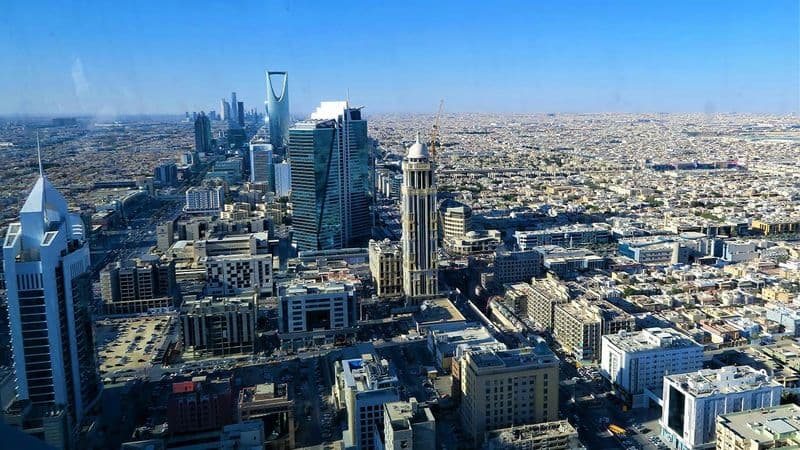
Saudi Arabia’s two largest cities enter 2026 on very different trajectories. Riyadh’s property market has run hot: average apartment prices rose about 10.6% year on year in the second quarter of 2025 to SAR 6,175 per square metre, and villa prices about 8.2% to SAR 5,470, per Knight Frank, with the new Riyadh Metro pulling demand into transit-linked districts. Jeddah’s market, by contrast, grew quietly: apartment prices rose about 1.8% and villas about 2.5% over the first half of 2025, per JLL. The two cities have decoupled, and a single national headline now flatters Jeddah while understating prime Riyadh.
That divergence matters because the Kingdom’s housing story changed twice over. The Real Estate Ownership by Non-Saudis law took effect on 22 January 2026, and the Cabinet approved the geographical zones and implementing regulations on 23 June 2026, giving foreign buyers a published mapped framework in both cities. And the national price index has cooled to single digits even as specific Riyadh districts surged. What follows sets out where prices, transactions, supply, demand and policy really stand in 2026, drawing on Knight Frank, JLL, Cavendish Maxwell, GASTAT, S&P and Henley & Partners, with an honest read of the downside risks. For the wider national picture, see the Saudi Arabia market hub.
Source: Knight Frank (Riyadh, Q2 2025) and JLL (Jeddah, H1 2025). The two cities decoupled in 2025. Indicative; not investment advice.
Riyadh property prices: the capital sets the pace.
What the prices did. Riyadh remains the engine of Saudi house price growth. Average apartment prices reached about SAR 6,175 per square metre in the second quarter of 2025, up about 10.6% year on year, while villa prices rose about 8.2% to about SAR 5,470 per square metre, per Knight Frank. The gains were uneven across the city, with the strongest moves in districts that gained transit access.
- The metro effect. The Riyadh Metro, which opened in late 2024, lifted demand in well-connected districts such as Olaya, Al Yasmin and Hittin, where buyers will pay a premium for stations within reach.
- Standout apartment districts. Knight Frank recorded Al Taawun apartments up about 32% to SAR 9,470 per square metre, and the King Abdullah District up about 17% to SAR 7,656, well ahead of the citywide average.
- Standout villa districts. Among villas, Al Sahafah rose about 24% to SAR 8,050 per square metre and An Narjis about 16.6% to SAR 8,750, with northern Riyadh the costliest sub-market at about SAR 8,660. At the other end of the city, budget-sensitive southern Riyadh apartments edged up to only about SAR 3,000 per square metre, a spread of roughly three to one against the top districts that captures how concentrated the growth has been.
The full-year read. Across all of 2025, prices kept appreciating even as activity thinned. Cavendish Maxwell put Riyadh apartment values up about 6.6% and villas up about 9.7% over the year, with the average residential transaction reaching about SAR 1.7 million (USD 450,000), the highest in recent years. By late 2025 Knight Frank read premium districts such as Al Malqa, Hittin and the Diplomatic Quarter at roughly SAR 9,000 to 16,000 per square metre, a band that sits well above the citywide average and explains why district selection has done most of the work for buyers.
What the buyers wanted. Demand has been driven by corporate relocations under the regional-headquarters programme, expatriate inflows and Vision 2030 megaprojects such as King Salman Park, Diriyah and Qiddiya, which keep tightening supply around the prime districts. Riyadh’s total residential stock reached about 2.18 million units by the end of the third quarter of 2025, with around 9,500 more units due by year end and roughly 57,000 scheduled across 2026 and 2027, per JLL, though completions have lagged the pace of demand. Nationally, Knight Frank expects the Kingdom’s five major markets to grow from about 3.5 million units toward nearly 3.9 million by the end of 2028, supported by the Wafi and Sakani ownership programmes.
Population pressure. The longer-run case rests on people. Riyadh’s population is projected to grow from about 7 million in 2022 toward about 9.6 million by 2030, per Knight Frank, a structural source of housing demand that megaproject jobs are accelerating.
Jeddah property prices: coastal growth, lower entry.
A quieter market. Jeddah’s Red Sea market grew far more gently than the capital’s. Apartment prices averaged about SAR 4,376 per square metre in the first half of 2025, up about 1.8% year on year, while villas reached about SAR 5,114, up about 2.5%, per JLL. Rents told a similar story: Jeddah apartment rents rose about 2.6% while villa rents slipped about 2.7%. The growth is steady rather than spectacular, which keeps Jeddah a lower entry point than Riyadh for buyers and an income market for landlords.
A record year on volume. Where Jeddah stood out was activity. The city set an annual record in 2025 with about 30,500 residential transactions worth about SAR 36.6 billion (USD 9.75 billion), a sales value up about 15.4% year on year, per Cavendish Maxwell, with the average deal at about SAR 1.2 million (USD 320,000). By year end apartment prices read about SAR 4,385 per square metre, up about 1.2%, and villas about SAR 5,185, up about 3.2%. The pattern is the mirror image of Riyadh: Jeddah grew on steady, broad-based deal flow rather than sharp price moves, which keeps the entry point lower and the income case intact.
Where the supply is going. Jeddah’s residential stock reached about 1.23 million units after roughly 4,320 completions in the third quarter of 2025, per JLL, with developers tilting toward the mid-market amid affordability concerns. The forward pipeline runs to roughly 36,000 units across 2026 and 2027, lighter than Riyadh’s, so supply pressure on the coastal market should stay more contained. Most new launches sit in the northern districts, where infrastructure expansion continues to draw residential investment.
The skyline anchor. The Jeddah Tower, the centrepiece of Jeddah Economic City, restarted construction in January 2025 under a SAR 7.2 billion contract with the Saudi Binladin Group after years of delay. It passed the 100th floor in April 2026 and the 103rd by June, with completion now read toward 2028. Once finished, the kilometre-tall tower will reset the city’s top tier and anchor the northern growth corridor, alongside the Vision 2030 Red Sea tourism project further up the coast. For how the waterfront top end behaves, see our read on Jeddah’s coastal market.
Saudi Arabia house price growth versus the deal count.
Sales value surged. Transaction values rose sharply in the first half of 2025 as buyers moved ahead of the foreign-ownership law and the Vision 2030 build-out.
- Riyadh. Residential sales reached about SAR 65.7 billion (USD 17.5 billion) in H1 2025, up about 63% year on year, across about 35,600 transactions, up about 10%, per Cavendish Maxwell.
- Jeddah. Sales values reached about SAR 18.3 billion (USD 4.9 billion), up about 34%, on about 15,200 transactions, up about 25%, per Cavendish Maxwell.
But volumes then cooled. By the third quarter of 2025, JLL reported Riyadh prices flattening and in places declining after the 2024 run-up, with transaction volumes about 44.3% lower than a year earlier on affordability pressure, even as they rebounded about 18.7% quarter on quarter to roughly 13,000 deals worth about SAR 17.6 billion. Quarterly prices held up at about SAR 6,160 per square metre for apartments and SAR 5,500 for villas, so the cooldown showed up in the deal count rather than the headline rate. Rents, meanwhile, kept rising hard: Riyadh apartment rents rose about 19.6% and villa rents about 17.2% year on year. A market where rents climb while sales volumes thin is one to read carefully, because the headline price gains rest on a narrowing base of deals.
The full year confirmed the split. Over the whole of 2025, Riyadh recorded about 56,600 residential deals worth about SAR 96.2 billion (USD 25.65 billion), with volume down about 31% on 2024 as elevated financing costs and affordability bit, even as average prices climbed. Jeddah moved the other way, setting a record on volume with about 30,500 deals worth about SAR 36.6 billion (USD 9.75 billion), value up about 15.4%. Riyadh therefore traded fewer homes at higher prices, while Jeddah traded more homes at flatter prices, a clean illustration of two markets running on different engines.
Mortgages did the heavy lifting. Behind the deal flow sits a fast-growing credit market. Real-estate loans from Saudi banks reached a record SAR 922.2 billion (USD 245.9 billion) by the first quarter of 2025, up more than 15% year on year, per SAMA, with retail mortgages of about SAR 698.8 billion making up roughly three quarters of the total. Housing finance for individuals rose about 15% in the first half of 2025 to about SAR 48 billion. Policy has pushed in the same direction: the minimum age for housing support was cut from 25 to 20 in May 2025, and the Kingdom cleared its first residential mortgage-backed securities in August 2025, all in service of a 70% national home-ownership target by 2030.
The national picture is calmer, then turned negative. The official GASTAT Real Estate Price Index rose only about 3.2% year on year in the second quarter of 2025, with the residential component roughly flat, then cooled further: it slowed to about 1.3% in the third quarter, with residential prices down about 0.9%, and turned outright negative at about -0.7% in the fourth quarter, with the residential segment down about 2.2% and apartments down about 2.5% nationally on the 2023 base. The gap between that softening national series and the double-digit Riyadh prime numbers from earlier in the year is the key insight: the eye-catching growth belongs to specific districts and asset types in specific quarters, not to the Kingdom as a whole, and even the prime markets had lost momentum by the close of 2025.
The foreign-ownership law that reset demand.
A structural change. The single biggest shift since the legacy version of this piece is regulatory. The Real Estate Ownership by Non-Saudis law was published on 25 July 2025 and, as REGA confirmed, took effect on 22 January 2026. The Cabinet then approved the geographical zones and implementing regulations on 23 June 2026. REGA now publishes the mapped zones, permitted rights and applicable limits through Saudi Properties, including approved areas in Riyadh and Jeddah. Makkah and Madinah remain specially restricted, with ownership limited to Muslim individuals and qualifying entities under the applicable controls. Non-Saudis legally resident in the Kingdom may also own one home for personal use outside the designated zones, except in the two holy cities. The law authorises a disposal fee of up to 5% of the property’s value for non-Saudis.
Why it matters for prices. For the first time, overseas buyers can hold property outright in approved areas of the two cities driving Saudi house price growth, adding a structural new source of demand on top of domestic relocations and expatriate inflows. The maps are now published, but eligibility remains property-specific and the rights and limits vary by zone, so the near-term effect is more about selective positioning than a single city-wide price step. Two companion reads set out the rules and the residency angle: whether the opening is worth acting on now and how Premium Residency has reshaped the market.
Why investors are watching Riyadh and Jeddah.
Vision 2030 and the events pipeline. Economic diversification is the magnet. Vision 2030 is channelling capital into tourism, entertainment and technology, and Riyadh and Jeddah are the main beneficiaries. The Kingdom welcomed about 116 million visitors in 2024 and about 122 million in 2025, on the way to a target of 150 million by 2030. Expo 2030 in Riyadh, expected to draw around 40 million visitors, and the FIFA World Cup in 2034 will both pull forward hotel, retail and residential demand across the two cities.
Wealth migration. The Kingdom is also pulling in private wealth at pace. Saudi Arabia recorded a net inflow of about 2,400 high-net-worth individuals in 2025, up from about 300 in 2024, the fastest jump of any country in the Henley Private Wealth Migration Report, even as the UAE stayed the world leader at about 9,800. That inflow concentrates in Riyadh and Jeddah and supports the upper end of both markets.
Population, mortgages and household formation. Population growth, stable financing costs and new household formation are feeding mortgage demand, while Saudi Arabia targets 70% home ownership among nationals by 2030. The credit channel is doing real work: real-estate loans from Saudi banks topped SAR 922 billion by early 2025, up more than 15% year on year, housing finance for individuals rose about 15% in the first half, and the first residential mortgage-backed securities cleared in August 2025, deepening the funding base for home loans. Long-dated tax breaks for Vision 2030 projects sweeten the case for developers and institutional capital. The browsable Saudi Arabia development listings show where that demand is being met across both cities.
What buyers want. In Riyadh, proximity to business hubs such as the Diplomatic Quarter and to metro stations tops the list, alongside high-end finishes and concierge service. In Jeddah, the draw is the coast: waterfront views, marinas and gated communities. Across both cities, younger buyers want energy-efficient, smart-equipped homes, which is steering developer specifications.
Risks and challenges to weigh.
Affordability and the volume cooldown. The clearest near-term risk is affordability. Riyadh’s rapid 2024 run-up priced out part of the buyer pool, and Q3 2025 volumes fell about 44.3% year on year as a result. Prices that climb while the deal count thins can hold for a time, but they leave the market sensitive to any drop in mortgage demand or sentiment.
Concentration. The headline growth is concentrated in a handful of Riyadh districts and asset types. The national index up about 3.2% is the reminder that a buyer in the wrong district can miss the growth entirely, so area selection matters more here than in a uniformly rising market.
Costs and competition for capital. Land, construction and material costs are rising, and developers compete for financing with the Vision 2030 megaprojects. That can slow private delivery and push completions later than headline pipelines imply, tightening supply in the near term but adding delivery risk to off-plan.
Property-level eligibility still matters. The foreign-ownership law, geographical zones and implementing regulations are now in force and published. The remaining underwriting risk is assuming that a particular property qualifies, or that one fee and right structure applies everywhere. Check the live REGA map, permitted rights and current fee treatment for the specific property before relying on them.
The 2026 outlook for Riyadh and Jeddah.
Where the market really stands. Read against the sources, the 2026 picture is positive but divided.
- Riyadh. After apartment prices rose about 10.6% and villas about 8.2% earlier in 2025, momentum faded into year end, with prices off about 0.9% quarter on quarter in the fourth quarter and the deal count down about 31% across the year. Consultants including JLL, Knight Frank and S&P still see sustained annual appreciation of about 4-6% through 2030, with transit-linked districts likely to keep outperforming the average, but the near-term path looks more like consolidation than another sharp leg up. Treat the 4-6% as the illustrative base case, not a guarantee.
- Jeddah. Growth should stay more modest, in the low single digits, with the foreign-ownership opening and the Jeddah Tower corridor the main upside levers and the lower entry point the main attraction.
- Demand. Foreign buyers entering designated zones, wealth migration and the Expo 2030 and World Cup 2034 pipeline all point to firm demand, even as affordability caps how fast prices can run.
- Supply. New completions should ease some pressure, with roughly 57,000 units scheduled in Riyadh and about 36,000 in Jeddah across 2026 and 2027, and the Kingdom’s five major markets set to reach nearly 3.9 million units by 2028, per Knight Frank, though delivery competes with the megaprojects for labour and capital.
The Omnia view. The clearest plays are transit-linked Riyadh apartments bought on the actual price per square metre for the specific district, and selective Jeddah coastal and northern-corridor stock positioned ahead of the foreign-demand wave, both underwritten to the consultant ranges rather than the boldest forecasts. For the branded top end, our reads on the One&Only residences in Jeddah and the Wadi Safar resort near Riyadh track where the headline buyers are going.
Looking forward across the Saudi market.
Riyadh and Jeddah enter 2026 on diverging paths: a capital that ran hot on prime stock while its deal count cooled, and a coastal city growing quietly with a lower entry and a new tower on the skyline. The foreign-ownership law that took effect in January adds a structural new buyer base to both, while the national price index up about 3.2% keeps the headline numbers in perspective. Riyadh and Jeddah property price growth in 2026 rewards buyers who read the price per square metre by district rather than the Kingdom-wide average. For a sense of where the value sits, see the priciest areas to live in Saudi Arabia.
Saudi Arabia’s housing story is part of a wider shift across the Kingdom’s investment landscape, where Vision 2030 capital, an opening property market and a global events calendar are pulling demand into Riyadh and Jeddah faster than supply can keep pace. For investors building Saudi exposure, the two cities remain the clearest expressions of that change, provided the figures are read honestly. Every figure here is indicative and not investment advice.
Advisory
Talk it through, privately.
An Omnia advisor on availability, structuring and timing across these markets.
 AvailableAl NahdahAmaya, JeddahStarting from£425,000TypeResidencesExplore residence