In brief
- Saudi Arabia opened to foreign property buyers on 22 January 2026, when the Law of Real Estate Ownership by Non-Saudis (Royal Decree M/14, gazetted 25 July 2025) entered into force, per REGA. It is now live law, not a future event.
- Non-residents can buy only within designated zones approved by the Council of Ministers; foreign residents may also own one personal residence outside them. Makkah and Madinah are restricted to Saudi companies and Muslim individuals. Violations carry fines up to SAR 10 million.
- Foreign buyers face up to roughly 10% in total government charges versus about 5% for the base case, with all transactions registered through the live Saudi Properties platform (Iqama for residents, an embassy-issued digital identity for non-residents).
- This is a long-term play, not a fast flip: Riyadh price growth has cooled to about 2.9% in 2025 and a five-year rent freeze caps Riyadh rental growth through 2030, so target quality assets and weigh income against the cap.
Contents
- 01How the new foreign-ownership framework works.
- 02Where can foreigners actually buy now?
- 03The key rules under the new law.
- 04What it costs a foreign buyer.
- 05Eligibility, how to register and Premium Residency.
- 06Saudi Arabia vs Dubai: which market makes sense in 2026?
- 07Expo 2030 and the 2034 World Cup: the demand catalysts.
- 08Should you invest in Saudi real estate in 2026?
- 09How to start as a foreign buyer.
Saudi Arabia’s real estate market is now open to foreign buyers. The updated Law of Real Estate Ownership by Non-Saudis, enacted by Royal Decree M/14 (gazetted 25 July 2025), entered into force on 22 January 2026, according to the Real Estate General Authority (REGA). This major reform forms a central part of Vision 2030 and lets foreign individuals, companies and funds own residential, commercial, industrial and agricultural property, but only within designated zones approved by the Council of Ministers.
For international investors the question is no longer whether they can buy in the Kingdom, but where, on what terms, and whether 2026 is the right moment to move. The short answer: the framework is real and live, the upside is genuine for early movers, and the discipline is selectivity, especially now that Riyadh sits under a five-year rent freeze. What follows is how the new law works, who is eligible, what it costs, how Saudi Arabia compares with Dubai in 2026, and how to start.
How the new foreign-ownership framework works.
For decades, direct freehold ownership in Saudi Arabia was effectively closed to non-Saudis outside narrow exceptions. Royal Decree M/14 changes that. It establishes a single, codified framework under which foreign individuals and companies can hold real estate in their own name, replacing the prior reliance on long leases, local nominees and usufruct workarounds, and superseding the 2000 foreign-ownership law it replaces. The intent is to channel international capital into the Kingdom’s housing and commercial pipeline as it diversifies away from oil, the defining goal of Vision 2030.
Crucially, the law is zone-based. Rather than opening the whole country at once, the Kingdom opens defined geographies first, then expands over time. That is a deliberate sequencing choice: it concentrates foreign demand in areas with the infrastructure, masterplanning and transparency to absorb it, while keeping sensitive locations protected. The practical consequence for a buyer is simple. Eligibility and process depend on which zone a property sits in, so the zone map matters as much as the headline that the market is now open.
Where can foreigners actually buy now?
With the law in force, the live question is the geography. On 23 June 2026 the Cabinet approved the geographical zones and implementing regulations, and REGA now publishes the permitted areas through Saudi Properties, together with the ownership percentages, right types, durations and controls that apply in each. Riyadh and Jeddah have approved mapped zones, while Makkah and Madinah remain specially restricted. Buyers should check the specific address against the live map before committing, because eligibility follows the parcel and its zone conditions rather than a district name alone.
Two further routes sit alongside the zones. The Kingdom’s giga-projects, including NEOM, Red Sea Global and Qiddiya, operate under their own specialised, investor-friendly ownership frameworks. And in practice, foreign demand is already clustering in northern Riyadh districts such as Al Malqa, Al Nakheel, Al Yasmin and Al Olaya, and in Jeddah along Al Shati and the Corniche, Al Hamra, Al Rawdah and North Obhur. Ownership in the holy cities of Makkah and Madinah remains restricted to Saudi companies and Muslim individuals.
The key rules under the new law.
The framework sets out who can buy, where, and on what basis.
- Foreign residents can additionally own one residential property outside the designated zones, for personal use.
- Non-residents are restricted to approved zones only.
- Corporate investors, funds and listed entities can own within the zones, including for operational purposes.
- All transactions are registered through the official Saudi Properties platform (saudiproperties.rega.gov.sa), where eligibility is verified.
- Foreign buyers face higher government charges, up to roughly 10% in total, compared with about 5% for the base case.
- The framework prioritises long-term investment and penalises violations of the ownership rules with fines of up to SAR 10 million.
What it costs a foreign buyer.
The cost stack is the first reality check. All property transfers attract a 5% Real Estate Transaction Tax (RETT). Under the new law, a non-Saudi disposal or transfer fee applies on top, capped at up to 5%, so a foreign buyer should budget for up to roughly 10% in total government charges against about 5% for the base case. Brokerage typically adds around 2.5% plus 15% VAT on the fee. The precise foreign-fee schedule sits in the executive regulations, so treat the 10% as a planning ceiling rather than a fixed line.
On the tax side, the structural advantage is real but should be stated precisely. Saudi Arabia levies no personal income tax, including on rental income earned by individuals, which materially changes the after-tax return on a held asset. That is not the same as a tax-free market: VAT of 15% applies to deal services and to commercial leases, RETT applies to every transfer, and a White Land Tax applies to undeveloped urban land. The correct framing is no personal income tax, not no tax at all.
Eligibility, how to register and Premium Residency.
Eligibility flows from the zone rules: a non-resident buyer needs an address inside an approved zone, while a foreign resident has the additional option of a single personal home outside one, and corporate buyers, funds and listed entities sit on the broadest tier. Every route runs through the same Saudi Properties platform, which is the system of record. Residents apply using their Iqama; non-residents first obtain a digital identity issued through a Saudi embassy, then browse zones, verify eligibility and submit an application on the platform.
Premium Residency above SAR 4 million. A qualifying property purchase can also unlock the Real Estate Owner Residency within the Premium Residency system, giving the right to live, work and own property without a local sponsor. The conditions are specific: the property must be residential, fully built rather than land, mortgage-free, and TAQEEM-appraised at no less than SAR 4 million (about USD 1.07 million). The route was introduced in January 2024 and updated in January 2026, and the residency is renewable while the asset is held. A single acquisition can therefore deliver both an asset and long-term residency rights.
Saudi Arabia vs Dubai: which market makes sense in 2026?
This is best read as a long-term play rather than a fast-flip opportunity. Saudi Arabia benefits from heavy government backing via giga-projects, ongoing economic diversification and comparatively steady pricing: Riyadh residential prices rose about 8.6% in both 2023 and 2024 (and 17.7% in 2022), but growth has since cooled to about 2.9% in 2025. That is steady appreciation now decelerating, not a crash-prone boom. National gross rental yields sit near 7% (Q3 2025), with Jeddah around 7-8%. The nuance that matters: in Riyadh, prime districts such as Hittin, the Diplomatic Quarter and Al Mohammadiyah actually yield less than mid-market areas, because prime-district pricing has outpaced rents, so Riyadh yields are best read as broadly 4-7% and higher in mid-market than in prime.
The Riyadh rent freeze. One 2026 fact reshapes the income case in the capital. By royal decree of 25 September 2025, annual rent increases on new and existing residential and commercial contracts within Riyadh’s urban boundary are frozen for five years, through 2030, with penalties of up to twelve months’ rent for breaches. The freeze was a response to sharp rent inflation, and it directly caps rental-income growth in Riyadh over the holding period. Any Riyadh yield should be read as a starting yield that will not be lifted by rent rises before 2030.
Dubai, by comparison, offers:
- More mature liquidity and long-established freehold ownership rules.
- Gross rental yields around 6.7-7% for apartments and about 4.5% for villas.
- Faster transactions and a proven track record for international buyers.
Dubai also faces growing supply pressure: around 120,000 units are due in 2026, roughly three times the 35,000 delivered in 2025, and price growth is moderating to about 5-8% (from 12-22% in 2024-2025), with localised softening in apartment-heavy communities such as Business Bay, JVC and Dubai South. Saudi Arabia is therefore likely to complement rather than directly challenge the UAE, attracting a more patient, strategic investor seeking exposure to one of the world’s most ambitious economic transformations.
Expo 2030 and the 2034 World Cup: the demand catalysts.
The case for moving early rests partly on two events the Kingdom has already won the right to host. Riyadh will stage Expo 2030, and Saudi Arabia was confirmed as host of the FIFA World Cup 2034 by FIFA on 11 December 2024, with matches across Riyadh, Jeddah, Al Khobar, NEOM and Abha. Both are multi-year build-ups, not single dates, and both concentrate investment in exactly the cities and districts the new ownership law is opening to foreign buyers.
The mechanism is straightforward. Mega-events pull forward infrastructure, hospitality, transport and residential delivery, and they lift business travel, tourism and high-value rental demand through the run-up. For an off-plan or early-stage buyer in Riyadh or Jeddah, that build-up is the demand backdrop a held asset is underwritten against. It is also why the framing is patient capital: the payoff is the decade, not the quarter, particularly while the Riyadh rent freeze holds income flat in the capital.
Should you invest in Saudi real estate in 2026?
The opening represents genuine long-term upside, particularly for early movers who target quality assets in confirmed zones. Several factors remain critical:
- Check the current Geographic Zones Document and confirm an address actually qualifies before committing.
- Read yields honestly: national gross yields near 7%, Riyadh prime lower than mid-market, and a Riyadh rent freeze capping income growth through 2030.
- Favour selectivity: prime and masterplan-backed locations, credible developers, strong fundamentals.
- Accept that liquidity and perception as an open international destination will take time to build, even with the law live.
For investors seeking GCC diversification beyond the UAE, Saudi Arabia now offers significant untapped potential backed by political will and capital, with the cooling in 2025 prices and the Riyadh rent freeze arguing for a value-and-quality discipline rather than a momentum trade. This is not a get-rich-quick market, but for those with a long horizon it could prove one of the region’s most rewarding new frontiers.
How to start as a foreign buyer.
For investors weighing a first move, the sequence matters more than speed. A practical order of operations:
- Confirm the zone. Check the Geographic Zones Document that the address sits within an approved zone for non-residents, or that you qualify for the single personal residence allowance as a foreign resident.
- Budget for the full cost. Plan for up to roughly 10% in total government charges, against about 5% for the base case, plus brokerage of around 2.5% and 15% VAT, on top of the purchase price.
- Decide what the purchase is for. A residential buy of SAR 4 million or more, fully built, mortgage-free and TAQEEM-appraised, can carry Premium Residency, which may shape whether you buy in your own name or through an entity.
- Vet the developer and the project. Favour credible developers with a delivery record, transparent escrow and documentation, in masterplan-backed districts across Jeddah and Riyadh.
- Register through Saudi Properties. Apply via Iqama if you are resident, or via an embassy-issued digital identity if not. The platform verifies eligibility and is the system of record for title.
For a closer look at where demand is heading, see our guide to the top projects for investing in Saudi Arabia 2026, and the live Saudi Arabia market hub for the wider investment picture.
Advisory
Talk it through, privately.
An Omnia advisor on availability, structuring and timing across these markets.
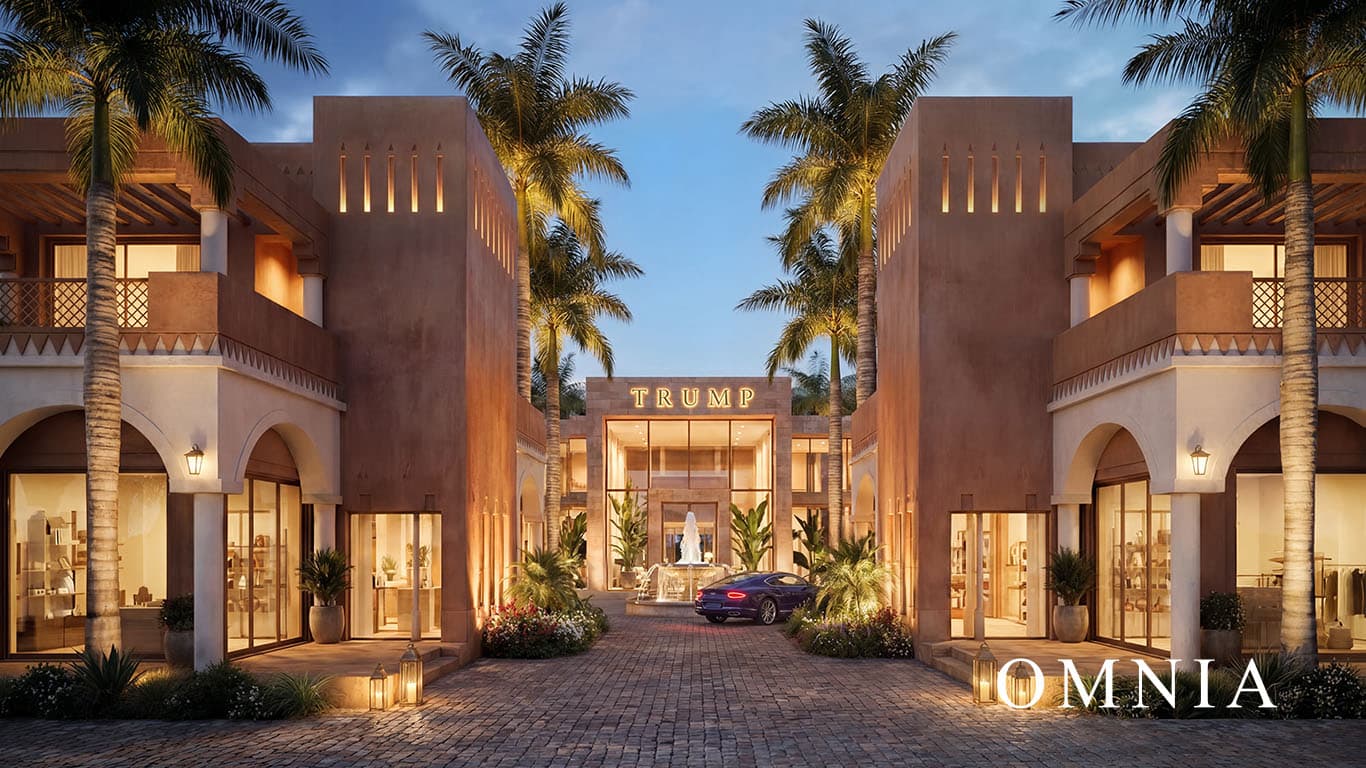
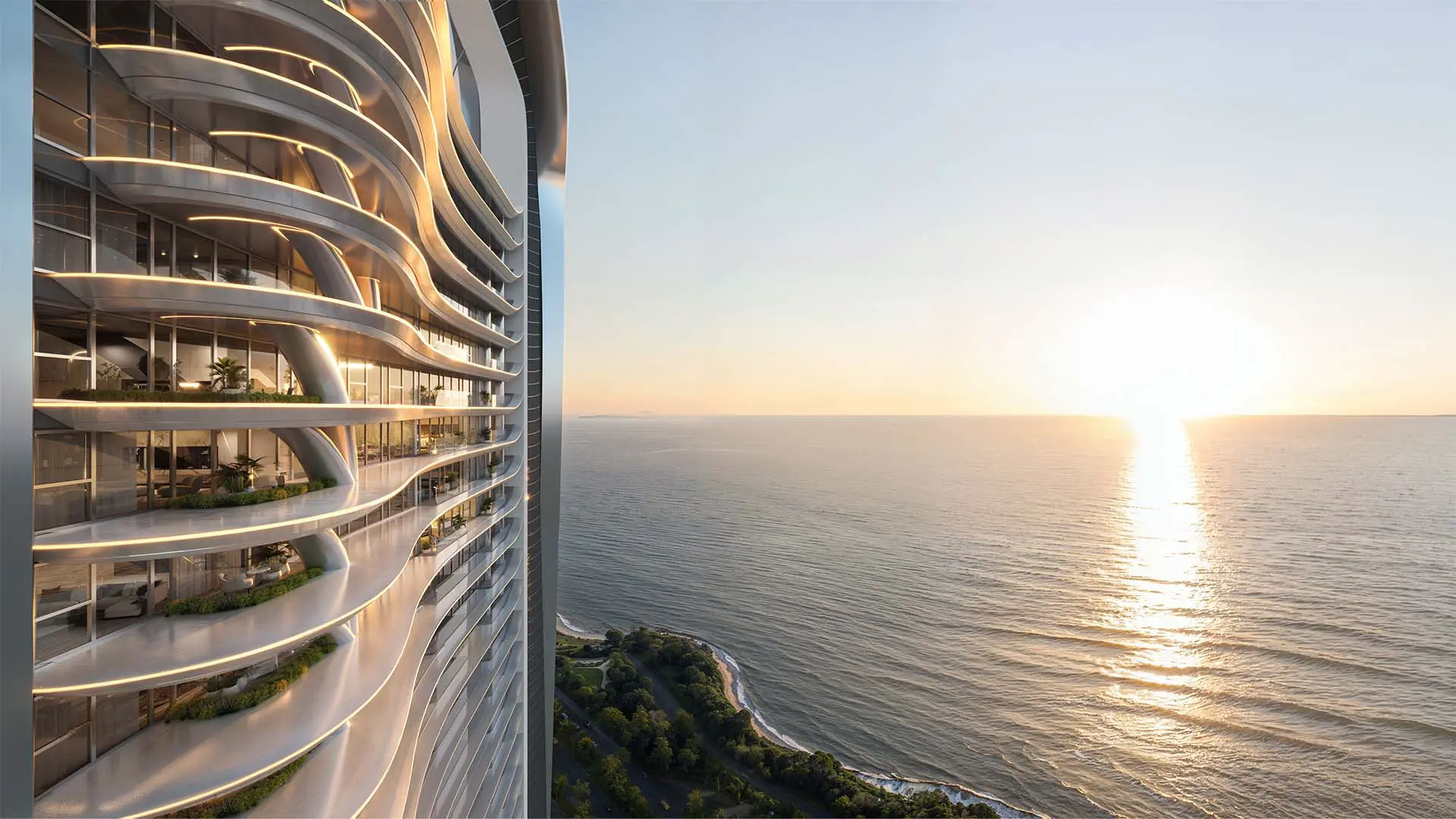 AvailableAl Shati, JeddahTrump Tower, JeddahStarting from£454,000TypeResidencesExplore residence