In brief
- Activity has held up better than prices. Residential sales value rose 43.5% to QAR 26.6bn in 2025 on about 6,831 deals (Knight Frank, January 2026), and ValuStrat’s tracked sales rose 15.8% year-on-year in Q2 2026 despite the regional war.
- Prices are flat to softer. Knight Frank put villas down 3.5% and apartments down 1.7% year-on-year in Q1 2026; ValuStrat’s index was down 0.3% year-on-year in Q2 2026, with apartments near QAR 10,460 per sqm and villas near QAR 5,675.
- Income is the stronger story. ValuStrat puts gross residential yields at about 5.6% in Q2 2026, about 8% for apartments and 4.4% for villas, while the median monthly rent fell 4.5% year-on-year.
- Our view for 2026–2027 is broadly flat national values, softer rents into 2027 and a recovery that depends on Gulf shipping reopening. Property routes to residency remain QAR 730,000 and QAR 3.65m.
Contents
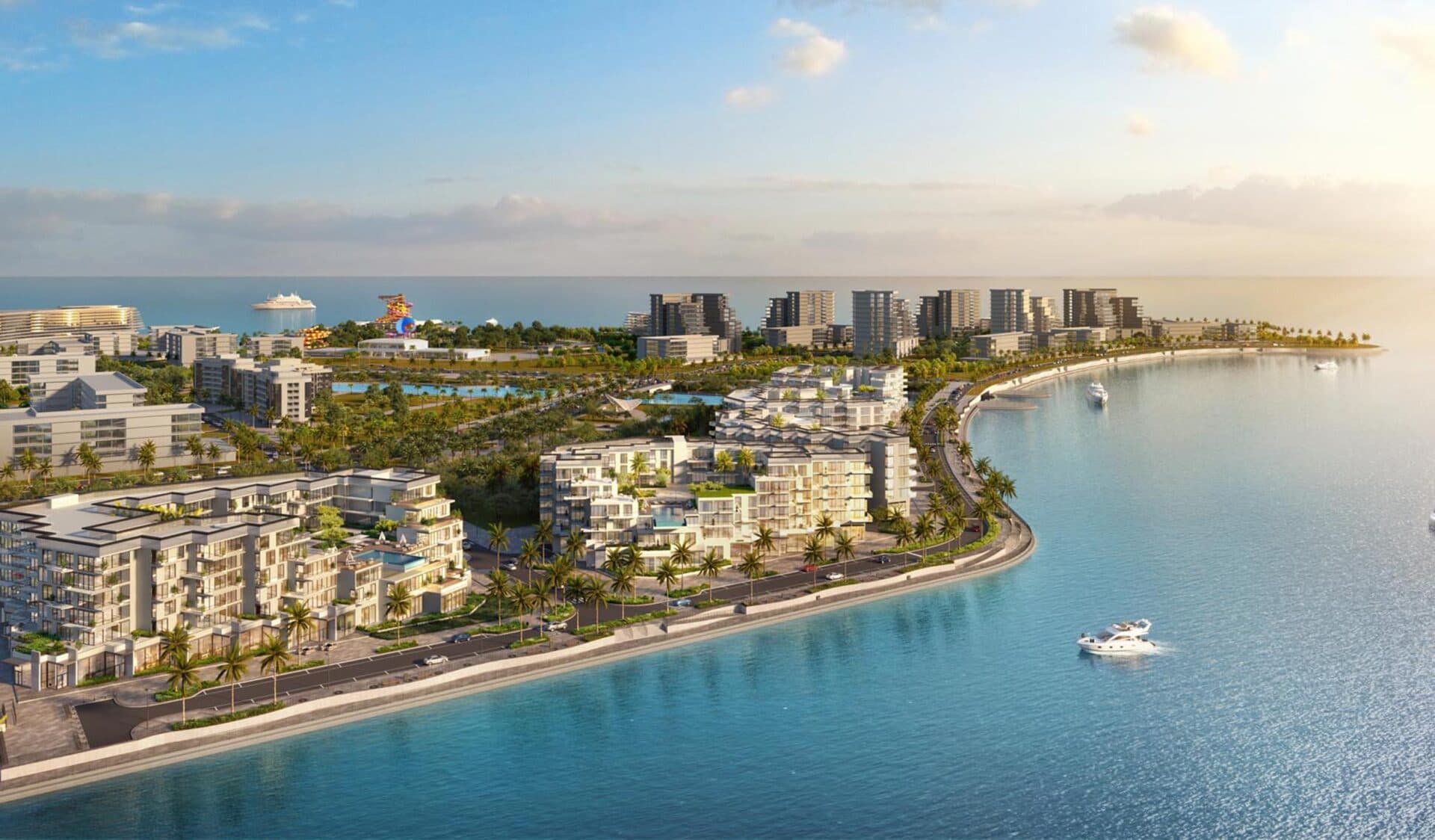
Qatar’s real estate market enters the last quarter of 2026 with an unusual signature: resilient sales activity alongside flat-to-softening prices and easing rents. Residential sales value rose about 43.5% to QAR 26.6 billion (roughly USD 7.3 billion) in 2025 on around 6,831 deals, while average villa prices fell about 1% over the year (Knight Frank, January 2026). In 2026 the regional war involving Iran added a new test: activity dipped in Q1, then recovered in Q2, while capital values barely moved (ValuStrat, Q2 2026). This is a buyer’s market built on volume and income, not appreciation.
That picture matters because earlier readings of Qatar leaned on double-digit capital-growth forecasts that the data has not borne out. What follows sets out where prices, rents, yields and ownership rules stand as of October 2026, drawing on Knight Frank, ValuStrat, Cushman & Wakefield, the IMF, Fitch and Qatar’s Ministry of Justice, and closes with our own view for 2026–2027.
The Qatar economic and policy framework.
Economic backdrop.
The macro picture changed sharply in 2026. Before the regional war, the IMF projected real GDP growth of about 6.1% in 2026, driven by the North Field liquefied natural gas expansion. After the 18 March 2026 Iranian missile strike on Ras Laffan Industrial City and the disruption of shipping through the Strait of Hormuz, the IMF’s April 2026 World Economic Outlook cut that projection by about 14.7 points, to a contraction of about 8.6% in 2026, with a rebound expected once energy production and transport normalise. Fitch placed Qatar’s AA rating on Rating Watch Negative in late March 2026; in early September 2026 it affirmed the rating at AA, removed the watch and assigned a Negative Outlook. Fitch assumes LNG exports resume through the strait in the first quarter of 2027, expects a budget deficit in 2026 before surpluses return from 2027, and projects sovereign net foreign assets at about 254% of GDP.
Ownership and residency policy.
Foreign ownership runs under Law No. 16 of 2018 and Cabinet Resolution No. 28 of 2020, as amended by Cabinet Resolution No. 21 of 2026. Non-Qataris may own freehold in ten areas, including Lusail, The Pearl, West Bay Lagoon, Al Dafna and, since June 2026, the Simaisma Resort and Beach Project, and may hold 99-year usufruct rights in sixteen further areas. On residency, property worth at least QAR 730,000 qualifies the owner for a renewable residence permit, and property worth at least QAR 3.65 million makes the owner eligible to apply for permanent residency under Law No. 10 of 2018. In February 2026 Qatar also announced long-term, renewable residence visas for senior executives and entrepreneurs; these are employment and business routes with salary or incubator criteria, not property-investment routes, and they do not change the purchase thresholds above.
Transaction costs.
Buying also became cheaper in January 2026. Under Ministerial Decision No. 5 of 2026, the Ministry of Justice set the fee for the final subdivision and registration of off-plan units at QR100 per unit, cut the notarisation of a real estate power of attorney from QR300 to QR100, reduced title-deed and replacement-deed fees to QR100, set mortgage registration at 0.025% of the secured debt, and lowered transfer fees for farms and marine land from 1% of market value to 0.25% of assessed value, in line with the standard 0.25% fee the buyer pays to register an ordinary sale.
Tax position.
Qatar levies no personal income or capital-gains tax on individual investors, a genuine structural advantage. The caveat worth stating plainly is that non-residents can face a 10% tax on Qatar-sourced gains where the asset forms part of a taxable business, so the zero-tax framing applies to personal ownership rather than every structure.
Infrastructure development.
Lusail City remains the flagship masterplan and will house the athletes’ village for the Doha 2030 Asian Games. On transport, the Lusail Tram Turquoise Line opened on 6 January 2025, with the Lusail QNB interchange linking the tram network to the Doha Metro. The Doha Metro Blue Line, a planned 17.5 kilometre line along the C-Ring Road, remains part of the long-term metro expansion plan with no construction contract or opening date announced, so we do not treat it as a near-term catalyst. Hamad International Airport handled a record 54.3 million passengers in 2025 and Qatar welcomed a record 5.1 million visitors, but the war reversed that trend in 2026: visitor arrivals fell about 45% year-on-year in Q2 2026 and average hotel occupancy dropped to about 52% (ValuStrat, Q2 2026).
Qatar property price trends for 2026.
Market snapshot.
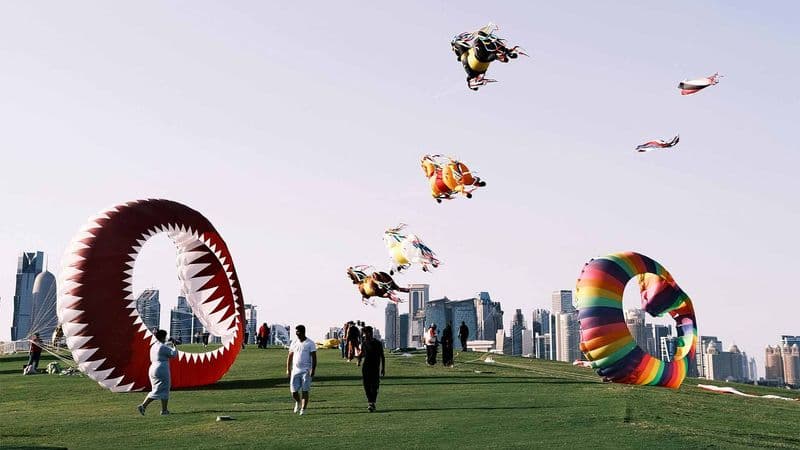
The 2026 story so far is resilient volume and flat-to-softer prices. Knight Frank’s Q1 2026 review recorded 1,582 residential transactions worth about QAR 6.2 billion: volumes were 15% higher than in Q1 2025 but 23% lower than in Q4 2025, as the regional war weighed on sentiment. Knight Frank put average villa prices down about 3.5% year-on-year, to around QAR 6,626 per square metre, and apartment prices down about 1.7%, to around QAR 13,049 per square metre. Activity then recovered: ValuStrat’s Q2 2026 review recorded residential sales up 23.6% on the quarter and 15.8% on the year, with the median ticket rising to about QAR 3 million. ValuStrat’s price index stood at 97.8 points, down 0.2% on the quarter and 0.3% on the year, with apartments averaging about QAR 10,460 per square metre and villas about QAR 5,675, both unchanged year-on-year. Ministry of Justice data show trading continuing into the third quarter, with about QAR 1.86 billion of registered sale contracts in July 2026 and QAR 1.29 billion in August 2026 across all property types.
Source: Knight Frank, Q1 2026 (published June 2026). Bars show the magnitude of national price DECLINE year-on-year. ValuStrat’s separate valuation-based index rose about 1.6% year-on-year in Q1 2026 and eased 0.3% in Q2 2026; the two series are not directly comparable. Indicative; not investment advice.
Residential benchmarks.
Two research series are quoted for Qatar, and they should be read separately rather than blended into one range. ValuStrat publishes a valuation-based index across a fixed basket of homes: in Q2 2026 it put apartments at about QAR 10,460 per square metre and villas at about QAR 5,675. Knight Frank publishes average prices from its own sample of tracked schemes and districts: its Q1 2026 averages were about QAR 13,049 per square metre for apartments and QAR 6,626 for villas. The gap reflects differences in method and sample, not a spread of prices in the market. The same caution applies to location data. ValuStrat’s Q2 2026 average for The Pearl, about QAR 10,570 per square metre, sits just above its national apartment average; it is an average across the island’s stock, not a prime benchmark. Knight Frank’s scheme-level readings sit higher, led by The Waterfront at about QAR 15,194 per square metre and Viva Bahriya on The Pearl at about QAR 14,482 in Q1 2026. The useful conclusion is narrower than a resilient prime tier: the best individual schemes command a clear premium, while high-end coastal villas on The Pearl and West Bay Lagoon have fallen by up to 12.5% over the year (ValuStrat, Q2 2026).
| Segment | Benchmark value | Price trend (YoY) |
|---|---|---|
| Apartments, nationalValuStrat, Q2 2026 | QAR 10,460 / sqm | 0.0% |
| Apartments, nationalKnight Frank, Q1 2026 | QAR 13,049 / sqm | −1.7% |
| Villas, nationalValuStrat, Q2 2026 | QAR 5,675 / sqm | 0.0% |
| Villas, nationalKnight Frank, Q1 2026 | QAR 6,626 / sqm | −3.5% |
| The Pearl apartmentsValuStrat, Q2 2026, district average | QAR 10,570 / sqm | Stable QoQ |
| Pearl / West Bay Lagoon villasValuStrat, Q2 2026, high-end coastal | High-end coastal band | Up to −12.5% |
Source: ValuStrat, Q2 2026 (published August 2026); Knight Frank, Q1 2026 (published June 2026). The two series use different methods and samples and should not be combined. Indicative; not investment advice.
Commercial and office.
On the commercial side, the verifiable direction is occupancy rather than headline rents. Cushman & Wakefield reported in August 2024 that Grade A occupancy in West Bay had reached its strongest level since 2015, with available space in the district expected to fall to around 160,000 square metres, under 10% of supply. ValuStrat’s Q2 2026 review puts Grade A office rents at about QAR 115 per square metre per month, up 1.6% year-on-year, while Grade B and C rents eased 3.4%. Tight prime occupancy supports rental stability at the top of the market without the precise rent points that earlier readings invented.
Doha property prices 2026: the area read.
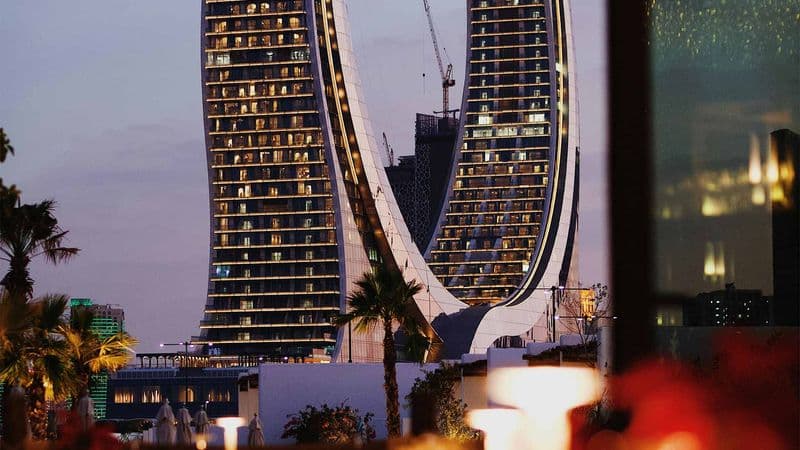
The headline averages hide a clear split across Doha’s districts. Rather than a uniform run of double-digit gains, 2026 shows broadly flat values, a clear premium for the best individual schemes and weakness in high-end coastal villas, with sales activity led by Al Wukair, The Pearl and Lusail (ValuStrat, Q2 2026).
- Lusail City. The flagship masterplan and the site of the Doha 2030 Asian Games athletes’ village. ValuStrat put Lusail apartments at about QAR 10,365 per square metre in Q2 2026, close to the national average.
- The Pearl. A freehold island where apartment values have been broadly stable, at about QAR 10,570 per square metre in Q2 2026 against QAR 10,615 in Q1 (ValuStrat), and where top schemes such as Viva Bahriya command a clear premium (Knight Frank, Q1 2026).
- Qetaifan Island North. A newer island district beside Lusail with the Icon Tower, a waterpark and the Les Vagues by Elie Saab branded residences. A prime district to watch rather than a proven price leader.
- West Bay. The office core, where Grade A occupancy is high and prime office rents edged up 1.6% year-on-year in Q2 2026 (ValuStrat).
- West Bay Lagoon. A high-end coastal villa market where villas on The Pearl and West Bay Lagoon fell by up to 12.5% year-on-year, while West Bay Lagoon apartments averaged about QAR 9,460 per square metre (ValuStrat, Q2 2026).
Qatar rental yield outlook.
Yields need to be read by asset type and by date rather than as a single band. ValuStrat’s Q2 2026 review puts the overall gross residential yield at about 5.6%, splitting into about 8.0% for apartments and 4.4% for villas. These are gross, index-level figures: net returns after service charges, vacancies and incentives will be lower, and individual schemes can sit well above or below the average. Rents are the variable to watch. ValuStrat’s median monthly rent fell 4.5% year-on-year to about QAR 8,100 in Q2 2026, with landlords offering incentives and flexible terms, and Knight Frank recorded average villa rents down about 8.9% year-on-year in Q1 2026. With capital values flat, yields will drift lower if rents keep easing.
Qatar property investment catalysts.
Residency and ownership rules.
The demand levers here are the established property routes rather than a new permit. Property worth at least QAR 730,000 qualifies the owner for a renewable residence permit, and at least QAR 3.65 million makes the owner eligible to apply for permanent residency under Law No. 10 of 2018. The June 2026 addition of the Simaisma Resort and Beach Project took the freehold list to ten areas, and the January 2026 fee cuts, including QR100 per unit for the final registration of off-plan units, lower the cost of buying. The February 2026 executive and entrepreneur residence visas widen the pool of long-term residents, which supports rental demand, but they are not property-investment visas.
Prime and branded supply.
Qetaifan Island North is the prime district to watch. Les Vagues by Elie Saab, developed by Dar Global, the international arm of Dar Al Arkan, with Qetaifan Projects and valued at about QR1 billion at its October 2022 sales launch, is the headline branded-residence scheme. Published handover dates have varied, so buyers should confirm the current schedule directly. Branded residences typically transact at a premium to comparable non-branded stock, which supports demand at the top of the market even where mainstream prices are flat.
Infrastructure and events.
The Lusail Tram Turquoise Line, opened in January 2025, improves connectivity across the Lusail corridor, while the Doha Metro Blue Line remains a planned line with no announced opening date. Qatar will host the 2030 Asian Games, with the athletes’ village in Lusail, a medium-term infrastructure and demand catalyst. The record 54.3 million airport passengers and 5.1 million visitors of 2025 show Doha’s underlying pull, but 2026 visitor numbers have fallen sharply during the war, so the short-let and hospitality case should be underwritten on a recovery, not on 2025 levels.
Risk factors and mitigations.
Price and supply risk.
The headline risk is the one the data already shows: values are flat to softer and rents are easing, with Knight Frank recording villas down about 3.5% and apartments about 1.7% year-on-year in Q1 2026, and ValuStrat expecting about 4,600 units to complete in the second half of 2026, with more than 600 deferred to 2027. Buyers focused on near-term capital growth should be cautious, while those weighting income and the best individual schemes are better positioned. Concentrating on masterplan-backed addresses with proven demand is the clearest mitigation.
Sentiment and external pressure.
Regional geopolitics is the dominant live factor. The 2026 war involving Iran brought a missile strike on Ras Laffan in March 2026 and continuing disruption to shipping through the Strait of Hormuz, interrupting Qatar’s LNG exports. Fitch placed Qatar on Rating Watch Negative in late March 2026 and, in early September 2026, affirmed the AA rating, removed the watch and assigned a Negative Outlook, assuming exports resume in the first quarter of 2027. The housing market has so far absorbed the shock with flat values rather than a fall, but a longer closure of the strait or renewed strikes would weigh on sentiment, public spending and rents. Diversifying across addresses and asset types reduces exposure to any single segment.
Policy stability.
Ownership policy has moved in investors’ favour, with the June 2026 addition of Simaisma to the freehold areas and the January 2026 fee cuts lowering transaction costs. The zero personal income and capital-gains tax position for individuals remains in place, with the standing caveat on Qatar-sourced business gains. Fiscal policy is the area to watch: Fitch expects a budget deficit in 2026 before surpluses return from 2027.
Our view for 2026–2027.
Omnia Desk view.
This is our reading of the latest published data as of October 2026, set out as ranges with the drivers behind them. It is a view, not a guarantee of future prices, and it is not investment advice.
Prices.
Our base case is broadly flat national capital values over the next twelve months, within about −3% to +1% on ValuStrat’s index, with apartments steadier than villas and high-end coastal villas still the weakest segment. Through 2027 we expect stabilisation, with room for a modest recovery of about 0% to +3% if Gulf shipping and LNG exports normalise as Fitch assumes.
Rents and yields.
We expect rents to keep easing into 2027 as about 4,600 new units complete in the second half of 2026. Gross yields should hold around 5–6% overall, about 7.5–8% for apartments and 4–4.5% for villas, drifting lower if rents fall faster than values.
Activity.
Transaction volumes have proved more resilient than prices. We expect full-year 2026 activity broadly in line with 2025, supported by end-user demand, mortgage lending and lower registration fees, with dips around any renewed escalation.
What would change our view.
On the upside: a durable reopening of the Strait of Hormuz, the restart of LNG exports and the North Field expansion, and delivery of the Asian Games programme in Lusail. On the downside: a prolonged closure or renewed strikes, slower public spending as the fiscal position tightens, and new supply arriving faster than demand. We will revisit these ranges when ValuStrat and Knight Frank publish their Q3 2026 data.
Qatar in late 2026 is a buyer’s market: activity has held up, values are flat and rents are easing, while the regional war sets the pace of any recovery. The opportunity is selective entry on income in proven addresses, not a bet on broad appreciation.
Where the Qatar market really stands in 2026.
Read against the sources rather than the marketing, the 2026 case is measured. Sales value surged in 2025, up about 43.5% to QAR 26.6 billion, and activity has held up through the war, while capital values are broadly flat and rents are easing. Gross yields sat near 5.6% overall in Q2 2026, apartments outperform villas on income, and individual investors pay no personal income or capital-gains tax. The structural supports are real but slower than hoped: ten freehold areas, lower registration fees, the Lusail Tram network and the 2030 Asian Games, set against a regional war that has disrupted Qatar’s gas exports.
The biggest change since the last reading is the war, not a new residency permit: the property routes to residency remain QAR 730,000 and QAR 3.65 million. Taken together, 2026 and 2027 favour selective buyers who weight income and proven addresses over broad capital growth. To act on it, browse the current developments in Qatar or read the wider Qatar market view. Every figure here is dated, indicative and not investment advice.
Advisory
Talk it through, privately.
An Omnia advisor on availability, structuring and timing across these markets.
 AvailableBarkaHai Al NaseemTypeResidencesExplore residence