Orientation
Most clients begin with the place, not the plan. Sultan Haitham City is a place that does not fully exist yet, so the honest starting point is what is being built and how far along it is.
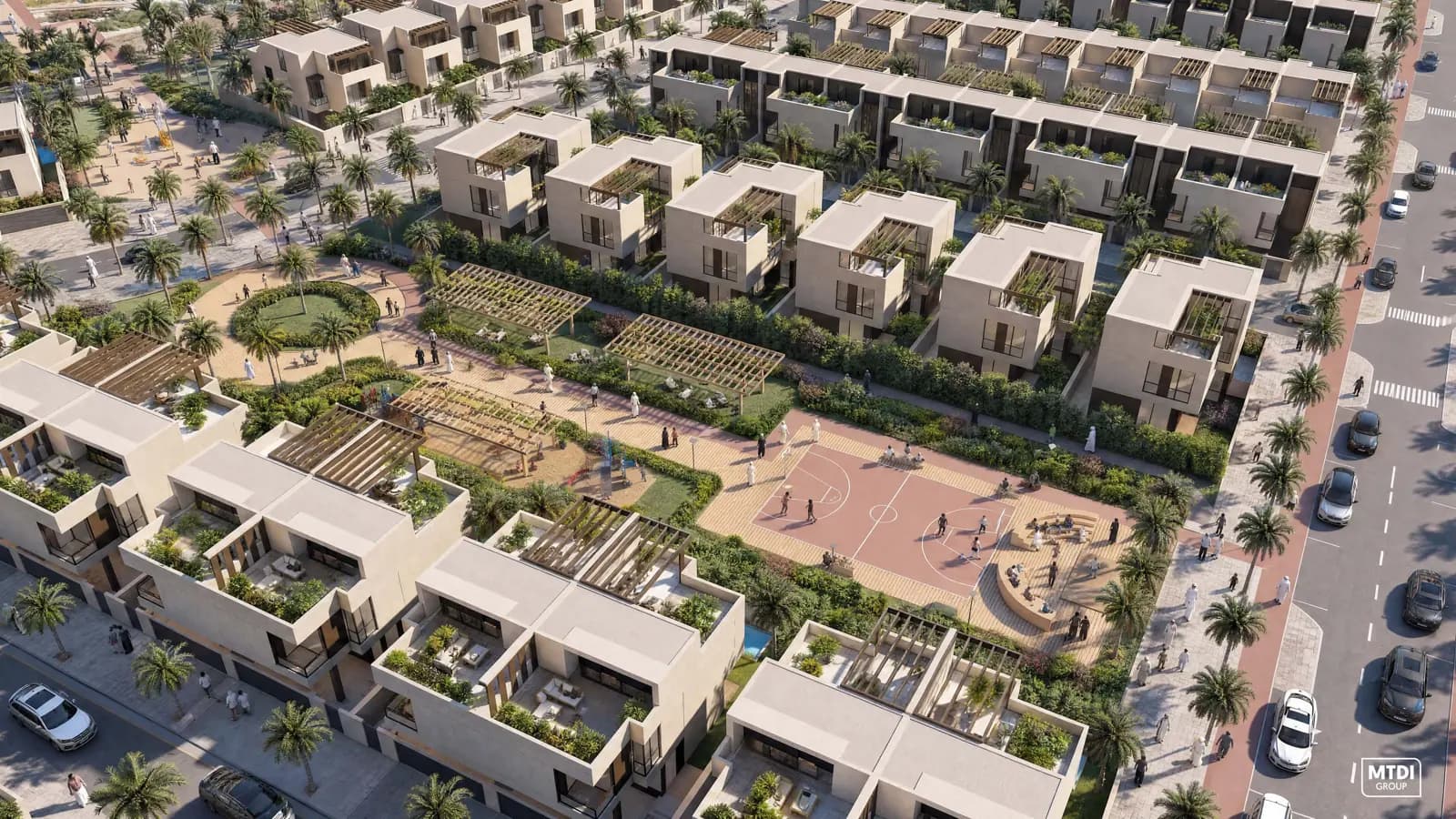
Sultan Haitham City is a 14.8 sq km masterplanned district in Seeb, western Muscat, named for the reigning Sultan and built by Oman’s Ministry of Housing and Urban Planning under Vision 2040. Skidmore, Owings & Merrill drew the plan: 19 neighbourhoods for around 100,000 residents, 2.9 sq km of green space, and a 1.6 million sq m central park along a 7.5 km wadi. Construction began in 2024 and runs across four phases to 2045 (MoHUP; SOM; Wikipedia).
Today it is a construction site with real momentum rather than a lived-in address. As of early 2026, phase-one enabling works were about 70% complete, the Experience and Sales Centre over 99% complete, bridges at roughly 71%, and first model villa handovers were targeted for mid-2026 (tender updates, January 2026). The demand behind that work is genuine and international: roughly 1,700 units had sold by February 2026 to buyers of more than 35 nationalities, and 6,986 units were signed with developers in the project’s first year (Oman Observer, February 2026).
What you buy into is deliberately a mixed Omani-and-international city, not an expatriate enclave. Subsidised housing for Omani families prices near RO 400 per sq m with over half government-supported, alongside investor product at about RO 900 per sq m (Minister of Housing, Oman Observer, 24 February 2026). So the foreign-eligible stock is specific neighbourhoods and buildings, which we identify and verify before you form any view.
- District type
- Government new city
- Stock
- Off-plan only, neighbourhood scale
- Pace
- Four phases to 2045
- First handovers
- Model villas mid-2026
- Airport
- About 15 to 25 minutes, same district
- Coast
- Seeb beach 12 to 15 minutes
Life here
A city being built ahead of the people who will fill it.
You are buying the masterplan, not the coast.
The everyday life of Sultan Haitham City is still on paper and in the ground. The masterplan is walkability-led: 19 neighbourhoods, a wadi park at the centre, micromobility and tram provision, and 23 access points off the Muscat Expressway and Sultan Qaboos Road. The three notes below are the honest read of what is here now, and what is coming.
The central park
The heart of the plan is a 1.6 million sq m central park along a 7.5 km wadi corridor, with 2.9 sq km of green space across the city. It is under construction, so today it is a promise on a hoarding rather than a place to walk.
The amenity curve
The social city is planned, not open: a 1,200-bed hospital, around 30 public and 9 private schools, and 25 mosques are phased with the neighbourhoods. Early residents will live ahead of that curve for several years and lean on Seeb and Al Khoudh nearby.
The connection
The Muscat Expressway borders the site, so the rest of the city is close: the airport is in the same district, about 15 to 25 minutes depending on the neighbourhood, Sultan Qaboos University about 15, Seeb’s beaches and souq 12 to 15. It is not a beachfront address. The draw is the plan, not the water.
Developments here
A short, honest shelf.
We list a select few developments in any city, the ones we would put a client into ourselves, not a full portal of inventory. Inside Sultan Haitham City we currently list two: Sarooj Oasis and Wadi Zaha. For the other neighbourhoods and developers building here, talk to the desk directly.
Oman · Muscat · Sultan Haitham City
Wiam District
Terrace Houses, Duet Villas and Grove Villas in a planned district of Sultan Haitham City, bringing gardens, plazas and a wadi into the pattern of daily life.
Oman · Muscat · Sultan Haitham City
Yenaier Residences
Studios, apartments and penthouses in Sultan Haitham City, with landscaped connections, planned wellness facilities and the wider Yenaier mix of retail, business and hospitality.
Oman · Muscat · Sultan Haitham City
Wadi Zaha
Studios to four bedroom villas by Al Ahly Sabbour in Sultan Haitham City, Muscat, facing the new city's Central Park. From OMR 43,050, first handovers scheduled for Q1 2028.
Oman · Muscat · Sultan Haitham City
Sarooj Oasis, Sultan Haitham City
Own an early home in Sultan Haitham City, Oman's SOM-masterplanned new city near Muscat: apartments, twin-houses and villas, one to six bedrooms. Freehold, off-plan for 2028, from about £65,000.
Off the listings
Most of the city is still being tendered and launched, neighbourhood by neighbourhood.
Tell us your brief and we will tell you which eligible neighbourhoods and developers are actually selling, and where the delivery risk sits.
Ask what’s availableNearby
Also in Muscat.
Neighbouring addresses worth seeing before you decide.
Oman · Muscat · Yiti, Muscat
Nikki Beach Residences at The Arc
132 serviced residences at Yiti, Muscat, across Oria, Onda and Opal. Two to four bedroom homes from OMR 423,883 on the September 2026 list, with distinct Nikki Beach branding tiers.
From£822,600Residences2–4 BedsStatusNow sellingOman · Muscat · Muttrah
Al Yazan Tower B
Picture life at Al Yazan Tower B in Muttrah, Muscat. Explore homes in a new waterfront community, planned resident spaces and three payment options with your Omnia advisor.
StatusNow sellingOman · Muscat · Yiti, Muscat
Sustainable District Villas at Yiti
Three and four bedroom Courtyard and Garden villas at The Sustainable City - Yiti, from OMR 238,747 on the September 2026 list, with private gardens and pedestrian neighbourhoods.
From£463,320Residences3–4 BedsStatusNow selling
Schools & everyday life
What a household should weigh before moving here.
Sultan Haitham City is planned as a primary-home city, but its own schools are not open yet, so early residents rely on Seeb and Al Khoudh nearby. The list below is what is genuinely reachable today, alongside the costs worth checking before you commit to an off-plan unit.
Schools within reach
- In-city schools (masterplanned)The plan allocates around 30 public and 9 private schools within the city, phased with the neighbourhoods. Opening dates are not yet confirmed · Within Sultan Haitham CityPlanned, not yet open
- ABQ Seeb International SchoolCambridge curriculum, Pre-KG to Grade 12 · Seeb, roughly 15 minutesPart of the ABQ schools group
- A’Soud Global SchoolInternational school serving the Seeb area · Seeb
- Sultan Qaboos UniversityOman’s flagship public university · Al Khoudh, about 15 minutes
- GUtech, German University of TechnologyPrivate technical university, established with RWTH Aachen · Halban, about 10 minutes
A working list, not a ranking. The city’s own schools are planned and not yet open, so early families use Seeb and Al Khoudh first. We confirm current curricula, fees and openings before you commit to a building.
What it costs to live, not just to buy
- Registration fee for foreign buyers in freehold purchases; Omanis pay 1%
- 3% of price
- No annual property tax, no capital gains tax and no inheritance tax on Omani property
- None
- Personal income tax: zero now; 5% on annual income above about OMR 42,000 from 2028
- 0% today, 5% from 2028
Indicative 2026 figures for the framework as verified. Your advisor confirms current numbers in your currency.
A closer reading
How to read Sultan Haitham City.
A working brief on the city: where it came from, what the stock actually is, and where it is going. About 8 minutes.
Reviewed by The Omnia Muscat desk · July 2026
ultan Haitham City is not a district you can walk yet. It is a 14.8 sq km stretch of Seeb that the Omani state is turning into its flagship new city, one neighbourhood tender at a time. To read it honestly is to hold two facts together: the ambition is real and government-backed, and almost nothing is finished. Everything for sale here is off-plan, bought on the strength of a masterplan and a delivery schedule rather than a home you can stand inside.
A state project, not a private scheme
This is a Ministry of Housing and Urban Planning project, masterplanned by Skidmore, Owings & Merrill under Vision 2040 and named for the reigning Sultan. Construction began in 2024 and the full build runs across four phases to 2045. Sales opened in March 2024 with Hay Al Wafa, the first of 19 neighbourhoods, developed by Al Siyabi International Group at an investment of RO 208m for 1,644 units. It sold 78% of its first two phases within three months (Oman Observer; developer records, 2024). The first-neighbourhood figures are reported variously: some sources cite Al Abrar Real Estate, 1,800 units and RO 280m.
In its first year the ministry signed 6,986 residential units with local and international developers, over RO 1bn of neighbourhood agreements covering more than 2.2 million sq m (Oman Observer, 2025). Delivery is spread across at least eight developers who buy and build whole neighbourhoods, from local groups like Al Siyabi to Saudi Arabia’s Retal, awarded neighbourhoods 3, 15 and 17 for RO 320m at MIPIM in March 2026. Sarooj Oasis, one of the neighbourhoods we list, launched in February 2025: a RO 30m gated district of 210 villas and apartments on 86,000 sq m beside a wadi (Muscat Daily, 5 February 2025). Egypt’s Al Ahly Sabbour builds at larger scale with Wadi Zaha, a RO 115m park-front neighbourhood of around 760 first-phase homes, launched in January 2025 and under construction since February 2026 (Oman Observer).
A city bought on a masterplan and a schedule, not a home you can stand inside. The ambition is real, and almost nothing is finished.
What you are actually buying
Everything for sale is off-plan and neighbourhood-scale: apartments, townhouses, twin and standalone villas bought from one of at least eight private developers building within the government masterplan, on freehold title open to all nationalities. At Sarooj Oasis the mix runs from 1-bed apartments of about 71 sq m, from around OMR 45,300, through 4-bed twin villas from around OMR 72,600, to 5 and 6-bed standalone villas at roughly OMR 219,000 to 245,000, on a 20/70/10 construction-linked plan with completion scheduled for the second half of 2028 (developer marketing via Oman Property Investment, 2026).
City-wide, official investor pricing sits near RO 900 per sq m, below Muscat’s established freehold zones at RO 800 to 1,100 per sq m for apartments and RO 750 to 1,000 for villas (Cavendish Maxwell, 2025). Portals quote entry points from roughly OMR 27,800 for studios and OMR 57,000 for the smallest villas (portal listings, 2026). Buyers get full freehold with inheritance rights under the city’s ITC-style designation, and off-plan purchasers qualify for renewable Omani residency once 30% of the price is paid, extended to family where the property exceeds OMR 50,000 (Ministerial Decision, September 2025).
Where it is going
The momentum is measurable. About 70% of phase 1 and 2 tenders were under execution by early 2026, some RO 300m committed to infrastructure, first model villas due mid-2026 and Hay Al Wafa’s first homes from around mid-to-late 2026 (Oman Observer, 24 February 2026; tender trackers, January 2026). The pipeline keeps thickening: Retal’s RO 320m deal for three neighbourhoods covers 1.39 million sq m, with further packages going to market through 2026 (Zawya; AGBI).
The full build is generational. Roughly 20,000 homes are planned at about 1,000 units a year across four phases ending 2045, so the city a 2026 buyer sees finished around them is a decade or more away. The hospital, most schools, retail and the central park will trail the first homes. The delivery pace, the amenity timing and the state’s tender cadence are the risks to watch, and they are policy outcomes rather than contractual guarantees to an individual buyer (MoHUP; Oman Observer).
Who it's for
Start with why the new city fits your plan.
Tell us which sounds like you, and an advisor tailors the guide, the neighbourhoods and the numbers to your situation.
The early buyer
A stake in a city being built.
Off-plan freehold at official pricing near RO 900 per sq m, on construction-linked payment plans. You carry delivery risk in exchange for the earliest position.
- Off-plan
- Payment plans
- Freehold
The residency buyer
A home that carries a permit early.
Under a September 2025 decision, an off-plan purchase here grants residency once 30% is paid, family included above OMR 50,000. Earlier than the standard completed-purchase route.
- Residency
- 30% paid
- Family route
The long-view investor
A generational build, entered early.
Roughly 20,000 homes and 100,000 residents are planned to 2045. There is no rental market or resale record yet, so this is a patience play, and we say so plainly.
- Long horizon
- No yield yet
- Honest read
Two minutes
Get a shortlist matched to your brief.
A handful of eligible neighbourhoods, with pricing and an honest read on delivery. A person replies, not an autoresponder.
What to know
The practical part, before you look.
Oman is straightforward to own in, and this city is deliberately open to foreign buyers, but everything here is off-plan and the legal framework is new. Here is the honest version: the local price readings, and how the freehold designation on a specific unit is checked before you commit.
Ownership & rules
- Who can own
- Foreign nationals can buy inside designated Integrated Tourism Complexes (ITCs) such as Al Mouj Muscat, Muscat Bay and Hawana Salalah. Outside the ITCs, freehold is generally reserved for Omani and GCC nationals, though long-term expatriate residents can hold usufruct of up to 99 years in some approved buildings. We confirm the status of a specific scheme before you commit.
- What you hold
- Registered freehold title in your own name inside an ITC. A minority of schemes grant long-term usufruct instead, up to 99 years, which can still be sold, let and passed to heirs. Which one applies is a scheme-level fact, so we verify it against the title record, not the brochure.
- Residency
- Ownership within an ITC carries renewable residency for the owner and immediate family, held for as long as the property is. Larger purchases can also qualify for the longer multi-year investor residency relaunched in 2025, which runs in five and ten year tiers at higher thresholds. Thresholds and terms vary and can change, so we confirm the current rules for your situation.
- Taxes
- A transfer and registration fee of about 3% on purchase, and that is broadly the headline cost. There is no recurring tax on a home you own and no personal capital gains tax today. From January 2028 a 5% income tax applies to individuals earning above a high yearly threshold, around OMR 42,000 under Royal Decree 56/2025, the first such tax in the Gulf.
- Letting
- Long lets and holiday lets both operate within the ITC communities, usually through the community’s own rental management, and leases are registered locally. Rental income is untaxed today, though from 2028 it falls within the scope of the new income tax above the threshold, so we model the net position before you bank on the income.
What it costs to buy
- Official investor-side pricing, per m²Minister of Housing, Oman Observer, 24 February 2026. Subsidised Omani housing sits near RO 400
- About RO 900
- Muscat freehold-zone apartments, per m² (villas RO 750 to 1,000)City-level reading; area-level data does not yet exist. Cavendish Maxwell, 2025
- RO 800 to 1,100
- Oman national residential price index, Q1 2025National reading, quoted for direction. NCSI via Arab News, 15 June 2025
- +7.3% y/y
Rules and figures reflect the framework as last verified, 2 July 2026, and can change. Your advisor confirms the current position, and the tenure of a specific scheme, before you commit.
Where it sits
Inland in Seeb, on the Muscat Expressway.
- Muscat International Airport
- About 15 to 25 minutes
- GUtech, Halban
- About 10 minutes
- Seeb beach and souq
- 12 to 15 minutes
- Sultan Qaboos University, Al Khoudh
- About 15 minutes
- Al Mouj Muscat
- 25 to 30 minutes
- Mutrah Corniche, Old Muscat
- 35 to 40 minutes
Around the city
- Muscat Expressway
- The central park and 7.5 km wadi corridor
- Sultan Qaboos University
- Al Khoud Dam park and lake
- Seeb coast and souq
The wider picture
The city
Muscat
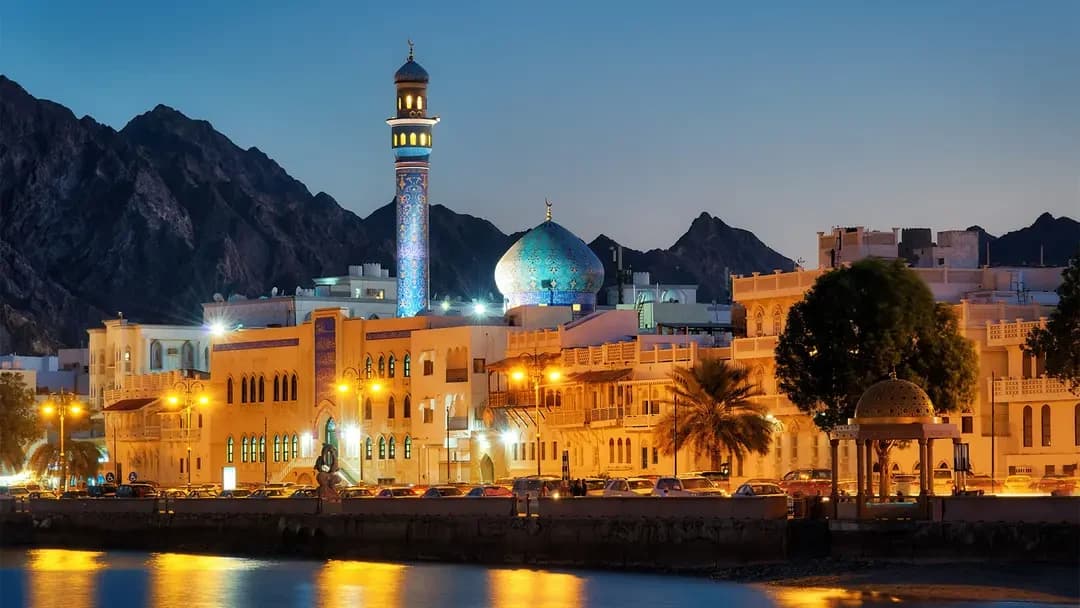
Muscat is Oman’s low-rise, mountain-and-sea capital, and Sultan Haitham City is the single largest thing being built in it. The city’s established addresses sit on the coast; this one sits inland, betting on a masterplan instead.
Read the city guide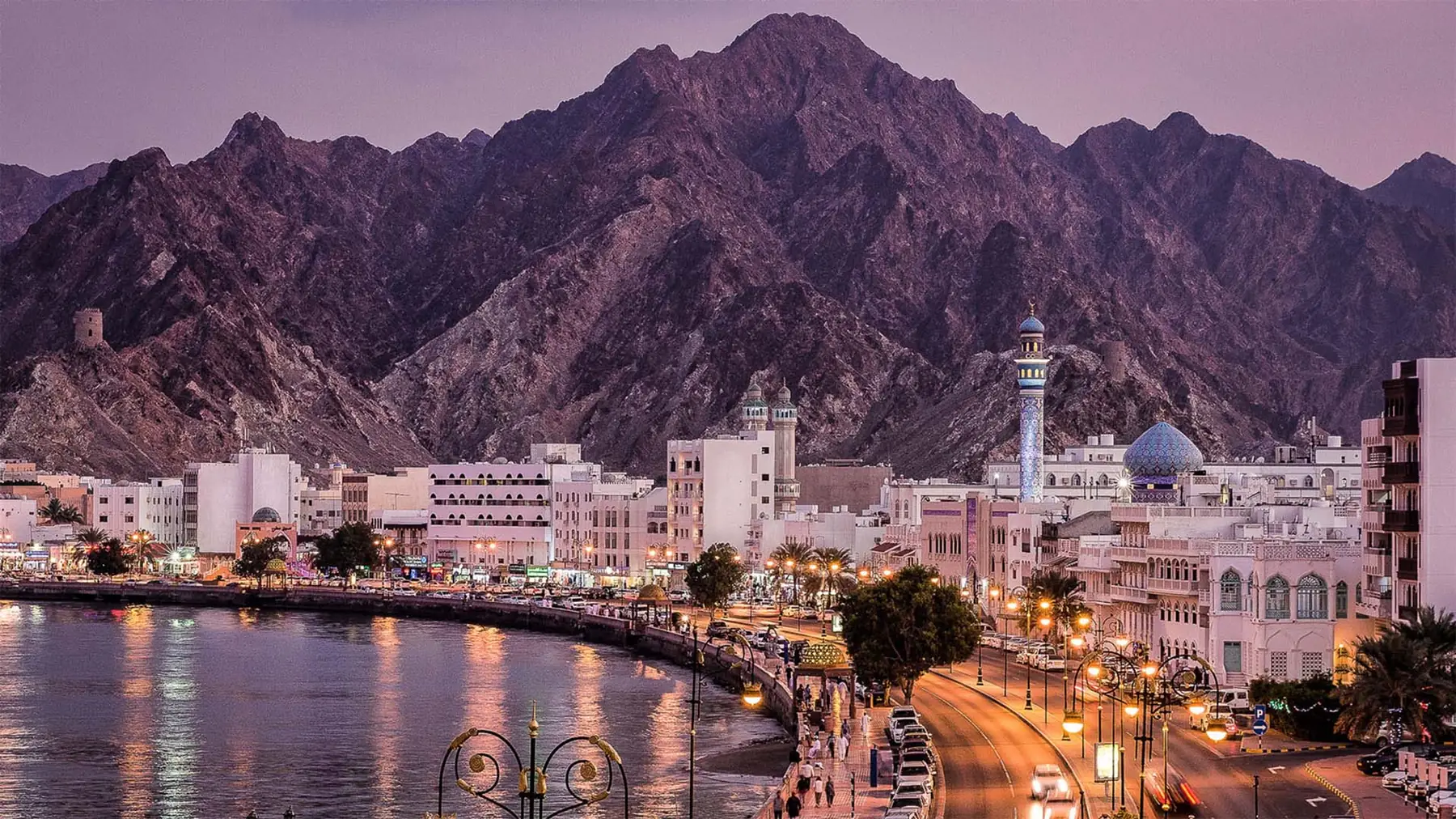
The country
Oman
Oman opens freehold to foreign buyers inside designated tourism-complex zones, with owner residency travelling with the home. For property in the Sultanate, we map the tenure, the residency route and the delivery risk before anything else.
Read the market guideFrom the desks
Read around Muscat.
Investor guides
Buying Oman property from the UAE.
A purchase guide for UAE citizens and residents: Oman ownership routes, title and contract checks, off-plan protection, fees and VAT, UAE-income finance and remote completion.
Process · OmanRead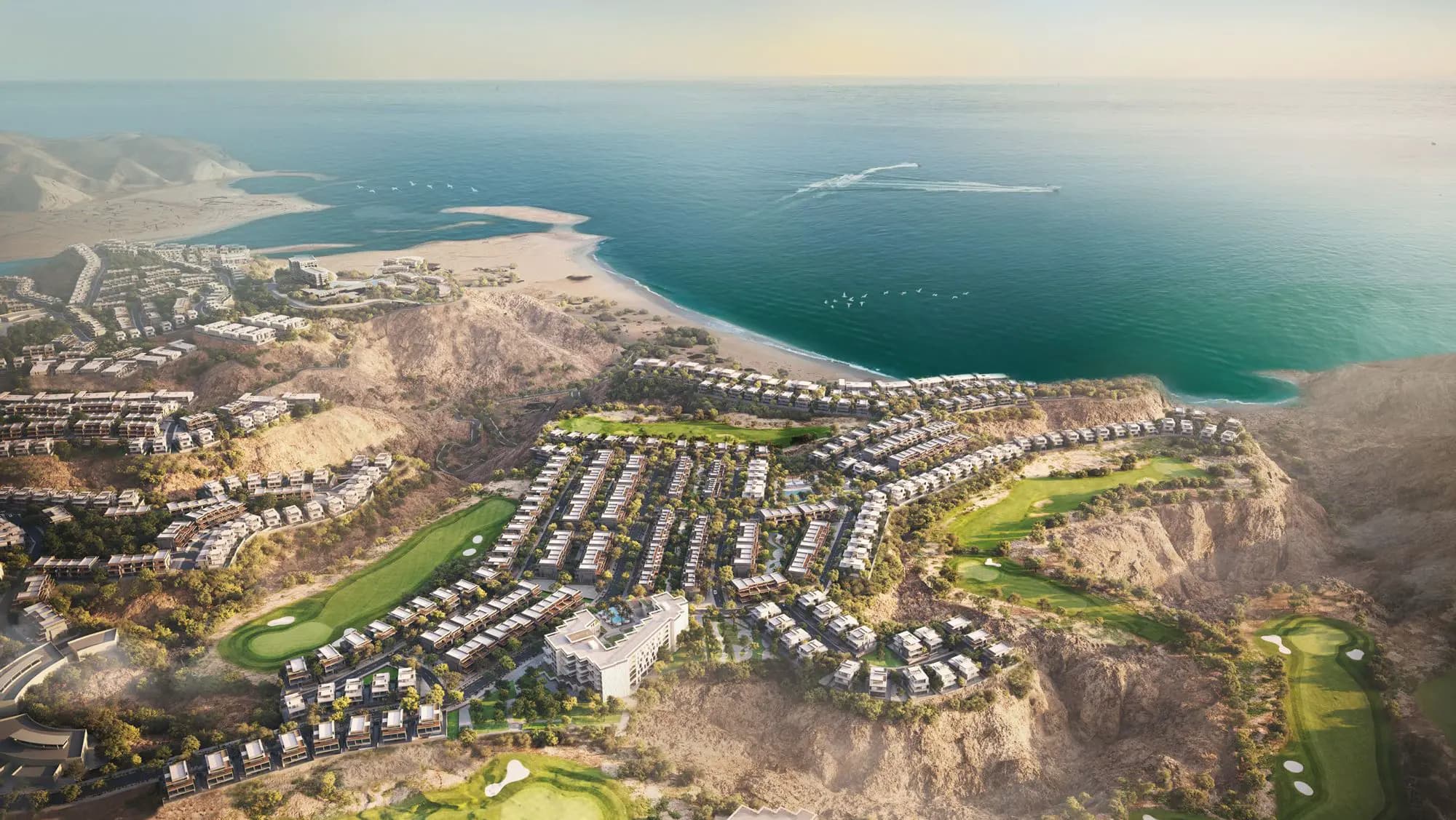
Investor guides
Can foreigners buy property in Oman? ITCs explained
Oman ownership checks: the scheme’s approval, title or usufruct, buyer eligibility and separate residency requirements.
Ownership · OmanRead
Investor guides
Buying property in Muscat: process and timeline
From reservation to registered title inside an ITC: the stages and realistic timelines.
Process · OmanRead
Investor guides
Oman residency through an Integrated Tourism Complex
Oman property-linked residency: check the owner service, Golden Residency and the property-purchase visa’s requirements.
Residency · OmanReadInvestor guides
Costs and fees when buying property in Oman
Registration, agency and the ongoing community charges typical of an ITC residence.
Costs · OmanRead
Reports
International developers are expanding Oman’s property market
Omnia’s Guy Watt on how international developers, broker networks and off-plan sales are expanding Oman’s property market and its overseas buyer base.
OmanRead
Frequently asked
Before you enquire.
Can foreign buyers own property in Sultan Haitham City outright?
Yes. The city’s residential neighbourhoods are sold freehold to all nationalities under Oman’s designated-zone (ITC-style) framework, with full title that passes to heirs. Foreign buyers pay a 3% registration fee at transfer, against 1% for Omanis. Confirm the freehold designation on the specific plot in your sale contract, as the city is new and the framework was consolidated under the 2025 Real Estate Law.
Does buying here give me Omani residency?
Yes, and unusually early. Under a September 2025 Ministerial Decision covering the city’s under-construction projects, a buyer qualifies for a renewable residency permit once 30% of the price is paid; where the property exceeds OMR 50,000 the residency extends to immediate family. Larger investments can qualify for Oman’s five and ten-year investor residency programmes.
What does entry cost at Sarooj Oasis?
As of 2026, 1-bed apartments of about 71 sq m start around OMR 45,300, 4-bed twin villas around OMR 72,600, and 5 to 6-bed standalone villas run roughly OMR 219,000 to 245,000, on a 20/70/10 payment plan. City-wide investor pricing sits near RO 900 per sq m, below Muscat’s established freehold zones at RO 800 to 1,100 per sq m for apartments.
When will homes actually be delivered?
The city’s first handovers begin with model villas from mid-2026 and Hay Al Wafa’s first phase from around mid-to-late 2026. Sarooj Oasis is scheduled to complete in the second half of 2028. The wider city builds out in four phases to 2045, so early owners live in a maturing district for years.
Is it a good rental investment today?
Honestly, not yet, because no rental market exists there until residents arrive from late 2026 onward. The income case rests on the build-out: roughly 1,700 units sold to buyers of more than 35 nationalities, 20,000 homes and 100,000 residents planned, plus in-city schools and a 1,200-bed hospital. Treat any quoted yield as a projection, not evidence.
Where is it, and how connected is it?
It sits inland in Seeb, western Muscat, the same district as Muscat International Airport, which is roughly 15 to 25 minutes by car depending on the neighbourhood. It is directly off the Muscat Expressway with 23 planned access points. Sultan Qaboos University is about 15 minutes, Seeb’s beaches 12 to 15 minutes, and Old Muscat 35 to 40 minutes. It is not a beachfront address; the draw is the masterplan, not the coast.
What taxes will I pay as an owner?
Oman levies no annual property tax, no capital gains tax and no inheritance tax; the main entry cost is the 3% registration fee for foreign buyers. Personal income tax is currently zero, with a 5% tax on annual income above roughly OMR 42,000 legislated to start in 2028, which does not touch property holding itself.
Continue exploring
Other Muscat areas.
Private client advisory, GCC
The Omnia Muscat desk
We start with the masterplan and the delivery schedule, not a unit. On a city being built, understanding the timetable is the whole job.
Start with the area
Let's start with Sultan Haitham City, not the apartment.
Tell us how you would use it. We will send the Sultan Haitham City guide, the buildings worth seeing, and an honest read on where ownership stands.