Buying property in Muscat: process and timeline
Start by confirming buyer eligibility and the title or usufruct offered for the selected home. Ask for the reservation and sale documents, payment schedule, registration process and an itemised quotation. A ready home and an off-plan purchase have different delivery and payment timelines; confirm the dates for your transaction.
- Reviewed by
- The Omnia Desk
- Last reviewed
- 13 June 2026
- Reading time
- 9 minutes

At a glance
The essentials, before you read.
A developer-led purchase with statutory escrow protection on off-plan. The cost sits in the 3% transfer fee and the closing line items, not in ongoing tax.
- Ownership
- Check scheme and title
- Authority
- Ministry of Housing (MoHUP)
- Transfer fee
- 3% for foreigners
- Off-plan funds
- Held in project escrow
- Binding step
- The SPA
- Ready timeline
- About 4-12 weeks
- Annual property tax
- None
- Capital gains tax
- None for individuals
- Golden Residency
- From OMR 200,000
On this page
How a Muscat purchase works.
Check the specific home’s approval, ownership eligibility and title or usufruct before reserving.
Buying in Muscat as a non-Omani means buying inside an Integrated Tourism Complex, a licensed master-development where a foreigner may hold 100% freehold title. The legal basis is the ITC Law, Royal Decree 12/2006, and the established complexes around the capital include Al Mouj, Muscat Bay, Muscat Hills and the coastal Jebel Sifah, with AIDA under construction on the clifftop to the south. Outside these complexes the open market remains, for the most part, closed to foreign freehold.
The transaction itself is developer-led and runs to a clear sequence: a reservation takes the unit off the market, the Sales and Purchase Agreement locks the terms, payment moves through a monitored channel, and the Ministry of Housing and Urban Planning registers the title and issues the deed in your name. For off-plan, a second layer applies: buyer funds sit in a project escrow account, released only against approved construction. The mechanics are simple; the judgement is in choosing the complex and reading the developer.
- Foreign freehold runs through Integrated Tourism Complexes; established Muscat complexes include Al Mouj, Muscat Bay, Muscat Hills and Jebel Sifah, with AIDA under construction.
- The Sales and Purchase Agreement is the binding step: it fixes the price, the payment schedule and the handover conditions.
- Title is registered at the Ministry of Housing, which collects the 3% transfer fee and issues the deed in your name.
- Off-plan payments must sit in a project escrow account under the 2025 real-estate law, released against construction phases.
From reservation to registered title.
Five stages, with the diligence and the title check sitting before any balance is paid.
- Reservation and checks
A reservation form and booking deposit, commonly around 5 to 10% of price, take the unit off the market. The developer runs KYC and source-of-funds checks. The deposit is developer-set, not statutory, and varies by project and payment plan.
- The Sales and Purchase Agreement
The SPA is signed with the developer. This is the legally binding step: it locks the price, the staged payment schedule and the handover conditions. Read it, and the developer's licence, before you sign.
- Due diligence and title verification
Title and encumbrance checks are run via the Ministry of Housing, typically over one to two weeks, to confirm the title is clean and transfers cleanly. For a remote buyer, a Power of Attorney to an Omani lawyer can carry the steps you cannot attend in person.
- Payment of the balance
The balance is paid through the regulated channel. For off-plan, funds are deposited into the project escrow account and released to the developer only against approved construction phases. The 3% transfer fee is settled with the Ministry at registration.
- Registration and handover
The Ministry registers the title and issues the deed in your name, usually within two to four weeks of payment. On a ready home, handover follows; on off-plan, handover comes at completion of the build, after which the unit is inspected, accepted and registered.
How long each stage takes.
A ready home completes in weeks. Off-plan is governed by the construction schedule, not the paperwork.
The two timelines are very different, and it pays to know which one you are on. A ready or resale home moves quickly once an offer is accepted: due diligence and title checks at the Ministry take around one to two weeks, the deed is usually issued two to four weeks after the balance is paid, and the whole transaction commonly clears in about four to twelve weeks. An off-plan purchase front-loads the same reservation and SPA steps, but completion then waits on the developer's build, commonly two to four years, with escrow releases tracking the construction phases.
These are realistic planning figures drawn from the market, not a Ministry service-level guarantee, so treat them as a guide rather than a promise. The single variable that most often moves the date on a ready purchase is the diligence: a clean title and complete documentation clear fast, while an unresolved encumbrance does not.
| Stage | Ready or resale | Off-plan |
|---|---|---|
| Reservation and SPA | Days to a few weeks | Days to a few weeks |
| Due diligence and title check | About 1-2 weeks | About 1-2 weeks |
| Construction to handover | Not applicable | About 2-4 years |
| Title deed issuance | About 2-4 weeks | After completion |
| End to end | About 4-12 weeks | Developer's build schedule |
What the purchase costs.
The 3% transfer fee is the headline. Total closing costs typically land near 5 to 8% of price.
The defining transaction cost is the 3% property transfer and registration fee paid to the Ministry of Housing by foreign buyers. Omani nationals pay 1% since the January 2025 reduction, and Islamic-bank transactions 0.5%, but the 3% foreigner rate was left unchanged. Around it sit the usual line items: legal and conveyancing fees of roughly OMR 500 to 1,500, agency commission of about 2 to 3%, and a valuation of a few hundred rial. Add 5% VAT only where the home is a new-build first supply; a resale is exempt.
Holding is light. Oman levies no stamp duty, no annual property tax and no capital gains tax on an individual's residential sale. A landlord pays a 3% municipal levy on rent, and from 1 January 2028 a 5% personal income tax under Royal Decree 56/2025 will reach high earners, with rental income in scope above the threshold. None of that touches the ordinary owner-occupier.
| Item | Amount | Notes |
|---|---|---|
| Transfer and registration fee | 3% | Foreign buyer, paid to the Ministry |
| Agency commission | About 2-3% | Negotiable, sometimes split |
| Legal and conveyancing | OMR 500-1,500 | Varies by firm and complexity |
| VAT | 5% | First supply of new-build only |
| Annual property tax | None | No stamp duty either |
| Capital gains tax | None | Individual residential sale |
See current availability across the Muscat complexes, with the Omnia view on the developer, the title and the all-in cost of each, sent privately to your desk.
Escrow and the new real-estate law.
Off-plan money is ring-fenced by statute. The framework around it was overhauled in 2025.
The reassurance in an off-plan purchase is structural. Buyer payments must be deposited into an independent project escrow account, with withdrawals tied to approved construction phases and the funds protected from the developer's creditors. So your money tracks the build rather than the developer's balance sheet, and a stalled project does not put your deposit at the back of a creditor queue.
This sits inside a wider reform. Royal Decree 79/2025, the Real Estate Regulation Law, consolidated registration, brokerage, developer licensing and escrow under the Ministry of Housing. It was published in September 2025 and came into force around 10 March 2026, so as of mid-2026 the regime is in its early implementation window. Some protections and the new licensing detail are still bedding in through executive regulations, which is exactly why we confirm the escrow arrangement and the developer's licence on each specific purchase rather than assume them.
Check residency separately from purchase.
Any ITC home supports a residence visa; from OMR 200,000 a ready-made home supports ten years.
The Royal Oman Police provides a two-year residence-visa service for owners of residential units in Integrated Tourism Complexes. Separately, the Ministry of Commerce, Industry and Investment Promotion describes a renewable ten-year Golden Residency programme with a minimum investment of OMR 200,000; its property route covers ready-made units in ITCs. Confirm the applicable route, the specific home and the application requirements before relying on residency as part of a purchase.
The wider picture is a market that is straightforward to enter and light to hold: freehold title in your own name, no annual property tax, no individual capital gains tax, and statutory escrow protection on off-plan. The discipline that remains is the one Omnia applies to every Gulf purchase. Choose the complex on its merits, read the developer, and confirm the title transfers cleanly before any balance moves.
The Omnia view
Oman rewards the patient owner. The mechanics are simple and the holding cost is light, so the work that matters is choosing the complex, reading the developer, and confirming the title transfers cleanly before any balance is paid.
Reference
Key terms, defined.
- Integrated Tourism Complex (ITC)
- A licensed master-development, such as Al Mouj or Muscat Bay, inside which a non-Omani may hold 100% freehold title. ITCs are the principal route to foreign freehold in Oman, under Royal Decree 12/2006.
- MoHUP
- The Ministry of Housing and Urban Planning. It collects the transfer fee, maintains the Real Estate Register, supervises escrow and developers, and issues the title deed in the buyer's name.
- Sales and Purchase Agreement (SPA)
- The legally binding contract with the developer. Signing it locks the price, the payment schedule and the handover conditions, and is the point at which the purchase commits.
- Project escrow account
- A ring-fenced account into which off-plan payments must be deposited under the 2025 real-estate law. Funds are released against approved construction phases and are protected from the developer's creditors.
- Transfer fee
- The property transfer and registration fee paid to MoHUP on transfer of title: 3% of value for foreign buyers, settled at registration.
Common questions
Answered, in plain terms.
How long does it take to buy a property in Muscat?
For a ready or resale home, allow roughly four to twelve weeks from accepted offer to registered title. Due diligence and title checks at the Ministry of Housing typically take one to two weeks, and the title deed is usually issued two to four weeks after the balance is paid. An off-plan purchase instead follows the developer's construction schedule, commonly two to four years to handover.
What fees does a foreign buyer pay when buying in Muscat?
The headline cost is the 3% property transfer and registration fee paid to the Ministry of Housing. On top of that, legal and conveyancing fees typically run around OMR 500 to 1,500, agency commission around 2 to 3%, and a valuation a few hundred rial. VAT of 5% applies only to the first supply of a new-build home; resale is exempt. Total closing costs commonly land near 5 to 8% of price.
Where can a foreigner buy property in Muscat?
Inside designated Integrated Tourism Complexes, where non-Omanis may hold full freehold title. The established complexes around Muscat include Al Mouj, Muscat Bay, Muscat Hills and the coastal Jebel Sifah, with AIDA under construction on the clifftop south of the city. Freehold for foreigners is concentrated in these complexes rather than the open market.
Can I buy off-plan safely in Oman?
Off-plan is protected by a mandatory project escrow account. Under the 2025 real-estate law your payments must be deposited into an independent escrow account, released to the developer only against approved construction phases and shielded from the developer's creditors. The law came into force in early 2026 and is in its early implementation window, so confirm the escrow arrangement and the developer's licence before committing.
Does buying in Muscat give me residency?
The Royal Oman Police provides a two-year residence-visa service for owners of residential units in Integrated Tourism Complexes. Separately, the Ministry of Commerce, Industry and Investment Promotion describes a renewable ten-year Golden Residency programme with a minimum investment of OMR 200,000; its property route covers ready-made units in ITCs. Confirm the applicable route, the specific home and the application requirements before relying on residency as part of a purchase.
This guide is general information, not investment, legal or tax advice. Regulations evolve; figures are indicative and current at the last review date. Speak with an Omnia advisor for guidance on your circumstances.
Related guides.
- Process
Buying Oman property from the UAE.
Oman · 10 minutes - Ownership
Can foreigners buy property in Oman? ITCs explained
Oman · 8 minutes - Residency
Oman residency through an Integrated Tourism Complex
Oman · 8 minutes
Related developments.
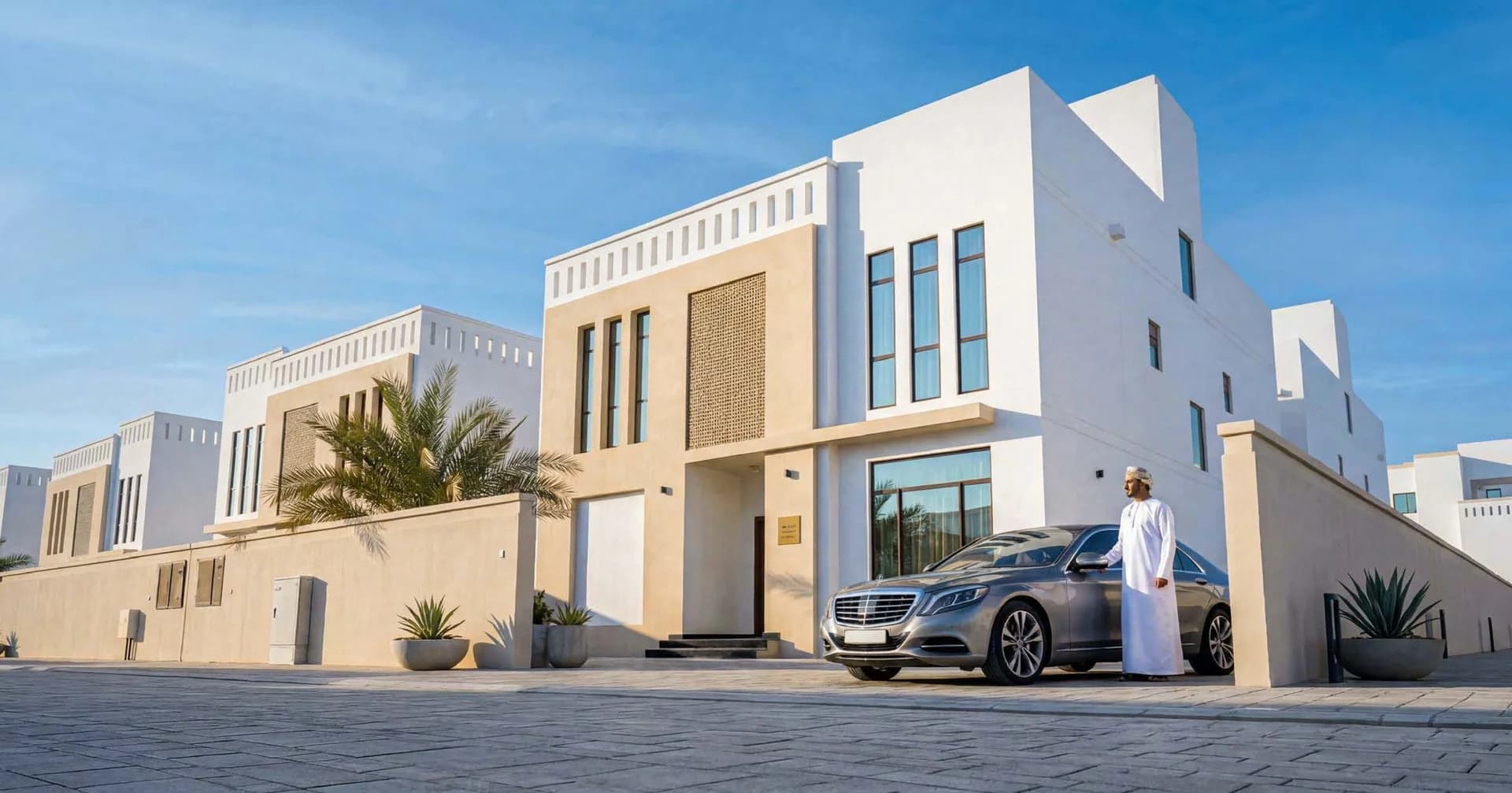 Now selling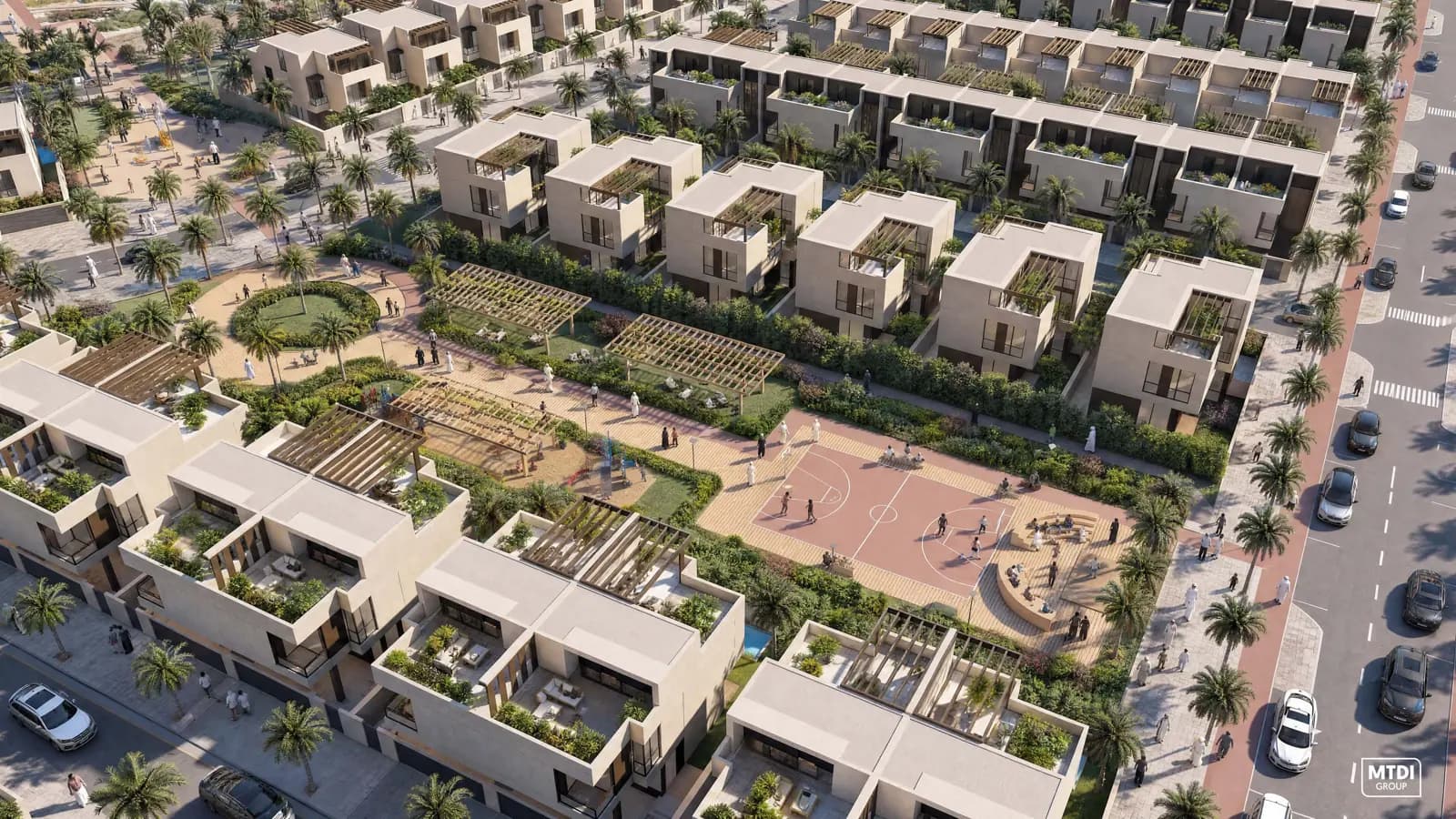
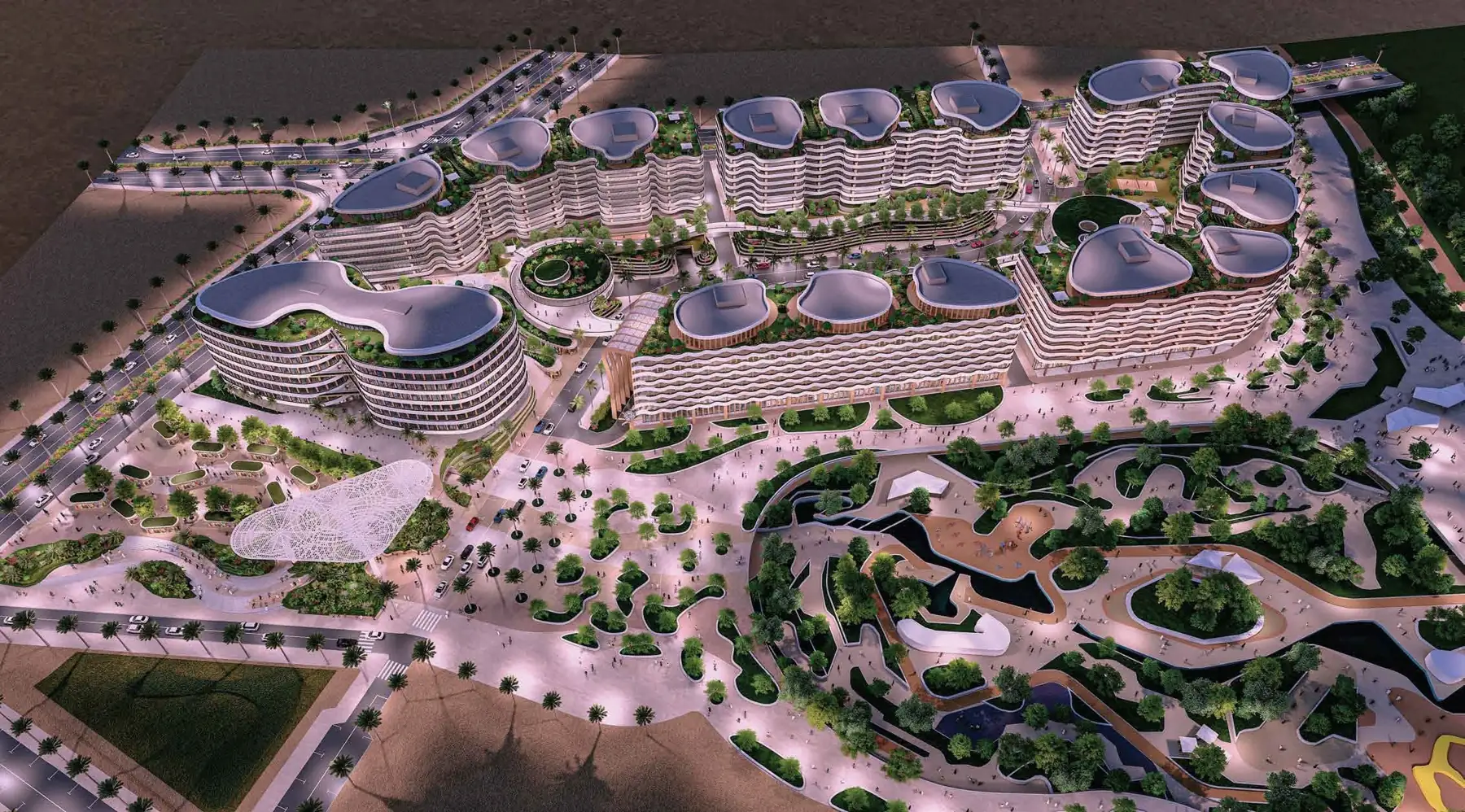 Now selling
More across Oman.
Private opportunities
Request opportunities.
Current availability, eligibility notes and the Omnia view on each address, sent privately to your desk.