Can foreigners buy property in the UAE?
Yes. A foreigner of any nationality can own property outright in the UAE, but only inside government-designated areas, and the legal mechanics differ by emirate. Dubai opened broad freehold first; Abu Dhabi followed in 2019 within named investment zones; Ras Al Khaimah offers all-nationality freehold too. Here is where you can buy, and on what terms.
- روجِع من قبل
- مكتب أومنيا
- آخر مراجعة
- 13 يونيو 2026
- زمن القراءة
- 10 دقائق

لمحة سريعة
الأساسيات، قبل أن تقرأ.
A low-friction market to hold: no annual property tax, no capital gains tax and no inheritance tax on residential property for individuals. The cost sits in the transaction.
- Ownership
- Freehold
- Eligible
- All nationalities
- Where
- Designated areas only
- Residency to buy
- Not required
- Dubai transfer fee
- 4%
- Abu Dhabi transfer fee
- 2%
- Annual property tax
- None
- Capital gains tax
- None for individuals
- Golden Visa
- From AED 2m
في هذه الصفحة
Yes, but only in designated areas.
A foreigner of any nationality can own freehold in the UAE. The detail that matters is where, and which emirate's rules apply.
The answer is yes, with one defining condition. Foreign nationals of any nationality can own property outright in the UAE, but only inside government-designated zones, and the legal mechanics differ from one emirate to the next. UAE and GCC nationals, and companies they wholly own, can buy anywhere; everyone else is confined to the designated areas or the free zones.
Three emirates carry the weight of the foreign market. Dubai opened broad freehold first and runs the deepest pool of eligible communities. Abu Dhabi opened freehold only in 2019, and confines it to named investment areas. Ras Al Khaimah offers genuine all-nationality freehold in a handful of island and village developments. Beyond those three the picture is mixed, and a single national rule does not describe it.
Dubai
Freehold, usufruct or up to 99-year leasehold for foreigners across 40-plus designated areas, registered with the Dubai Land Department. No residency required to buy.
الأنسب لـThe widest freehold choice
Where you can buyAbu Dhabi
Full foreign freehold since April 2019, but confined to designated investment areas such as Saadiyat, Yas and Al Reem, registered with ADREC via the DARI platform.
الأنسب لـCultural-district and island stock
The emirate mapRas Al Khaimah
All-nationality freehold in designated zones including Al Marjan Island, Al Hamra Village and Mina Al Arab, with no residency requirement.
الأنسب لـResort-led, emerging value
The northern emirates- Foreigners of any nationality can own freehold in the UAE, but only inside designated areas; UAE and GCC nationals can own anywhere.
- Dubai, Abu Dhabi and Ras Al Khaimah all offer clear all-nationality freehold in their zones. The wider northern emirates are mixed, so check per emirate and per project.
- No residency or visa is needed to buy, and a non-resident receives a full title deed of equal legal force.
- Holding is light: no annual property tax, no capital gains tax and no inheritance tax on residential property for individuals. The cost is concentrated in the transfer.
The rules differ by emirate.
The UAE is a federation of seven property regimes. Three matter most to the foreign buyer, and they are not the same.
In Dubai, the foundation is Law No. 7 of 2006 on real property registration, with the designated areas set out in Regulation No. 3 of 2006 and expanded since. A non-UAE national may take freehold without a time limit, usufruct, or leasehold up to 99 years, in over 40 communities including Palm Jumeirah, Downtown Dubai, Dubai Marina, Business Bay and Dubai Hills Estate. In January 2025 the DLD also opened freehold conversion to 457 leasehold plots on Sheikh Zayed Road and in Al Jaddaf, for all nationalities.
Abu Dhabi came to foreign freehold later. Law No. 13 of 2019, effective April 2019, let non-UAE nationals hold freehold for the first time, but only inside designated investment areas such as Saadiyat Island, Yas Island, Al Reem Island, Al Maryah Island, Al Raha Beach and Al Reef. Outside those zones a foreigner is limited to usufruct, musataha or a long lease, and on Al Maryah and Al Reem the ADGM common-law jurisdiction can apply instead of onshore ADREC law.
Ras Al Khaimah permits all-nationality freehold in designated zones, principally Al Marjan Island, Al Hamra Village and Mina Al Arab, with no residency requirement, regulated by RAK's municipal and real-estate authorities. Sharjah opened ownership to all nationalities under Law No. 2 of 2022, but only within named master-plans, and its default position for foreigners remains a long usufruct rather than freehold. Ajman, Umm Al Quwain and Fujairah are largely leasehold, with limited or emerging freehold zones. In the smaller emirates, verify the tenure per project before you commit.
| What foreigners can hold | Where | |
|---|---|---|
| Dubai | Freehold, usufruct, 99-yr lease | 40+ designated areas |
| Abu Dhabi | Freehold (since 2019) | Designated investment areas |
| Ras Al Khaimah | Freehold, all nationalities | Al Marjan, Al Hamra, Mina Al Arab |
| Sharjah | Mostly long usufruct | Named master-plans only |
| Other northern emirates | Mostly leasehold | Limited, emerging zones |
Freehold, leasehold and the lesser rights.
Settle the tenure before the address. What you can hold decides what the asset is worth in twenty years.
Tenure is the first thing to settle. Freehold is absolute, time-unlimited ownership of both the unit and its share of the land, inheritable and freely transferable, with no expiry. It is the tenure most foreign buyers want, and in a designated area it is the tenure they get. Leasehold is a fixed-term right, typically up to 99 years in Dubai, where the land remains with the freeholder and reverts at term end unless renewed.
Outside the freehold zones, or in Abu Dhabi outside the investment areas, foreigners are limited to lesser interests. Usufruct grants a registered right to use and draw income for up to 99 years in Dubai and Abu Dhabi, and up to 100 years in Sharjah. In Abu Dhabi, musataha is a right to build and own structures on another's land, capped at 50 years and renewable for a further 50, and an ordinary long lease for a non-national is capped at 25 years. A usufruct or musataha of more than 10 years can be disposed of without the owner's permission.
Off-plan adds one wrinkle. A Dubai off-plan purchase is recorded on the Oqood interim register, which converts to a full title deed at handover. The same 4% DLD fee applies, alongside developer admin fees. Apartments and master-planned communities are jointly owned property: under Dubai's Law No. 6 of 2019, common areas are run by a RERA-approved management company with an owners' committee, and owners pay an annual service charge budgeted through the regulated Mollak system.
| Tenure | What it gives | Maximum term |
|---|---|---|
| Freehold | Unit and land, outright | No limit |
| Leasehold | Use of the unit, not the land | Up to 99 years |
| Usufruct | Use and income, registered | 99 years (100 in Sharjah) |
| Musataha | Build and own structuresAbu Dhabi | 50 + 50 years |
| Long lease | Personal hire, not landAbu Dhabi non-nationals | 25 years |
See current availability across Dubai, Abu Dhabi and Ras Al Khaimah, with the tenure position and the Omnia view on each address, sent privately to your desk.
Costs and ongoing charges.
A low-friction market to hold, with the cost concentrated at the moment of purchase.
The UAE is unusually light to own. There is no annual property tax, no capital gains tax and no inheritance tax on residential property for individuals, and residential resale is exempt from VAT. The cost sits in the transfer. Dubai charges a 4% registration fee, legally split between buyer and seller but by market convention usually paid in full by the buyer, plus a trustee fee of around AED 4,200 and a title-deed fee of around AED 250. Abu Dhabi charges 2%.
Two recurring costs are worth naming. Occupiers in Dubai pay a municipality housing fee of 5% of annual rental value, collected in monthly instalments via the DEWA utility bill, with UAE nationals generally exempt. And any apartment or managed community carries an annual service charge, roughly AED 10-30 per square foot for standard apartments and higher in luxury towers, set per building each year through the Mollak system and benchmarked against the DLD service-charge index. Note also that property held through a business can fall within the 9% federal corporate tax, which does not touch an individual holding in a personal capacity.
| Item | Amount | When |
|---|---|---|
| Dubai transfer fee | 4% | Once, on transfer |
| Abu Dhabi transfer fee | 2% | Once, on transfer |
| Agency commission | 2% + VAT | On completion |
| Annual property tax | None | Residential, individuals |
| Capital gains tax | None | For individuals |
| Municipality housing fee | 5% of rent | Occupiers, via DEWA |
How a foreign purchase completes.
Fast and well protected, provided the diligence comes before the money.
- Agree terms and sign the MoU
Buyer and seller sign the DLD's standard Form F, the unified contract for a Dubai resale, and a deposit is placed, typically around 10%, held by the registration trustee.
- Verify the title and the agent
Confirm the title deed via the DLD QR code, check the listing permit and, for off-plan, the RERA or Oqood permit, and verify the agent's BRN and brokerage are active in the RERA database.
- Obtain the developer NOC
For a resale, the developer issues a no-objection certificate confirming service charges are clear, a precondition to transfer.
- Pay only through escrow
For off-plan, all buyer funds must go into a DLD-approved project escrow account under Law No. 8 of 2007. Payment to a personal account is a primary fraud red flag.
- Register and take title
The transfer is completed at the land department, the 4% fee settled, and a full e-title deed issued in your name, with off-plan units recorded on Oqood until handover.
Property and the Golden Visa.
Owning can support a 10-year residency, but buying and residency are two separate decisions.
Ownership and residency are linked, but they are not the same step. Buying property in the UAE does not by itself grant residency. What it can do is qualify you for the 10-year renewable Golden Visa: a property valued at AED 2 million or more on the land-department valuation, about USD 545,000 or GBP 430,000, is one qualifying route, and it allows you to sponsor your family.
The route has widened. Since a February 2026 circular, the old rule that required AED 1 million paid upfront has gone: mortgaged property now qualifies with a bank no-objection certificate and no minimum down payment, off-plan units qualify, and more than one property can be combined to reach the AED 2 million threshold. The visa carries no minimum-stay requirement. It remains a separate application from the purchase, which is why we structure the two together, so the asset and the residency hold up as one decision.
رؤية أومنيا
The UAE did not open one door, it built several, each with its own lock. The question is rarely whether a foreigner can own, but which emirate, which zone, and which tenure compounds.
مرجع
مصطلحات أساسية، معرّفة.
- Freehold
- Absolute, time-unlimited ownership of both the unit and its share of the land, with the right to live in, rent, sell, mortgage, gift and bequeath. The headline tenure for foreigners in designated areas.
- Designated area
- A zone the emirate has opened to non-UAE, non-GCC ownership. In Abu Dhabi these are called investment areas. Outside them, foreigners are limited to lesser interests.
- Usufruct
- A registered right to use and draw income from a property without owning the land, capped at 99 years in Dubai and Abu Dhabi and up to 100 years in Sharjah.
- Oqood
- Dubai's interim register for off-plan units. The Oqood record converts to a full title deed at handover, once the project completes.
- DLD
- The Dubai Land Department, the only authority that registers property rights in Dubai, with its regulator RERA. Abu Dhabi's equivalent is ADREC, via the DARI platform.
- Golden Visa
- A 10-year renewable UAE residence permit. A property worth AED 2 million or more is one qualifying route, but buying property does not by itself grant residency.
أسئلة شائعة
إجابات، بعبارات واضحة.
Can a foreigner own property outright in the UAE in 2026?
Yes. Foreign nationals of any nationality can hold freehold title in the UAE, but only within government-designated areas. Dubai opened broad freehold under Law No. 7 of 2006, Abu Dhabi followed in April 2019 within named investment zones, and Ras Al Khaimah offers all-nationality freehold in zones such as Al Marjan Island and Al Hamra Village. UAE and GCC nationals can own anywhere; everyone else is confined to the designated zones.
Do I need a visa or UAE residency to buy?
No. In Dubai's freehold areas a foreigner can buy with no residency, no visa and no prior government approval, and receives a full e-title deed of equal legal force. Owning a property worth AED 2 million or more can in turn support a 10-year Golden Visa, but residency is optional for ownership and is a separate application.
What is the difference between freehold and leasehold in the Emirates?
Freehold is absolute, time-unlimited ownership of the unit and its share of the land. Leasehold is a fixed-term right, typically up to 99 years in Dubai, where the land reverts to the freeholder at term end. Foreigners can take freehold only in designated areas; outside them they are limited to leasehold, usufruct or, in Abu Dhabi, musataha.
What taxes and fees apply when a foreigner buys in the UAE?
Dubai charges a 4% transfer fee, commonly paid in full by the buyer, plus trustee and title-deed fees. Abu Dhabi charges 2%. There is no annual property tax, no capital gains tax and no inheritance tax on residential property for individuals. A Dubai municipality housing fee of 5% of annual rental value applies to occupiers via the utility bill, and 5% VAT applies to commercial, not residential resale, property.
Is buying property in the northern emirates the same as Dubai?
No. Ras Al Khaimah offers genuine all-nationality freehold in designated zones, but the rest of the northern emirates is mixed. Sharjah opened ownership to all nationalities only within named master-plans under Law No. 2 of 2022, and its default for foreigners remains a long usufruct rather than freehold. Ajman, Umm Al Quwain and Fujairah are largely leasehold with limited or emerging freehold zones, so the position must be checked per emirate and per project.
هذا الدليل معلومات عامة، وليس مشورة استثمارية أو قانونية أو ضريبية. تتطوّر الأنظمة؛ والأرقام إرشادية وصحيحة في تاريخ آخر مراجعة. تحدّث مع مستشار أومنيا للحصول على إرشاد يناسب ظروفك.
أدلة ذات صلة.
- الإجراءات
Buying property in Dubai, step by step
الإمارات العربية المتحدة · 9 دقائق - الإقامة
The UAE Golden Visa through property investment
الإمارات العربية المتحدة · 9 دقائق - على الخارطة
Ras Al Khaimah: the new branded-residence frontier
الإمارات العربية المتحدة · 10 دقائق
مشاريع ذات صلة.
للبيع الآن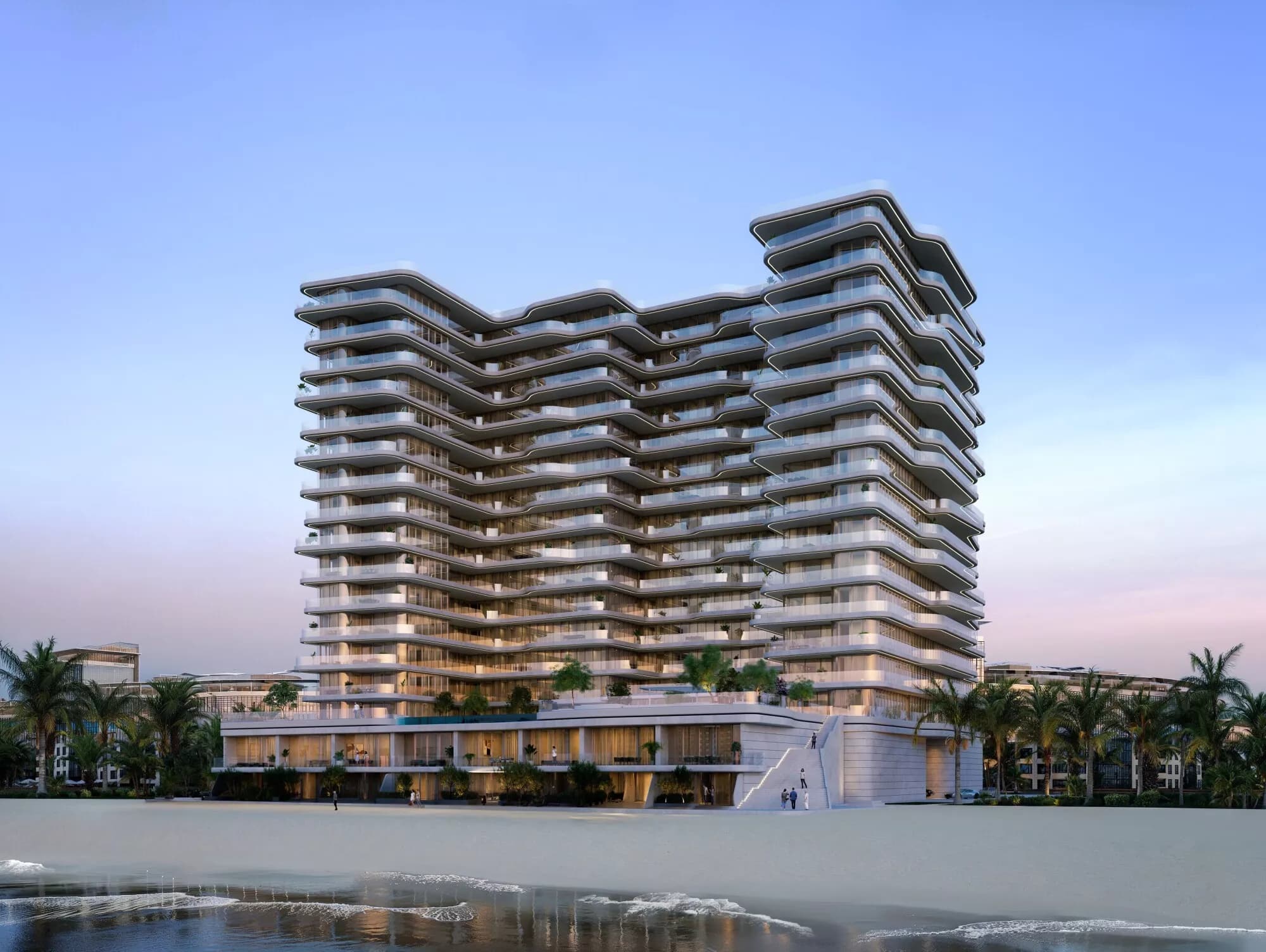 للبيع الآن
 للبيع الآن
المزيد في الإمارات العربية المتحدة.
فرص خاصة
اطلب الفرص.
التوافر الحالي وملاحظات الأهلية ورؤية أومنيا حول كل عنوان، تُرسل إلى مكتبك بسرّية.