For generations, buying property in Saudi Arabia meant something very different from buying in London or New York. The state granted you land. You built your own villa: thick walls, a high perimeter, a central courtyard. Privacy was not a feature, it was the foundation. This was not a developer-led market but a self-build culture rooted in centuries-old architectural principles, where Islamic privacy norms and desert climate control converged into a single design language. Walls that kept the heat out and kept the family in.
That model is changing fast, and what is replacing it is not just a shift in who builds the product. It is a meeting between a deep Saudi preference for walled, private living and international real estate capital arriving at speed. Since the property market opened to foreign ownership, international developers have moved into Riyadh with a proposition that feels both familiar and new: gated communities, multi-tiered access, championship golf and five-star hospitality woven into residential infrastructure. The demand has been considerable. International capital is allocating into Saudi residential at volumes the market has not seen before, and it is buying into something culturally specific. The Saudi taste for private living is not being replaced by international models. It is being upgraded by them. This is not Dubai with Saudi characteristics. It is a market with centuries of privacy architecture now being branded and sold to a global buyer base for the first time.
Why gated living is Riyadh’s default, not its novelty.
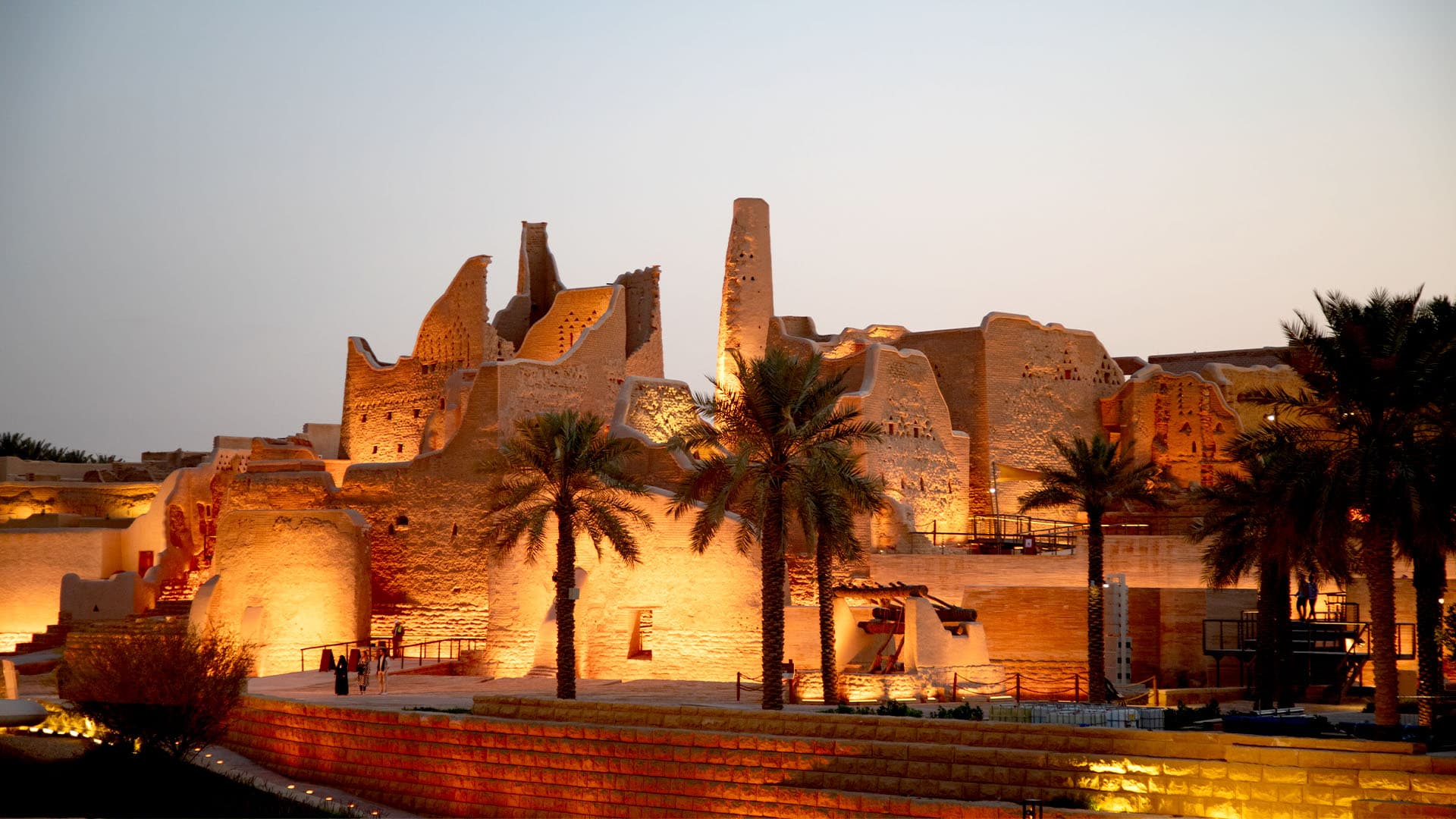
To understand gated communities in Riyadh, you need to understand where the demand comes from. Traditional Saudi architecture was built around one non-negotiable principle: privacy. Not privacy as an amenity, but privacy as infrastructure. Najdi homes in central Saudi Arabia featured walls 80 to 100 centimetres thick, small windows, inward-facing courtyards and separate entrances for family and guests. These were not aesthetic choices. They were functional requirements driven by Islamic cultural norms around family life and the realities of a desert climate.
The courtyard was the heart of the home: an open private space where family could gather, shielded entirely from external view. The thick walls provided thermal mass to regulate temperature swings between scorching days and cold nights. The limited openings minimised dust and preserved the interior climate. But more than climate, these homes were designed to protect household privacy in a culture where the boundary between public and private life was carefully kept. Family members could move freely within the compound without concern for external visibility. Guests were received in designated spaces that did not compromise the inner family areas. The home was a controlled domain, and the walls were the mechanism that made that control possible. This is not ancient history. It is cultural memory, and it still shapes what Riyadh buyers want.
Even as oil wealth transformed the country in the mid-20th century and the government began distributing free land plots with interest-free construction loans, the architectural priorities held. Saudis built larger villas. They used concrete instead of mud brick. But the design philosophy stayed the same: high perimeter walls, gated entries, inward orientation, privacy first. What is happening now in Riyadh’s residential market is not a departure from that tradition. It is an evolution of it. The walls are still there. The gated access is still there. The separation from public life is still there. What has changed is who is building it, how it is branded, and who is being invited to buy.
From self-build villas to developer-led Riyadh compounds.
For decades, property acquisition in Saudi Arabia followed a pattern unfamiliar to Western markets. The government provided free land plots to Saudi citizens. The housing ministry offered interest-free loans for construction. Families either hired contractors to build custom villas or chose from pre-designed prototypes and built the homes themselves. This was not a speculative development market. There were no large-scale housebuilders marketing ready-made communities. The residential landscape was shaped by individual families building personal compounds on allocated plots, each one designed to the owner’s specifications.
Privacy was baked into every decision. Plot sizes were generous. Perimeter walls were high. Neighbours were separated by meaningful distances. But that model had limits. It required coordination: managing contractors, architects, engineers and tradespeople, navigating approvals and inspections, overseeing timelines and budgets. It also lacked amenities. You had your villa and your compound, but you did not have golf, dining, wellness centres or curated social programming.
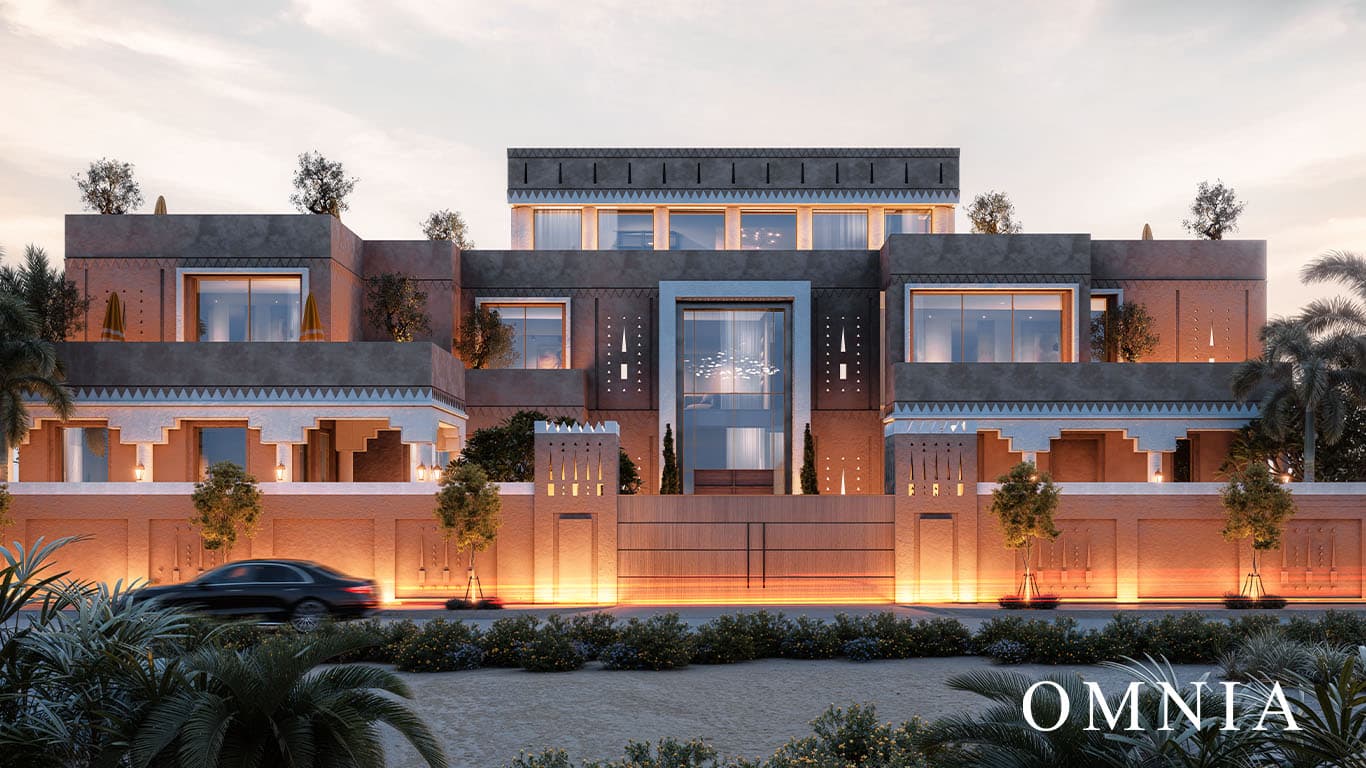
What international developers are bringing to Riyadh is a different proposition. They are taking the privacy model that Saudis already value and wrapping it in a professionally managed, amenity-rich, branded environment. You still get the walls. You still get the gates. You still get the separation. But now you also get a five-star operator managing the hospitality, a championship course designer on the golf, and a wellness brand delivering the programming. For Saudi buyers, this is not a foreign concept being imposed. It is a familiar concept being elevated. And for international buyers entering the market for the first time under the new ownership law, it is an entry point into Saudi residential culture that feels legible and credible.
The gated formats of Riyadh, ranked by who they serve.
At a glanceThe Diplomatic Quarter (DQ).
Riyadh’s original gated district, built 1978-1982 on roughly 800 hectares by Wadi Hanifah. Controlled entry, embassies, ~30% green space, and family compounds long favoured by diplomats and senior executives.
Northern family compounds.
Districts like Al Nakheel hold the city’s established expat compounds: villas behind a single secured perimeter, with pools, gyms and shared social space, near the international schools.
Branded residences.
The fastest-moving format: villa and tower collections carrying a hotel or golf operator’s name. Riyadh ranks first in Saudi Arabia for branded-residence demand, and the segment commands a steep premium, above SAR 65,000 per square metre in Riyadh versus a market-wide average near SAR 5,500 (Knight Frank).
Multi-tiered private valleys.
The new endpoint: Wadi Safar in Diriyah, gated at the valley, neighbourhood and enclave level, with branded hospitality and a championship golf course built in.
The foreign-ownership law that reopened Riyadh.
The market we are seeing today would not exist without the regulatory change that underpins it. Until early 2026, foreign property ownership in Saudi Arabia was severely restricted. Non-Saudis could own property only in very limited circumstances. That barrier has now moved. The Law of Real Estate Ownership by Non-Saudis was published in the official gazette on 25 July 2025 and, as REGA confirmed, entered into force on 22 January 2026. It allows foreign individuals and companies to hold title and other property rights in residential, commercial and mixed-use assets, but it does so through a designated-zone model. On 23 June 2026 the Cabinet approved the geographical zones and implementing regulations, and REGA now publishes the parcel-level maps through Saudi Properties. This is not blanket, city-wide ownership: the precise mapped boundary and its conditions determine where a foreign buyer can actually transact.
The holy cities of Makkah and Madinah remain specially restricted, with ownership limited to Muslim individuals and qualifying entities under the applicable controls. Riyadh and Jeddah now have approved mapped zones, with the precise boundaries and conditions published through Saudi Properties. There is also a separate door for legal residents: the law lets a resident own one residential property for personal use outside the designated zones, except in the two holy cities. For the gated and compound market specifically, the headline is simpler. A pool of international capital that could previously only rent can now, in the right zones, own.
The impact has been quick. Developers already active in other Gulf markets have moved into Saudi Arabia with projects designed to capture both local and international demand, and branded residential product that worked in Dubai and elsewhere is now being deployed across Riyadh. The volume of international inquiries for Saudi residential has risen sharply since the law was confirmed. These are not all speculative buyers. They are Gulf nationals diversifying their property portfolios, and Saudi returnees, citizens who spent years abroad and are relocating to the Kingdom with capital and expectations shaped by international markets. We cover the mechanics of the change in our report on whether the open market is worth investing in now and the detail of the statute in the law of real estate ownership by non-Saudis.
When the Public Investment Fund backs a project like Wadi Safar, and when global hospitality names anchor developments, it signals credibility. It tells both Saudi and international buyers that this is not experimental. The law did not create the demand for gated, private living in Riyadh: that was already latent in the culture. What it did was open the market to a much larger pool of capital and validate the lifestyle model at an institutional level. For the residency angle that often travels with these purchases, see our piece on how Premium Residency has transformed the market.
The branded residences boom in Riyadh and Jeddah.
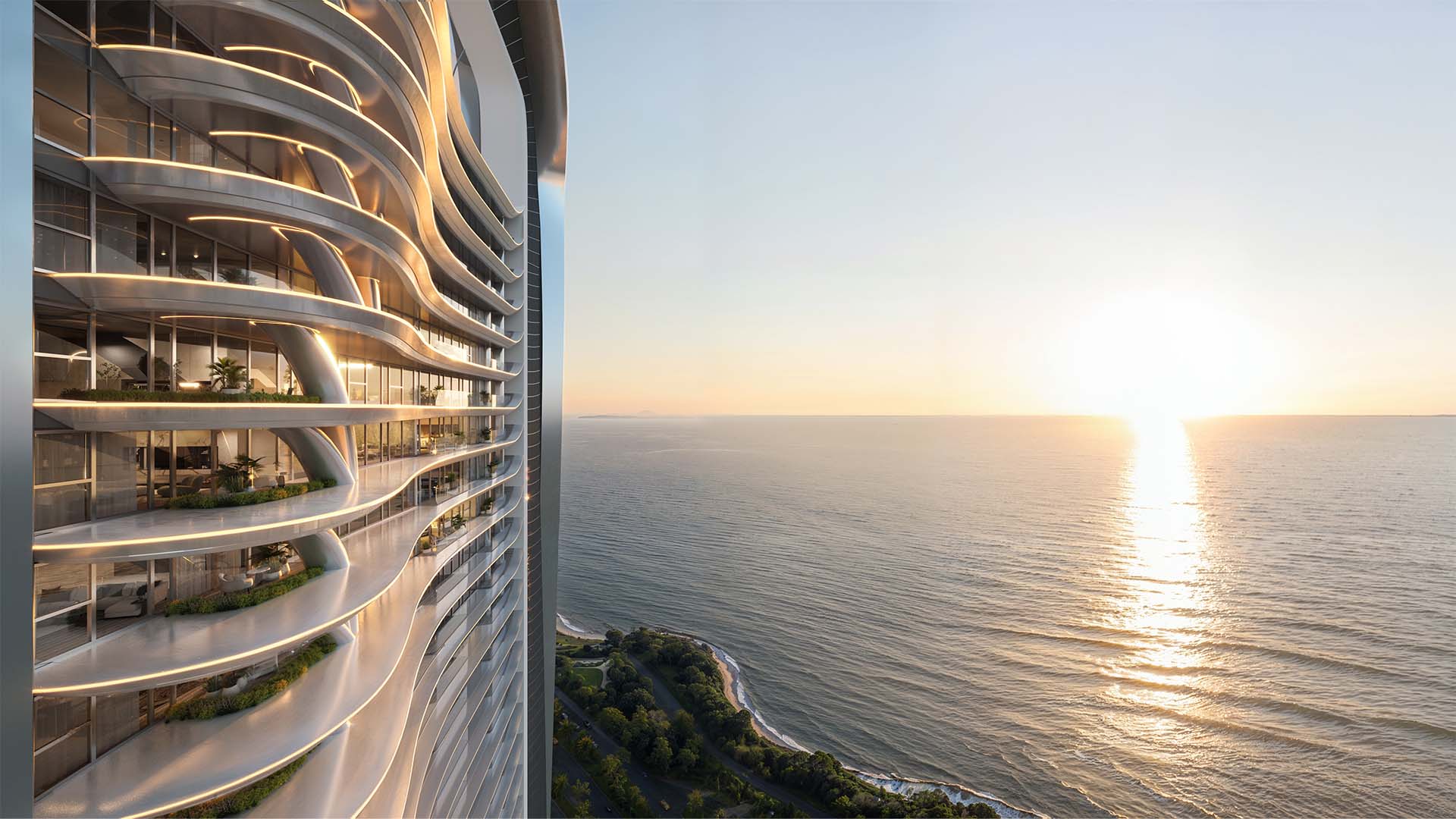
Branded residences have become the fastest-moving product type in Riyadh’s prime segment, and the pace of announcements accelerated through late 2025 and into 2026. The market is still early: Knight Frank counts roughly 1,775 existing branded units across Saudi Arabia, with around US$953 million (about SAR 3.57 billion) of private capital committed to the segment, the bulk of it from Saudi nationals rather than expatriates. The pricing gap is the part that matters for the gated thesis. In Riyadh, branded stock has changed hands above SAR 65,000 per square metre, against a market-wide average closer to SAR 5,500 per square metre on Knight Frank’s figures, a premium of more than ten times for the operator’s name and the managed environment behind the gate. Riyadh ranks first among Saudi cities for branded-residence demand, ahead of Jeddah, and the brands now circling the Kingdom include Aman, Trump, Four Seasons, Raffles, Ritz-Carlton, Armani and Jumeirah, concentrated in Diriyah, Jeddah and the Red Sea.
Jeddah has carried the loudest headlines. Dar Global and the Trump Organization launched Trump Plaza Jeddah in January 2026, a mixed-use development valued at more than US$1 billion inside the AMAYA development on King Abdulaziz Road, combining Grade-A offices, retail, dining, a members-only lifestyle club and Trump-branded residences. It follows Trump Tower Jeddah, unveiled in 2024, and Dar Global puts the combined value of its Diriyah and Jeddah Trump-branded projects at around US$10 billion. We unpack the Jeddah tower in what is Trump Plaza Jeddah.
On the Jeddah waterfront, Midad Real Estate has joined Kerzner International and the Public Investment Fund’s Jeddah Central Development Company in a SAR 7.6 billion joint venture, announced in November 2025, to bring the Kingdom’s first Atlantis and One&Only destinations to the Jeddah Central masterplan on the Red Sea. Atlantis Jeddah will include branded residences, the region’s first Aquaventure Waterpark, the Lost Chambers Aquarium and more than 20 dining venues. One&Only Jeddah will offer rooms, suites and villas, plus the brand’s first community of Private Homes in Saudi Arabia. We cover that deal in the Midad and Kerzner Atlantis and One&Only venture.
Riyadh’s own share of that pipeline is concentrated in Diriyah and its valley, Wadi Safar, where the branded launches arrived in quick succession through January 2026. Diriyah Company introduced Chedi Residences Wadi Safar and Faena Residences Wadi Safar, the latter a set of just 20 branded villas, alongside Aman-branded villas in the same valley. In the heritage masterplan itself, Diriyah Company and Midad signed a roughly US$827 million joint development for a Four Seasons Hotel and Private Residences Diriyah: a 159-room hotel and a residential community on a site of about 235,938 square metres. These sit within a hotel pipeline of close to 40 planned properties across the 14 square kilometre Diriyah district and the adjacent Wadi Safar valley, which is the institutional scale that makes the branded-residence read credible rather than speculative.
The pattern is consistent. International hospitality and real estate groups are entering Saudi Arabia with branded product because they have seen it work across the Gulf. Branded residences reduce friction for international buyers: they provide a reference point for quality, service and operational credibility, and they make a new market feel less risky. For Saudi buyers, they offer a professionally managed, amenitised version of the privacy model they already value. You get the walls, the gates and the controlled access, but also the golf, the dining, the wellness centres and the social programming. That dual appeal is why branded residential product is moving faster than any other segment in Riyadh right now.
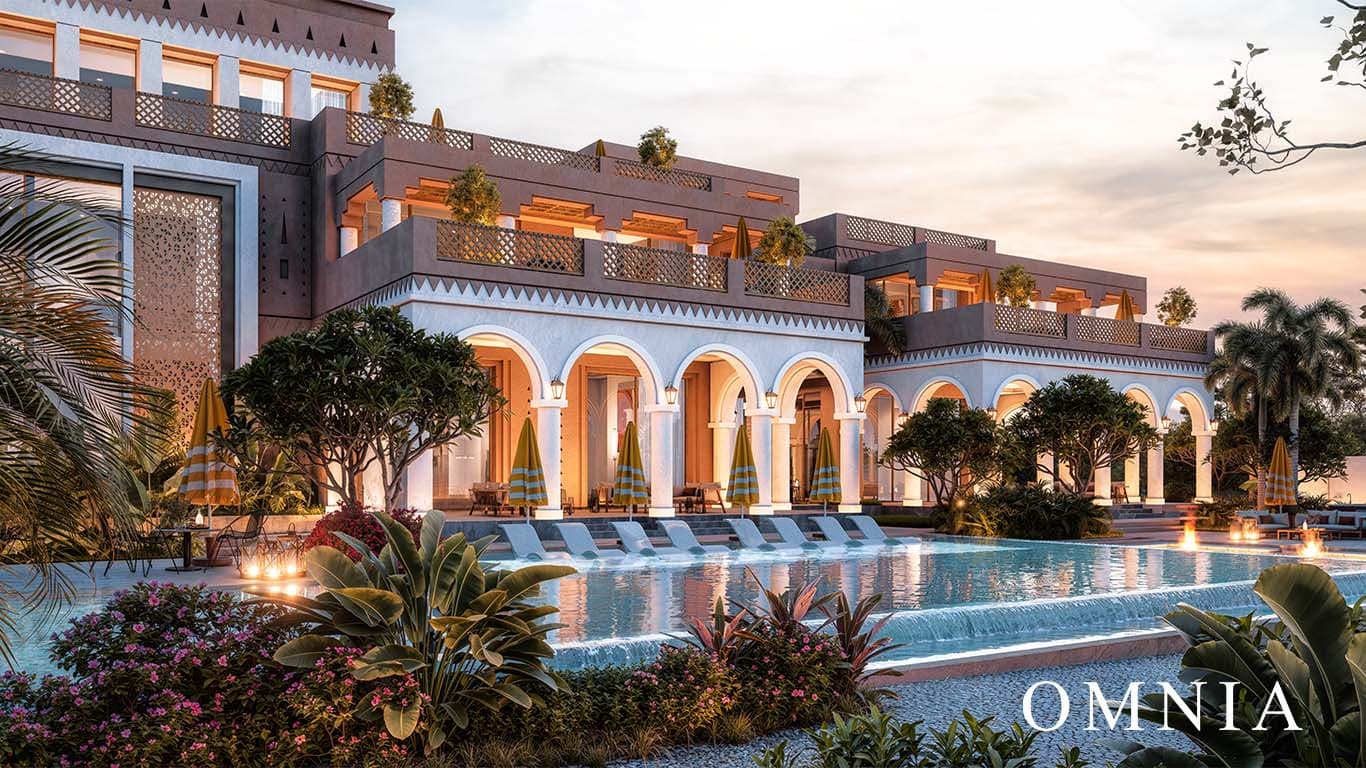
On what the walls mean
Privacy in Riyadh is not a marketing feature bolted onto a development. It is the inherited grammar of the home, now being built at the scale of a community.
What private living actually means inside a Riyadh enclave.
Multi-layered access control. Private gets used loosely, so it is worth being precise about what it means in Riyadh’s gated market. It means multiple layers of controlled access. The development sits behind a secured gate: that is baseline. But within that perimeter, individual neighbourhoods often have secondary gates, and in some enclaves villa clusters or individual plots have a third access point. This layering creates zones of progressively greater separation. You are not just living in a gated community, you are living in a gated neighbourhood within a gated community. For buyers who value discretion, that matters: it creates physical and visual separation not only from the public, but from other residents in the same development.
Constrained density. These developments are not packed to maximise unit yield. Plot sizes are large. Building coverage is limited. Setbacks are generous. The distance between homes creates acoustic and visual privacy that fencing alone cannot deliver, and that low density is itself a priced feature rather than an accident of the site.
A controlled public realm. Shared amenities exist, but they are designed for residents and authorised guests. There are no day visitors, no public throughfares, no mixed retail drawing external foot traffic. The development operates as a closed loop by design and by covenant.
Professional security infrastructure. Multi-layered perimeter monitoring. Limited entry points with 24-hour staffing. Vehicle and visitor logging. Biometric access. Internal patrol routes. Surveillance that is ambient rather than intrusive. This is not security theatre but operational credibility delivered by professional management teams. For buyers at the top of the market, Saudi and international alike, these details are not negotiable. They are the baseline expectation, and the same retrofits are reaching the older stock too, where established compounds have swapped dated gates for biometric entry.
Who is buying into Riyadh’s gated communities.
The buyer profile breaks into several distinct groups:
- Established Saudi families. Multi-generational wealth holders who historically owned large compounds in central Riyadh and are now exploring newer enclaves that offer privacy without the operational burden. They want space and amenities, with security handled professionally rather than in-house.
- Saudi returnees. Citizens who spent years abroad for education or business and are relocating as the economy diversifies. They carry international reference points and expect architectural quality, landscape design and lifestyle programming to match what they knew in London, Geneva or California. They are less attached to traditional central neighbourhoods and more open to new enclaves with strong branding.
- Gulf nationals. Citizens of the UAE, Kuwait, Qatar and Bahrain allocating capital into Saudi real estate under the new ownership framework. Many already own second homes across the Gulf, understand gated living and value privacy, and are drawn to Saudi Arabia’s scale and the institutional backing behind PIF-led developments.
- International buyers and family offices. Individuals and offices from Asia, Europe and beyond who view the Kingdom’s transformation as a structural opportunity. They are entering for the first time, and branded gated communities provide a legible entry point because the operator names reduce perceived risk.
- Corporate executives. Both Saudi and expatriate, who want turnkey product. They do not want to coordinate construction or oversee household operations: they want a finished residence in a managed environment with reliable security, amenities and a vetted community.
Across all these groups the common thread is a willingness to trade urban centrality for privacy, space and separation. They are not optimising for convenience. They are optimising for insulation. And the relocation context behind much of this demand is set out in our guide to life as an expat in Saudi Arabia.
The Journal · Free, monthly
Enjoying the issue? Have the next one delivered.
One considered email a month. Unsubscribe in one click.
Al Nakheel and the northern Riyadh compounds.
Before the branded valleys, the workhorse of gated living in Riyadh was, and still is, the compound. North of the centre, districts such as Al Nakheel hold the city’s established compound stock: self-contained residential enclaves, often run by housing operators, built to accommodate families behind a single secured perimeter. Al Nakheel itself stretches across roughly 10 square kilometres of northern Riyadh, framed by wide boulevards and green space, and it is one of the districts where compound living and family demand most clearly overlap. A development like Nakheel Village, around 140 units on roughly 100,000 square metres, sets the template: villas around landscaped gardens and pools, with the kind of shared social space that turns a perimeter into a community.
What makes the northern compounds work is proximity to the things international families weigh first: schools and access. Al Nakheel sits near several of the city’s respected international schools and the Al Nakheel Mall, and rents across the district have risen sharply since 2023 as professionals relocated to Riyadh in volume. Across Riyadh’s prime districts, including the Diplomatic Quarter, Hittin and Al Malqa, family villas and compound units commonly run from around SAR 16,000 to SAR 30,000 a month depending on size and amenities, while the older Western-style compounds north of the centre, such as those clustered around the Granada and Ghirnatah districts, sit a step below that on price. These compounds were never positioned as lifestyle destinations the way the new product is. They were practical: reliable, turnkey and familiar to families who had lived in similar environments across the Gulf. Architecturally they tended toward uniformity, with adequate rather than exceptional amenities and minimal community programming. They existed to house people well, not to create generational addresses.
That is exactly the gap the new model is built to fill. Where compounds compete on price and convenience, the emerging communities compete on lifestyle and long-term value retention, designed for ownership rather than rental and for families who intend to stay for decades. The messaging shifts from convenient housing to heritage, permanence and belonging. For buyers weighing the choice, the practical starting point is the live Riyadh developments listing.
The Diplomatic Quarter: Riyadh’s original gated enclave.
Before the current wave of branded product, Riyadh’s most established example of controlled, low-density living was the Diplomatic Quarter. The DQ, as it is universally known, was established by Council of Ministers resolution in 1975 and built between 1978 and 1982, with the master plan drawn up by Albert Speer & Partners in 1979. It was conceived as a purpose-built enclave for embassies, diplomatic residences and select international organisations, and it sits on the western edge of central Riyadh, bordered by Wadi Hanifah. The district spans roughly 800 hectares, about eight square kilometres, and gives an unusually high share of its land, close to 30%, to parks, gardens and plazas, with around 17 parks threaded through it.
The DQ operates as a gated district. Access is controlled and entry requires clearance. The internal environment is green, quiet and spatially generous. The compounds within the Diplomatic Quarter house expatriate families, diplomats and senior executives, offering villas, pools, landscaped gardens and recreation within secured perimeters. The stock is substantial and professionally run: Dur Hospitality’s Darraq compound alone holds around 434 units, including 139 villas in its first phase and 35 in its second across roughly 74,866 square metres, while Osool operates three projects in the quarter that together total about 525 apartments and 321 villas. Purchase prices in the DQ sit among Riyadh’s highest, broadly SAR 9,000 to SAR 16,000 per square metre, with family villas and compound homes renting from around SAR 16,000 to SAR 30,000 a month. For decades, this was Riyadh’s benchmark for privacy and controlled living, and for the compounds in the Diplomatic Quarter that pull a steady share of search demand, it still is. The population skews heavily international, and the district has modernised in place: established compounds have swapped older gates for biometric security, and the wider area benefits from the King Salman Park green spine rising to the southwest.
But the DQ was never designed for Saudi nationals in large numbers, and it was never positioned as a lifestyle destination the way current developments are. It was functional rather than aspirational. It proved the market for gated living in Riyadh, but it did not elevate the concept. What is happening now is developers taking the DQ’s privacy model and building on it: introducing branded hospitality, championship golf, curated retail, dining and wellness programming, building for owner-occupiers rather than rotating expat assignments, and targeting a buyer base that expects an ecosystem rather than just a secure villa. Living in the Diplomatic Quarter proved that there was real demand for controlled, low-density living in Riyadh. The new generation of product is scaling that concept upward.
Reading the Diplomatic Quarter as a buyer.
Field notesIt set the template.
The DQ proved that Riyadh would pay for controlled access and low density. Every gated community that followed borrows its grammar: a clearance gate, generous green space and villas behind a managed perimeter.
Green is the differentiator.
With close to 30% of its 800 hectares given to parks and gardens, the DQ offers a density and greenery that newer compounds struggle to match inside the city.
It was built for transients.
Diplomatic and expat tenure means a rotating population. The new communities are built for owner-occupiers who intend to stay, which changes how they are designed and priced.
It is modernising in place.
Biometric access, retrofitted compounds and the King Salman Park spine nearby keep the DQ relevant rather than dated, even as the branded valleys take the headlines.
Wadi Safar: the gated valley that sets the new benchmark.
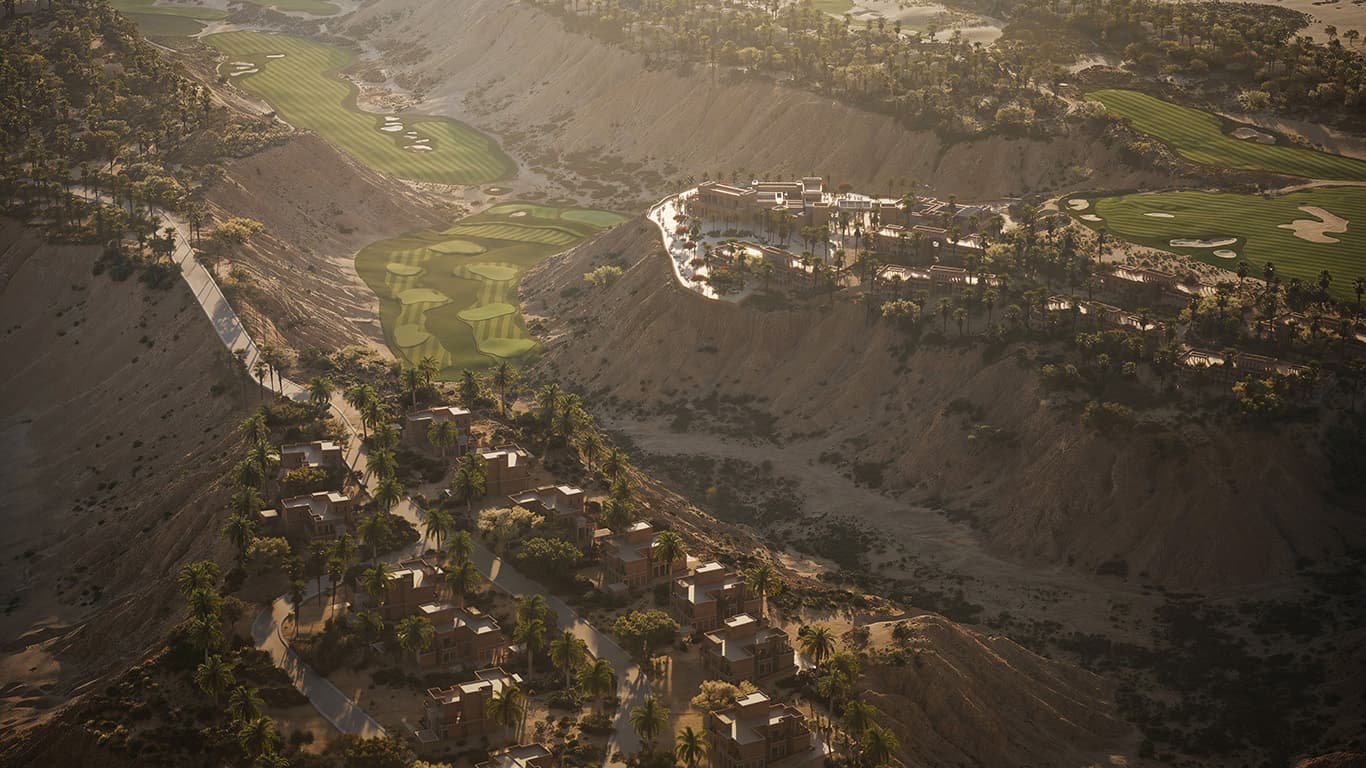
The clearest example of where Riyadh’s gated model is heading is Wadi Safar. Located on the western edge of the city within the broader Diriyah development zone, Wadi Safar is being positioned as the Kingdom’s standout residential valley: a PIF-linked project developed by Diriyah Company, structured around low-density living at scale. The valley spans a significant footprint within Wadi Hanifah, the same natural valley that borders the Diplomatic Quarter, with rolling terrain, escarpment views and native desert landscape. The master plan integrates that topography deliberately, positioning villas and mansions to maximise views over the valley floor and the fairways, with large plots and intentionally restrained density.
Access into Wadi Safar is secured at the valley level, with one primary entry point reserved for residents and authorised guests. Within the valley, individual neighbourhoods have additional private access, and in enclaves like Rayana the homes sit behind further secured gates. That multi-tiered access is central to the positioning. The valley’s amenity infrastructure is anchored by the Royal Diriyah Equestrian and Polo Club and a Greg Norman-designed 27-hole championship golf course, which includes a nine-hole academy course, driving range and short-game area. The confirmed hospitality partners run deep: Aman, The Oberoi, Six Senses, The Chedi, Faena, Montage and WELL, under a roughly US$2 billion Diriyah Company contract. Several of those names have now extended from hotel flags into residential product inside the valley, with Diriyah Company launching Chedi Residences, Faena Residences (a set of 20 branded villas) and Aman-branded villas through early 2026. They are not flags for marketing alone. They form a curated ecosystem designed to serve residents with dining, wellness, spa and leisure without leaving the valley.
Within Wadi Safar, the most-watched enclave is Rayana, developed by Dar Al Arkan in collaboration with Dar Global and the Trump Organization. The Trump International Golf Club Wadi Safar was revealed on 11 January 2026 across a 2.6 million square metre site, anchoring a gated community of branded and non-branded mansions, a Trump-branded championship course, a Trump hotel and a members-only club with no day-guest access. The residential offer is organised into distinct product families: Rayana Mansions for trophy ownership, Trump Mansions for the branded line, and Altara for buyers who want land and a bespoke build. Trump Mansions run to 6- to 8-bedroom estates in two collections, a custom shell-and-core Rayana line and a Signature Interiors Trump line, with prices that start from around SAR 25 million (about US$6.66 million) and completion targeted for the end of 2029. Rayana is not marketed as a villa community but as a private address, and privacy is the proposition rather than a feature. We track the project in detail in our report on the Trump golf resort and mansions in Wadi Safar. It matters here because it represents a directional shift: low density by design, gated at multiple levels, branded hospitality fused with private estates, and a buyer who values discretion, space and controlled access above urban proximity. This is the new benchmark, and it is distinct from the central-city compound it grew out of.
Why privacy commands a price premium in Riyadh.
In most residential markets, privacy is a secondary attribute: nice to have, but not a primary driver of valuation. In Riyadh’s prime gated segment, privacy is the core value proposition, and everything else, amenities, branding, location, is supporting infrastructure. That changes how developments are priced. Buyers are not comparing a price per square metre against other villas in the city. They are paying a premium for the ability to live in an environment where their household is physically and operationally separated from public exposure. That premium is meaningful, and it shows up in land values, construction budgets and resale pricing.
Developers who understand this structure their offerings accordingly. They constrain density. They layer access. They invest in professional security operations. They partner with globally recognised hospitality brands to validate quality and service. And they price for it. For international buyers, particularly those from markets where gated living is standard for affluent households, that positioning is intuitive: they have paid for privacy elsewhere and understand its value. For Saudi buyers the psychology is slightly different but equally strong. Privacy has always been culturally important, expressed through high walls, separate entrances and discrete household management. What the gated communities offer is a modern, professionally managed version of that same principle. Buyers will pay more for lower density, for layered access, and for the assurance that their address will not become crowded or publicly accessible.
The market data carries the same signal in aggregate. Riyadh apartment values rose about 10.5% and villa values about 6.5% across 2025, on Knight Frank’s figures, and growth has continued into 2026 at a calmer pace, roughly 6.3% for apartments and 4.9% for villas year on year in the first quarter, even as transaction volumes thinned by about half. Apartment rents climbed roughly 19.6% and villa rents roughly 17.2% year on year into 2026, per the Global Property Guide, and the five-year freeze on Riyadh rents from September 2025 caps increases until 2030, which channels the heat into new stock and the prime communities most of all. The premium for the branded, gated end of the market is the sharpest signal of all: Riyadh branded residences have traded above SAR 65,000 per square metre against a market-wide average near SAR 5,500, on Knight Frank’s numbers. In a market priced like this, the value attached to genuine privacy is not a soft preference. It is a measurable line in the valuation.
From expat compounds to Riyadh communities.
Riyadh’s traditional model for private, gated living was the expat compound: self-contained enclaves, typically run by corporate housing providers, designed to accommodate international families on assignment. Compounds offered villas, pools, gyms and sometimes retail within a secured perimeter. They served a functional need, and they were reliable, turnkey and familiar to expats who had lived in similar environments across the Gulf. But they were never aspirational. They offered security and convenience, not a lifestyle destination. Architecturally they leaned toward bland uniformity, amenities were adequate but rarely exceptional, and community programming was minimal. They existed to house people, often temporarily, rather than to create long-term owner-occupied neighbourhoods.
What is emerging now is a different model: gated communities designed for ownership rather than rental, built for families who intend to stay for decades rather than rotational assignments. They incorporate branded hospitality, fine dining, championship golf, wellness centres and curated social programming. They are architecturally ambitious, landscaped to high standards, and managed by professional operators with institutional backing. This shift from compound to community changes the buyer equation. Compounds compete on price and convenience. Communities compete on lifestyle and long-term value retention.
You see the transition most clearly in how new developments are positioned. They are not marketed as convenient housing solutions but as generational addresses, with messaging that emphasises heritage, permanence and belonging. The target buyer is not someone looking for short-term accommodation. It is someone looking to anchor a family in an environment that reflects their standing and values. That is the line that separates the new product from the compound it grew out of, even when the physical grammar, the wall, the gate, the inward orientation, looks much the same.
The future of gated communities in Riyadh.
Riyadh’s gated segment is still early, but the trajectory is clear. More developments will follow the Wadi Safar template: low density, multi-tiered access, branded hospitality and lifestyle programming designed for long-term owner-occupiers. We expect additional international hospitality groups to partner with Saudi developers to anchor these communities, and more branded residential product, where golf clubs, hotels or wellness operators extend their names to villa collections within gated enclaves. The pipeline figures support that read: a branded-residence segment that is still in its early phase, with demand running ahead of completed supply and Riyadh sitting first in the country for buyer interest.
We also expect the price gap to widen. As supply of genuinely private, low-density product stays constrained relative to demand, the premium will hold. Buyers who want the highest level of separation, discretion and security will keep paying for it, and the developers who can deliver that at institutional quality will capture a disproportionate share of value. The open question is not whether gated communities will remain relevant in Riyadh. It is how much of the city’s wealthiest population migrates to these enclaves, and what that migration does to established central neighbourhoods like the older parts of the Diplomatic Quarter and the northern compounds.
For now the trend is unmistakable. Privacy is not a preference in Riyadh. It is an expectation rooted in centuries of architectural and cultural tradition, and the residential market is restructuring around that expectation at speed, with institutional backing, international capital and global hospitality brands validating the model at scale. The walls are not new. The sophistication inside them, and the law that now lets the world own a home behind them, is. To look seriously, start with the Saudi Arabia market and the Riyadh developments listing.