In brief
- Montenegro in 2026 has moved from boom to stabilisation: national new-build prices reached about EUR 2,228 per square metre in Q3 2025 (up 20.17% year-on-year), with growth now expected to cool to roughly 2–6% in 2026, per Monstat and Investropa.
- Five projects span the market: Luštica Bay and Porto Montenegro on the coast, Budva for tourism volume, Kolašin in the mountains, and Podgorica in the capital, which carries the highest rental yields of the five.
- Yields are city-specific, not a flat national band: Podgorica runs about 6.1–6.9% gross, Budva 5.4–6.8% and Tivat 4.4–4.8%, so the capital, not the coast, leads on income, per Global Property Guide.
- Two 2026 rule changes matter: residency by property now needs a EUR 150,000 taxable value, and resale carries a progressive transfer tax of 3% to 6% while new-builds carry 21% VAT instead.
Contents
- 01The 2026 Montenegro property investment case.
- 02Montenegro real estate investment fundamentals.
- 03The best property investment Montenegro projects for 2026.
- 04Luštica Bay investment, on the Luštica Peninsula.
- 05Porto Montenegro property, Tivat’s flagship development.
- 06Budva, the high-volume tourism hub.
- 07Kolašin, the mountain retreat market.
- 08Podgorica, the urban growth centre and yield leader.
- 09The 2026 tax position, untangled.
- 10Market challenges and considerations.
- 11How to approach a Montenegro investment in 2026.
- 12The Montenegro property investment outlook.
Montenegro remains one of the most watched destinations for property investment on the Adriatic, but the story in 2026 is different from the boom that defined it. Prices rose 30.9% year-on-year by March 2024 at the peak and 20.8% nationally across 2024, far ahead of the EU average of 3.6%. That run has now cooled: official Monstat new-build prices reached about EUR 2,228 per square metre in Q3 2025, up 20.17% year-on-year, but analysts expect 2026 growth to ease to roughly 2–6% as the market stabilises.
From coastal resorts to mountain retreats, the country still offers a genuinely diverse set of opportunities. This report focuses on the projects: five developments and city markets drawing the most investor attention for 2026, and the market case that underpins each. For what a purchase actually costs to complete, and for where the highest-value addresses sit, we cross-link to two companion reports rather than repeat the detail here.
The 2026 Montenegro property investment case.
Montenegro real estate investment rests on a small set of strong fundamentals. After two boom years, national new-build prices sit at roughly EUR 2,210–2,250 per square metre (Monstat: about EUR 2,228 in Q3 2025 and EUR 2,206 in Q4 2025), well up on the EUR 1,844 of 2023 and early 2024. As one of Europe’s most advanced EU candidate countries, Montenegro pairs that growth with no restrictions on foreign property ownership and gross rental yields that range by city from about 4.4% to 6.9%. Foreign investment in real estate was about EUR 455 million in 2024, then rebounded around 14% in the first half of 2025.
An investor-friendly legal framework.
- No foreign ownership restrictions on residential or commercial property.
- Residence by property, with a threshold. Since the Law on Foreigners amendments effective 17 January 2026, a residence permit requires a property with a Tax-Authority-assessed taxable value of at least EUR 150,000. Holders from before 2026 are grandfathered.
- A low annual municipal property tax of 0.25% to 1.00% of assessed value, separate from the transfer tax on resale.
- Tax treaties with over 40 countries.
- SEPA access. Montenegro became an operational member of the Single Euro Payments Area on 6–7 October 2025, the first Western Balkan country to join, cutting the cost and time of cross-border euro transfers ahead of EU membership.
The EU accession timeline.
Montenegro is the front-runner candidate and 2028 is the live membership target. As of June 2026 it had provisionally closed about 16 of the 33 negotiating chapters, two more (free movement of workers, and consumer and health protection) closing in June 2026, and the EU had begun drafting the Accession Treaty after the Ad Hoc Working Party approved the step in May 2026. The aim is to finish negotiations by the end of 2026.
Economic stability and growth.
- GDP grew about 3% in 2024 and roughly 2.7–3.2% in 2025, with 2026 forecast near 2.8–2.9%, per the IMF and World Bank.
- Inflation eased to about 3% in 2025, converging toward 2% over the medium term.
- Tourism drives roughly 25% to 30% of GDP.
- The euro provides monetary stability.
Montenegro real estate investment fundamentals.
Montenegro’s position along the Adriatic Sea gives it Mediterranean character with Central European access. Tivat Airport handled about 1.12 million passengers in 2024, up 32.5% year-on-year and over a million for the first time since 2019, and about 1.18 million in the first nine months of 2025. Connectivity has improved on the ground too: the first section of the Bar-Boljare highway, Smokovac to Mateševo, has been open since July 2022, linking Podgorica toward the Kolašin gateway, with further sections planned.
National new-build prices now sit at roughly EUR 2,210–2,250 per square metre, up sharply from the EUR 1,844 of 2023 and early 2024. Significant regional variation sits underneath that headline, set out below. Prime coastal stock generally runs about EUR 2,100–3,500 per square metre, and the northern regions surged 39.9% to EUR 1,280 per square metre across 2023–2024, before the latest Kolašin investment push. At the very top of the market, Porto Montenegro in Tivat now trades at roughly EUR 6,000–15,000 per square metre and Kotor’s Dobrota waterfront at about EUR 3,500–6,000, so the old EUR 10,000 coastal ceiling is now exceeded at the apex rather than being the norm.
| Area or segment | Price per sqm |
|---|---|
| New builds, national averageMonstat Q3/Q4 2025 | €2,210-2,250 |
| Prime coastal stock | €2,100-3,500 |
| Northern regionsup 39.9%, 2023-2024 | €1,280 |
| Kotor waterfrontDobrota | €3,500-6,000 |
| Porto Montenegroapex of the coast, Tivat | €6,000-15,000 |
Source: Monstat and Investropa, 2025–2026. Indicative; varies by location and unit.
Foreign investment in real estate was about EUR 455 million in 2024, down roughly 1.7% on the about EUR 463 million of 2023 but still more than half of total inward FDI. Momentum returned in 2025: about EUR 113.5 million in the first quarter and roughly EUR 309 million across the first eight months, with the half-year up around 14%. The investor mix shifted too. Serbia stayed the largest investor nation, but Turkey rose up the table while Russia’s share fell.
Yields, by city. The single most important correction to the old framing is on yield. Gross rental yields are not a flat national band, and the coast does not lead on income. By city in 2026, Podgorica is highest at about 6.1–6.9% (averaging roughly 6.4%), Budva runs about 5.4–6.8%, and Tivat is the lowest at about 4.4–4.8%, with Porto Montenegro’s material monthly homeowner-association fees eroding the net figure further. For investors prioritising income, the capital, not the coast, is the higher-yield play.
| City | Gross yield |
|---|---|
| Podgoricathe capital, highest of the five | 6.1-6.9% |
| Budvahigh tourism volume | 5.4-6.8% |
| Tivatlowest once HOA fees net out | 4.4-4.8% |
Source: Global Property Guide / Montenegro Housing, 2026. Gross yields; indicative.
The best property investment Montenegro projects for 2026.
Five projects and city markets stand out for 2026, spanning the coast, the capital and the northern mountains. Each carries a distinct investment profile, from established resort communities to lower-cost emerging areas, and the right one depends on whether the priority is income, appreciation or lifestyle.
Luštica Bay investment, on the Luštica Peninsula.
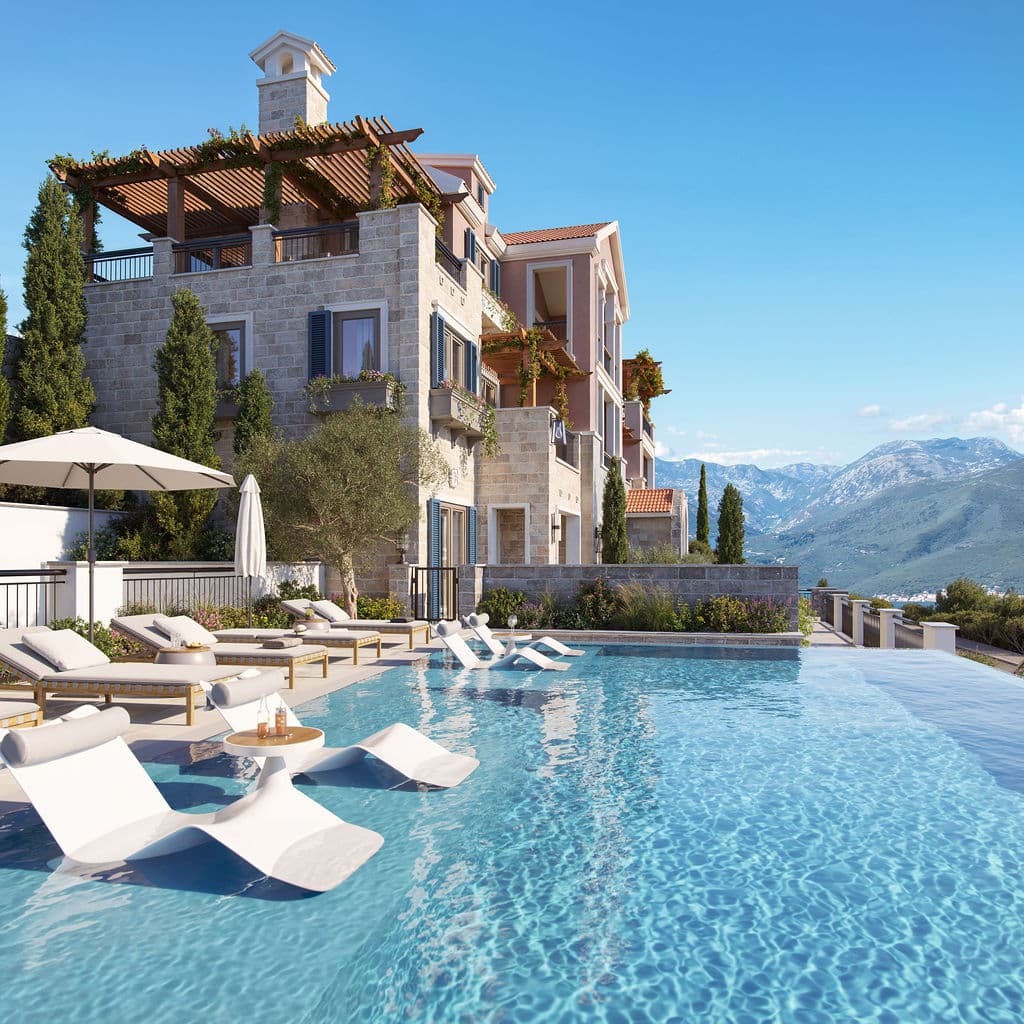
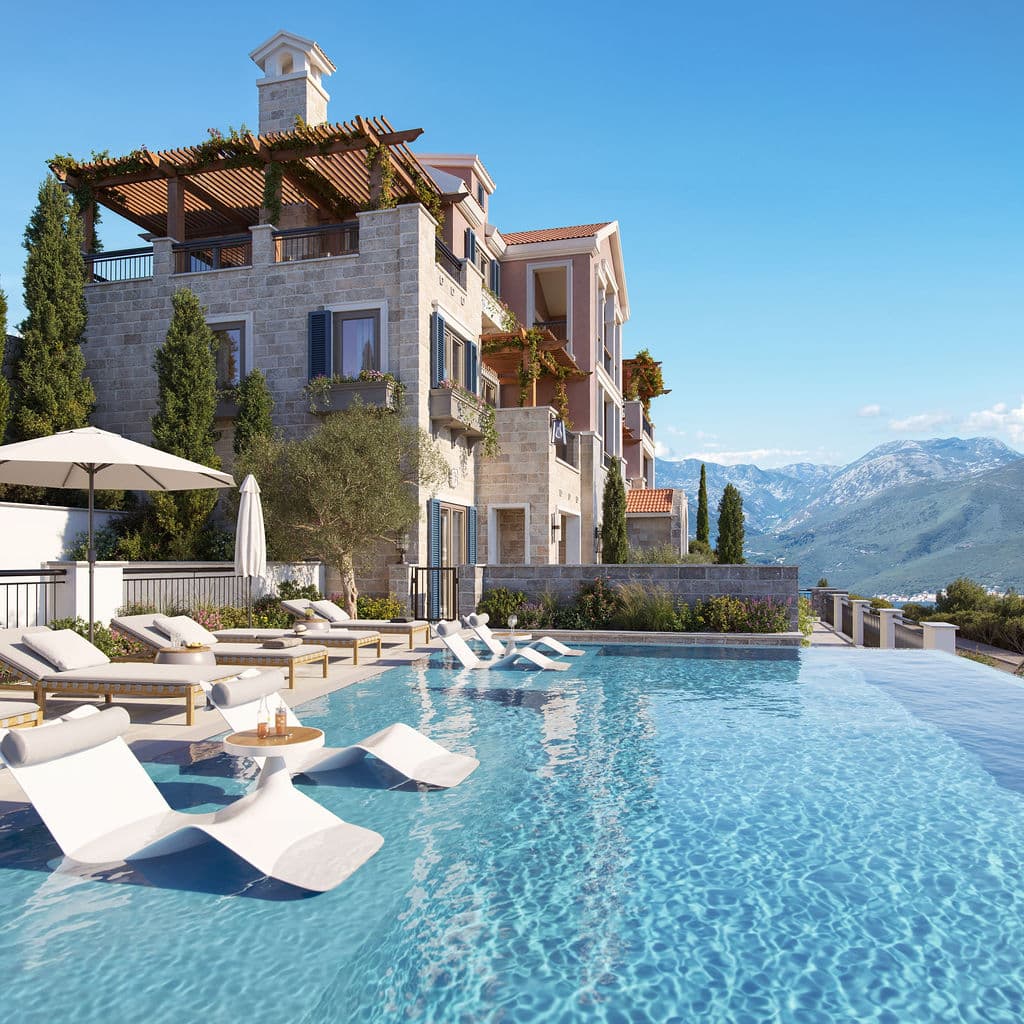
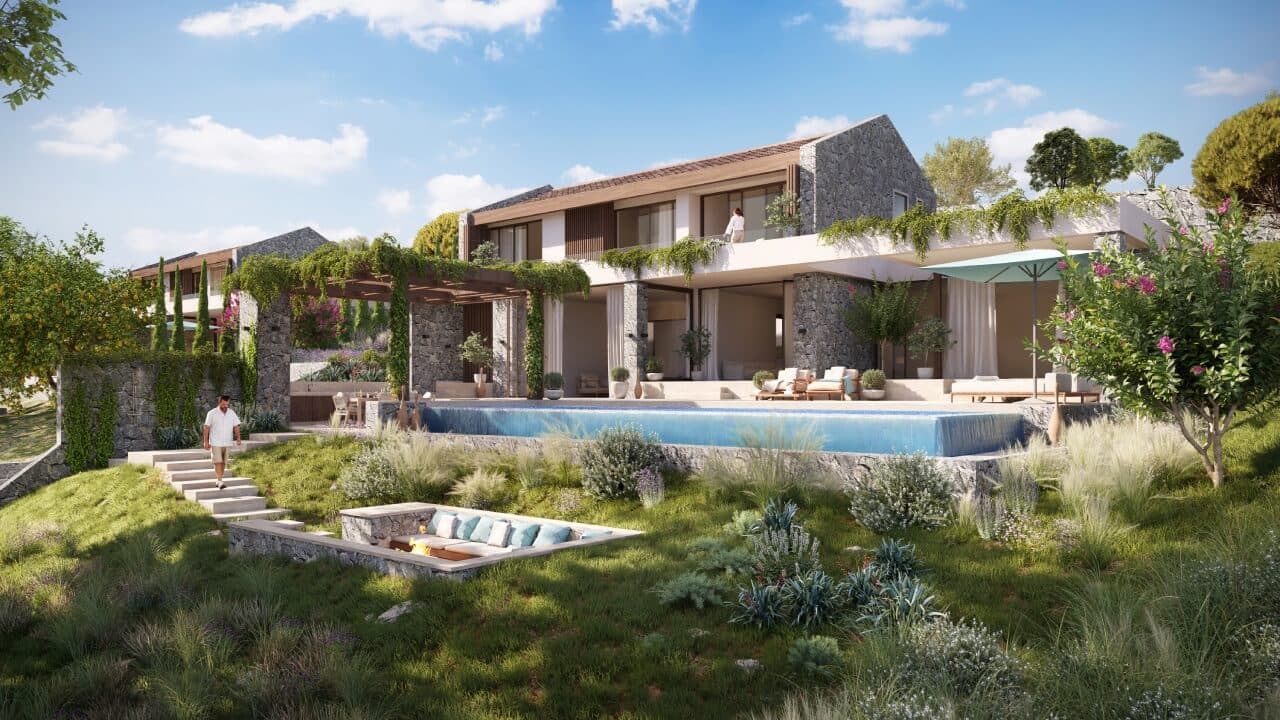
Overview. On the Luštica Peninsula, this master-planned resort community by Orascom and Luštica Development is an about EUR 1 billion, 690-hectare scheme that has drawn 700-plus homeowner-families from 50-plus countries. Entry pricing has risen with the market: apartments and residences now typically start at about EUR 450,000–665,000, with prime stock at roughly EUR 5,500–12,000 per square metre. The development carries a full-service marina and yacht club, hotels and residences, beach clubs and dining, and a golf course that is being delivered in phases, with 9 holes due in 2026 and the full 18 targeted for 2028.
The investment case. Luštica Bay draws rental demand from a high-end tourism market, with appreciation potential and eco-conscious development standards. The international buyer base across 50-plus countries gives the address depth of demand and a measure of resale liquidity that newer schemes lack, though as a Tivat-area property its gross yield sits at the lower end of the national range.
Porto Montenegro property, Tivat’s flagship development.
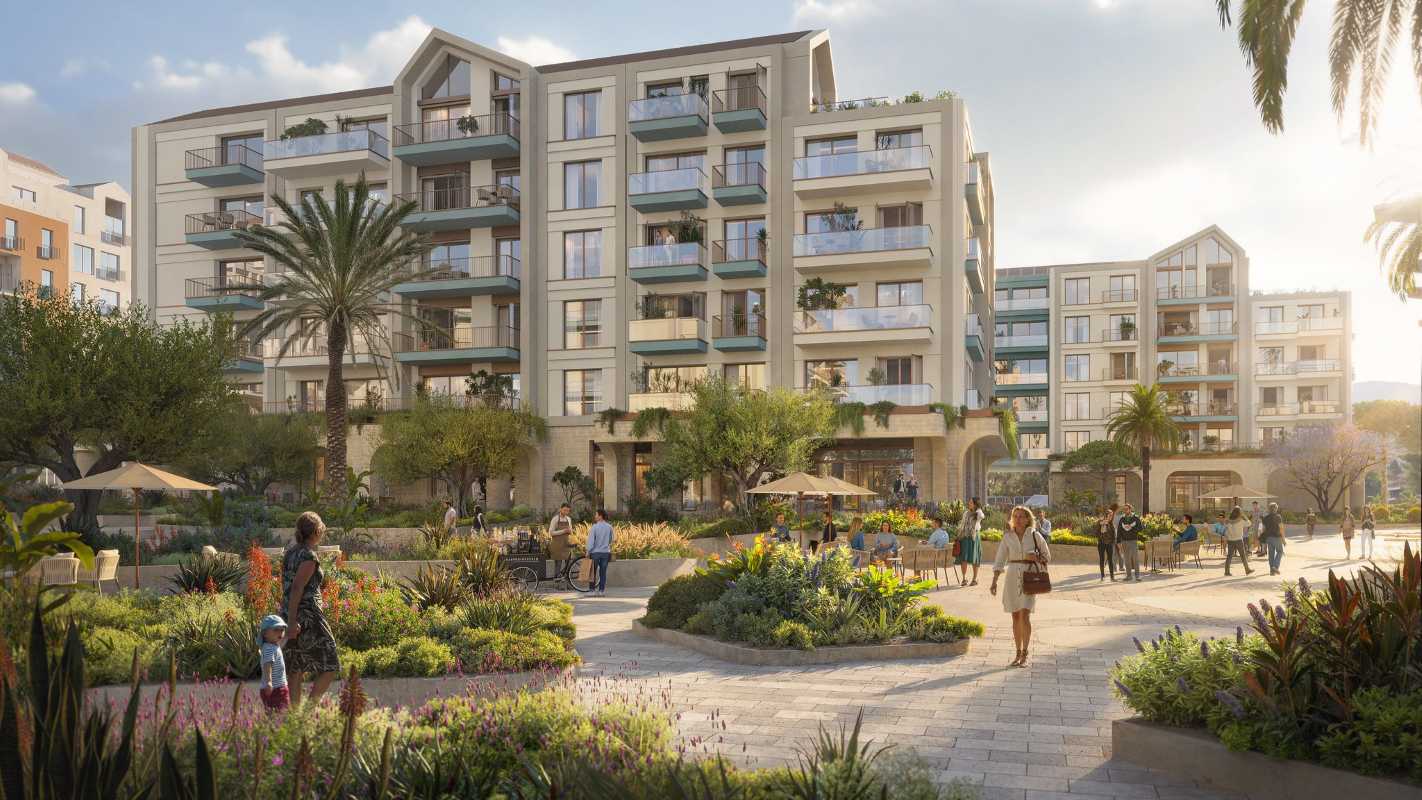
Overview. Set in Boka Bay, Porto Montenegro is the established waterfront address in Tivat, and its superyacht marina is the leading one on the Adriatic. Branded marina-front residences continue to launch here, with pricing at the top of the scheme running roughly EUR 6,000–15,000 per square metre. The address is the apex of the Montenegrin coast.
The investment case. Porto Montenegro is an established, high-end market with strong rental demand and an in-place resident community, marina ecosystem and brand that support occupancy and price resilience. The caveat is income: Tivat carries the lowest gross yields in Montenegro, about 4.4–4.8%, and material monthly homeowner-association fees erode the net figure, so the case here is value retention and lifestyle rather than headline yield.
Budva, the high-volume tourism hub.
Overview. Montenegro’s tourism capital pairs accessibility with value. It offers beach proximity, an active nightlife and lower entry costs than Tivat or Kotor, and along with Tivat it has led the 2026 market as foreign demand diversifies and local buyers return. Gross rental yields in Budva run about 5.4–6.8%, supported by strong seasonal short-let demand.
The investment case. Budva is the more accessible coastal entry point of the five, with high tourism volumes and strong rental demand. The combination of a lower starting price and proven seasonal occupancy makes it well suited to buy-to-let investors building a first position in the market, with a healthier income profile than the higher-priced Tivat addresses.
Kolašin, the mountain retreat market.
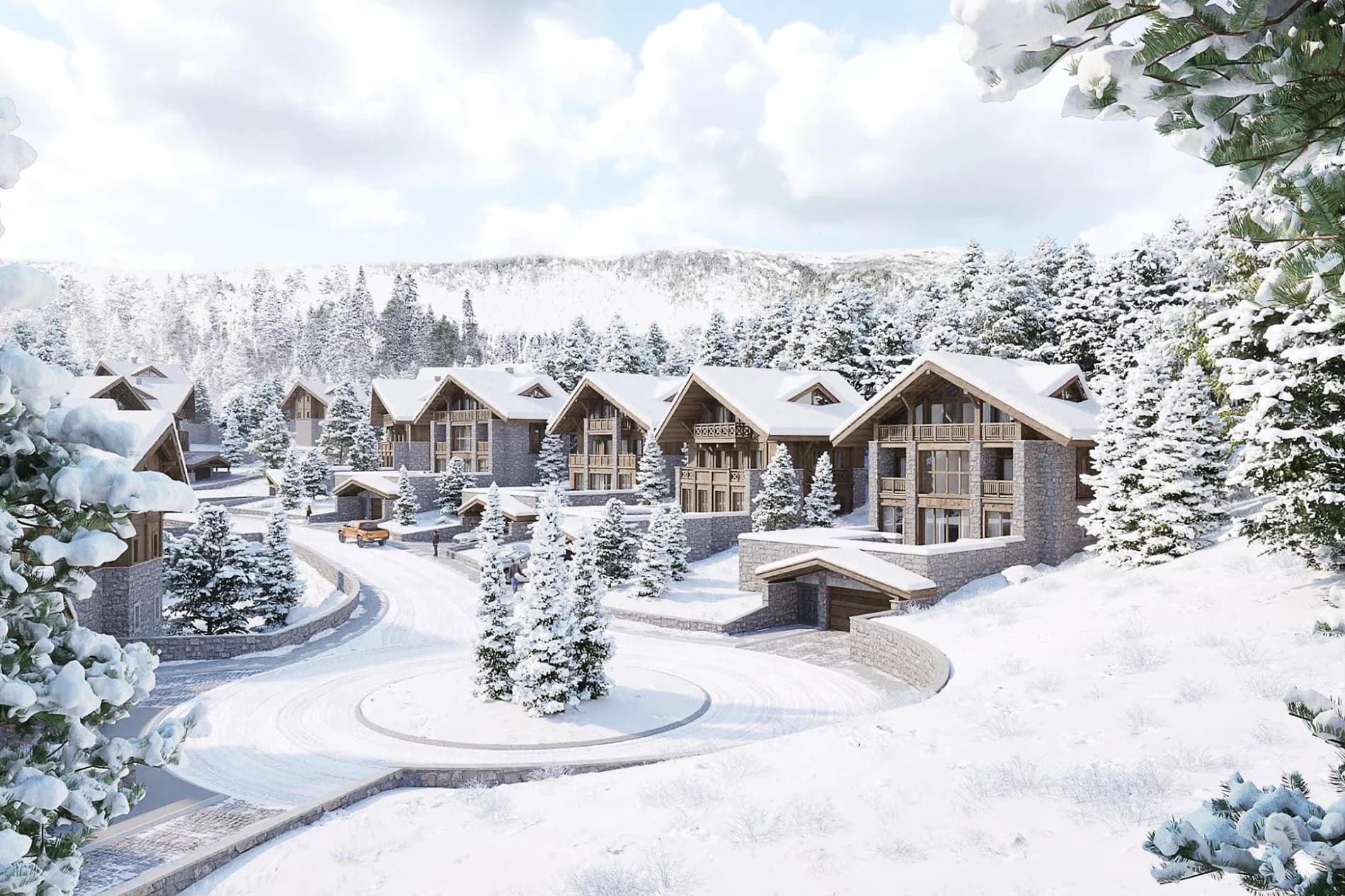
Overview. In Montenegro’s northern mountains, Kolašin offers something distinct from the coast. Its modern ski product is the Kolašin 1450 and Kolašin 1600 resort (Kolašin 1600 opened in 2021 with Doppelmayr lifts), and the open first section of the Bar-Boljare highway already links the area toward Podgorica. The town has year-round appeal: skiing in winter and hiking in summer. Investor interest has risen too, with UAE developer Mohamed Alabbar signalling interest in Kolašin tourism projects in June 2025.
The investment case. Kolašin occupies a mountain-tourism niche with seasonal rental potential and a lower entry point than the coast, which can balance a coast-weighted portfolio. The caveat is delivery risk: several state-resort upgrades, including the K7 cable-car pillar, snowmaking and slope lighting, slipped past the 2025–2026 winter season, so the build-out is still in progress.
Podgorica, the urban growth centre and yield leader.
Overview. The capital provides lower property prices than the coastal markets, a growing community of expat professionals, and commercial as well as residential opportunities. Crucially for an income investor, it is the highest-yield market of the five, with gross rental yields of about 6.1–6.9% (averaging roughly 6.4%).
The investment case. Podgorica offers the strongest income case of the five, with steady year-round rental demand from a domestic and expat tenant base, appreciation potential and lower-maintenance urban property. For investors prioritising yield over a holiday-home use case, the capital’s tenant base provides more even income than the seasonal coast, and it claims the yield crown that the coastal addresses do not.
The 2026 tax position, untangled.
The tax picture is often mislabelled, so it is worth setting out the three separate charges clearly before you commit.
Transfer tax on resale.
When you buy an existing property from another owner, Montenegro applies a progressive real-estate transfer tax, charged bracket by bracket: 3% on value up to EUR 150,000, 5% on the EUR 150,000 to EUR 500,000 portion, and 6% above EUR 500,000. This applies to all resale, progressively, not only to the premium segment.
VAT on new-builds.
A new-build bought directly from a developer is not subject to the transfer tax. Instead it carries 21% VAT, which is typically reflected in the headline price. Knowing which of the two applies is the difference that matters when you budget a purchase.
Annual municipal property tax.
Separate from both of the above, the recurring municipal property tax runs 0.25% to 1.00% of assessed value each year. A flat 15% capital gains tax applies to the net gain when you sell. For every tax and fee on a purchase, see our companion cost report.
Market challenges and considerations.
A cooling market.
After two boom years, growth is moderating. Analysts expect 2026 price growth of roughly 2–6%, with coastal markets under 7% and Podgorica and central towns under 5%, while resale typically clears 2–6% below asking. Prime Tivat micro-locations such as Porto Montenegro and Luštica Bay ran hotter, around 22–28% in 2025, but the broad market is stabilising rather than surging.
Market maturity.
Tourism has held up well, with about 2.61 million visitors in 2024 and record revenue of roughly EUR 1.3 billion in 2025, but the sector skews toward the upper segment, which points to some polarisation in demand.
The regulatory environment.
The market still faces challenges from unfair competition and limited regulatory protection for buyers, sellers and agencies, though a law on mediation in real estate transactions is expected to address this.
Montenegro offers European investors a rare combination: a pre-EU market with established infrastructure, legal clarity and proven tourism appeal, where the window for appreciation narrows as accession approaches even as headline growth cools.
How to approach a Montenegro investment in 2026.
Three broad strategies map onto the five projects. The right one depends on whether the priority is income, appreciation or lifestyle.
Income-led, capital and Budva.
For yield, weight toward Podgorica, where gross returns of about 6.1–6.9% lead the five, and Budva at about 5.4–6.8%. The capital’s year-round tenant base and Budva’s seasonal demand give the most even income profiles in the market.
High-end coastal, value retention.
Target the coast in Tivat and Kotor for international buyer demand, EU-accession appreciation potential and a limited supply of waterfront property. Luštica Bay and Porto Montenegro sit here, where the case is value retention and lifestyle rather than the highest yield, as Tivat income runs at the lower end of the range.
Emerging-area and seasonal.
Consider the northern regions for lower entry costs, infrastructure-led upside and a different demand cycle. Kolašin sits here, with mountain-tourism seasonality that can balance a coast-weighted portfolio, set against the delivery risk on its resort upgrades.
The Montenegro property investment outlook.
The EU membership effect.
There is a directional precedent. Economists cite average price rises of around 40% in the major cities of new EU members around accession, and Croatia’s cumulative gain since joining in 2013 has been far larger. Montenegro’s own path is concrete: 2028 is the live target, about 16 of 33 chapters are provisionally closed, the Accession Treaty is being drafted, and SEPA membership since October 2025 already eases euro transfers. Used as an analogy rather than a guarantee, accession points to further foreign inflows, infrastructure and market maturity.
A less seasonal economy.
Montenegro’s economy has become less seasonal, with digital nomads and year-round residents adding stability, and the country sits outside the Schengen zone, which attracts extended-stay visitors. Ongoing EU and Chinese infrastructure investment continues to improve connectivity, particularly in previously remote areas now reached by the open first section of the Bar-Boljare highway.
For a fuller view of the market, two companion reports go deeper: the complete cost of buying property in Montenegro sets out every tax and fee, and our look at Montenegro’s highest-value places to live maps where the top addresses sit. To see what is available now, browse the current developments in Montenegro. Every figure here is indicative and not investment advice.
Advisory
Talk it through, privately.
An Omnia advisor on availability, structuring and timing across these markets.
 AvailableBarkaHai Al NaseemTypeResidencesExplore residence