In brief
- Oman drew 752,474 visitors by the end of February 2026, up 12.6% year on year (NCSI), led by the UAE, India and Germany. That momentum predates the regional war that began on 28 February 2026.
- The war is the defining 2026 risk: the US raised Oman to a Level 3 travel advisory in early March and high-season trips were cancelled, even as Oman, a neutral mediator, is read as relatively stable.
- Property plateaued in 2025 (OMR 3.368bn of deals, down 0.4%) but is firming again: Savills reports Q1 2026 transaction values up 18.4%, helped by a rate cut and safe-haven capital from rattled UAE investors.
- Foreigners own freehold in tourism complexes such as Al Mouj and Muscat Bay, where Muscat yields run 6-9%. Property is untaxed, but a 5% income tax on high earners starts in 2028.
Contents
- 01Oman tourism in 2026: strong start, clouded outlook.
- 02What it means for the Oman tourism property market.
- 03Why global capital is moving into Oman property.
- 04Tourism’s ripple effect on demand and rents.
- 05The real risks an Oman investor should weigh.
- 06Oman real estate in 2026: the case for a considered move.
Oman opened 2026 on a strong note. The Sultanate drew 752,474 visitors by the end of February, up 12.6% year on year, according to the National Centre for Statistics and Information (NCSI), with the UAE, India and Germany the largest source markets. Then, on 28 February, a regional war began. Any honest read of Oman tourism and property in 2026 has to hold both facts at once: real momentum into February, and a clouded outlook after it. Below is how that tension translates into a property story, and what an investor should weigh before reading too much into either headline.
Oman tourism in 2026: strong start, clouded outlook.
Oman is not trying to mimic Dubai, and that is part of its appeal. The Vision 2040 blueprint is explicit: shift away from oil and build out tourism, lifting its share of GDP toward 5% by 2030 and around 10% by 2040, with a headline visitor target of 11.7 million (up from 2.6 million in 2015). The draw is the landscape and the culture: the Hajar mountains, a long Arabian Sea coastline, Muscat’s old souqs, and Salalah’s misty Khareef season, which alone drew 1,027,255 visitors in 2025, up 2% on the year.
The 2025 figures were solid. Oman closed the year with tourism output of RO 2.28 billion ($5.93 billion), up 7.8%, and tourism’s direct contribution to GDP rose to 2.7%, while revenue at three-to-five-star hotels climbed 21.4% to RO 257.9 million through November. International arrivals held near 3.9 million for a second year. The direction was set by strategy, not luck.
What changed everything is dated 28 February 2026. A regional war broke out, and within days the US State Department raised Oman to a Level 3 Reconsider Travel advisory, tour operators cancelled Oman departures through March, and the wider region absorbed a wave of high-season cancellations. Oman, a long-standing neutral mediator, is read as relatively stable, but its security-perception score fell sharply. The plain reading: the 12.6% start to 2026 predates the war, and the first-half outlook is now uncertain.
| Metric | Figure | Source / period |
|---|---|---|
| Visitors by end of February 2026 | 752,474 | +12.6% YoY (NCSI) |
| 2025 international arrivals | ~3.9 million | Full year, held flat |
| 2025 tourism output | RO 2.28bn ($5.93bn) | +7.8% (NCSI) |
| Three-to-five-star hotel revenue | RO 257.9m | To Nov 2025, +21.4% |
| Salalah Khareef 2025 | 1,027,255 | +2% (NCSI) |
| Visitor target by 2040 | 11.7 million | Vision 2040 ambition |
Sources: National Centre for Statistics and Information (NCSI); Vision 2040. Figures as published; the 2040 figure is a Vision 2040 target, not a forecast.
What it means for the Oman tourism property market.
Here the honest framing matters. Oman’s real estate market did not simply ride tourism higher. After a strong 2024, when transactions reached OMR 3.3 billion, up 29.5%, full-year 2025 deals plateaued at OMR 3.368 billion ($8.76 billion), down 0.4%. Sales contracts rose 16% to OMR 1.27 billion, but mortgage contracts fell 8.2% to OMR 2.09 billion. Tourism growth that year did not translate into transaction or price growth, which is the clearest evidence that tourism supports hospitality and rental absorption rather than directly lifting prices.
Into 2026 the market is firming again. Savills reports Q1 2026 transaction values up 18.4%, supported by a 0.25-point cut to mortgage rates by the Central Bank of Oman in 2025 and roughly 23,000 mortgage-financed home purchases, up about 10%. The ownership regime does the rest of the work: expats and foreign buyers can own freehold in Integrated Tourism Complexes (ITCs) such as Al Mouj Muscat and Muscat Bay, where Muscat gross rental yields run 6-9% and Al Mouj two-bed apartments sit near 9%. For the live picture of what is selling, see developments in Muscat.
The longer trajectory still looks constructive. Mordor Intelligence forecasts Oman’s residential real estate growing from $4.78 billion in 2025 to $7.42 billion by 2030, a 9.19% annual rate, with the apartment segment tracking near 7.4% growth, the band that includes ITC condominiums. On those figures this reads as a market built for steady, income-led returns rather than a bubble. The forecast is illustrative, and the usual caveats on any projection apply. Our wider read sits in the reasons property prices in Oman are rising.
Source: Mordor Intelligence residential real estate forecast ($4.78bn 2025 to $7.42bn 2030, 9.19% CAGR). Illustrative; forecasts are not guarantees of future value.
Why global capital is moving into Oman property.
Oman is no longer only a regional story, and 2026 has sharpened the point. The UK remains the largest foreign investor, holding FDI stock of around OMR 11.52 billion, just over half of the total, with real estate now joining oil as a focus. A meaningful share of ITC stock is in expatriate hands, with Indian buyers a notable group. The newer twist is counterintuitive: AGBI reported in April 2026 that UAE investors rattled by the war are pushing capital into Oman property as a regional safe haven. The demand story in 2026 is as much about capital flows as tourist flows.
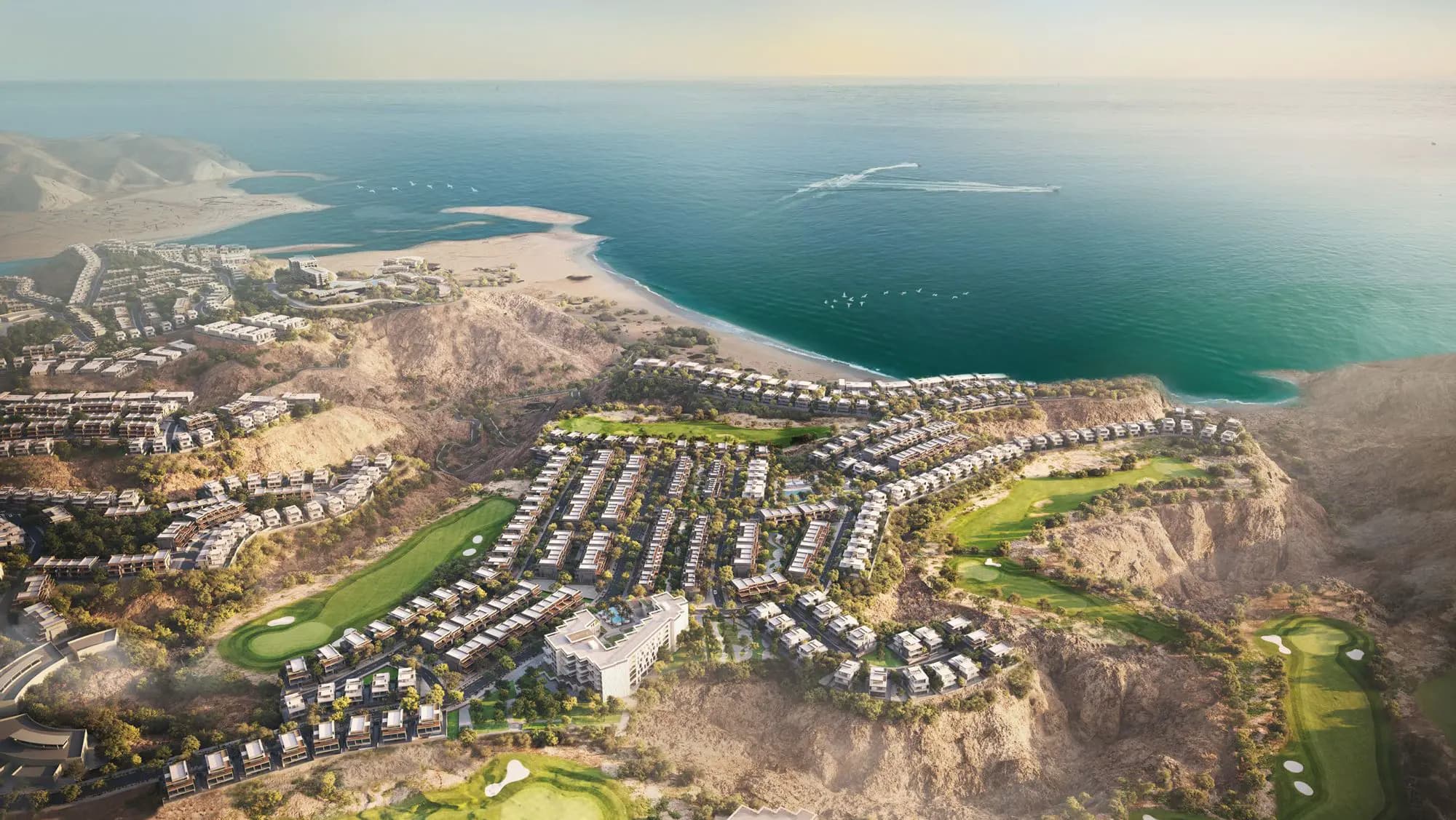
Projects carry the point. AIDA by Dar Global, developed with OMRAN Group at Yiti in Muscat, is a USD 1.6 billion masterplan of 3,500 residences anchored by a Trump International golf club and a 140-key Trump hotel; the separate Yiti Sustainable City carries the larger $2.4 billion tag. Al Mouj’s golf-and-villa blend draws buyers from Europe and the Gulf alongside it. These are the kind of branded, masterplan-backed addresses where foreign demand concentrates. At Omnia Capital Group the approach is to weigh the figures rather than the noise, and on that basis Oman warrants a closer look.
Tourism’s ripple effect on demand and rents.
Visitors and residents do more than take photographs; they fill homes. Oman’s expatriate population grew sharply through the early 2020s, rising roughly 33% nationwide from about 1.63 million in late 2022 to about 2.17 million by mid-2023, which fed rental demand across Muscat and the industrial hubs. Growth has since moderated to a more modest inflow, but the base is larger and stickier. Salalah’s Khareef season floods the south with over a million visitors, filling hotels and sending the overflow into private rentals, while Muscat’s high-end segment runs year-round, supported by foreign buyers and a growing expat base.
The government’s push into MICE travel, meetings, incentives, conferences and exhibitions, adds another layer, with the wider Middle East sports economy valued at around $600 billion and a recurring headline at regional travel markets. More events mean more visitors, and more visitors mean more demand for homes, temporary and permanent. It is a dual play: rentals today, ownership later. The point to keep in proportion is that this supports absorption and income, and is one input alongside cheaper mortgages and safe-haven capital, rather than a guarantee of rising prices.
Tourism is the spark, but property is not the automatic payoff. The discipline for an investor is the same as anywhere: read the figures, weigh the war risk, and buy well-located rather than chase the headline.
The real risks an Oman investor should weigh.
Oman is not flawless, and 2026 makes the gaps plain. The dominant near-term risk is the regional war that began on 28 February: the Level 3 travel advisory, cancelled high-season trips and a knock to security perception all sit directly against the strong start to the year. Beyond that, the 11.7 million visitor target for 2040 looks ambitious set against arrivals near 3.9 million, and the 2025 transaction plateau is a reminder that activity does not always compound. Property carries its own headwinds.
- Regional security. The 28 February war is the live risk: a travel advisory, cancellations and weaker arrivals could suppress the first-half tourism numbers.
- Oil exposure. A sustained dip in oil prices could slow the pace of diversification.
- Plateau risk. The 2025 transaction plateau shows demand can stall even as arrivals hold.
- Future tax. The 5% personal income tax on high earners from 2028 changes the calculus for some buyers, even though property itself stays untaxed.
None of these are reasons to stay away. They are reasons to structure an entry properly: the better approach is to understand the risks, including the war, and plan around them, not to pretend they do not exist.
Oman real estate in 2026: the case for a considered move.
Oman is not a speculative gamble; it is a considered one. The sourced picture for the next twelve months is a prime Muscat price outlook running roughly flat to up 5%, with a low chance of a meaningful fall given constrained, regulated credit, and gross rental yields of 6-9%, with Al Mouj two-bed apartments near 9%. The case rests on income and resilience, supported by cheaper mortgages and safe-haven capital, rather than on a bet that prices race ahead.
For the full market picture, the live hub sits at Oman, and current stock is listed under Muscat developments. The tourism numbers are real, the property market plateaued in 2025 and is firming into 2026, and the ownership routes stay open to foreign buyers. The work, as ever, is in choosing the right address and the right developer, and in pricing the war risk honestly. Every figure here is indicative and not investment advice.
Advisory
Talk it through, privately.
An Omnia advisor on availability, structuring and timing across these markets.
 AvailableYiti, MuscatAIDA, OmanStarting from£200,000TypeResidencesExplore residence