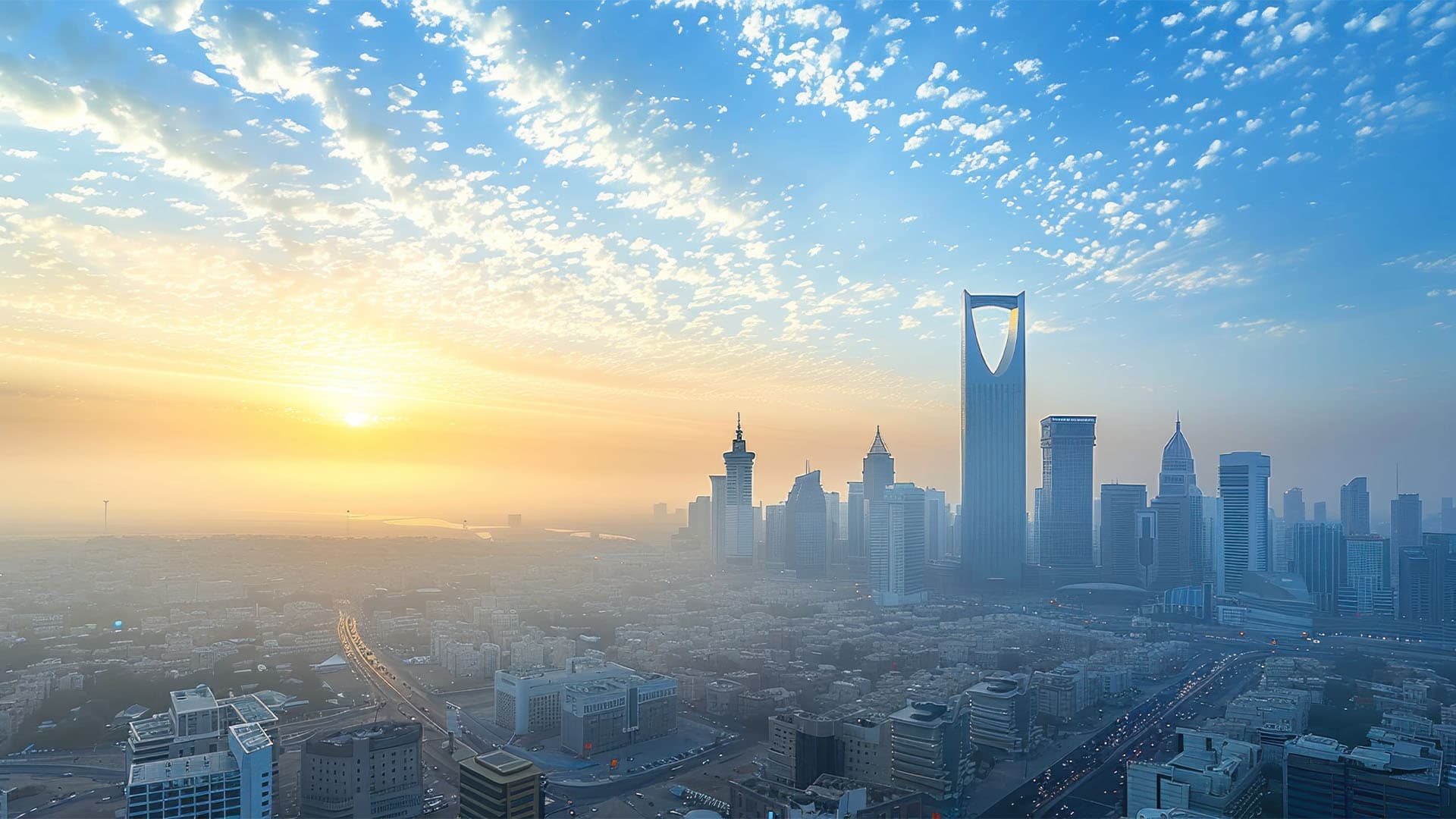
In brief
- The GCC was the world’s strongest prime residential region in 2025, with Middle East luxury values up 9.4% against a 3.2% global average (Knight Frank).
- The region split in two: Dubai, Abu Dhabi and prime Riyadh ran hot on capital growth, while Qatar, Bahrain, Oman and Kuwait turned on income and yield.
- Saudi Arabia’s foreign ownership law, in force from 22 January 2026, is the structural opening of the cycle for international buyers.
- For 2026, the patient return sits in prime and branded residences, in Abu Dhabi, and in the newly opened Saudi zones, not in mid-market Dubai supply.
Contents
- 01The year the Gulf led the world.
- 02A two-speed region.
- 03The United Arab Emirates: record liquidity, managed cooling.
- 04The Saudi opening.
- 05The yield markets: Qatar, Bahrain, Oman and Kuwait.
- 06Branded, prime and the flight to quality.
- 07Commercial: a landlord’s market.
- 08Ownership, tax and the end of the zero-tax Gulf.
- 09The 2026 outlook.
- 10The Omnia position.
- 11Methodology and sources.
For a decade the question put to international capital was whether the Gulf belonged in a global property portfolio at all. In 2025 that question was settled. The six states of the Gulf Cooperation Council, Saudi Arabia, the United Arab Emirates, Qatar, Oman, Bahrain and Kuwait, together formed the best-performing prime residential region on earth, drew more relocating millionaires than anywhere else, and turned a record share of new private wealth into bricks, land and branded keys.
The result is not a single boom but a region pulling decisively apart. Dubai and Abu Dhabi set the global pace on capital growth. Saudi Arabia opened its market to foreign ownership for the first time in a generation while its broad index quietly cooled. Qatar, Bahrain, Oman and Kuwait offered something the headline markets no longer can: income. The investor who treated the GCC as one trade in 2025 was right by accident. The investor who reads it as six distinct markets will be right on purpose.
This is Omnia’s annual reading of those six markets: what 2025 delivered, what the data says now, and where the patient return sits for 2026. The signal this year is unusually clear. Value is moving from momentum to position, from the trade to the hold, and from the city to the address within it. The question is no longer which Gulf market. It is which position within it.
The year the Gulf led the world.
Begin with the global ranking, because it is the cleanest measure of the year. Knight Frank’s Prime International Residential Index, the benchmark for luxury values across 100 cities, put Middle East prime price growth at 9.4% in 2025, comfortably the strongest of any world region against a global average of 3.2%. Dubai rose 25.1%, second only to Tokyo (+58.5%) on the entire index, and remained the world’s most active market for sales above 10 million US dollars, with 500 such transactions worth 9.05 billion dollars.
Underneath the price data sits the wealth that drives it. Henley & Partners forecast the UAE as the world’s number-one destination for relocating millionaires in 2025, a record net inflow of 9,800, with Saudi Arabia the single biggest riser at a projected 2,400, roughly eight times its 2024 figure. The Gulf now hosts three sovereign wealth funds each above one trillion dollars (Saudi Arabia’s PIF, Abu Dhabi’s ADIA and Kuwait’s KIA on Global SWF estimates), and Saudi non-oil activity reached about 55% of GDP, a Vision 2030 record. That capital is landing in property. Dubai transacted roughly 250 billion dollars of real estate in 2025; Abu Dhabi set its own record at 142 billion dirhams.
For the international buyer, the read-through is structural rather than cyclical. The Gulf is no longer a high-yield oil proxy bought for diversification. It is where a rising share of the world’s ultra-high-net-worth population now lives, banks and increasingly owns its primary and secondary homes.
Sources: Dubai prime, Knight Frank PIRI 100 (Wealth Report 2026, full-year 2025); Abu Dhabi overall, Knight Frank Residential Market Review H1 2025; Muscat, Oman NCSI residential price index Q4 2025; Riyadh and Jeddah apartments, Knight Frank Q2 2025. Bases differ by market and are not directly comparable. Doha, Manama and Kuwait City were flat to negative in 2025 (see table).
The chart carries a warning as well as a story. The bars are not measured on a single basis, and three of the six markets are missing from it because their prices fell. That gap is the report. Capital growth concentrated in a handful of addresses while the rest of the region traded on yield, supply discipline and reform. Reading the league table without reading the absences is how investors mistime the Gulf.
In 2025 the Gulf did not merely participate in the global prime market. It set the pace.
A two-speed region.
The defining feature of the 2025 cycle is divergence. On one track sit the capital-growth markets: Dubai, Abu Dhabi and prime Riyadh, where wealth migration, scarce prime stock and Vision-led demand pushed values higher. On the other sit the income markets: Doha, Manama, Muscat and Kuwait City, where prices were flat or softening but gross yields ran well above the headline cities. A single market, Dubai, even runs at two speeds within itself, its luxury segment accelerating as its mainstream began to normalise.
The practical consequence is that the GCC should be underwritten as a barbell, not a bloc. One end is bought for appreciation and liquidity; the other for income and entry price. The table below is the map. The chapters that follow walk each market in turn.
| Market | Foreign ownership | 2025 price signal | Gross yield | Omnia view |
|---|---|---|---|---|
| Riyadh & JeddahSaudi Arabia | Opening Jan 2026, designated zones | Recalibrating; prime resilient | ~6.8% | Accumulate |
| DubaiUAE | Freehold zones, Golden Visa | Record; prime +25.1% | ~6.6% | Transact |
| Abu DhabiUAE | Freehold in investment areas | Outperforming; +17.3% | ~5.5% | Accumulate |
| DohaQatar | Freehold / leasehold zones | Volume up, prices soft | ~5.9% | Selective |
| MuscatOman | Freehold within tourism zones | Index +13.9%, villa-led | 6–9% | Accumulate |
| ManamaBahrain | Freehold zones | Buyer's market, high yield | 6.5–11% | Income |
| Kuwait CityKuwait | Companies and funds only | Record 2025, soft Q1 2026 | Restricted | Watch |
Compiled by Omnia Reports & Intel, June 2026. Price signals: Knight Frank, GASTAT, Oman NCSI, CBRE. Gross yields: Global Property Guide, REIDIN and CBRE benchmarks (indicative ranges). Ownership summaries are indicative; verify per jurisdiction and development. Positions reflect the Omnia Desk house view at publication and are not investment advice.
The United Arab Emirates: record liquidity, managed cooling.
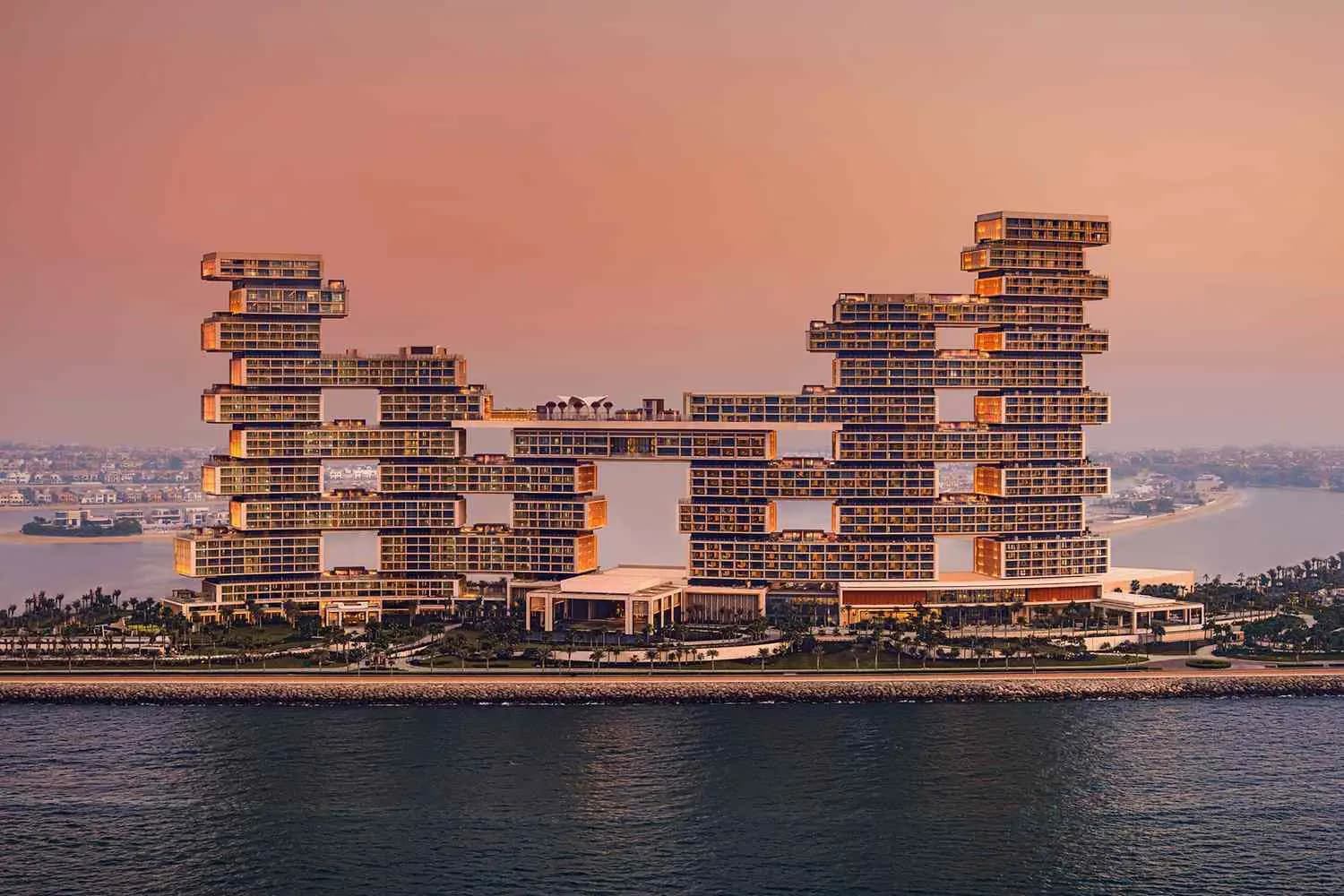
Dubai had the largest year in its history. The Dubai Land Department recorded over 917 billion dirhams (about 250 billion dollars) of real estate transactions across more than 270,000 deals, up 20% on 2024. On residential sales specifically, Knight Frank tracked a record 205,400 transactions, up 18%, worth 544.2 billion dirhams, up 25%. Prime values rose 25.1% on the year and the super-prime tier, homes above 10 million dollars, set a world record of 500 sales worth 9.05 billion dollars. Off-plan ran at roughly 72% of activity, and momentum carried straight into 2026: first-quarter transactions reached 252 billion dirhams, up 31% by value year on year.
The nuance behind the record is the growth gap. Knight Frank’s own data shows prime accelerating while mainstream growth normalised, the classic late-cycle signature of a market where the best addresses keep compounding as the broad middle slows. That gap, not the headline number, is what defines Dubai entering 2026.
Abu Dhabi was the quieter outperformer, and for many international buyers the more interesting one. The Abu Dhabi Real Estate Centre reported a record 142 billion dirhams of transactions in 2025, up 44% by value and 52% by deal count, with residential prices up 17.3% and prime beachfront leading: Saadiyat villas rose 28% and Yas Island villas 22%. Average prime values sit roughly 30% below Dubai, the ADGM financial free zone expanded onto Al Reem Island, and the Saadiyat Cultural District (the Guggenheim, the Zayed National Museum, teamLab) is maturing into a genuine global-culture address. Abu Dhabi offers much of Dubai’s institutional quality at a discount, with less mainstream supply risk.
At the region’s high-beta edge sits Ras Al Khaimah, where the 5.1 billion dollar Wynn Al Marjan Island casino resort (the UAE’s first, targeting a 2027 opening) is repricing the emirate ahead of completion. CBRE put prime apartment values at a cycle-high 2,428 dirhams per square foot in 2025, with apartments up 32% and the Al Marjan submarket rising even faster. It is the most speculative position in the UAE, and the most dependent on a single catalyst opening on schedule.
The Saudi opening.
Saudi Arabia is the structural growth story of the GCC and, in 2025, also its clearest example of a maturing market. The official GASTAT real estate index turned mildly negative late in the year, down 0.7% year on year in the fourth quarter (residential down 2.2%), and softened further to minus 1.6% in the first quarter of 2026, with villas off 6.1%. This is recalibration, not retreat: it reflects a five-year residential rent freeze, a heavy supply pipeline and the natural cooling of a market that ran double-digit for three years.
Prime and average submarket data tells the other half of the story. Cavendish Maxwell put full-year 2025 Riyadh apartment prices up 6.6% and villas up 9.7%, even as Riyadh transaction value fell 12.4% and deal count fell 31.4% on affordability fatigue. Jeddah, by contrast, posted a multi-year high. The broad index cooled while the best stock kept appreciating, the same divergence seen in Dubai, one market upstream.
Source: General Authority for Statistics (GASTAT), Real Estate Price Index, via Arab News, 2025–2026. National composite index; the residential component fell faster (residential minus 3.6%, villas minus 6.1% in Q1 2026). Prime and brokerage-tracked submarkets continued to appreciate over the same period.
The catalyst that reframes everything is regulatory. The Law of Real Estate Ownership by Non-Saudis took effect on 22 January 2026. On 23 June 2026 the Cabinet approved the geographical zones and implementing regulations, and REGA now publishes the parcel-level maps through Saudi Properties. Approved areas cover Riyadh and Jeddah, while Makkah and Madinah remain specially restricted. The law and operational map are both live, but buyers must check the specific property and its zone conditions. Total government charges for foreign buyers can run near 10% once the 5% transaction tax and a foreign-ownership disposal fee are layered on.
The demand case is strong on every axis. Henley forecast Saudi Arabia as the world’s biggest riser for millionaire inflows in 2025. Over 700 multinationals have established regional headquarters in Riyadh, pushing prime office vacancy close to zero and Grade-A rents up 15.1% on the year. Knight Frank estimates the Kingdom needs around 825,000 new homes by 2030. The giga-project picture has matured rather than stalled: Diriyah, the Red Sea and Qiddiya are delivering, while NEOM’s The Line has been scaled back sharply, a useful reminder that the speculative end of the pipeline carries real execution risk.
The broad index cooled while the best addresses kept compounding. That gap is the opportunity.
The yield markets: Qatar, Bahrain, Oman and Kuwait.
Qatar is the cleanest example of the income trade. Residential sales value jumped 43.5% in 2025 to 26.6 billion riyals and deal count rose 50%, yet average villa prices slipped 1% and apartments 2% as a post-World-Cup supply overhang met modest population growth. The first quarter of 2026 softened further, with Knight Frank attributing a 23% quarterly drop in volume to regional conflict. The investment case is structural, not cyclical: residency from a property purchase of about 200,000 dollars (permanent residency at one million), a 250 billion dollar Lusail pipeline, and prime gross yields of 6–7% on small, well-located Pearl and Lusail apartments. Qatar is underwritten on net yield and absorption, not capital appreciation.
Bahrain is the GCC’s highest-yielding residential market, with gross yields broadly 6.5–11% and Manama around 8.2%, comfortably above Dubai and Doha. Headline prices fell in 2025 (apartments down 4.4%) on freehold oversupply in clusters such as Juffair, even as transaction value hit a decade high. Policy turned firmly pro-investor at year end: the Golden Residency property threshold was cut 35% to 130,000 dinars (about 345,000 dollars), among the most affordable routes in the Gulf, and real estate brokerage was opened to 100% foreign ownership. Bahrain is an income and entry-price play for the buyer disciplined about micro-location.
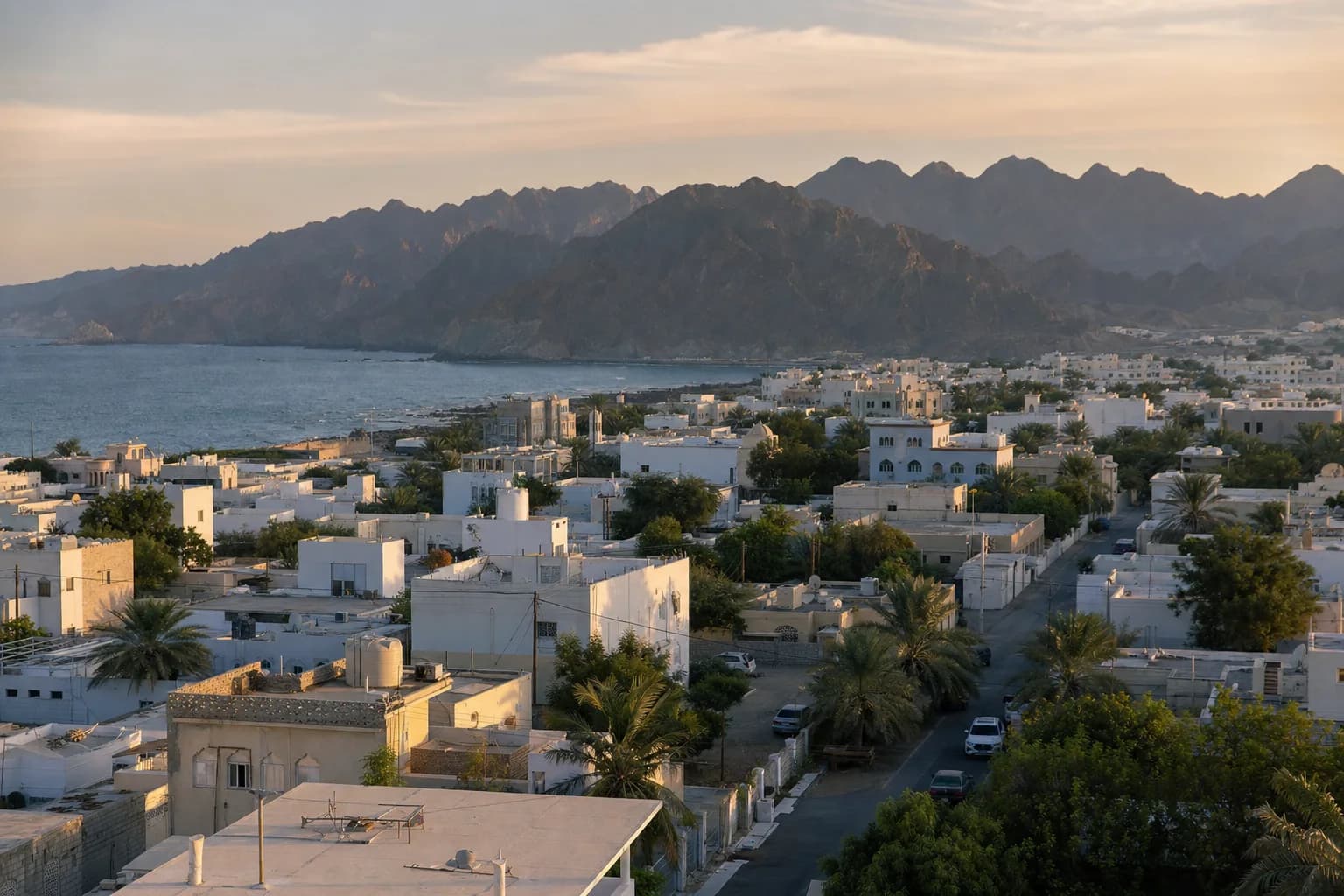
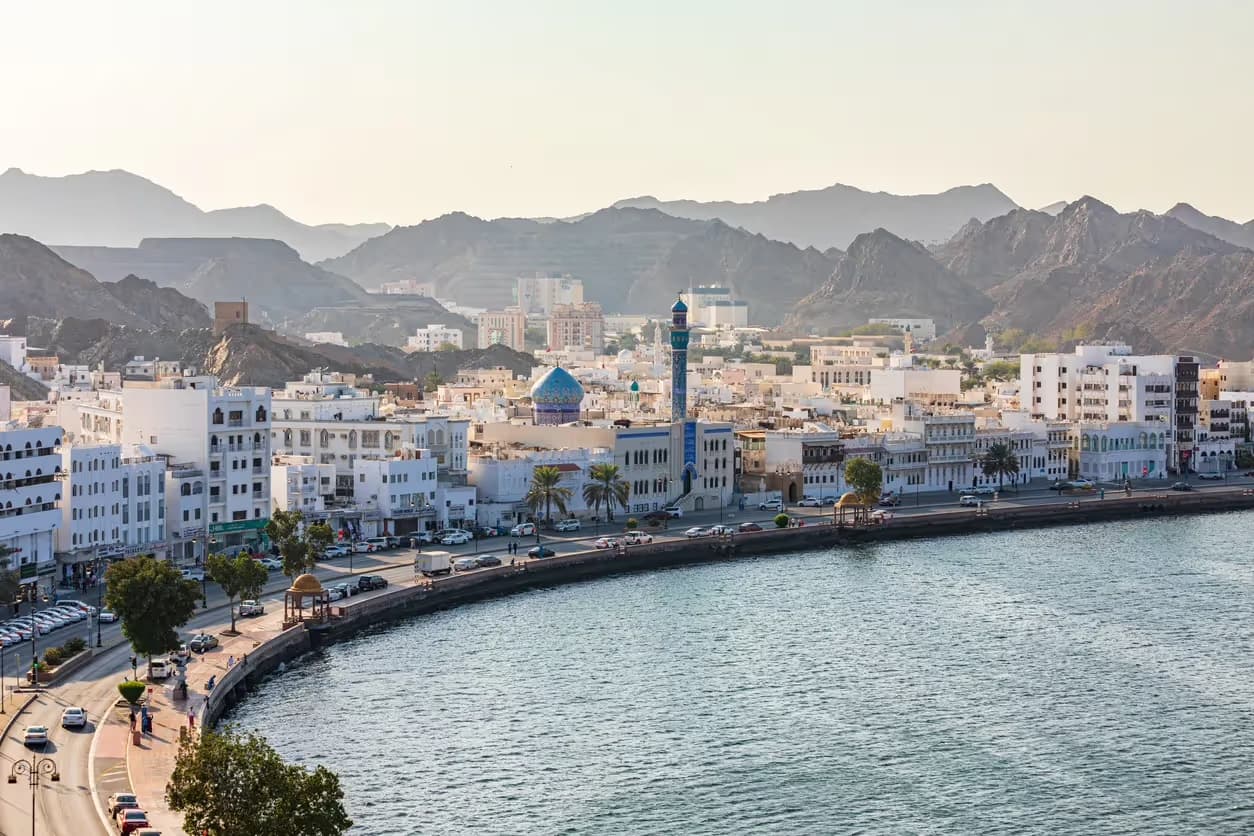
Oman is the region’s quiet diversification story. The national price index rose 13.9% in the fourth quarter of 2025, led by villas at 20.6%, off a low base and on the back of a record tourism year. Foreign buyers own freehold within designated tourism complexes (Al Mouj, Yiti, AIDA), now amplified by a ten-year Golden Residency from OMR 200,000. The defining 2025 event was fiscal: Oman legislated the GCC’s first personal income tax, 5% on income above roughly 109,000 dollars from 2028. The direct hit to property investors is limited (rental income and most home disposals are expected to be exempt), but it reframes the tax-free Gulf pitch and is the clearest signal yet of where the region’s fiscal model is heading.
Kuwait is the GCC’s least-liberalised major market and its sharpest near-term swing. Full-year 2025 was the strongest in over a decade (roughly 4 billion dinars of trading), before a first quarter of 2026 slump on regional geopolitics and the Ramadan lull. Foreign access remains narrow: 2025 reforms opened ownership to licensed companies and real estate funds only, with residential plots still reserved for citizens. The market to watch is the draft mortgage law that would let commercial banks lend for housing for the first time, against a backlog of over 97,000 families awaiting government homes. For now, Kuwait is a watch, not a buy, for the international investor.
Branded, prime and the flight to quality.
If one asset class captures the Gulf’s wealth shift, it is the branded residence. Dubai is the world’s single largest branded-residence market, with 64 completed schemes and 87 more in the pipeline on Savills data, and the Middle East holds roughly 27% of the global pipeline. Branded stock commands an average price premium of about 33% over equivalent unbranded homes (closer to 39% in resort locations), a premium buyers pay for certainty: a named operator, serviced management and resale liquidity. Abu Dhabi (Mandarin Oriental, Nobu on Saadiyat) and Saudi Arabia (Ritz-Carlton, Baccarat and Capella at Diriyah, selling strongly) are scaling fast behind it.
The other reason the wealthy keep buying is relative value. On Knight Frank’s purchasing-power measure, one million dollars still buys far more prime space in Dubai than in Monaco, London or New York. For a UHNWI population that holds roughly a fifth of its wealth in property and owns nearly four homes on average, the Gulf offers prime quality, freehold tenure and residency at a price the legacy hubs cannot match. That arithmetic, more than any single year’s price print, is what keeps capital flowing in.
Commercial: a landlord’s market.
The commercial cycle is defined by prime scarcity. Riyadh is the tightest office market in the region: prime vacancy fell to roughly 0.5%, Grade-A rents rose 15.1% on the year and are now about 86% above 2019, driven by the regional-headquarters programme and PIF demand. Dubai (prime vacancy 0.7%, Grade-A rents up 19%) and Abu Dhabi (prime vacancy near 0.1%) are similarly landlord-favoured. Doha is the outlier, a tenant’s market where Grade-A rents fell about 2% on an aggressive pipeline.
Logistics is the strongest-performing sector in the region and the most under-supplied. Dubai warehouse rents rose roughly 20% on the year at sub-5% vacancy; Riyadh industrial rents rose 16% at 98% occupancy, fuelled by e-commerce, non-oil manufacturing and third-party logistics demand. Retail is a two-speed prime-versus-secondary story: Dubai mall occupancy reached 98% and super-regional rents rose 12.4%, while older secondary stock softened. The unifying theme across offices, retail and logistics is the same as in residential, structurally short prime supply meeting Vision-led demand, sustaining a landlord’s market into 2026.
Ownership, tax and the end of the zero-tax Gulf.
The six states are converging on a single strategy: open real estate to foreign capital while quietly broadening the tax base. On ownership, 2025 and 2026 brought the fastest liberalisation in a generation. Saudi Arabia opened to foreign buyers in designated zones. Kuwait opened to licensed companies and funds. Bahrain added freehold zones and opened brokerage to full foreign ownership. Residency-by-investment thresholds were cut across the board, from Bahrain (130,000 dinars) to Oman, Qatar (from 200,000 dollars) and the UAE’s 2 million dirham Golden Visa.
On tax, the direction is unmistakable. The zero-tax Gulf is ending. A 15% domestic minimum top-up tax on large multinationals took effect across five GCC states from January 2025, layered on the UAE’s 9% corporate tax, and Oman’s 5% personal income tax arrives in 2028, the first anywhere in the bloc. Property itself stays lightly taxed for the individual investor: there is no annual property tax on individuals in most of the region, transfer costs run from 4% in Dubai to about 5% in Saudi Arabia, and Saudi Arabia is using a reformed white-land fee (raised toward 10% of value) to force idle land to market. The architecture is maturing fast, but for the individual buyer the Gulf remains, for now, one of the most lightly taxed property markets in the world.
The 2026 outlook.
The most-debated question in the region is whether Dubai corrects. The house views diverge in degree, not direction. Knight Frank expects a managed cooling, prime growth of about 3% and mainstream about 1% in 2026, as a record handover wave arrives. Fitch models price falls of up to 15% across 2025 and 2026 on supply; Moody’s expects a measured twelve to eighteen month cooling concentrated in mid-market apartments. All three agree the large developers and UAE banks can absorb it, and all three note that chronic delivery slippage (less than half of promised 2025 completions arrived on time) is the main reason a deep correction may not materialise. The clearest risk in the region sits in Dubai mid-market apartments most exposed to 2026 to 2028 supply.
Away from Dubai mainstream, the outlook is constructive. Saudi Arabia is a structural growth market whose foreign opening should broaden the buyer base through the year, even as the broad index cools. Abu Dhabi is positioned to outperform on culture, ADGM expansion and contained supply. Qatar is rebalancing on yield, Bahrain and Oman offer income, and Kuwait’s mortgage law is the region’s biggest potential re-rating if it passes. The rate path supports the cycle: the dirham and most Gulf currencies are dollar-pegged, the UAE central bank held its base rate at 3.65% in April 2026 after three cuts, and further Fed easing would lower mortgage costs across the region.
The Omnia position.
Our house view follows from the data rather than the headlines. Treat the GCC as a barbell. At the growth end, accumulate prime and branded residences in Abu Dhabi, structure early entry into the newly opened Saudi zones as the operator and regulatory map arrive, and transact rather than accumulate in Dubai mainstream, where the supply wave argues for selectivity over momentum. At the income end, use Qatar, Bahrain and Oman for net yield and entry price, underwritten on absorption and cash flow, not appreciation. Hold Kuwait until the mortgage law lands.
The through-line across all six markets is the same one that opened this report. The next decade of Gulf return rewards position over momentum: the structured address over the trophy one, early access where markets are opening, and the patience to hold through a construction and reform cycle. The towers will keep rising. The compounding sits with the investor who chose the position, not the moment.
Methodology and sources.
This report reflects data available to mid-June 2026: full-year 2025 results and first-half 2026 readings where published. Figures are attributed to their source at each exhibit and named in the text. Where a national index and a brokerage submarket series diverge (as in Saudi Arabia), both are presented rather than blended. Forecasts and positions described as the Omnia view are the house view of the Reports & Intel desk at publication and are not investment advice; verify all figures, taxes, ownership rules and residency thresholds independently before acting.
Principal sources. Knight Frank (The Wealth Report 2026 and PIRI 100, Dubai, Abu Dhabi, Saudi, Qatar and GCC market reviews), Savills (Branded Residences Report 2025/26), JLL and CBRE (office, industrial and Bahrain market reviews), Cushman & Wakefield and ValuStrat (Qatar), Cavendish Maxwell (Saudi Arabia and Dubai residential), the Dubai Land Department, the Abu Dhabi Real Estate Centre, Saudi GASTAT and REGA, Oman NCSI, Qatar Aqarat and the Ministry of Justice, Bahrain’s Survey and Land Registration Bureau, Kuwait’s Ministry of Justice and Kuwait Finance House, Henley & Partners, Global SWF, the IMF and World Bank, Alpen Capital and Global Property Guide.
Advisory
Talk it through, privately.
An Omnia advisor on availability, structuring and timing across these markets.
 AvailableBarkaHai Al NaseemTypeResidencesExplore residence