In brief
- Savills puts the 2026 global average branded premium at about 33% over comparable non-branded stock, around 30% in established and emerging cities and 39% in resort markets, where emerging cities can reach as high as 47% but with far higher variance.
- The sector is scaling fast: Savills counts 764 schemes at end-2024 rising toward about 910 by end-2025, while Knight Frank forecasts roughly 162,000 branded units globally by 2030. MENA is the fastest-growing region, up about 187% over five years.
- The premium has a cost: steep entry prices, ongoing service charges, and brand-execution risk that can erase value. Branded stock can command rental premiums and stronger occupancy, but the precise yield edge varies by market.
- The case is strongest for patient buyers in prime, high-tourism markets on a long horizon. Dubai is the largest market and Saudi Arabia is the freshest 2026 supply story; flippers and budget buyers should pass.
Contents
- 01What are branded residences?
- 02Why branded residences look like a win.
- 03The risks branded buyers cannot ignore.
- 04Who should invest in branded residences?
- 05Top markets to watch for branded residences.
- 06The trends driving the branded sector in 2026.
- 07How to win with branded residences.
- 08The bottom line on branded residences in 2026.
Branded residences, high-end homes tied to names like Four Seasons, Bulgari or Aston Martin, are one of the fastest-growing corners of global real estate in 2026. Savills now counts 764 branded schemes at end-2024, rising toward about 910 by end-2025, with a deep contracted pipeline still to deliver (Savills Branded Residences 2025/26). They are a magnet for high-net-worth buyers. But they sell at a premium over comparable non-branded stock, around 33% on a global average, so the question for an investor is simple: does the brand pay for itself? This article works through the sourced 2026 data to show whether branded residences deliver, and for whom.
What are branded residences?
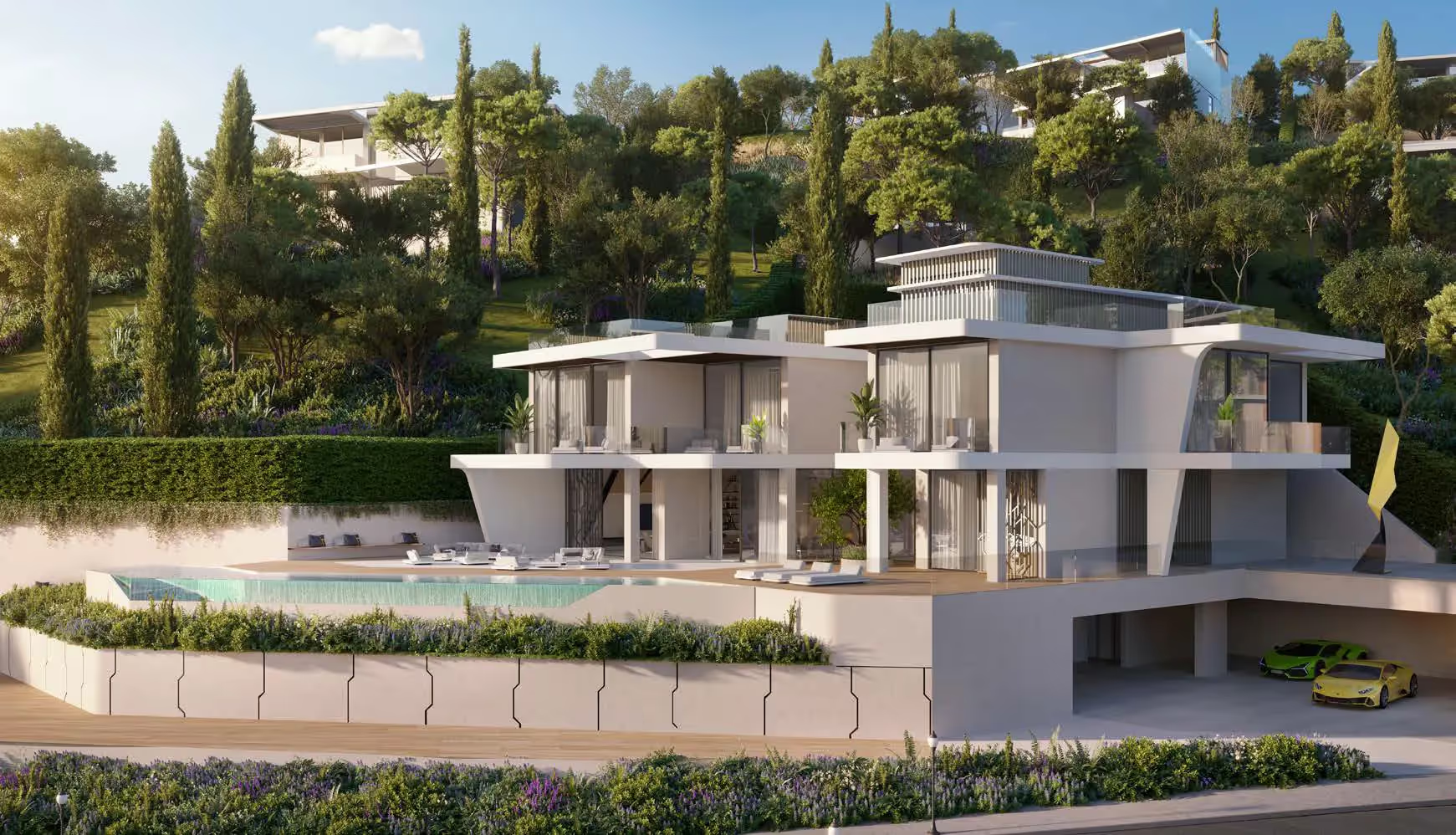
Branded residences are homes linked to a recognised brand, most often a hotel operator such as Ritz-Carlton, Raffles or Mandarin Oriental, but increasingly non-hotel names like Aston Martin, Bentley, Armani and Missoni. They typically pair the home with managed services to brand standards: concierge, housekeeping, amenities and, in many cases, a rental programme. Hotel operators still account for most completed stock, but non-hotel brands are a fast-growing share of the category (Knight Frank Global Branded Residence Survey 2025). The format is not new: New York’s Sherry-Netherland opened in 1927 and is widely credited as the first of its kind, while the modern hotel-branded model is usually traced to Four Seasons Boston in 1985. What has changed is the pace of supply.
Branded residences sell a managed lifestyle and a brand promise, but the price demands scrutiny.
Why branded residences look like a win.
The headline number that defines the category is the premium. Savills puts the 2026 global average at about 33% over comparable non-branded stock, unchanged year-on-year, splitting into roughly 30% in established urban cities and about 39% in resort markets (Savills Branded Residences 2025/26). The spread is by market type, not a flat number everywhere: established and emerging cities average around 30%, resorts around 39%, and emerging cities can reach as high as 47%, though Savills flags that emerging markets carry far higher variance, so the brand alone guarantees nothing. The case for paying the premium rests on what the brand actually delivers: amenities, scarcity, and a trust mark that can shorten time-to-sale.
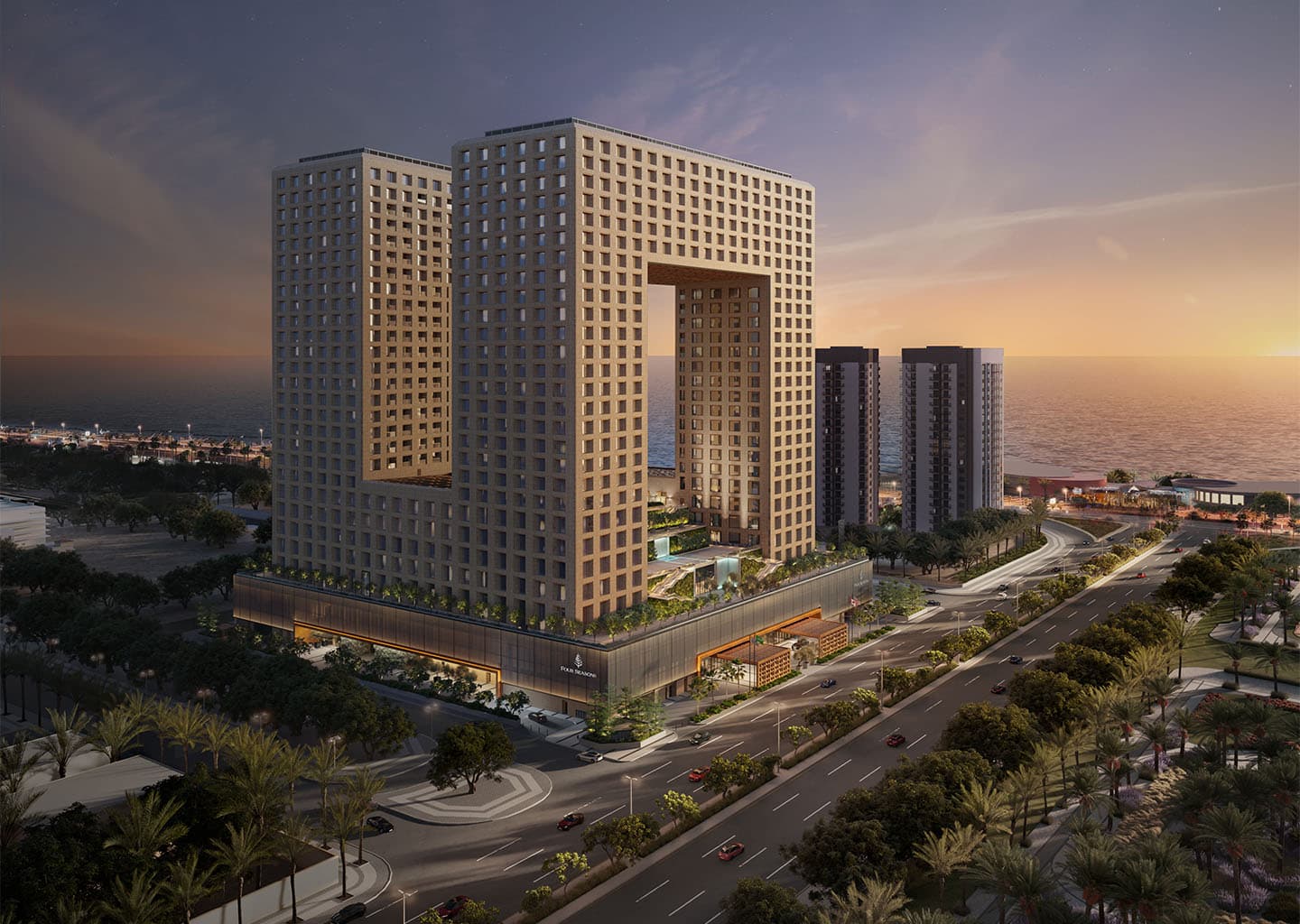
A brand like Four Seasons is a trust mark that can also move a property faster.
Rental appeal is the second pillar. Branded stock tends to command rental premiums and stronger occupancy in high-tourism markets, where the operator runs a turnkey letting and upkeep programme that suits absentee owners. The precise yield edge varies by market and is often overstated, so the honest framing is directional: a managed brand can support occupancy and rate, but a buyer should underwrite the actual numbers for the specific scheme rather than rely on a headline yield. Resale evidence points the same way, with branded units widely reported to resell at higher values than comparable non-branded stock, though the size of that uplift is market-specific.
Demand is also genuinely international and long-horizon. Knight Frank’s 2025 survey spans nearly 80 brands and more than 1,000 live and pipeline schemes across 83 countries, with North America the largest live region at about 32.7% of schemes and the Middle East about 15.9% of live stock but roughly 26.7% of the pipeline (Knight Frank, The Residence Report 2025/26). That weight of international, high-net-worth demand is what keeps the premium standing in prime markets.
| Market type | Branded premium | Read |
|---|---|---|
| Global averageSavills 2025/26 | ~33% | Unchanged YoY |
| Resort markets | ~39% | Pipeline tilting to resorts |
| Established and emerging citiesurban average | ~30% | Deepest, most liquid |
| Emerging citiesupper bound | up to ~47% | Higher premium, far higher variance |
Source: Savills Branded Residences 2025/26, as cited. Premiums are averages over comparable non-branded stock and vary by scheme. Indicative; not investment advice.

The risks branded buyers cannot ignore.
The premium is the first downside. By definition a branded home costs more than comparable non-branded stock, so a buyer is paying up front for a benefit that has to be recovered through resale uplift, rental performance or simply use and enjoyment. On top of that sit ongoing service and management charges, which are real and material and can carry a meaningful annual cost before the home earns a return. Those charges fund the very services that justify the brand, but they have to be underwritten honestly in any investment case.
Brand-execution risk is the second. The brand is only as good as the operator’s delivery, and a scheme that disappoints on service or management can lose the premium it charged for. Operator rules can also limit flexibility, restricting renovations or how an owner lets the property, which means buyers are often locked into the operator’s system. And the premium is not uniform: it is widest in resorts and emerging cities, where Savills flags far higher variance, and it can compress where comparable non-branded prime stock is already abundant, so the uplift that looks compelling in one market can be thin in another.

Who should invest in branded residences?
Branded residences fit a specific profile. They suit high-net-worth buyers who can absorb the entry price and the ongoing carry, and who value the managed, turnkey nature of the format, which is well suited to absentee and second-home ownership. Demand skews international and long-horizon, and Knight Frank confirms strong international and high-net-worth appetite for the segment without resting on a single buyer-demographic split. The qualitative fit matters more than any precise percentage: this is a category for patient capital, not for quick resale.
Long-term investors with a multi-year horizon benefit most, because the premium is best recovered through appreciation and use rather than a fast flip, and the carry rewards holding. Rental-focused buyers do best in high-tourism markets where the operator’s letting programme can sustain occupancy and rate. Flippers and budget investors should pass, as the entry premium and service charges make quick profits hard. For buyers in the deepest branded market, the live United Arab Emirates developments listing is the place to start.
Top markets to watch for branded residences.
A few markets concentrate the branded story in 2026. Dubai is the single largest: in 2024 the city recorded 4,261 branded-residence transactions worth about AED 7.8 billion, or roughly US$2.1 billion, with around 8,200 more branded units due within four years and the stock forecast to grow about 80% by 2030 (Knight Frank, via Zawya). South Florida around Miami and Fort Lauderdale is the established US hub, sitting within North America, the largest live region per Knight Frank. For a real price anchor in Dubai, Atlantis The Royal Residences on Palm Jumeirah list at an average near AED 9,600 per square foot in 2025, about US$2,600, a useful benchmark for the top of the branded market.
The trends driving the branded sector in 2026.
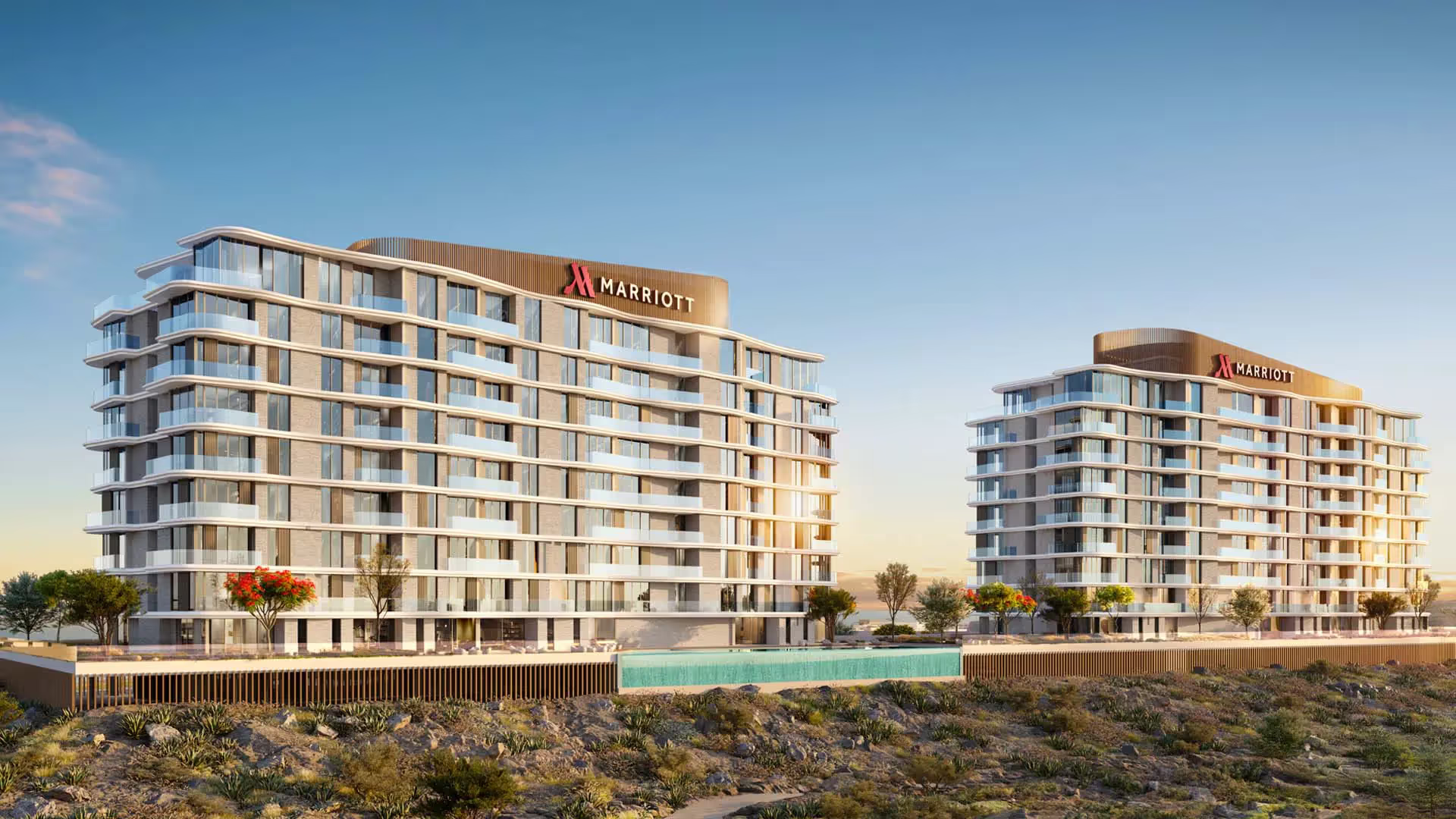
Three trends define the 2026 market. First, scale: Savills counts 764 schemes at end-2024 rising toward about 910 by end-2025, a roughly 19% annual increase, while Knight Frank counts 611 live schemes today and forecasts around 1,019 by 2030, taking the global unit count to about 162,000 by 2030, up from roughly 27,000 in 2011 (Knight Frank Global Branded Residence Survey 2025). Second, geography: MENA is the fastest-growing region, up about 187% over five years per Savills, and the pipeline has tilted toward resorts, now a little over half of contracted projects. Third, brand mix: non-hotel names such as Aston Martin, Bentley, Armani and Missoni are a growing share of stock, widening the category beyond the traditional hotel operators.
How to win with branded residences.
To make the premium pay, investors should follow a clear playbook.
- Pick proven markets. Favour deep, high-tourism markets like Dubai, the largest branded market, where demand and supply are both growing (Knight Frank, via Zawya).
- Stick to proven operators. Established hotel and design brands carry the firmest premium and the lowest execution risk.
- Budget for the carry. Allow for ongoing service and management charges on top of the entry premium, and underwrite them honestly for the specific scheme.
- Underwrite the actual numbers. Treat headline yields as directional and model the specific scheme’s rental programme and occupancy before you buy.
- Hold for the long game. The premium is best recovered over a multi-year horizon, not a fast flip.
Saudi Arabia is the clearest example of new branded supply arriving in 2026. Knight Frank reports about 1,685 branded units available and roughly 1,900 under development, with brands including Ritz-Carlton, Raffles, Aman, Armani, SLS, Jumeirah and Trump across Diriyah, Riyadh, Jeddah and the Red Sea, and around US$3.4 billion of private capital targeting the segment (Knight Frank, via Zawya). The live Saudi Arabia developments listing tracks these schemes as they come to market.

The bottom line on branded residences in 2026.
Branded residences can deliver for the right investor. The premium is real and well-sourced at about 33% globally in 2026, justified by amenities, scarcity and a brand trust mark that can support resale and rental appeal in prime, high-tourism markets. The segment is scaling fast, toward about 910 schemes by end-2025 and roughly 162,000 units by 2030, with MENA growing fastest and Dubai the deepest market. The costs are equally real: a meaningful entry premium, ongoing service charges, and brand-execution risk that can erase value if the operator underdelivers. For patient buyers in high-demand markets, branded residences can be a sound move, with Dubai the largest market and Saudi Arabia the freshest 2026 supply story. For others, comparable non-branded stock may offer better value. Choose proven operators, budget for the carry, and treat every figure here as indicative, not investment advice.
Advisory
Talk it through, privately.
An Omnia advisor on availability, structuring and timing across these markets.
 AvailableAl Shati, JeddahFour Seasons Private Residences, JeddahStarting fromSAR 6,716,214TypeResidencesExplore residence