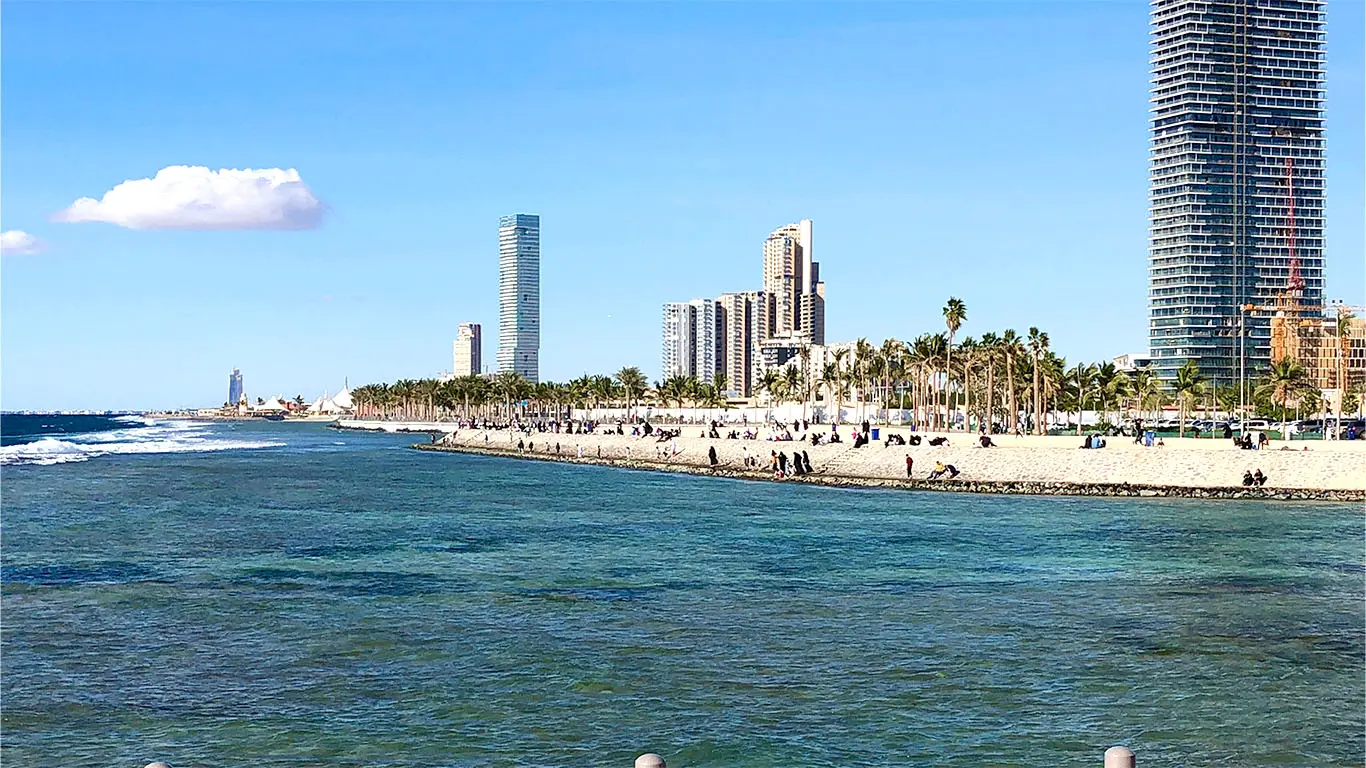


Jeddah has long been Saudi Arabia’s commercial gateway and its most internationally oriented big city. For foreign buyers, that matters in two ways. First, the market is deep, with a wide range of stock from new-build apartments to established villa districts. Second, the Kingdom’s regulatory direction is clearly toward tighter transparency and a more formal, registry-based system for property rights, with specific zones and controls for non-Saudi ownership.
This guide explains what foreign buyers need to know about visas and residency, ownership rules, and the practical purchase process in Jeddah, with a focus on what you can verify and document before you commit funds.
The legal baseline for non-Saudis buying in Jeddah
Saudi Arabia’s framework for non-Saudi ownership is now built around an updated “ownership by non-Saudis” law and its implementing rules and geographic scope document, which determine where ownership is permitted, what rights are available, and what caps or conditions apply. The Real Estate General Authority has made clear that ownership in Riyadh and Jeddah is available “within specific areas,” designed to maintain market balance, and that those areas will be defined in official geographic scope documentation.
A few practical implications flow from this approach:
- Location matters as much as the unit. The same apartment layout may be eligible in one zone and ineligible in another, depending on the official geographic scope map and rules.
- Registration is central. The framework emphasizes in-kind registration in the Real Estate Registry as a core requirement, not a paperwork afterthought.
- Ownership is not a substitute for immigration status. Property ownership and residency privileges are governed by separate systems. The law explicitly frames ownership as a regulated real estate right, not a gateway to broader privileges beyond what other laws provide.

Where foreigners can and cannot buy
Jeddah
REGA’s published guidance indicates that non-Saudi ownership is available in Jeddah within specific areas, subject to the geographic scope document and implementing regulation.
What this means in practice is that a buyer should treat “eligible location” as a due diligence item, verified with documentation tied to the official scope rules, not as a marketing claim.
Holy cities and restricted sites
Older Saudi real estate rules included clear restrictions on ownership in Makkah and Madinah for non-Saudis except in limited cases. The newer framework also contemplates geographic controls and special considerations.
Even if your target is Jeddah, this matters because some portfolios and development groups operate across the western region and may advertise “near” or “gateway” offerings. You should confirm the precise municipal boundaries and the zone eligibility for any property marketed with religious tourism proximity.
Visa and residency pathways that matter in real estate deals
Foreign buyers typically fall into one of three practical categories in day-to-day transactions:
Premium Residency holders
Saudi Arabia’s Premium Residency Center is the government platform that issues Premium Residency permits and lists multiple products, including a product explicitly aimed at property owners, alongside investor and entrepreneur categories.
Premium Residency can be relevant because it may simplify practical steps like banking, contracting, and proving lawful presence and identity in the Kingdom, depending on your personal circumstances and the specific residency product you hold.
Legally resident expatriates
Under the earlier framework for non-Saudi individuals, non-Saudi natural persons legally residing in the Kingdom could acquire real estate for private residence after obtaining permission from the Ministry of Interior.
In today’s market, you will still encounter transaction workflows built around the logic of lawful residency and identity verification, even as the new ownership regime evolves.
Corporate and investment structures
Foreign companies and Saudi-incorporated entities with foreign shareholders may have different routes to acquire real estate rights, subject to licensing and implementing regulations. The updated ownership-by-non-Saudis framework also sets out categories and controls for companies and other entities.
If your purchase is linked to business activity, staffing, or a development plan, professional advice on structuring is essential because the compliance burden often shifts from personal documentation to corporate licensing and disclosure.
What you can buy and what “ownership” can mean
Saudi Arabia’s real estate framework distinguishes between:
- Full ownership rights
- Other in-rem rights, such as usufruct and easements, which may be time-limited or capped in certain zones
This is not academic. Some developments may offer long-term rights that look like ownership to a lay buyer but are legally different. Always confirm the exact right being transferred, how it is registered, and what restrictions attach to it.
Fees and taxes you must budget for
Real Estate Transaction Tax
Saudi Arabia applies a 5 percent Real Estate Transaction Tax on real estate transactions, under ZATCA’s Real Estate Transaction Tax law and regulations.
Additional fee for non-Saudi dispositions
REGA’s published Q and A indicates that the updated framework contemplates a total fee of 10 percent for non-Saudi ownership in certain cases, consisting of the 5 percent transaction tax plus an additional fee that can be up to 5 percent.
What to do with this information:
- Treat 5 percent as the baseline tax reference point you can confirm directly with ZATCA.
- Treat any additional non-Saudi fee as a regulated component that may depend on the implementing regulation and the category of buyer and property. Build contingency into your budgeting until your specific transaction path is confirmed.
.jpg)
The purchase process in Jeddah step by step
Saudi real estate transactions are increasingly designed to be verifiable through official digital channels and registries. The key is to avoid relying on screenshots and sales decks when government verification tools exist.
Step 1 Choose an eligible property and verify the zone
Before you negotiate price, confirm the unit is in an area permitted for non-Saudi ownership under the geographic scope rules applicable to your category.
If the seller or broker cannot provide a clear eligibility basis, treat that as a red flag. In a zone-based regime, “should be fine” is not due diligence.
Step 2 Verify the title deed and registration status
REGA provides a Title Deed Verification e-service that allows users to verify title deeds and property records issued by the Real Estate Register.
Your goal at this stage is to confirm:
- The property record exists in the official register
- The seller’s identity aligns with the registered owner or authorized representative
- There are no obvious inconsistencies in unit identifiers, boundaries, or the type of right being sold
Step 3 Confirm off-plan protections if buying a unit under construction
If you are buying off-plan, confirm the project is regulated under Wafi, the official program responsible for licensing off-plan sales and lease activity.
This is one of the most important protections a foreign buyer can insist on, because it is designed to regulate developers and projects before sales proceeds.

Step 4 Negotiate terms with financing and transfer mechanics in mind
Two common pitfalls for foreign buyers:
- Currency and transfer logistics that are not aligned with Saudi banking requirements
- Payment schedules that do not match the legal transfer milestones
You should align installment schedules, escrow or payment triggers (where applicable), and handover clauses to the documented transfer process rather than informal promises.
Step 5 Execute the ownership transfer through official Ministry of Justice channels
Saudi Arabia’s Ministry of Justice has centralized many legal services via Najiz, a platform created to deliver MoJ services digitally. Saudi Vision 2030
Real estate ownership transfer workflows are commonly routed through Najiz-based services and notarization steps, depending on the transaction type and parties.
Step 6 Register, pay applicable taxes and fees, and keep your full audit trail
At closing, ensure you retain:
- Proof of tax payment and any required fee payments
- Updated registration or deed confirmation
- Signed contracts and any developer disclosures
- Identification and authority documents used in the transaction
In a disclosure-based regime, your best protection later is a clean file that shows you complied with every required step.

The foreign buyer checklist for Jeddah
Documents you will likely need
- Valid passport and Saudi identity documentation relevant to your status
- Proof of lawful residency or premium residency where applicable
- Bank documentation supporting funds source and payment routing
- If buying via a company, incorporation documents and licensing relevant to the transaction category
Questions you should insist on answering in writing
- Is this property inside a zone permitted for my category under the geographic scope rules
- What right is being transferred full ownership or another in-rem right
- Is the title deed verifiable through official services
- If off-plan, is the project licensed under Wafi
- What exact taxes and fees apply including transaction tax and any additional non-Saudi fee
Common mistakes foreign buyers make in Jeddah
Treating “new law” headlines as permission everywhere
The reality is a controlled rollout tied to zones and implementing regulations. You can’t rely on broad statements when the system is explicitly geographic and category-based.
Buying off-plan without checking Wafi licensing
Off-plan is not automatically risky, but unlicensed off-plan sales are where buyers most often lose leverage. Wafi exists specifically to regulate this segment.
Skipping official verification tools
If you do not verify deeds and records through official channels, you are accepting unnecessary risk in a market that is deliberately building digital verification into its governance.
Under-budgeting taxes and fees
Foreign buyers should model the 5 percent transaction tax as a baseline and treat additional non-Saudi fees as a potential overlay depending on the final implementing details for their transaction type.

Become a member to Access our full network. The ultimate community for global investors.
Reccomended for you


Related reading