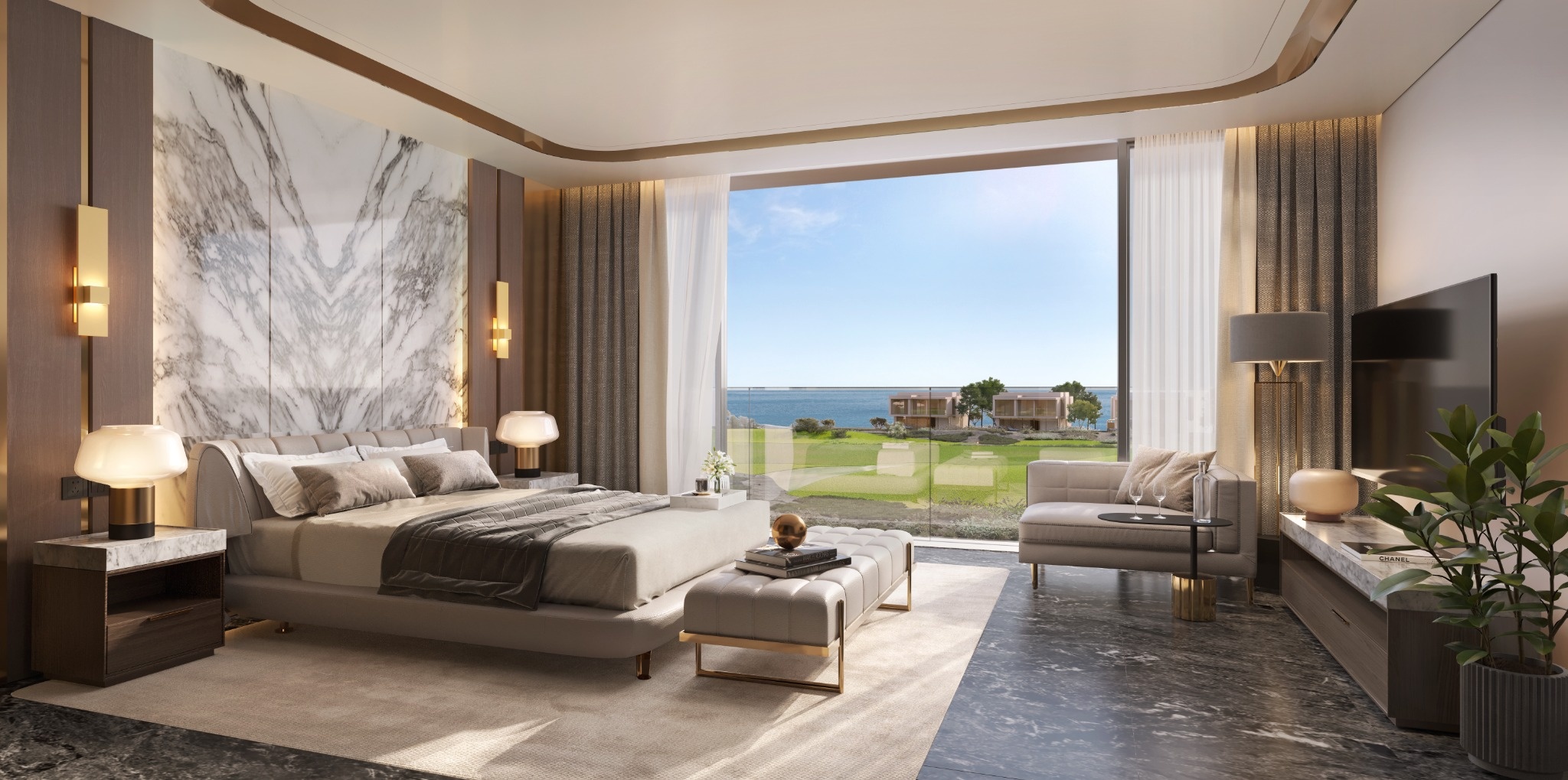


Dar Global, the international arm of Saudi developer Dar Al Arkan, has partnered with the Trump Organization to launch a Trump-branded luxury real estate development in Diriyah, Saudi Arabia. Diriyah is a historic town on the outskirts of Riyadh undergoing a $63 billion government-backed redevelopment into a high-end tourism and cultural destination.
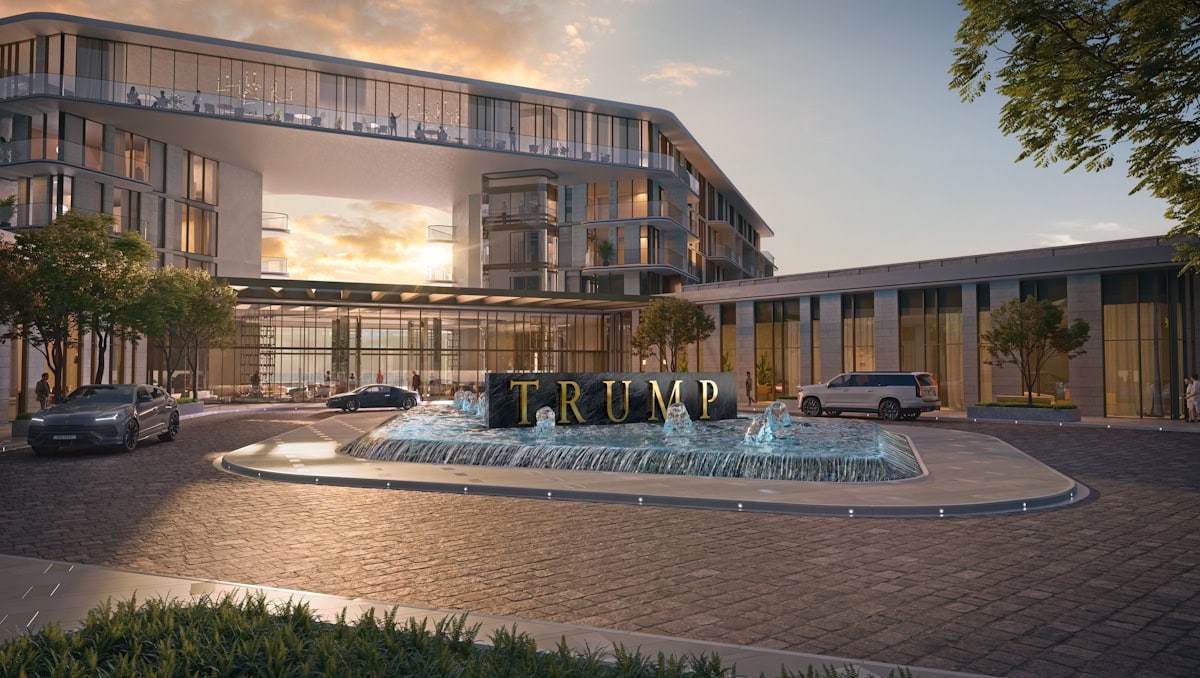
The new venture in Diriyah will mark the fourth and fifth collaborations between Dar Global and the Trump Organization, building on their earlier projects in Oman, Dubai, and Jeddah. While detailed plans have yet to be fully disclosed, the project is expected to include a Trump-branded luxury hotel or mixed-use tower integrated into the Diriyah master plan.
Development Scale and Context
Both companies have emphasized the ultra-luxury nature of the development, aligning it with the Trump brand's upscale image and Diriyah's positioning as a world-class destination. The Diriyah project joins other marquee ventures in the partnership's portfolio, which already features Trump Towers in Jeddah and Dubai and a $4 billion golf resort project in Oman.
The scale of the Diriyah development provides an opulent canvas for the Trump-branded project. Diriyah's master plan spans 5.4 square miles and will include:
- Dozens of luxury hotels and branded residences
- Office complexes and retail districts
- Cultural attractions and museums
- Heritage preservation areas
Luxury Brand Partnerships
Global luxury names are already on board. Armani and Ritz-Carlton have signed on to develop their own high-end towers in Diriyah. The Trump Organization's addition will join this roster of elite brands, further elevating the development's profile.
Dar Global's strategy has been to partner with internationally renowned luxury firms to create landmark properties. The Trump brand's inclusion is intended to amplify Diriyah's appeal to affluent investors and visitors alike.
In scope, the project is expected to be a mixed-use luxury development, likely featuring:
- Five-star hotel accommodations
- High-end private residences
- Exclusive amenities and services
- Premium dining and entertainment facilities
Though exact specifications are pending official announcement, industry observers anticipate a flagship Trump International hotel and residences concept, given the pattern of Dar Global-Trump collaborations in other cities.
Timeline and Expected Completion
Current Project Status
Project timelines are still emerging. The Diriyah Trump venture was only publicly signaled in late 2024 and is in the final stages of negotiation as of 2025.
Dar Global and the Trump Organization first announced "two new Riyadh real estate projects" in December 2024, a statement widely understood to reference the Diriyah development alongside another Riyadh-area project. At that time, the companies provided no specific details or groundbreaking dates.
Recent Developments
By May 2025, former U.S. President Donald Trump, who returned to office in 2025, was given a personal tour of Diriyah during a state visit. Talks accelerated around incorporating a Trump-branded site into the project.
Jerry Inzerillo, CEO of the Diriyah development, confirmed in November 2025 that "nothing [is] announced yet, but [it's] soon to be," calling an agreement "just a matter of time." This suggests that a formal deal announcement is imminent, likely followed by design finalization and construction commencement soon thereafter.
Projected Completion Timeframe
The Diriyah megaproject's overall timeline provides some guidance on when the Trump component might come online. Launched in 2020, the broader Diriyah redevelopment has been opening in phases and is slated to have its major infrastructure completed by 2027.
The development is already partially open to tourists as heritage sites and initial venues have been restored. Work is ongoing to transform the area into a fully-fledged luxury destination by the end of the decade.
According to project officials, Diriyah will be a centerpiece of Saudi Arabia's Vision 2030 goals by hosting dozens of hotels and world-class attractions by around 2028-2030.
Given this schedule, the Trump-branded hotel/residences, once officially agreed, would likely aim for completion within the latter half of the decade, potentially opening doors around 2027-2028 to coincide with Diriyah's grand debut.
Construction and Development Milestones
Eric Trump, the Trump Organization's Executive Vice President, indicated in late 2024 that the company was planning a "tower in Riyadh" as part of two upcoming Saudi projects, signaling that internal planning was already underway.
Investors and observers can watch for official ground-breaking announcements and construction milestones in 2026. If contracts are inked by early 2026 as expected, the project could break ground that year.
Key milestones will include:
- Unveiling of architectural designs
- Sales launches for residential units
- Construction commencement
- Phased completion targets
- Hotel and residence opening dates
Diriyah Company, the PIF-owned developer managing the overall project, has partnered with global construction and engineering firms like Parsons to fast-track development. Parsons signed on to oversee Phase 2 infrastructure in late 2025, so the groundwork for rapid progress is in place.
By 2027, Diriyah's core infrastructure (roads, utilities, public spaces) will be in place, likely enabling the Trump tower or resort to be fitted out and finished soon after.
While an exact completion date isn't public, the project is positioned to advance swiftly once formalized, dovetailing with Diriyah's late-2020s completion target under Vision 2030.
Architectural Design and Style
Heritage Meets Luxury
One of the most distinctive aspects of the Diriyah project is its architectural vision, which carefully blends modern luxury with traditional Saudi heritage aesthetics.
Diriyah is the site of At-Turaif, a UNESCO World Heritage Site and the 300-year-old ancestral home of the Saudi royal family. Accordingly, the master plan emphasizes Najdi architectural design, characterized by:
- Mud-brick structures
- Geometric patterns
- Earth-toned facades
- Traditional courtyard layouts
This ethos will extend to all new developments in Diriyah, including the Trump-branded project.
Design Integration
Parsons Corporation, the American engineering firm involved in Diriyah's construction, highlighted that the development is using "the latest technology and urban planning practices blended with the city's traditional Najdi architecture design, which dates back 300 years."
Such guidance suggests that even a modern Trump hotel or tower will incorporate elements like traditional motifs, courtyard layouts, and adobe-like exteriors to harmonize with Diriyah's cultural context.
Expected Architectural Features
While the specific architectural plans for the Trump project have not been released, the involvement of the Trump Organization implies a fusion of the brand's signature opulence with Diriyah's heritage style.
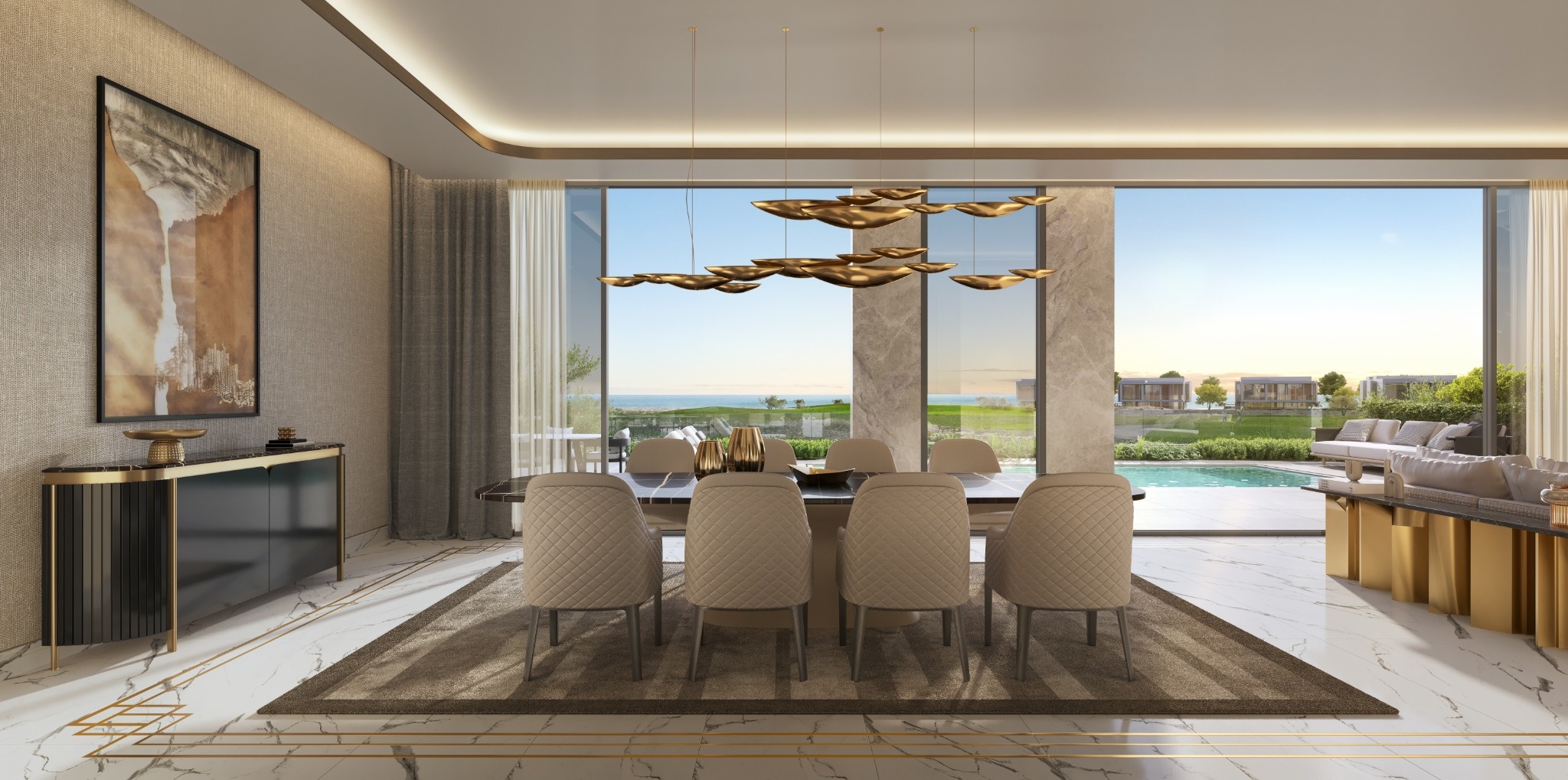
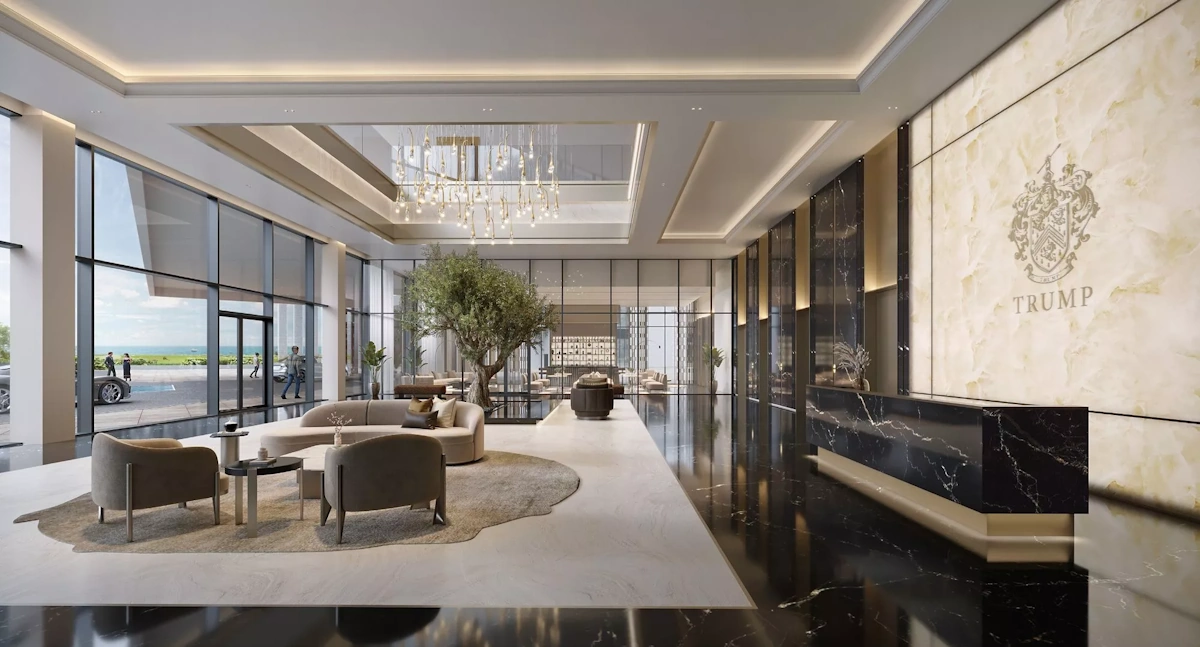
Trump-branded properties worldwide often feature lavish interiors including marble, gold accents, and grand lobbies. We can expect interior design and amenities that meet those luxury standards.
However, externally the design will likely respect Diriyah's strict guidelines to maintain visual unity with the historic surroundings. This could result in a unique Trump property: one that is luxurious yet low-rise or earth-toned, potentially adopting the fortress-like silhouette common to Diriyah's architecture rather than a gleaming glass skyscraper.
Balancing Tradition and Modernity
Diriyah's plan does allow for larger structures. Some towers are planned on the periphery of the site, but even those are being styled in a way that doesn't clash with the old city's skyline.
Already confirmed in Diriyah are ultra-luxury hotels like an Armani Hotel and a Ritz-Carlton property, which presumably will follow similar design principles of "modern inside, heritage outside" to preserve the character of At-Turaif.
The Trump development is expected to follow suit. Architecture and design will be a balancing act: The project must deliver the extravagance and comfort befitting both the Trump brand and high-end international travelers, while externally honoring the 300-year-old Saudi architectural vernacular.
Cultural Authenticity
This approach aligns with Diriyah's positioning as a place where visitors can experience authentic Saudi culture in a luxurious setting. As Pierre Santoni of Parsons noted, Diriyah is about creating an "iconic mixed-use destination that celebrates Saudi's rich culture and heritage" alongside modern urban development.
It is reasonable to expect features such as:
- Sand-colored stone facades
- Arabesque detailing
- Palm-lined courtyards
- Rooftop wind towers
- State-of-the-art interior facilities
- Premium spas and dining
- Penthouse suites
Once designs are unveiled, they will likely draw global attention as an architectural case study in marrying heritage with brand-led luxury.
Investment Scale and Financial Details
Overall Project Valuation
The investment scale of the Dar Global-Trump project in Diriyah is substantial, although exact figures have not been publicly disclosed.
The entire Diriyah redevelopment is one of Saudi Arabia's most expensive giga-projects, valued at roughly SAR 238 billion (US$63.2 billion) as of 2025. This budget covers massive infrastructure works and dozens of sub-projects including hotels, museums, entertainment venues, and residential areas.
The Trump-branded development will represent a slice of this broader program.
Comparable Project Investments
For context, similar Trump ventures in the region have carried hefty price tags:
Trump Tower Jeddah: Launched in late 2024, this 240-meter skyscraper has a budget of approximately US$530 million.
Trump Plaza Jeddah: Announced as a $1 billion mixed-use complex.
Trump International Golf Resort, Oman: Part of the AIDA project, this development is within a larger $4 billion master plan.
Based on these analogues, industry experts speculate the Trump Diriyah development could involve an investment on the order of several hundred million dollars up to around $1 billion, depending on its scale and components.
Investment Structure
From an investment structure standpoint, the Trump Organization is not expected to invest significant capital directly. Instead, it will lend its brand and expertise under a licensing and management arrangement.
In recent years, the Trump Organization's foreign projects have predominantly been licensing or joint venture deals. Local partners like Dar Global finance and build the property, while Trump's company earns fees for branding, design input, and possibly management of a hotel or club.
This appears to be the case here: Dar Global is the developer bearing the development costs, while the Trump Organization will reap licensing revenue and a share of profits without having to outlay construction capital.
Licensing Revenue
According to a New York Times report, Dar Global paid the Trump Organization approximately $21.9 million in licensing fees in 2024 alone for various projects. These payments likely encompass deals in Oman, Dubai, and Saudi Arabia (Jeddah) that were signed or in progress during that year.
We can infer that the Diriyah project's financial arrangement will add significantly to those figures once formalized. Dar Global's rapid expansion of Trump-branded ventures has created a steady stream of income for the Trump Organization. Licensing arrangements are lucrative for Trump's business.
Developer Capacity
As for key financial details available to date, the companies have not released the projected value or budget of the Diriyah Trump project specifically.
However, Dar Global did announce that it unveiled ten landmark projects in 2024 with a combined value exceeding US$1.9 billion across Saudi Arabia, UAE, Qatar, Oman, and Spain. Among these were the Trump Jeddah Tower (mentioned above at $530M) and other non-Trump projects, indicating Dar Global's capacity to mobilize roughly a couple of hundred million dollars per project on average.
For Diriyah, given its prominence, the investment might be on the higher end of Dar's project spectrum. The partnership's second Riyadh project, also announced in December 2024, "Neptune by Mouawad" (a luxury villa community), was valued at $230 million.
The Trump development, being potentially a large hotel or mixed-use tower, could surpass that.
Government Support
The involvement of Saudi Arabia's Public Investment Fund (PIF) in Diriyah means financing for infrastructure and enabling works is well-supported at the state level.
In October 2025, for example, a $56 million contract was awarded to Parsons just for phase-two infrastructure design. With such backing, financing risk is relatively low, and global investors may be invited at later stages.
Saudi officials have indicated that foreign property ownership in key projects will be opened up by 2026.
Market Performance and Returns
For investors and stakeholders, an important financial detail is that this project is part of a government-led initiative. This implies that incentives such as tax breaks and long-term land leases could be in place to ensure viability.
The return on investment for Dar Global will come from sales or leasing of the Trump-branded units and the premium that the Trump name can command in the luxury market.
If Trump-branded residences are sold (as in other Trump projects), they will likely be priced at the top tier of the market, targeting wealthy Saudis and international buyers who value the exclusivity.
Early indications show strong local appetite for Diriyah's upscale offerings. Over $4 billion in residential real estate at Diriyah has already been sold, mostly to Saudi buyers, even in the project's early phases. That bodes well for the commercial success of a Trump-branded residence or hotel, which would be positioned as a trophy asset in the development.
Financial Transparency
While precise numbers for the Trump Diriyah project aren't public yet, all signals point to a major investment running into the high hundreds of millions of dollars, underwritten by Saudi Arabia's development ambitions and Dar Global's funding.
The Trump Organization stands to benefit through multi-million-dollar licensing and management fees over the life of the project, continuing a profitable partnership that has already brought it significant revenue in 2023-2024.
As the project progresses, more granular financial details (such as cost breakdowns, expected revenue, and perhaps public market impacts for Dar Global, which is listed on the London Stock Exchange) are likely to be revealed to maintain investor transparency.
Strategic Motivations for Dar Global and Trump Organization
Dar Global's Strategic Objectives
Why are Dar Global and the Trump Organization pursuing this project? For both parties, the Diriyah collaboration serves strategic goals that extend beyond just the immediate profit of a single development.
From Dar Global's perspective, partnering with the Trump Organization is a strategic move to bolster its portfolio with internationally recognizable brands and to attract a global clientele to its projects.
Dar Global (LSE: DAR) has a stated mission of "redefining the global luxury real estate landscape" and delivering projects with high investment potential. By associating with marquee names like Trump, Dar Global differentiates its developments in a crowded market.
Brand Value and Market Positioning
The Trump brand carries prestige in certain investor circles. It is associated with luxury, high standards of quality, and a kind of exclusivity that can justify premium pricing.
The Diriyah project, in particular, is aimed at making Saudi Arabia a new hotspot for luxury travel and investment. Having a Trump-branded property in Diriyah is likely to draw international attention and signal that the development is open to global high-net-worth individuals.
Broader Partnership Strategy
Dar Global's partnership with Trump is part of a broader strategy of collaborations with luxury lifestyle brands and designers. Recent projects include:
- Aston Martin-designed residences in the UAE
- Missoni-branded homes in Spain
- Villas project with fashion label Elie Saab in Qatar
Each of these tie-ups (Trump included) is about creating a unique value proposition.
In Saudi Arabia's case, Dar Global likely also values the Trump Organization's experience in hospitality and resort development, which can contribute operational know-how to make the Diriyah venture world-class.
Alignment with Vision 2030
By delivering high-profile projects like this, Dar Global strengthens its reputation as a "leader" in luxury real estate development and aligns itself with the Saudi government's Vision 2030 initiatives. This potentially opens doors for future government-backed opportunities.
In short, Dar Global's motivation is to leverage the Trump brand to enhance project appeal and to cement its role as a key player in bringing Vision 2030 projects to fruition, thereby attracting both investors and buyers to its developments.
Trump Organization's Strategic Rationale
From the Trump Organization's perspective, the Diriyah project represents an opportunity to expand its international footprint and revenue in a lucrative emerging market.
After Donald Trump's first term as U.S. president (2017-2020), the company put most foreign deals on hold due to ethical scrutiny. However, upon leaving office (and especially during Trump's campaign and subsequent second term starting 2025), the Trump Organization once again actively pursued overseas deals.
The Middle East, and Saudi Arabia in particular, became one of its most important regions for growth.
Low-Risk Revenue Model
Partnering with Dar Global has given the Trump Organization a conduit to participate in the Gulf's real estate boom without shouldering large capital costs.
According to Eric Trump, the company began planning multiple projects with Dar Global, including towers in Saudi Arabia and the UAE, as part of a major expansion strategy.
The strategic rationale for Trump's business is clear: The Gulf's mega-developments (like Diriyah) offer a chance to have the Trump name on flagship properties that will be heavily marketed worldwide, aligning with Trump's brand image of grandiosity and success.
Financial Benefits
Financially, the licensing model provides steady income streams. As noted, Dar Global's deals delivered nearly $22 million in fees to the Trump Organization in one year. These are high-margin revenues given that the Trump Organization doesn't have to invest equity or assume construction risk.
The Diriyah deal, if finalized, would further entrench the Trump brand in the Middle East, potentially unlocking more deals and networking benefits. This includes relationships with Saudi's Public Investment Fund and other developers for future projects.
Diplomatic and Business Synergies
It also leverages the personal rapport Donald Trump has cultivated with Saudi leadership to turn diplomatic goodwill into business opportunities.
In broader terms, the Trump Organization's motivation is to capitalize on the Gulf region's trillion-dollar development wave, essentially riding the Vision 2030 momentum, to secure a global pipeline of Trump-branded properties.
This diversifies its portfolio beyond the U.S. and generates international income that could be resilient even if other markets slow down.
Mutual Benefits
Both parties also share a mutual strategic benefit: global visibility.
The Diriyah project is poised to garner extensive media coverage (given its historic and political significance), which in turn shines a spotlight on Dar Global's capabilities and the Trump brand's prestige.
Successfully executing a high-profile project in Saudi Arabia could lead to increased investor confidence in Dar Global (important for a publicly traded company) and could revive the Trump Organization's image as a global real estate powerhouse.
Both see the Diriyah collaboration as a keystone in their growth strategies: Dar Global in cementing international leadership in luxury real estate, and Trump Org in cementing its return to international deal-making on a grand scale.
Economic, Social, and Political Implications
Economic Impact
The planned Trump-branded project in Diriyah carries a range of economic, social, and political implications for stakeholders in Saudi Arabia and beyond.
On the economic front, the project is expected to contribute positively to Saudi Arabia's diversification efforts.
By anchoring a high-end hotel/residential development in a heritage tourism hub, it will help generate employment (both construction jobs in the short term and hospitality/management jobs in the long term) and stimulate the local economy.
Tourism and Employment
Diriyah's overall development is projected to create a "walkable city" for about 100,000 residents and a workplace for tens of thousands of people, while drawing nearly 50 million visits per year in the future.
The Trump project, as part of this larger ecosystem, will likely be a magnet for luxury tourism and business travel. It could attract wealthy tourists who might also visit other Saudi attractions, thereby increasing tourism spend per capita.
Additionally, it may draw international events (for instance, openings, conferences, or golf/entertainment events if facilities permit) given the Trump brand's marketing clout.
Real Estate Market Effects
There's also a real estate market impact. Branded residences tied to luxury hotels often command a premium, so any Trump-branded condos or villas in Diriyah could set new price benchmarks in Riyadh's property market.
This bodes well for investors and could have a halo effect, raising values of surrounding properties.
Foreign Investment Signal
From a macro perspective, successful execution of this project sends a message that Saudi giga-projects are viable and can attract top-tier international partners. This might encourage more foreign investment into the kingdom.
Saudi officials have been pitching the country's $1.7 trillion slate of Vision 2030 projects to global investors. A Trump-branded success story in Diriyah would be a flagship example to showcase.
Saudi Arabia plans to open sectors like real estate to foreign ownership. By 2026, foreign individuals will be allowed to buy into developments like Diriyah.
A Trump project could therefore become a focal point for wealthy foreign buyers, injecting foreign capital into the Saudi economy and supporting the Vision 2030 goal of increasing foreign direct investment.
Social and Cultural Implications
Socially, the integration of the Trump brand into Diriyah is a symbol of Saudi Arabia's evolving cultural landscape.
Diriyah itself is being carefully curated as a cultural heritage site fused with modern leisure. It's a place where one can stroll through 18th-century palace ruins by day and dine at a Michelin-starred restaurant or shop in a luxury mall by night.
The Trump project contributes to this narrative of an opening society that still honors its past. It shows that Saudi Arabia is willing to embrace Western brands and personalities as part of its social fabric, a notion that would have been unthinkable in previous decades when the kingdom was more closed-off.
Domestic Social Signaling
The presence of a Trump hotel may also have social signaling effects internally. It aligns with Crown Prince Mohammed bin Salman's push for a more globalized lifestyle for Saudis, where entertainment, tourism, and luxury are more accessible at home. This reduces the need for Saudis to travel abroad for such experiences.
That said, the Trump name can be polarizing globally, and its arrival in Saudi Arabia has prompted mixed reactions.
Within the country and region, some may view it simply as another prestigious brand coming in (much like a new Four Seasons or an Aman resort) and thus a point of pride. Saudi media highlighted Trump's visit to Diriyah as an honor, noting that he "expressed his admiration" for the project's vision, which suggests local elites welcome his endorsement.
Congressional Scrutiny
Democratic lawmakers in the U.S. have already requested investigations. For example, calling on the Department of Justice to consider a special counsel into the broader web of Trump family dealings with the Saudis. This includes a $2 billion investment Saudi's PIF made in Jared Kushner's fund shortly after Trump left office.
While Trump and his team have denied any impropriety (Trump insists he has "nothing to do" with the family business while in office and that his sons handle it independently), the perception issue remains a significant political topic in Washington.
Impact on U.S.-Saudi Relations
This could have implications for U.S.-Saudi relations. A deal like Diriyah's could either cement close ties (if viewed favorably by the administration) or become a point of contention and increased scrutiny.
Regionally, the political response has been more muted or pragmatic. In the Gulf, high-profile business partnerships with politically connected figures are not uncommon and are often seen as savvy moves to build alliances.
Saudi officials likely view the Trump partnership as beneficial. It not only enhances Diriyah's profile but also potentially gives them goodwill with a U.S. leader known to be friendly to the kingdom.
Regional and International Criticism
However, rival regional powers or media critical of Saudi Arabia have seized on the Diriyah deal to cast MBS's relationship with Trump in a negative light.
For instance, Iranian state-affiliated media characterized the luxury deal as evidence of corruption and "pay-for-play" diplomacy, implying that Saudi Arabia is effectively buying influence in Washington by cutting business deals with Trump.
Such characterizations feed into a narrative of skepticism about the motives behind Saudi's lavish investments and its relationship with the Trump family.
Internationally, beyond the U.S., there may be some diplomatic side-eyes as well. European officials and others have generally been cautious about MBS, and seeing a U.S. president potentially personally benefit from ties with him could complicate multilateral diplomacy (for example, on issues like human rights or oil policy).
Potential Positive Outcomes
On the flip side, if managed transparently, the project could simply be seen as a natural outcome of Trump's pro-business stance and Saudi Arabia's investment drive.
Some analysts argue that having an American brand deeply embedded in a Vision 2030 project could align U.S. interests with the success of Saudi's reforms, possibly creating a new form of soft diplomacy through business.
Supporters might frame the project as strengthening economic bonds between a major U.S. enterprise and Saudi Arabia, reinforcing a long-standing alliance in a new domain (tourism and culture).
Crown Prince MBS has been keen to showcase such partnerships as a sign of international confidence in Saudi Arabia.
Domestically in the U.S., however, even some Republicans might be uneasy about the optics. Overall, the political implications are a double-edged sword: economically and diplomatically it ties Saudi Arabia closer to Trump's America, but ethically it raises questions that echo in both Washington and the international community.
Alignment with Saudi Vision 2030 and Diriyah's Development Goals
Vision 2030 Framework
The Diriyah project, and by extension the Dar Global-Trump development within it, is deeply intertwined with Saudi Vision 2030, the kingdom's ambitious blueprint for economic and social transformation.
Vision 2030, launched by Crown Prince Mohammed bin Salman in 2016, aims to diversify Saudi Arabia's oil-dependent economy by investing heavily in sectors like tourism, entertainment, culture, and real estate.
Diriyah Gate is a flagship initiative under this vision. It seeks to transform the historic birthplace of the Saudi state into a global tourism and lifestyle destination, symbolizing the balance of preserving heritage while embracing modernization.
The inclusion of a Trump-branded luxury development is very much in line with the Vision 2030 ethos of partnering with global brands and investors to bring world-class attractions to Saudi soil.
Cultural Heritage and Tourism Goals
Firstly, Diriyah's focus on heritage and culture aligns with Vision 2030's goal of strengthening national identity and sharing Saudi culture with the world.
By developing the At-Turaif district (a UNESCO site) into an open-air museum surrounded by upscale museums, galleries, and heritage-themed hotels, Saudi Arabia is asserting its cultural soft power.
The Trump project will need to operate within this context, likely offering visitors an immersive Arabian historical ambiance with the comforts of a top-tier international hotel.
This supports the Vision 2030 objective of boosting tourism to 100 million annual visits by 2030, by diversifying attractions beyond religious tourism to include cultural tourism.
Diriyah is expected to be a major contributor to that target, with its goal of 50 million visits a year in the future.
President Trump's personal interest in Diriyah, evidenced by his visit and expressions of admiration for its preservation efforts, can be seen as a validation of the Vision 2030 approach. Using high-profile figures to endorse and draw attention to these projects amplifies their global reach.
Investment Hub Strategy
Secondly, Vision 2030 emphasizes making Saudi Arabia an investment hub.
The Public Investment Fund (PIF), Saudi's sovereign wealth fund, is the driving force and financier of Diriyah and other "giga-projects" (like NEOM, Qiddiya, the Red Sea Project, etc.).
PIF's involvement ensures that projects are well-capitalized and can pursue partnerships with top global firms.
The Dar Global-Trump partnership in Diriyah exemplifies how Vision 2030 projects attract such collaborations. It's effectively a public-private partnership model:
- The Saudi government (via PIF and Diriyah Company) provides land, infrastructure, and regulatory support
- Private developers (Dar Global) provide capital
- International brands (Trump) provide expertise and branding
This model is what Vision 2030 envisions for many sectors: leveraging foreign technology and brands to build local capacity.
The Trump Organization, by participating, is implicitly supporting Vision 2030's success, which could have positive ripple effects. For example, encouraging other U.S. companies or brands to consider investing in Saudi projects.
The project also highlights Vision 2030's message that Saudi Arabia is "open for business" and eager to work with international partners, even those as prominent and sometimes controversial as the Trumps.
Job Creation and Economic Diversification
Furthermore, the Diriyah development's goals of job creation and economic diversification are central to Vision 2030.
Diriyah Company's CEO, Jerry Inzerillo, noted that the $63 billion development will deliver a human-centric, walkable city that provides tens of thousands of jobs and homes, contributing to a vibrant new community.
The Trump development will be part of hospitality and real estate sectors, areas Saudi Arabia wants to grow. It will provide training and employment for Saudis in:
- Hospitality management
- Tourism services
- Property management
This aligns with Vision 2030's human capital development pillar.
Also, by creating a high-profile tourist draw, it helps Saudi Arabia capture more of the luxury tourism market, which traditionally went to cities like Dubai.
This intraregional competitive angle is tacit in Vision 2030: to make Saudi Arabia itself a destination rather than just a source of outbound tourists.
Complementary Development Strategy
In this context, Diriyah (with its mix of history and luxury) and NEOM (with futurism and mega-scale) are complementary. One looks to the past and one to the future, but both aim to put Saudi on the map for international travelers and investors.
Notably, Vision 2030 includes social liberalization in tandem with economic projects. The presence of Western brands and entertainment in Diriyah is also a form of social change.
Five years ago, concerts, cinemas, and tourist visas were rare in Saudi Arabia. Now they are common.
The Trump project, being a luxury venue, might host international events or allow practices that were once novel in the kingdom. For example, serving non-alcoholic "mocktails" in a country that still bans alcohol, or hosting mixed-gender gatherings in a resort setting.
These small shifts contribute to the larger Vision goal of modernizing society in a controlled manner.
Historical Significance
Diriyah is somewhat unique among Vision 2030 projects in that it directly ties into national history, positioning the new Saudi identity as proud of its past but not stuck in it.
Inzerillo's comments during Trump's visit, where he talked about "celebrating the past and building the future," succinctly capture how Diriyah encapsulates Vision 2030's spirit.
Proof of Concept for Vision 2030
Finally, the Trump project's success would serve as a proof point for Vision 2030 in the international arena.
If a Trump-branded hotel and residences in Diriyah opens on schedule and becomes a thriving business, it will demonstrate that Saudi Arabia can execute on its mega-project promises and attract global clientele.
This could boost confidence in other Vision 2030 ventures, potentially accelerating partnerships in those projects.
Conversely, any failure or controversy (for example, if political issues derail the project or if it underperforms) could be used by skeptics to question Vision 2030's viability.
Therefore, from the Saudi leadership's perspective, bringing in the Trump Organization is a calculated risk under Vision 2030. The payoff is a high-profile endorsement and draw, but it requires careful management to avoid negative fallout.
In essence, the Diriyah-Trump project is both a product of Vision 2030 and a contributor to its goals, symbolizing the new Saudi Arabia that Vision 2030 aspires to create: economically diversified, culturally vibrant, internationally partnered, and unmistakably luxurious.

Comparisons with Similar High-End Projects in the Middle East
Regional Luxury Development Trend
The Dar Global-Trump project in Diriyah can be seen as part of a broader trend in the Middle East where ultra-high-end real estate developments are branded in partnership with internationally famous names.
Across the Gulf region, governments and developers have launched numerous "mega-projects" in recent years that aim to create luxury destinations from scratch, often in collaboration with Western brands, celebrity architects, and luxury lifestyle companies.
A few comparisons help put the Diriyah project in context.
AIDA in Oman (Trump International Golf Resort & Residences)
One closely related project is the AIDA development in Muscat, Oman. This is a $4 billion hillside luxury community where the Trump Organization, again partnered with Dar Al Arkan/Dar Global, is developing a Trump International golf course, hotel, and villas.
Much like Diriyah, AIDA combines natural beauty (clifftop sea views) with luxury branding. The Trump golf course there will be one of the centerpieces of the development.
The Oman project and the Diriyah project share the same developer and brand, indicating Dar Global's strategy of deploying the Trump name in multiple Middle Eastern markets.
Both are pitched to premium investors and second-home buyers in the region. However, AIDA is more leisure/resort-oriented (golf and seaview villas), whereas Diriyah is culturally oriented (heritage tourism).
Together, they show how the Trump Organization is tapping into the Middle East's appetite for branded luxury projects, whether it's seaside in Oman or heritage city in Riyadh.
NEOM and Other Saudi Giga-Projects
Saudi Arabia's Vision 2030 portfolio includes several colossal projects besides Diriyah.
NEOM: This futuristic $500+ billion city in the northwest includes The Line (a 170km linear city), ski resorts, and high-tech zones. While NEOM hasn't (as of now) announced any Trump involvement, it has parallels in that it's attracting global hospitality brands. For example, hotel chains like Four Seasons and Morgans have signed on to NEOM's Sindalah island resort.
NEOM also involves star architects (like Zaha Hadid Architects and others) designing signature buildings. Compared to Diriyah, NEOM is more speculative and techno-centric, whereas Diriyah is tangible and history-centric. But both aim at luxury and global appeal.
Qiddiya: This entertainment city near Riyadh focuses on theme parks (Six Flags), motorsports, and leisure. Qiddiya, like Diriyah, will have high-end resorts and has teamed up with foreign partners. For example, Six Flags for a theme park.
The Red Sea Project and AMAALA: These luxury tourism enclaves on the Red Sea coast partner with brands like Ritz-Carlton Reserve and wellness brands.
In comparison, the Trump Diriyah project stands out as one of the few cases of a development branded with the name of a former (and current) U.S. president, adding a political dimension absent in most others.
Nonetheless, in terms of luxury level, it's consistent with these projects. All are targeting affluent international visitors who might previously have vacationed in Dubai, Europe, or elsewhere.
Dubai's Branded Towers and Resorts
The concept of branded real estate in the Middle East arguably took off in Dubai over the past two decades.
Dubai has seen:
- Armani Hotels (in the Burj Khalifa)
- Bulgari Resorts
- Versace-designed residences
- Paramount-branded hotel towers
- And many others
In fact, the Trump brand itself once had a presence in Dubai. A Trump International Hotel & Tower was planned for Palm Jumeirah in the 2000s. Although that particular project was canceled during the 2009 financial crisis, the association remained strong.
Now, as of 2023/2024, Dar Global and the Trump Organization have re-entered the Dubai market with a planned Trump International Hotel & Tower in Dubai.
Market Strategy and Competition
The resurgence of Trump in Dubai and the expansion into Saudi Arabia suggests that Middle Eastern developers believe the Trump name still carries significant cachet for regional investors.
It also reflects how Dubai's model of creating branded, thematic luxury projects is being replicated in Saudi Arabia's Vision 2030 developments.
For example, just as Dubai built entire districts around themes (like culture in Al Seef, theme parks in Dubailand, etc.), Saudi is building:
- Diriyah as the culture/heritage district
- NEOM as the futuristic district
- Qiddiya as entertainment
Often with global partnerships.
The Trump Diriyah project could be likened to something like the Emirates Palace in Abu Dhabi or the Palace Downtown in Dubai, in the sense of being a palatial hotel that anchors a cultural district, except here it carries a specific personal brand which is unusual.
Doha and Other Gulf Capitals
Qatar and Kuwait have also embarked on luxury development, though on a smaller scale than Saudi or UAE.
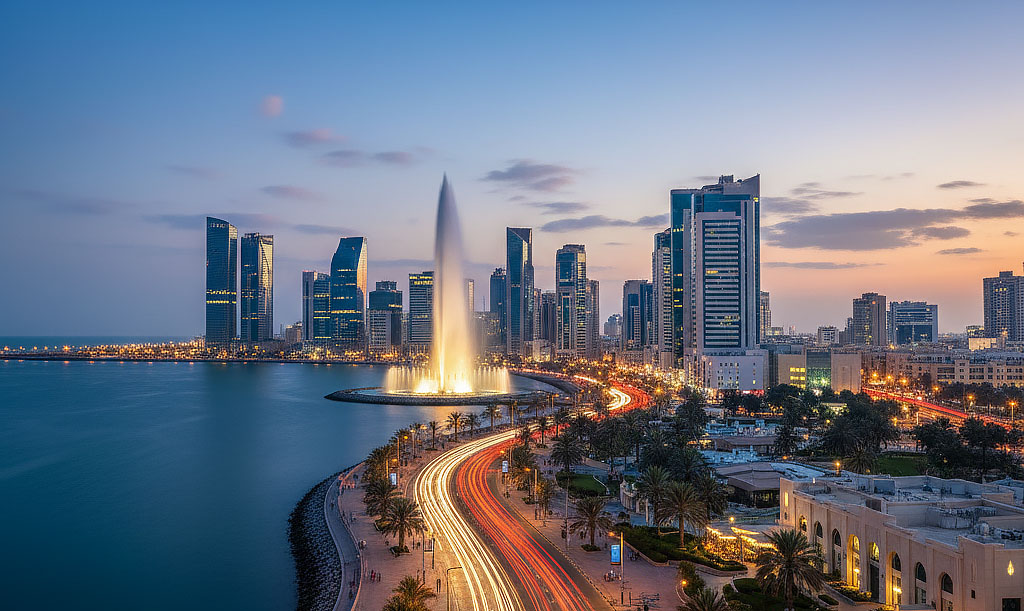
In Doha, for instance, Msheireb Downtown is a regeneration project mixing Qatari heritage architecture with modern luxury (somewhat akin to Diriyah's ethos minus the UNESCO site). Qatar has worked with designers like Philippe Starck and brands like Nobu for hotels.
Dar Global even has a project in Qatar: "The Weekend by Elie Saab" luxury villas, indicating similar brand-name leveraging.
While Qatar hasn't pursued a Trump project, it shows that partnering with a famous designer or brand is a common tactic to market Middle East luxury real estate.
Bahrain and Kuwait have been more low-key, but Oman (as discussed) and the UAE are quite active. Egypt's New Administrative Capital and other North African projects also see Gulf investment and could potentially incorporate brand partnerships.
Unique Positioning
In summary, the Trump-branded Diriyah project fits the pattern of Middle Eastern mega-developments using international branding to enhance allure, but it also has unique traits.
Unlike most projects which use luxury fashion or hotel brands (Four Seasons, Armani, etc.), this one uses a political-personality brand, which is unprecedented in the region.
Yet in terms of exclusivity and luxury, it competes in the same arena as an Aman Resort in Saudi AlUla, a Four Seasons in NEOM, or an Armani Hotel in Dubai. All are meant to offer extraordinary experiences to clientele who seek the very best.
The Middle East's high-end real estate market is increasingly about experiential branding, and having Trump's name in Diriyah is a bold example of that strategy.
If successful, it could pave the way for other non-traditional brands or celebrity-driven real estate ventures in the region.
And if one zooms out, it underscores how Vision 2030's Saudi projects are vying to match or surpass the glamour of Dubai's developments by bringing in equally prominent partners.
Conclusion
The upcoming Dar Global-Trump Organization project in Diriyah is a multi-faceted venture that encapsulates the economic ambitions, cultural vision, and complex geopolitics of today's Saudi Arabia.
It promises to add a new jewel to the Diriyah Gate development: a luxury Trump-branded hotel and residence that will stand alongside other world-class establishments in the historic birthplace of the kingdom.
For Investors and Visitors
For the general public, this development is poised to become a must-see attraction, offering a blend of Saudi heritage and trademark Trump opulence in one of the Middle East's most talked-about new destinations.
For investors, it represents a potentially rewarding opportunity, backed by strong government support and the marketing pull of an internationally recognized brand.
Symbol of Transformation
Neutral in tone yet grand in scope, the Diriyah project underscores a significant shift in Saudi Arabia's posture: from a closed oil kingdom to an emerging hub of tourism and investment.
The partnership of a Saudi developer with the Trump Organization signals confidence on both sides:
- Confidence from Saudi stakeholders in leveraging global brands to achieve Vision 2030
- Confidence from the Trump business in the kingdom's massive development agenda
Challenges Ahead
Yet, the project also comes with challenges and watchful eyes. Execution will be key, delivering the promised luxury while navigating cultural sensitivities and political scrutiny.
If it succeeds, the Diriyah Trump development could become a case study in effective collaboration between global business and state-led modernization efforts, potentially opening doors to more such partnerships in the region.
If it encounters hurdles, it will serve as a cautionary tale on the risks of entwining business with high politics.
Current Status and Outlook
As of now, anticipation is high. Official press releases and announcements have struck an optimistic note about transforming Diriyah's skyline and reinforcing the fruitful collaboration between "two global titans."
Reputable news outlets are closely monitoring the story, from the project's financial underpinnings to the diplomatic context in which it unfolds.
Regional reaction appears positive, bolstered by the prestige the project is expected to bring, while international observers remain attentive to its broader implications.
Historical Significance
In the grander scheme, the Dar Global-Trump venture in Diriyah is more than just a real estate development. It is a landmark in the ongoing saga of a nation reinventing itself and a business empire extending its reach.
As construction cranes eventually rise on Diriyah's horizon for this project, they will be building not just a luxury complex, but also a bridge between historical Saudi hospitality and global modern enterprise.
The world will be watching to see how this bridge is built, and whether it stands as a testament to mutual prosperity or becomes mired in controversy.
In either case, the story of Diriyah's Trump-branded development is set to be an important chapter in the narrative of 21st-century Middle Eastern development, investment, and diplomacy.

Become a member to Access our full network. The ultimate community for global investors.

Reccomended for you
Related reading